

Wheelchair and Components Market
Wheelchair and Components Market Research Report: Information Based on By Product (Composites Material, Metals Material), By Application (Manual Wheelchairs, Powered Wheelchairs, Powered Scooters Wheelchairs), and Region (North America, Europe, Asia-Pacific, and Rest of the World) Global Industry Analysis, Size, Share, Growth, Trends, Regional Analysis, Competitor Analysis and Forecast Period 2026-2035
Market Overview
As per Econ Market Research analysis, the Global Wheelchair and Components Market was recorded at US$ 7.47 Billion in 2026 and is projected to expand to US$ 15.69 Billion by 2035, registering a CAGR of 8.5% over the forecast period. The base year used is 2025.
Wheelchair and Components Market Size 2025-2035 (USD Billion)

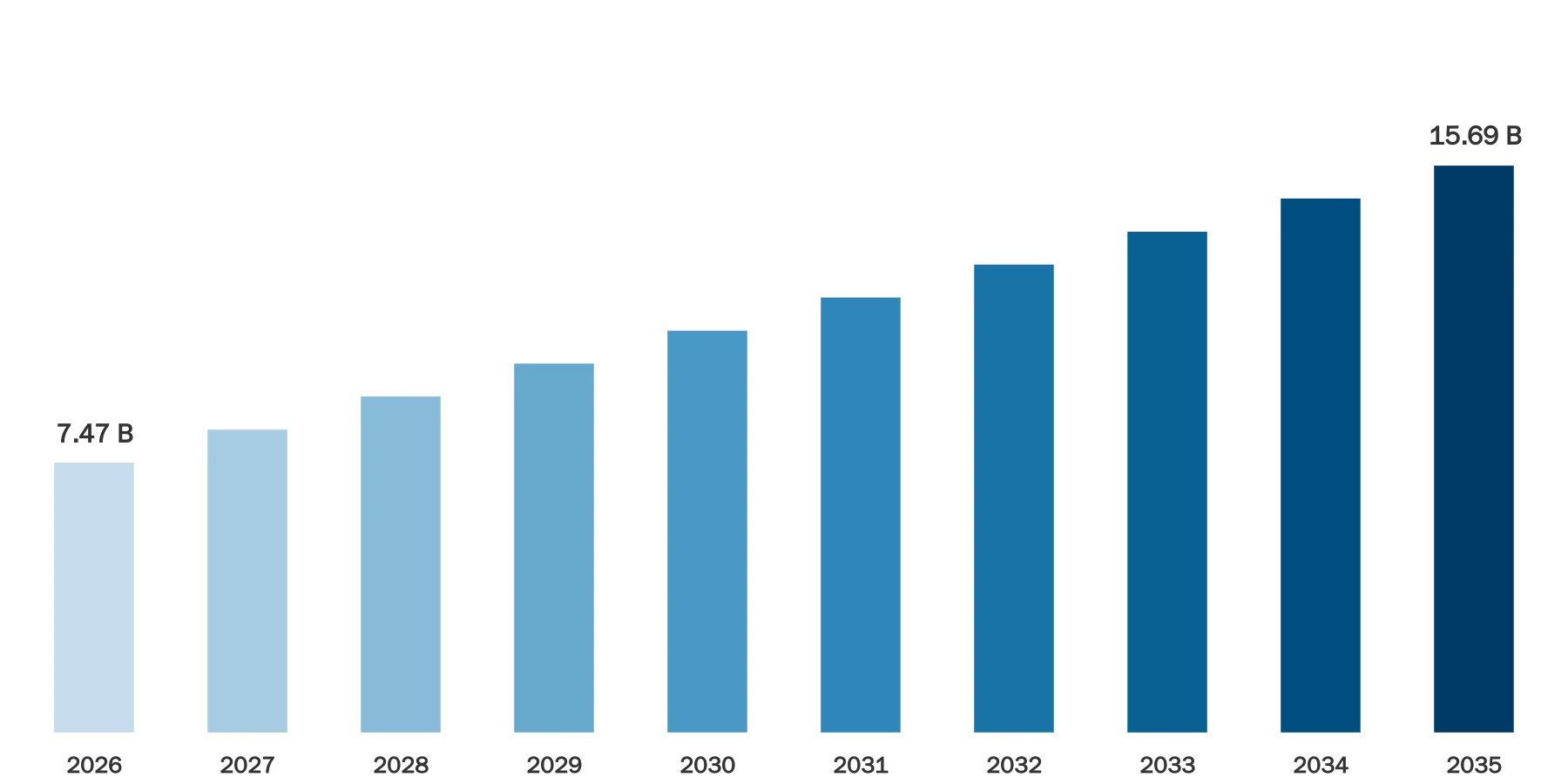
Source: Econ Market Research
Wheelchairs and components are important mobility aids meant to improve the freedom and mobility of people with mobility issues. The main components are a strong frame, comfortable seats, and effective wheels, which are often offered in manual or power variants. Manual wheelchairs are propelled by the user, while power wheelchairs are propelled by electric motors.
Footrests, armrests, and specialized cushions for comfort may also be included. Lightweight materials, collapsible frames for mobility, and improved power-assist technology are examples of Wheelchair design innovations. These devices help individuals with impairments navigate their environment, engage in everyday activities, and live more active and satisfying lives, fostering inclusion and accessibility.
Market Dynamics
The market dynamics of the wheelchair and components industry are shaped by various factors. Drivers include the growing awareness of accessibility and inclusivity, and rapid technological advancements. However, there are also restraints such as financial barrier to accessibility. The opportunities lie in advancing assistive technologies to cater to diverse user needs. The market is highly competitive, with major players continually innovating to provide enhanced features and sturdiness for Composites Materials and Metals Material.
Market Drivers
The global wheelchair and components market is experiencing significant growth due to the rising accessibility awareness along with Technological Advancements. The increased awareness of accessibility and diversity is a fundamental driving force behind the development of wheelchairs and components. The growing social awareness of the significance of accommodating those with mobility issues has increased demand for innovative, user-friendly, and adaptable wheelchair solutions. This driver pushes producers to create goods that meet a variety of demands by taking into account elements such as simplicity of use, adaptation to varied contexts, and the introduction of innovative technology to improve user independence and comfort.
The global wheelchair and components market is witnessing significant growth, fueled by the rising technology advancement. Smart wheelchairs, robotic assistance, and connection features are revolutionizing conventional wheelchair functions. These enhancements are intended to improve the user experience, boost maneuverability, and give improved control and customization choices.
The incorporation of sensors, artificial intelligence, and connection promotes the development of cutting-edge wheelchair components, establishing technology as a driving force in creating the future of mobility aids for people with a variety of mobility requirements. For instance, in December 2022, a start-up hatched at IIT Madras is collaborating with MOBIS to finance 500 motorized wheelchairs for persons with impairments. The NeoMotion motorized wheelchair is a wholly indigenous&rsquo, made in India', technology that has been created with Indian circumstances in mind to be a high-quality but inexpensive product.
Restraints:
The market for wheelchair and components faces constraints due to financial barrier to accessibility. High costs associated with modern wheelchair technology, customized components, and maintenance might restrict access for those with mobility issues, especially in areas where insurance coverage is poor or financial resources are limited. This price constraint prevents the broad adoption of new and technologically sophisticated wheelchairs, restricting users', alternatives. To address this limitation, manufacturers, policymakers, and healthcare systems are working together to develop affordable alternatives, improve coverage through insurance, and promote affordability, maintaining that individuals with mobility impairments have the opportunity to purchase the most appropriate and empowering wheelchair and component options regardless of financial constraints.
Opportunities:
The advancement of assistive technology to adapt to different user demands is an opportunity in the wheelchair and component sector. Smart wheelchairs with integrated sensors, connection features, and AI-driven controls have enormous promise. Customizable components, lightweight materials, and enhanced ergonomics provide the potential to increase user comfort and happiness. Furthermore, addressing environmental accessibility issues with characteristics such as all-terrain capabilities might broaden the reach of wheelchair solutions.
Collaboration among manufacturers, healthcare experts, and technology developers opens up possibilities for bringing affordable, inclusive, and technologically sophisticated wheelchairs to market. This changing environment provides an opportunity to empower people with mobility issues, enhance their overall quality of life, and contribute to a more accessible and inclusive society.
Segment Overview
By Type
The global wheelchair and components market is segmented based on the Types into Composites Materials and Metals Material. Because of their lightweight nature and robustness, composite materials are in high demand for wheelchair components. These materials, such as carbon fibre or fiberglass composites, help to develop wheelchairs that are more maneuverable, robust, and easy to push, so improving the entire mobility experience for people with a variety of requirements.
On the other hand, Because of their strength, durability, and lightweight qualities, metals, especially aluminium and titanium, are in great demand for wheelchair components. These materials contribute to the production of durable but maneuverable wheelchairs, which provide users with dependable mobility solutions that are resistant to wear and tear and provide long-lasting performance.
By Application
The global wheelchair and components market is segmented based on applications into manual wheelchairs, powered wheelchairs, and powered scooters wheelchairs. Manual wheelchairs continue to be in high demand, offering as an important mobility option for those with a variety of demands. Manual wheelchairs provide freedom and flexibility via user-controlled propulsion. These adaptable gadgets are used in a variety of contexts, boosting mobility for people in homes, healthcare institutions, and outdoor settings, so contributing to increased accessibility and quality of life.
On the other hand, powered scooters and wheelchairs are in high demand among those who desire to improve their mobility. These gadgets, which are often driven by electric motors, provide users more freedom, particularly those with limited physical strength. Powered scooters and wheelchairs are used both inside and outdoors, providing users with a comfortable and efficient mode of movement.
Market Overview by Region
North America
North America currently maintains a prominent position in the global Wheelchair and Components market and is projected to maintain this position in the future. The ageing population, improved accessibility awareness, and developments in assistive technology all contribute to the expanding industry. Furthermore, favorable reimbursement regulations, a solid healthcare infrastructure, and a proactive attitude to inclusion all contribute to increased demand. The region',s dedication to guaranteeing accessibility in public areas and transit networks fuels the need for high-quality wheelchair solutions. As a consequence, North American manufacturers and healthcare professionals are constantly innovating to suit the unique requirements of those with mobility issues, supporting increased independence and enhanced quality of life.
Asia Pacific
In terms of compound annual growth rate (CAGR), the worldwide wheelchair and components market is witnessing phenomenal growth, which is projected to continue in the future. The region',s ageing population, the increasing frequency of mobility-related disorders, and a growing awareness of the need of accessibility are all factors contributing to this demand. For instance, according to Asian Development Bank, by 2050, one in every four individuals in Asia and the Pacific will be older than 60.
During 2010 and 2050, the region',s population of senior people (those over the age of 60) will treble, reaching about 1.3 billion individuals. Improving economic circumstances and healthcare infrastructure are other important considerations. In this physically diverse area, there is also an opportunity for innovation to solve distinct environmental issues. As governments and organizations work to increase inclusion, there is a greater need for innovative, customized wheelchair solutions, creating a dynamic market for manufacturers and suppliers looking to meet the Asia-Pacific region',s particular mobility demands.
Competitive Landscape
The wheelchair and component industry',s competitive climate is dynamic, with established manufacturers, young innovators, and a worldwide market ready for developments. The emphasis is on lightweight materials, sophisticated technology, and customized choices. The market is adaptable to shifting demographics and accessibility requirements, promoting continual expansion.
The competitive environment is characterized by partnerships with healthcare providers and a dedication to user-centric designs. As accessibility becomes a worldwide issue, competition remains fierce, requiring firms to provide cutting-edge wheelchair solutions and components to fulfil changing customer needs.
Key Players:
Panthera X
Custom Engineered Wheels
Invacare Corporation
21st Century Scientific, Inc.
Pride Mobility Products Corporation
Ottobock SE and Co. KGaA
Handicare Group AB
Permobil AB
Sunrise Medical LLC
Tetra Equipment
Hoveround Corporation
The Wheelchair Place
GF Health Products, Inc.
Drive DeVilbiss Healthcare
Karman Healthcare, Inc.
Recent Developments
In August 2022, Sunrise Medical, a worldwide pioneer in mobility product development and production, announced the availability of RGK, a highly innovative and top-tier line of made-to-measure wheelchairs that are manual, in the North American market.
Wheelchair and Components Market Report Scope & Segmentation
| Attributes | Details |
|---|---|
Market Size (Current) | US$ 7.47 Billion in 2026 |
Market Size (Forecast) | US$ 15.69 Billion in 2035 |
Growth Rate | CAGR of 8.5% from 2026 to 2035 |
Forecast Period | 2026 – 2035 |
Base Year | 2025 |
Historical Data Available | Yes |
Regional Scope | Global |
Segments Covered | By Product
By Component
By Application
By End-User
|
Frequently Asked Questions
Common questions about this report
The study period covers historical insights and forecast projections for the period 2026-2035.
About the Author
Market research expert with years of industry experience

Related Reports
Explore more market insights from the same category