

Welding consumables Market
Welding consumables Market Size, Share, Trends, Growth, and Industry Analysis, By Product (Stick Electrodes, Solid Wires, Flux-cored Wires, SAW Wires and Fluxes), By Welding Technique (Arc Welding, Resistance Welding, Oxy-fuel Welding), By End-Use Industry (Automotive, Construction, Shipbuilding, Energy andamp; Power, Manufacturing), Regional Analysis and Forecast Period 2026-2035
Welding consumables Market Overview
As per Econ Market Research analysis, the Global Welding consumables Market valuation stood at US$ 22.08 Billion in 2026 and is expected to reach US$ 36.9 Billion by 2035, growing at a steady CAGR of 5.89% from 2026 to 2035. 2025 serves as the base year.
Welding consumables Market Size 2025-2035 (USD Billion)

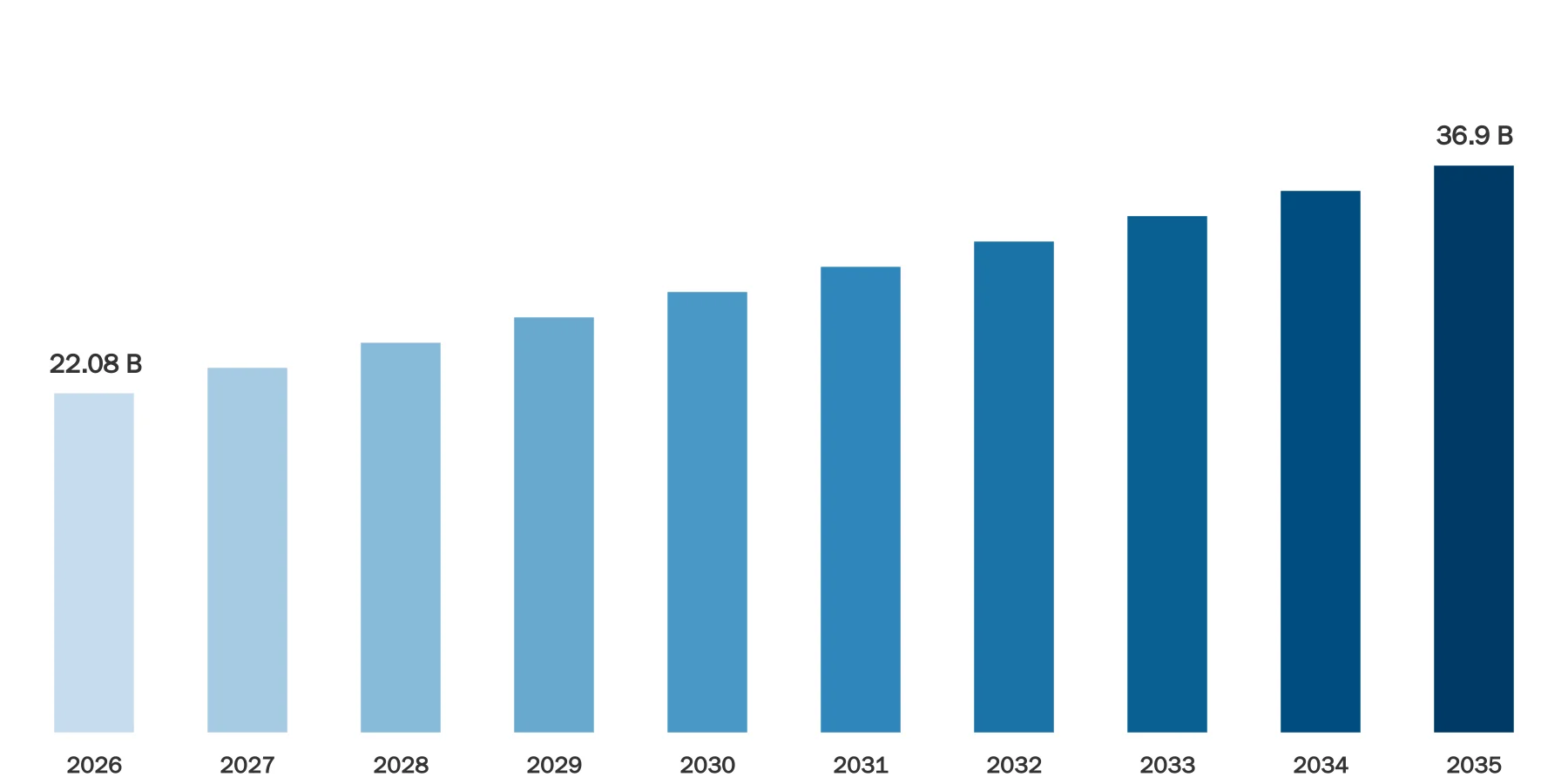
Source: Econ Market Research
The materials used in welding, such as electrodes, filler metals, fluxes, and gases, are referred to as welding consumables. These consumables are essential for fusing materials together, guaranteeing structural integrity, and raising the general effectiveness of welding processes. The market is expanding significantly due to the rising need for welding processes in the energy, automotive, aerospace, and construction industries. Due to an increase in infrastructure projects worldwide, the construction industry in particular has played a significant role in the market',s expansion.
Additionally, the automotive sector',s adoption of advanced welding technologies for lightweight and fuel-efficient vehicle manufacturing is fuelling the demand for high-quality consumables. As industries prioritize efficiency, safety, and cost-effectiveness in their welding operations, there is a growing emphasis on innovative consumables that offer improved performance and reduced environmental impact. The market is also influenced by technological advancements, with a shift towards automation and the integration of IoT (Internet of Things) in welding processes.
Welding Consumables Dynamics
The ongoing growth of sectors like construction, automotive, and energy&mdash,where welding processes are essential to fabrication and manufacturing&mdash,is one important motivator. With its continuous infrastructure projects across the globe, the construction industry in particular drives demand for welding consumables, which are an essential part of construction operations. The automotive sector also makes a substantial contribution to market expansion, fueled by the use of cutting-edge welding techniques to produce lightweight cars that adhere to strict fuel economy regulations.
The dynamics of the market are significantly shaped by technological advancements, with automation and the integration of IoT in welding processes being two prominent trends. This move to intelligent welding solutions, which reflects a larger industry focus on Industry 4.0 principles, improves efficiency, accuracy, and data-driven decision-making. Furthermore, the market is significantly impacted by safety and environmental concerns, which encourages the creation and use of more environmentally friendly welding consumables. Tight laws pertaining to emissions and worker safety encourage manufacturers to innovate and create consumables that support sustainable objectives.
Welding Consumables Drivers
Rapid Industrialization and Infrastructure Development
The continuous global trend of fast industrialization, especially in developing nations, propels the market for welding consumables. The increase in infrastructure projects and building activities necessitates lengthy welding procedures, which raises the need for welding consumables. Welding consumables are in constant demand due to significant investments in urbanisation and industrial expansion occurring in developing nations, particularly in Asia-Pacific. The necessity for strong and effective welding solutions in the construction of buildings, bridges, and other vital infrastructure is what drives this driver.
Technological Advancements and Industry 4.0 Integration
One of the main factors driving the market is the ongoing advancement of welding technologies combined with the incorporation of Industry 4.0 concepts. Welding processes are being revolutionised by automation, Artificial Intelligence, and the Internet of Things (IoT), which is improving Data Analytics, efficiency, and precision. The growing popularity of smart welding solutions is driving up the use of cutting-edge consumables that follow these technological trends. The welding consumables market is growing overall because manufacturers and end users are drawn to consumables that offer enhanced connectivity, real-time monitoring, and predictive maintenance capabilities.
Restraints:
Stringent Environmental and Safety Regulations
Environmental and safety regulations pose a significant constraint on the welding consumables market. Manufacturers are forced to make investments in the creation of eco-friendly consumables with lower emissions as governments throughout the world step up efforts to increase workplace safety and reduce emissions. Adherence to these regulations results in elevated production expenses and presents obstacles for industry participants, thereby affecting profit margins. Furthermore, overcoming technological obstacles and persuading conventional users to embrace more environmentally friendly welding techniques may be necessary to make the switch to greener alternatives.
Fluctuating Raw Material Prices
The welding consumables market is susceptible to fluctuations in the prices of raw materials such as metals, alloys, and fluxes. Volatility in commodity prices, influenced by geopolitical factors, supply chain disruptions, or market speculation, can significantly impact the overall cost structure for consumable manufacturers. Unpredictable material costs pose challenges in maintaining stable pricing for welding consumables, affecting profit margins and potentially limiting market growth. Market players need to implement effective supply chain management strategies and explore alternative materials to mitigate the impact of raw material price fluctuations.
Opportunities:
Expansion of Renewable Energy Infrastructure
The global market for welding consumables is expanding as a result of the shift towards renewable energy sources like solar and wind power. Welding procedures are crucial to the installation and upkeep of renewable energy infrastructure, such as solar panels and wind turbines. Manufacturers of consumables have a promising market opportunity as these sectors grow. Furthermore, the construction of offshore wind farms and massive solar projects necessitates specialised welding solutions, creating opportunities for market expansion and innovation in welding consumables. Manufacturers can increase their market presence by strategically positioning themselves to meet the particular welding challenges presented by renewable energy projects.
Segment Overview
By Type
The welding consumables market is categorized into various types, each serving distinct purposes in welding processes. Submerged Arc Welding (SAW) wires are designed for high-speed, efficient welding, commonly used in applications like shipbuilding and heavy equipment manufacturing. Fluxes play a crucial role in welding by shielding the weld pool from atmospheric contamination, ensuring the integrity of the final weld.
Flux-cored wires are known for their versatility, offering a combination of high deposition rates and ease of use, making them suitable for diverse applications such as construction and pipeline welding. Solid wires are essential for Gas Metal Arc Welding (GMAW) processes, providing a stable and reliable arc for welding metals in various industries. Stick electrodes, known for their simplicity and portability, find applications in construction, maintenance, and repair work, making them a popular choice for on-site welding tasks.
By Technique
The technique segment encompasses various methods employed in welding processes. Arc welding, a widely used technique, involves the use of an electric arc to melt and join metals. Resistance welding utilizes the heat generated by the resistance of metals to electric current for joining purposes and is commonly employed in the automotive and electronics industries. Oxyfuel welding relies on the combustion of oxygen and a fuel gas to create a high-temperature flame for welding or cutting metals, finding applications in metal fabrication and repair. Ultrasonic welding utilizes high-frequency vibrations to create frictional heat at the welding interface, particularly useful in industries requiring precise and clean welds, such as the electronics and medical sectors.
By End-Use
The end-use segment categorizes the welding consumables market based on the industries that extensively rely on welding processes. The oil and gas sector employ welding consumables for pipeline construction, offshore platform fabrication, and maintenance activities. Power generation industries utilize welding for the construction and repair of power plants, including nuclear, thermal, and renewable energy facilities. In the marine sector, welding is essential for shipbuilding, repair, and maintenance.
The construction industry relies on welding for structural steelwork, bridges, and infrastructure projects. Automotive manufacturing utilizes welding consumables for joining components in the production of vehicles, while the aerospace and defence sector employs specialized welding techniques for aircraft and defence equipment fabrication. These end-use segments showcase the diverse applications of welding consumables across crucial industries, highlighting the market',s adaptability to various manufacturing needs.
Welding Consumables Overview by Region
Asia-Pacific is a prominent region that is characterised by rapid industrialization in nations like China and India. Welding consumables are in high demand due to the region',s expanding manufacturing and construction industries, which makes them a major growth driver. Furthermore, the market',s growth is greatly aided by urbanisation and infrastructure development programmes. Mature markets with a strong emphasis on sustainability and technological advancements can be found in North America and Europe. The demand for advanced welding consumables is primarily driven by the automotive and aerospace industries, as these sectors aim to reduce their environmental impact and increase efficiency. The market dynamics in these regions are influenced by strict regulations concerning worker safety and emissions, which in turn drive ongoing innovation and the adoption of environmentally sustainable welding solutions.
Welding Consumables Market Competitive Landscape
Due to their broad product portfolios and global presence, market leaders like Lincoln Electric, ESAB, and Illinois Tool Works (ITW) control a large portion of the market. In order to provide cutting-edge welding consumables and satisfy the changing demands of end-user industries, these businesses place a strong emphasis on ongoing research and development. Increasing market share and improving technological capabilities are common goals achieved through strategic alliances, mergers, and acquisitions.
Additionally, big players have invested in smart welding solutions as a result of the incorporation of Industry 4.0 principles into welding processes, further differentiating their products in the market. The competitive landscape also features a mix of regional and local players catering to specific market segments. Regional players often focus on customization and niche applications, offering specialized welding consumables to address unique industry demands. Additionally, partnerships with end-users and distributors play a crucial role in establishing a strong market presence for both global and regional players.
Welding Consumables Market Leading Companies:
The Lincoln Electric Company
ESAB
voestalpine Bö,hler Welding
Air Liquide
ITW (Illinois Tool Works Inc.)
Ador Welding Limited
D&,H Sé,cheron
Kiswel Ltd.
Magmaweld
Chosun Welding
Welding Consumables Recent Developments
Sept 2023, Asahi/America, a leading thermoplastic valve and pipe manufacturer, has entered into a strategic partnership with McElroy Manufacturing, headquartered in Tulsa, Oklahoma. This collaboration aims to deliver top-notch fusion equipment to the market, specifically designed to complement Asahi/America',s thermoplastic piping systems. Under this partnership, Asahi/America will now provide McElroy-manufactured butt and socket fusion equipment, which can be conveniently rented or purchased by customers.
July 2023, Vitesco Technologies, a global manufacturer specializing in modern drive technologies and electrification solutions, recently unveiled advanced green laser equipment designed for copper welded joints in collaboration with their engineering partner, Trumpf.
Nov 2023, ESAB Corporation, a global leader in welding and cutting equipment and consumables listed on the NYSE as ESAB, introduced the groundbreaking Renegade VOLT ES 200i Stick/TIG battery-powered welding system during SparkWeek. This virtual launch event showcased the brand',s latest welding and fabrication products, automation and robotics solutions, and significant advancements in Personal Protective Equipment (PPE).
Global Welding Consumables Report Segmentation
Welding consumables Market Report Scope & Segmentation
| Attributes | Details |
|---|---|
Market Size (Current) | US$ 22.08 Billion in 2026 |
Market Size (Forecast) | US$ 36.9 Billion in 2035 |
Growth Rate | CAGR of 5.89% from 2026 to 2035 |
Forecast Period | 2026 – 2035 |
Base Year | 2025 |
Historical Data Available | Yes |
Regional Scope | Global |
Segments Covered | By Product
By Welding Technique
By End-Use Industry
|
Frequently Asked Questions
Common questions about this report
The study period covers historical insights and forecast projections for the period 2026-2035.
About the Author
Market research expert with years of industry experience

Dipali Bhingare serves as the Market Research Director at Econ Market Research. With a focus on translating complex global economic shifts into actionable business intelligence, she oversees the strategic direction of comprehensive market studies. Her work empowers organizations to navigate volatile industries through data-driven forecasting and deep-dive competitive analysis.
Related Reports
Explore more market insights from the same category