

Wedding Dress Market
Wedding Dress Market Size, Share, Trends, Growth, and Industry Analysis, By Product (Ball Gowns, Mermaid Style, A-Line, Others), By Distribution Channel (Specialty Boutiques, Department Stores, Online Stores), By Length (Maxi, Midi, Short), Regional Analysis and Forecast Period 2026-2035
Wedding Dress Market Overview
As per Econ Market Research analysis, the Global Wedding Dress Market was valued at approximately US$ 17.86 Billion in 2026 and is predicted to reach US$ 26.95 Billion by 2035, expanding at a CAGR of 4.52% over the forecast duration. The base year is 2025.
Wedding Dress Market Size 2025-2035 (USD Billion)

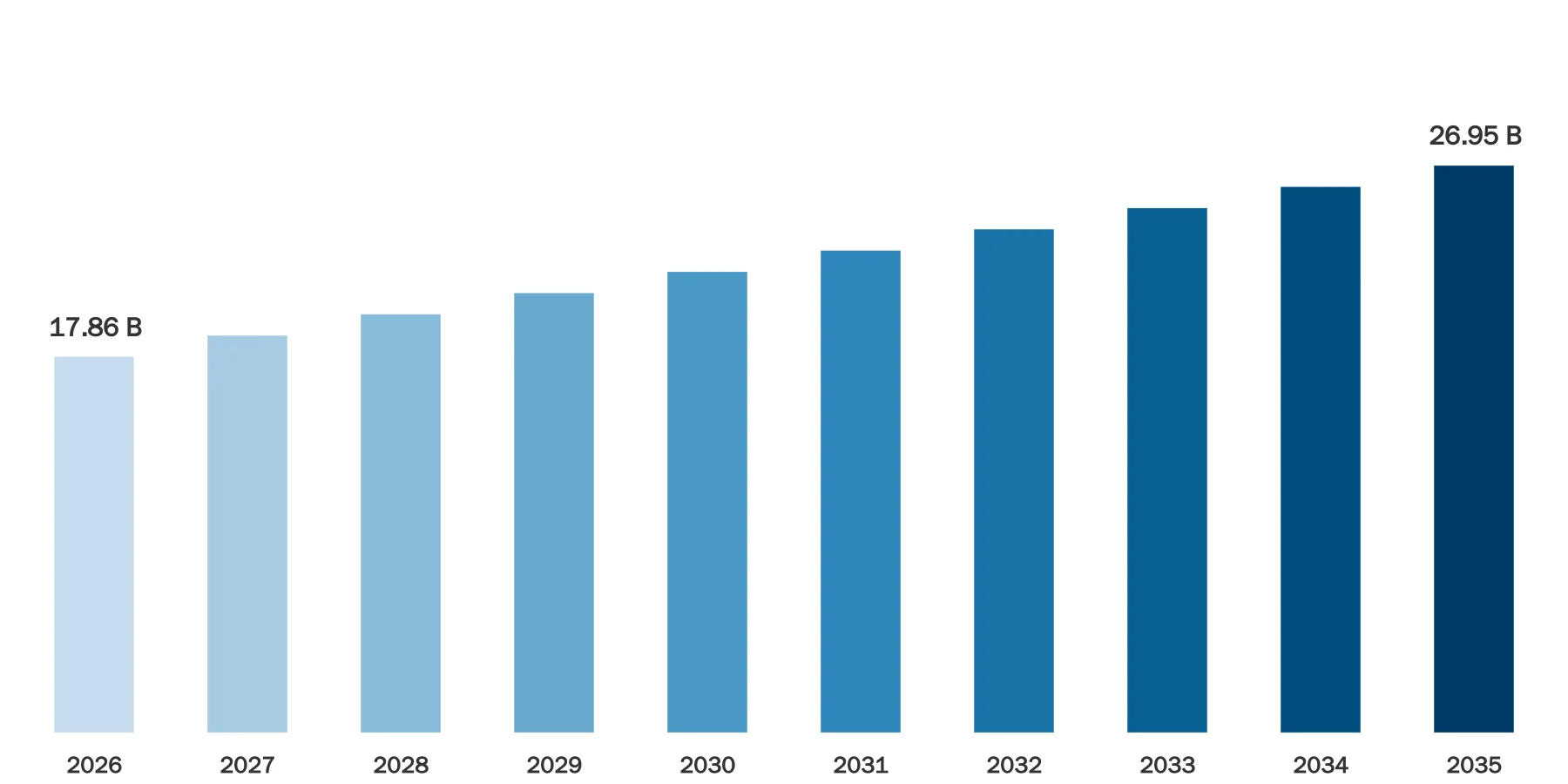
Source: Econ Market Research
A wedding dress represents the elegance, tradition, and style of a bride during her wedding ceremony. These dresses are either custom-made or acquired from retail stores. The design, fabric, color, and many other embellishments vary according to cultural norms, personal preferences, and trends. The market has grown significantly with increasing disposable income, rising wedding budgets, and growing consumer demand for unique, high-quality bridal attire. In addition, online shopping has increased the accessibility of wedding dresses to a wider audience.
Brides today look for dresses that reflect their personal style and also meet the traditional expectations. Bridal collections are often a reflection of changing fashion trends, with modern styles and fabrics incorporated into the classic designs. Global and regional factors drive the market, and trends vary from region to region due to cultural and social influences. As design and fabric technology continue to evolve, the wedding dress market is expected to grow steadily, with demand from both traditional and contemporary brides.
Dynamic Insights
Among the main drivers is the increasing significance of weddings as major social events, and thus, an increase in wedding spending, such as bridal dresses. Consumers increasingly look for one-of-a-kind, high-quality dresses that resonate with personal style and wedding themes, which has LED to increased demand for custom-made and designer gowns. The trend towards personalization and customization is also a significant influence, as brides opt for dresses that reflect their individuality.
Rising disposable incomes and the trend toward higher wedding budgets are further adding to the market. In regions where disposable income is higher, consumers are willing to spend more on luxury bridal gowns. Furthermore, the growth in online shopping has made it easier for brides to explore a wide range of options, including international brands, which often increases competition among retailers. However, fluctuations in the costs of raw material for fabrics and design materials influence the pricing on the market, and shifts in culture, altering attitudes toward the wedding itself-a trend that shows a preference to smaller or destination weddings-affect demand.
Drivers Insights
Rising Disposable Incomes and Changing Consumer Preferences
With disposable incomes rising, especially in emerging markets, there is a growing willingness to spend more on wedding-related products, including wedding dresses. The rising trend of luxurious weddings and the willingness to allocate significant budgets for the bridal gown has significantly boosted demand. Consumers today prioritize quality, design, and personal expression, with many willing to invest in bespoke, high-end wedding dresses.
This shift in consumer preferences toward unique and personalized wedding dresses is driving the market, as more brides seek gowns that reflect their individual style rather than opting for off-the-rack or traditional designs. Additionally, the desire to stand out and embrace modern wedding trends has led to increased demand for creative, luxury wedding attire.
Rise in Online Shopping and E-commerce Platforms
The growth of the wedding dress market has had to do with the expansion of online shopping. Now, a bride can be able to browse and buy wedding dresses from across the globe, free of geographical restrictions. Through e-commerce, one is able to get various styles of wedding dresses within one online platform, ranging from cheap to those luxury ones, giving consumers more options and accessibility.
Online order dress facilitation has enabled the brides to make a quick search for that ideal wedding dress. Furthermore, comparison of the price by various brands or dealers helps to get more transparent services when buying the wedding dress. Also, with the advent of virtual fitting and online customization services, it becomes convenient for people to shop, making the online platform an important and rapidly emerging field in bridal dressing.
Restraints Insights
High Price Point and Affordability Issues
Despite the surging trend in high-end wedding dresses, their steep price poses a significant impediment to consumption for many buyers. Wedding gowns, mainly luxury or handmade ones, generally carry hefty prices because of good quality materials and craftsmanship and also because of the exclusivity offered. For some brides, these prices make it hard to invest in the wedding dress of their dreams, and they opt for cheaper options or even rent dresses. Economic downturns or financial uncertainty can also deter spending on non-essential luxury goods such as high-priced wedding dresses, affecting the overall market.
Impact of Traditional Wedding Norms and Cultural Sensitivities
Traditional and cultural norms also impact the wedding dress market, which sometimes limit diversity in design preferences. In some areas, the color or style preferred is that which is associated with a specific culture, and thus innovation in bridal attire may be restricted. For instance, the Western world has a deep-seated affinity for white or ivory wedding dresses, while other cultures have their preferred colors or styles. This focus on wedding dresses as a once-in-a-lifetime garment has pressured designers to stick to the traditional look and thus limit their creativity. Further, some brides will not take any deviation from what is socially expected, thus limiting their choice, which might reflect in market demand for such different styles and trends.
Opportunities Insights
Sustainability and Eco-friendly Wedding Dresses
The rise in sustainability will open up enormous opportunities for the wedding dress market. Consumers have become increasingly sensitive to environmental concerns, and the bride is looking for eco-friendly alternatives in wedding attire. Such sustainable materials are organic cotton, recycled fabrics, and vintage or upcycled dresses. The growing demand allows designers and bridal shops focused on making eco-friendly wedding dresses to cash in on this demand. In addition, the new trend of renting or repurposing wedding dresses also serves to mitigate environmental issues while giving business a chance to capture the increasingly green-conscious market segment.
Segment Analysis
By Product Type:
The product type segment of the wedding dress market includes several categories such as traditional, contemporary, couture, custom-made, and off-the-rack wedding dresses. Traditional wedding dresses are often designed in classic styles, typically featuring lace, satin, and intricate embellishments, symbolizing timeless elegance. Contemporary wedding dresses embrace modern design elements, offering a more relaxed or unconventional look with alternative cuts, fabric choices, and non-traditional features.
Couture wedding dresses are considered luxury garments as they are designed by famous fashion houses, have exclusive designs, and are done with exceptional craftsmanship. Custom-made wedding dresses are made according to a bride',s specific measurements and preferences, making them highly personalized in terms of design and fit. Off-the-rack wedding dresses are ready-made and available in stores for immediate purchase, often being more affordable without the wait time associated with custom gowns.
By Material:
Material Segment in the wedding dress market consists of a broad range of fabrics that contribute to the overall look, feel, and style of the gown. Fabrics such as silk, satin, lace, tulle, chiffon, and organza are the most common used in bridal fashion. Silk offers a luxurious, smooth finish with a soft sheen, making it a popular choice for high-end and traditional gowns. Satin, a fabric known for its glossy finish and structured nature, is favored for its ability to hold form and shape. Lace is often used to add delicate, romantic detail to wedding dresses, often used in overlays or accents.
Tulle, a lightweight, sheer fabric, adds volume and ethereal softness, making it a popular choice for fuller skirts or layered designs. Chiffon is a very lightweight, airy material that makes flowy, more casual wedding dresses a perfect option, while organza gives a crisp, structured look, and most of the time, layers are created using it or adding texture. Using these materials enables designers to come up with styles from soft and romantic to structured and dramatic so that brides can easily find a dress that matches their style and theme of their wedding.
By Price Range:
Price range wedding dresses can be divided into three segments, namely budget, mid-range, and luxury, all of which vary in exclusivity, quality, and design. Budget wedding dresses focus on affordability without compromising style, thus offering brides a chance to find attractive gowns within a lower price range. The dresses are mostly made of cheaper fabrics and simpler designs.
Mid-range wedding dresses are a mix of affordability and luxury, involving higher-quality materials, intricate designs, and more sophisticated finishes. Brides at this range seek quality, elegance, and value. Luxury represents the top rung of bridal fashion, including high-end fabrics, exclusive designs, and exquisite craftsmanship from notable designers or Haute Couture fashion houses. The other dresses cost so much because of the superior material, rich detail, and even the level of craftsmanship involved in making the garments.
By Distribution Channel:
The distribution channel segment for the wedding dress market includes online retail, offline retail such as bridal boutiques and department stores, and renting services. Among all these distribution channels, online retail has gained a great popularity, mainly owing to the convenience and variety of wedding dresses available from both global and local retailers. Nowadays, many brides opt to shop online for wedding dresses and easily compare styles, prices, and designers. Offline retail, for instance, can be provided by bridal boutiques and department stores for retail. This way, brides can try the dress in person, get a feel of the fabrics, fit, and the whole design of the dress before buying it.
Bridal boutiques usually better represent a customized shopping experience as it typically provides tailored fittings and expertly guided advice. Departmental stores can offer a more extensive variety of brands and styles at different price points. Other ways through which women can get good wedding dresses include the rental services available today, where a bride can hire a quality wedding dress to save on its price or avoid waste by renting instead of buying. Rental services provide a variety of designer gowns to wear for one occasion, appealing to brides who desire luxury at a fraction of the cost or those who wish to avoid the long-term commitment of keeping a wedding dress.
Regional Analysis
In North America, specifically the United States, the wedding dress market thrives due to heavy spending on weddings and an emphasis on both classic and modern designs. Women in this area prefer wedding gowns of high quality and designer fame, plus primarily for high end and made-to-order styles. Online shopping has expanded the availability of wedding dresses as most retailers now offer in-store as well as online options. In Europe, the United Kingdom, France, and Italy have age-old traditions for bridal fashion as opulent as couture, with many prominent designers influencing worldwide trends. Many European brides often prefer classic designs with a touch of modernism, and high-end couture dresses as well as off-the-rack varieties are in demand.
Asia-Pacific has been growing rapidly with the wedding dress market, which has been supported by rising disposable incomes, changes in wedding trends, and influence of Western fashion. Brides in these regions have adopted traditional garments as well as Western-style wedding dresses that reflect a mix of cultural and modern influences. Destination weddings, especially in countries like Thailand and Bali, have further fuelled the demand for diverse bridal wear. Meanwhile, in Latin America, marriages are considered an important social affair, and the traditional wedding dresses are still widely in vogue.
Bridal fashion is being increasingly influenced by global trends, and with improved economic conditions, there is an increasing demand for quality and luxury wedding dresses. The Middle East and Africa show high demand for luxury wedding dresses, especially in countries like the UAE, where lavish weddings and designer gowns are highly sought after. Every region has its unique cultural influences and economic factors that contribute to a diverse and evolving global wedding dress market.
Competitive Landscape
Luxury and high-end collections are mostly led by global major players, including Pronovias, Rosa Clará,, Vera Wang, and David',s Bridal. Their exclusive collection and couture offers set these brands apart due to exceptional craftsmanship, iconic designs, and fine quality material that makes the bridal dresses very lavish and one of a kind for brides. Some of these designers have an enormous online presence and therefore sell worldwide. Regional players like Carolina Herrera Bridal, Elie Saab Bridal, and Monique Lhuillier are also the most significant players, as these styles blend heritage with modern flair, further widening the scope for competition in this space for both luxury and premium categories. Besides luxury designers, there are a few bridal boutiques and mid-market retailers that have gained prominence due to the affordable yet fashionable wedding dresses.
The brands include ASOS Bridal, BHLDN (Anthropologie), and Lulus, among others, that have taken advantage of the new wave of online shopping, which allows for various styles at a different price point. In addition, off-the-rack retailers such as Maggie Sottero Designs and Allure Bridals remain relevant in the mass market by providing quality gowns at affordable prices, which place them at the top of the budget-conscious category. Rental services such as Hughes &, Hughes and Borrowing Magnolia have recently become a competitive factor as it attracts brides to look for expensive gowns at a more affordable price. It is also driven by the trend towards customization and personalization, wherein smaller, boutique designers are now offering made-to-measure services.
List of Key Players
Kleinfeld Again
Vedant Fashions Ltd
Giorgio Armani S.p.A.
Blue Bird Dress of Toronto Corp
PRONOVIAS GROUP
Guccio Gucci S.p.A.
Gianni Versace S.r.l.
Septwolves Group
Michael Cinco
Recent Developments
In June 2024, Kleinfeld Bridal is thrilled to introduce KleinfeldAgain.com, a new online platform where brides can buy and sell pre-owned wedding dresses. Building on its reputation as the most trusted bridal retailer, Kleinfeld',s innovative digital marketplace offers a solution for brides globally, catering to the growing trend of circular fashion. This new service not only provides an alternative for brides who prefer not to experience the traditional salon setting with family and friends but also offers a reliable option for those looking to sell their wedding dresses.
Global Wedding Dress Report Segmentation
Wedding Dress Market Report Scope & Segmentation
| Attributes | Details |
|---|---|
Market Size (Current) | US$ 17.86 Billion in 2026 |
Market Size (Forecast) | US$ 26.95 Billion in 2035 |
Growth Rate | CAGR of 4.52% from 2026 to 2035 |
Forecast Period | 2026 – 2035 |
Base Year | 2025 |
Historical Data Available | Yes |
Regional Scope | Global |
Segments Covered | By Product
By Distribution Channel
By Length
|
Frequently Asked Questions
Common questions about this report
The study period covers historical insights and forecast projections for the period 2026-2035.
About the Author
Market research expert with years of industry experience

Dipali Bhingare serves as the Market Research Director at Econ Market Research. With a focus on translating complex global economic shifts into actionable business intelligence, she oversees the strategic direction of comprehensive market studies. Her work empowers organizations to navigate volatile industries through data-driven forecasting and deep-dive competitive analysis.
Related Reports
Explore more market insights from the same category