

Water Park Market
Water Park Market Size, Share, Trends, Growth, and Industry Analysis, By Type (Indoor Water Parks, Outdoor Water Parks), By Application (Residential, Commercial (Hotels, Resorts, Theme Parks)), Regional Analysis and Forecast Period 2026-2035
Market Overview
As per Econ Market Research analysis, the Global Water Park Market valuation stood at US$ 3.46 Billion in 2026 and is expected to reach US$ 6.38 Billion by 2035, growing at a steady CAGR of 8% from 2026 to 2035. 2025 serves as the base year.
Water Park Market Size 2025-2035 (USD Billion)

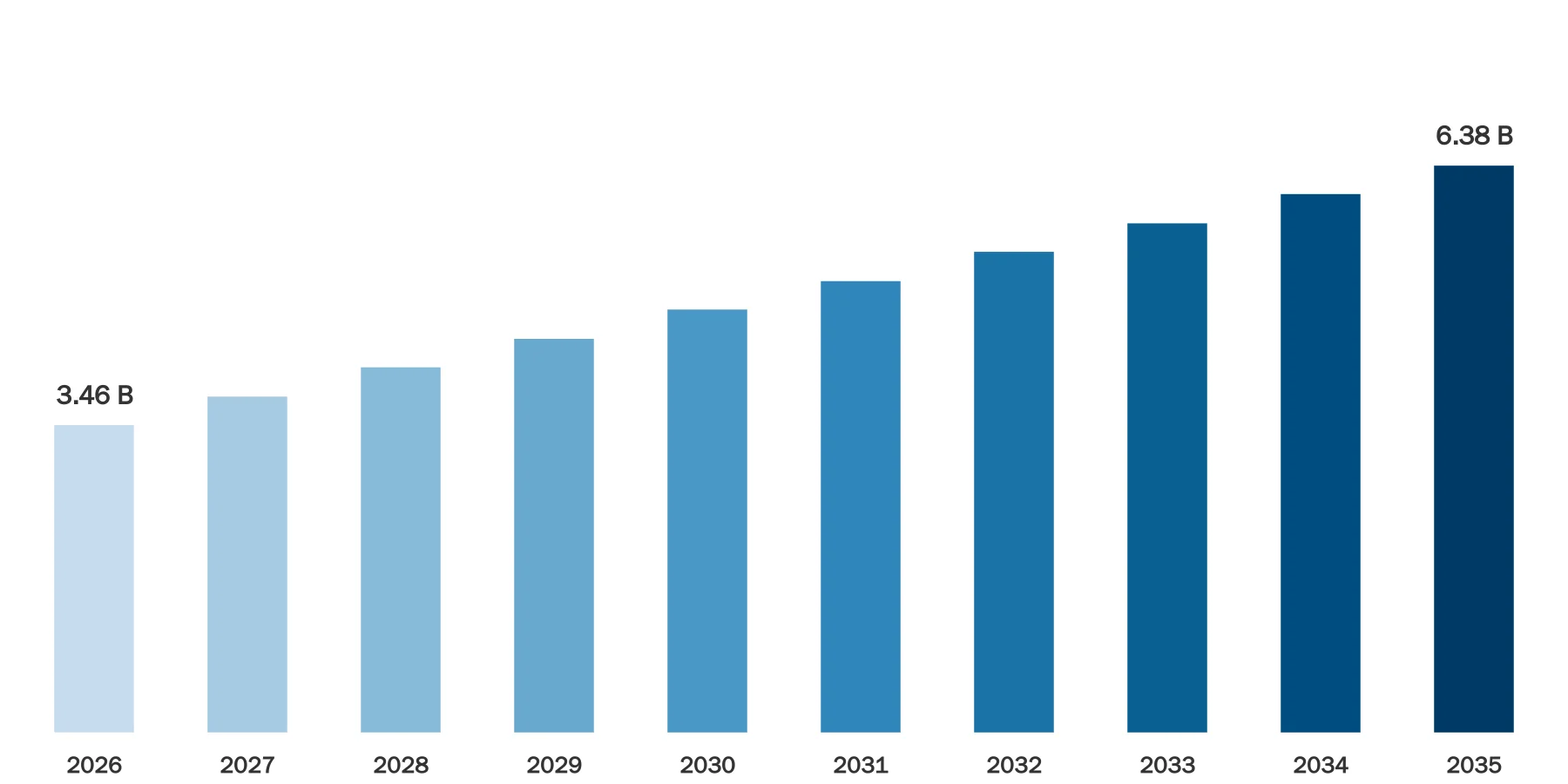
Source: Econ Market Research
Water parks usually feature water slides, wave pools, lazy rivers, and other such water attractions designed for entertainment. Water parks are popular among families, tourists, and thrill-seekers as they offer a mix of fun and relaxation. The market includes both standalone water parks and those integrated with resorts or theme parks. The water park market has grown largely over the past few years, mainly because of an increase in disposable income, an increase in family vacations, and growth in the demand for outdoor forms of entertainment.
Technology too has been another key player where parks will be introducing new thrill rides that include virtual reality and new advanced water filtration systems. Furthermore, the growth of tourism and the increased popularity of wellness and health-related leisure activities have also fueled the demand for water parks. As water parks continue to focus on safety, sustainability, and variety, they are becoming an important part of the global tourism and leisure industry.
Dynamic Insights
The primary reason is the rising disposable income of consumers, allowing more families to spend money on leisure activities such as visiting water parks. With the increase in tourism, resorts or water parks within tourist destinations are also gaining popularity. The trend of family-friendly entertainment options is also growing in this market, as water parks offer a variety of attractions for all age groups, from thrilling slides to relaxing water activities. Moreover, innovations such as water-based adventure rides, VR experiences, and eco-friendly attractions are attracting more visitors, pushing market growth.
However, the significant initial capital investment and continuous operational expenses, for instance, pose major barriers to rapid market growth, especially within developing economies. Regular maintenance and related safety measures increase operational expenses, while varied weather patterns and seasonal fluctuations impact revenues, as water parks are considered in higher demand within warmer climate zones and summer periods. Further regulatory concerns over the conservancy of water, proper disposal of wastes, and general safety standards further hamper development and operation in the sector. Growth, however continues, driven by rising interest in sustainable practices, enhanced technology, and visitor experiences worldwide in water parks.
Drivers Insights
Increasing Disposable Income and Spending on Leisure Activities
As global disposable incomes rise, especially in emerging economies, consumers tend to spend more of their consumption on recreational activities and family entertainments. A water park offers different kinds of attractions suitable for all age groups and is considered an excellent investment for family vacations. With this increase in disposable income, consumer demand for leisure and entertainment services will rise, thus positively boosting the growth of the water park market. In addition, growing living standards and urbanization imply that more individuals can afford travel to domestic as well as overseas destinations with water parks, resulting in increased foot traffic and, consequently, more revenue for the operators.
Growing Popularity of Family-Oriented Entertainment
Water parks have evolved into a perfect choice for family outings because of the variety of activities that suits different age groups and interests, be it just a lazy river for relaxation or something splashier like water slides. This family appeal has grown the market because most consumer activity typically involves activity in which all family members can participate, and the trend of family vacations and bonding experiences is growing. In addition, family-oriented promotions and packages from water parks attract more families, thereby increasing the demand for such recreational places..
Restraints Insights
High Capital Investment and Operational Costs
Water parks face one of the greatest capital expenditures as part of developing and maintaining their infrastructure. Water parks are built on huge capital investments, such as land acquisition, attraction development, water systems, and safety equipment. Other high operational costs may include water management, staffing, maintenance, and regulatory compliance. Such costs will, therefore, hinder growth within the market, especially for new entrants or operators in less affluent spending regions. The high costs also pose financial risks, especially during off-peak seasons when visitor numbers are lower.
Seasonality and Weather Dependency
Water parks are seasonal places, where the majority of its visitors usually throng it when the climate is warm or when it',s tropical. Such a seasonability affects the overall possible revenue for such parks in an entire year. Unpredictable weather like rainfall or spells of cold also lowers attendance as not many will opt to go out to a water park on bad weather days. In temperate climates, water parks often experience fluctuations in revenue during the off-season, making it difficult for operators to attract visitors throughout the year, either by indoor water parks or special events.
Opportunities Insights
Sustainability and Eco-Friendly Attractions
With the increased awareness of environmental issues, water parks can portray the opportunity to adopt greener practices and eco-friendly attractions. It could be through water-efficient systems, Solar Energy, recycling of waste, and green spaces incorporated inside the water parks. More and more travelers are only traveling in an environment-friendly manner as given priority over other preferences.
Water parks using green technologies will certainly outshine their competitors within a cut-throat market. Furthermore, eco-friendly attractions, such as water parks constructed from sustainable materials or those emphasizing environmental awareness, can attract a niche segment of environmentally aware visitors. Implementing these practices not only helps protect the environment but also offers a unique selling point to potential customers.
Segment Analysis
By Type of Parks
The water parks are categorized according to the various types of the park, such as amusement water parks, indoor water parks, and outdoor water parks. Amusement water parks refer to large parks combining water attractions with other amusement rides, meaning the parks would typically offer more diversity in their forms of entertainment. Indoor water parks are indoor facilities that enable year-round operations, thus reducing their dependency on weather conditions, which is especially beneficial in colder climates.
Outdoor water parks, on the other hand, are open-air parks that are visited during warm months and often have large-scale water attractions such as wave pools, lazy rivers, and slides. Each type of park has its appeal and challenges: indoor parks, focusing on extended operational periods, outdoor parks, emphasizing seasonal appeal, and Amusement Parks, offering diversified entertainment for all ages.
By Revenue Source
The revenue streams of water parks are diverse and primarily come from ticket sales, food and beverage services, merchandise, and sponsorships &, advertising. Ticket sales form the backbone of the water park&rsquo,s revenue, as visitors pay for entry to access various attractions. Food and beverage sales generate a significant portion of revenue, as many visitors spend money on snacks, meals, and drinks while enjoying the park. Merchandise, such as branded clothing, toys, and accessories, adds another revenue stream. Sponsorships and advertising are growing sources of income, as companies see the value in associating their brands with popular leisure destinations like water parks.
By Target Audience
Water parks generally target all levels of audiences: key segments are composed of families, teenagers &, young adults, corporate groups, schools &, educational groups. Families can be said to be the target audience because these water parks prove to be wonderful places where any age group and family members are bonded with much fun and entertaining.
Teenagers and young adults go there looking for the high thrill rides offered and for good social life. Corporate groups usually make use of water parks for team building and fun events. Group rates and packages can be arranged. Schools and other educational groups often like to hold field trips in water parks because it combines learning with fun in an interactive setting.
By Attractions
Attraction is important as it attracts different types of people to come visit the park, and they come because the park offers interesting features. A wave pool or an aqua play structure could also be in that list because the attractions for this type of amusement park differ based on size. Water parks provide a huge list of various kinds of amusement with water slides.
Wave pools provide the simulated ocean waves', feeling, thereby allowing people to experience fun moments or relaxing themselves. Lazy rivers offer a more leisurely attraction where visitors can float on tubes through a winding water course. Aqua play structures are interactive play areas for younger children, which offer smaller slides, water fountains, and sprinklers. Interactive water features like water cannons and splash pads make the experience even better by providing interesting activities to be undertaken for all ages.
By Ownership
Water parks can be categorized based on ownership into private-owned, government-owned, and public-private partnerships (PPP). Private-owned water parks tend to be run by private companies. They seek a maximum profit by providing diverse attractions and services to be attractive enough to the visitor. Government-owned water parks are dominated by local, state, or national governments. It tends to operate mainly with the aim of providing low-cost recreational facility to the public.
These parks can also be on local tourism or public health. Public-private partnerships (PPP) combine the strength of both sectors, where private companies collaborate with the government to fund, develop, and operate water parks. The partnership usually focuses on improving the infrastructure and services of the park while sharing the financial and operational risks.
Regional Analysis
North America remains a leading segment in terms of market share, the well-developed tourism sector, higher disposable incomes, and large indoor as well as outdoor water parks facilitate this market segment. In North America, one of the leaders is the United States, and it hosts many of the largest water parks across the world that attract millions of domestic as well as international visitors. Technological innovation in water attractions, including virtual reality-based rides and interactive water features, maintains parks competitive, while the market in North America is mature. Future growth in this region might be influenced by new developments in eco-friendly water parks and seasonal offerings.
Meanwhile, the water park market in the Asia-Pacific region is rapidly growing, driven by increasing urbanization, an increase in disposable income, and growing interest in family-friendly leisure activities. Countries such as China, India, and Japan are seeing significant investments in both large-scale outdoor water parks and indoor facilities, trying to capitalize on the growing tourism sector and a young middle-class population. Southeast Asian countries, such as Thailand and Indonesia, are also coming up as a significant market due to their high tourism industries. Europe is also a market that focuses on family tourism and water-based attractions, especially in countries like Spain, Germany, and France. In the Middle East and Africa, luxury water parks are being developed within resorts and hotels, targeting high-income tourists.
Competitive Landscape
Major international players in the global market include Universal Parks &, Resorts, Six Flags Entertainment Corporation, and Disney Parks, which operate large, multi-location water parks offering a wide array of attractions, services, and brand recognition. These companies leverage their well-established brands and large-scale investments to attract visitors, often integrating water parks into broader entertainment complexes that include theme parks, hotels, and resorts. Besides that, they invest in innovative technologies and eco-friendly features to help their products and services stand out from the crowd in this highly competitive leisure and tourism market.
Regional players also account for a considerable share in the market. Companies like WhiteWater West, ProSlide Technology, and Aquatic Development Group specialize in the design and construction of water parks and offer unique water attractions and solutions that aim to provide the perfect water park experience for public and private operators to embrace new and creative water-based attractions. Other market participants include the smaller, regional water park operators. In recent years, local players have thrived in most emerging economies by providing family-oriented entertainment options, especially for middle-class families with young children. Regional players specialize in niche offers and cost-efficient solutions, satisfying local preferences and markets.
Apart from the existing players, the new market entrants are making use of this trend towards indoor water parks and eco-friendly attractions. These new entrants reduce environmental impact, enhance visitor experience through technology, and provide entertainment throughout the year. With growing competition, strategic partnerships, mergers, and acquisitions are frequent in this area, which allow companies to extend their portfolios and enhance their competitive positioning in the global water park market.
List of Key Players
Europa-Park
Wet',n',Wild Water Parks
Fantawild Holdings Inc.
Wild Wadi Waterpark
SeaWorld Parks &, Entertainment (now United Parks &, Resorts Inc.)
Therme Erding
Chimelong Group
Comcast Corporation
Walt Disney World Resort
Tropical Islands
Recent Developments
In May 2024, Imagicaaworld Entertainment has announced the much-anticipated expansion of Imagicaa Water Park in Khopoli, which will significantly enhance the customer experience with the introduction of six new thrilling water rides: Thunder Bay (a four-person tube slide, the first of its kind in India), Crusader (a two-person tube slide), Twin Twister (a one-person body slide), Blizzard (a two-person tube slide), Crazy Fall (a one-person body slide), and Storm Surge (an intense one-person body slide). This expansion will boost the water park',s daily footfall capacity by approximately 30%, allowing it to accommodate more visitors on peak days and meet the growing demand for immersive leisure activities.
Global Water Park Report Segmentation
Water Park Market Report Scope & Segmentation
| Attributes | Details |
|---|---|
Market Size (Current) | US$ 3.46 Billion in 2026 |
Market Size (Forecast) | US$ 6.38 Billion in 2035 |
Growth Rate | CAGR of 8% from 2026 to 2035 |
Forecast Period | 2026 – 2035 |
Base Year | 2025 |
Historical Data Available | Yes |
Regional Scope | Global |
Segments Covered | By Type
By Application
|
Frequently Asked Questions
Common questions about this report
The study period covers historical insights and forecast projections for the period 2026-2035.
About the Author
Market research expert with years of industry experience

Dipali Bhingare serves as the Market Research Director at Econ Market Research. With a focus on translating complex global economic shifts into actionable business intelligence, she oversees the strategic direction of comprehensive market studies. Her work empowers organizations to navigate volatile industries through data-driven forecasting and deep-dive competitive analysis.
Related Reports
Explore more market insights from the same category