

Vehicle Leasing Market
Vehicle Leasing Market Size, Share, Trends, Growth, and Industry Analysis, By Type (Operating Lease, Financial Lease), By End-User (Corporate/Business, Individual/Private), By Vehicle Type (Passenger Cars, Commercial Vehicles), Regional Analysis and Forecast Period 2026-2035
Market Overview
As per Econ Market Research analysis, the Global Vehicle Leasing Market generated revenue of US$ 147.57 Billion in 2026 and is forecast to achieve US$ 333.67 Billion by 2035, at a CAGR of 9.4% during the study period 2026–2035. The base year considered is 2025.
Vehicle Leasing Market Size 2025-2035 (USD Billion)

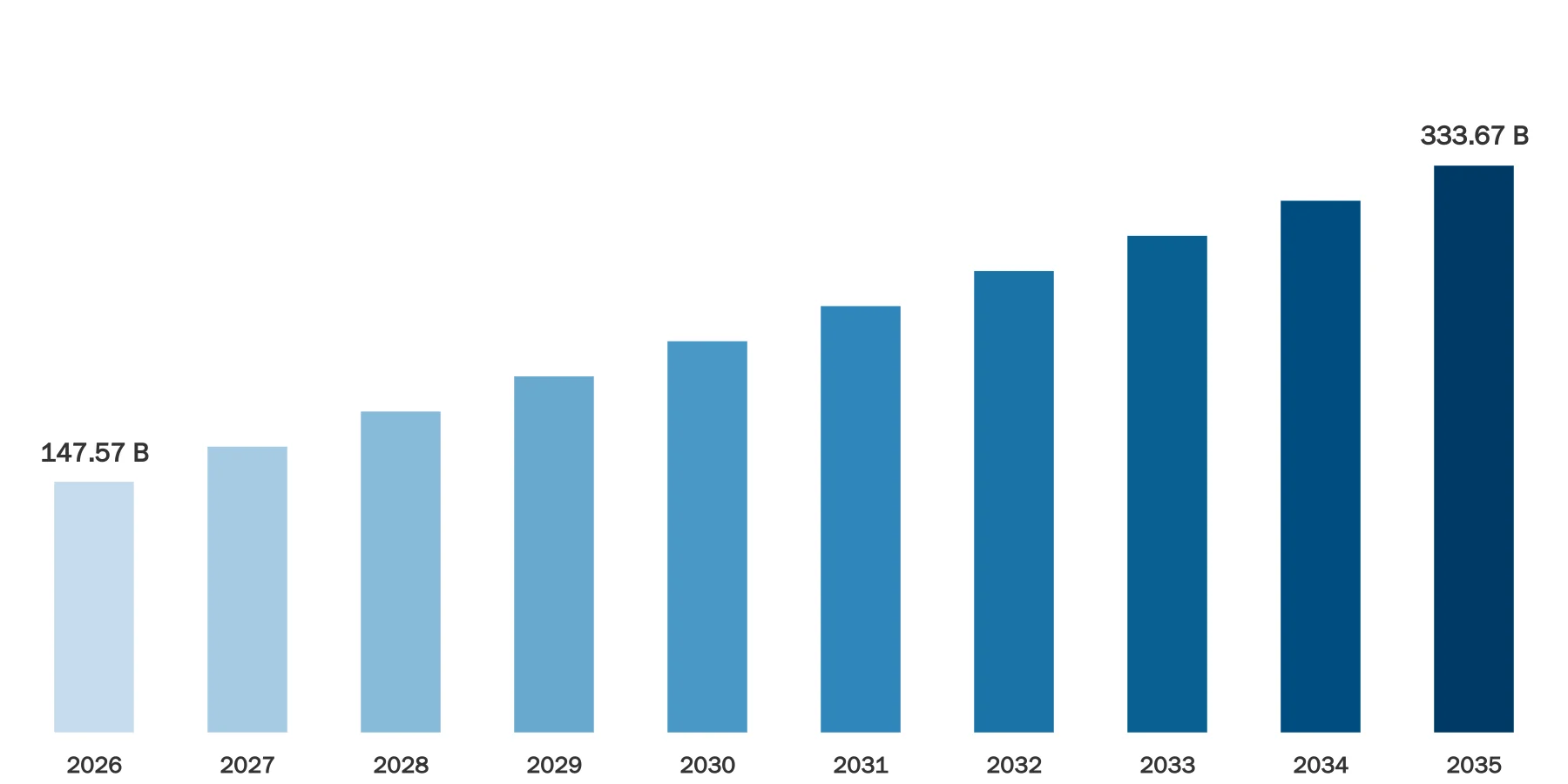
Source: Econ Market Research
Global vehicle leasing is a process of hiring vehicles to either individuals or organizations for a given period, often in exchange for monthly payments. It is mostly adopted by companies and consumers who need vehicles but do not wish to buy them outright. This model provides flexibility, lower up-front costs, and the possibility of changing to a new vehicle at the end of the lease term. Vehicle leasing involves a wide range of vehicles including cars, trucks, and commercial fleets aimed to fulfill the needs of individuals as well as businesses.
The market has grown significantly due to factors such as the increasing preference for flexible transportation options, the rise of shared mobility services, and the growing trend of businesses opting for leased vehicles to manage fleet costs. Leasing allows businesses to maintain modern, efficient fleets without the burden of ownership, and individuals benefit from more affordable options compared to buying a car. The leasing market also grew because of advancements in vehicle technology and the increasing demand for electric vehicles (EVs). Main players within the market offer different leasing terms, options, and add-ons such as maintenance services, which contributed to the widespread adoption of leasing.
Dynamic Insights
Higher flexibility in transport usage has largely fuelled the rise of this industry. It would be seen to be easier by consumers and commercial users alike due to low one-time payment levels and also offering the flexibility for upgrading models when new models enter the market regularly. Another big advantage offered through vehicle leasing would be fleet management for companies - without financial cost, as against ownership, helping them in affordable fleet management. The rise in shared mobility services and Car Subscription models is also pushing the demand for vehicle leasing, as more people seek access to vehicles without long-term commitments.
On the other hand, market fluctuations and uncertainty may affect consumers', spending behaviour and demand for leased vehicles. In addition, the introduction of electric vehicles presents new challenges for leasing companies as they need to adjust to newer technologies, thereby increasing initial costs and complexity in fleet management. However, demand for leasing options that include maintenance services and flexible terms is likely to increase as the adoption of EVs increases. Government incentives for electric vehicles and technological advancements will further boost the demand for leasing in the next few years. Moreover, vehicle leasing companies', partnerships with car manufacturers are further strengthening the market, offering customers better pricing, services, and innovative solutions to match the changing requirements of customers.
Drivers Insights
Increased Demand for Flexibility and Cost-Effectiveness
The global vehicle leasing market is driven mainly by the increasing demand for flexibility in transportation options. Consumers and businesses are increasingly preferring to lease vehicles because of the lower upfront costs compared to buying. Leasing allows people to access newer models of cars, trucks, and commercial vehicles without the financial burden of ownership.
This flexibility appeals to those who need transportation for a short period or want the ability to upgrade to a newer model every few years. Leasing helps businesses manage cash flow effectively by avoiding large capital expenditures on fleet purchases. This cost-effective model makes vehicle leasing particularly attractive in times of economic uncertainty, where businesses aim to reduce overheads and consumers prioritize affordable, flexible mobility solutions.
Technological Advancements and Integration of Electric Vehicles (EVs)
Another major driving factor for the market is the Electric Vehicle (EV) trend along with ongoing innovation in the automobile sector. Leasing companies now offer EV models as people get more concerned with the environment and the government incentivizes people with benefits on them. This reduces the overall outlay that would be needed on an outright purchase of such expensive new technology, making it relatively affordable to leasing customers. EVs generally require less maintenance and provide long-term savings on fuel costs, making leasing even more attractive. Additionally, advanced in-car technology and improved vehicle safety features included in leased cars make these options even more attractive, enhancing the overall appeal of vehicle leasing.
Restraints Insights
Economic Uncertainty and Budget Constraints
Vehicle leasing market suffers from the vagaries of economic downturns. When the economy enters recession or faces a slowdown, disposable income declines for consumers as well as for businesses. This reduces the consumer',s willingness to spend money on monthly leasing commitments. In some cases, individuals may even give up transportation to save money and opt for less expensive alternatives like public transportation. Similarly, an organization in financial distress may also look for ways to reduce its cost. These might be done by not expanding the fleet for a certain period or reducing the number of vehicles to be leased. Constraints like these can slow the market, particularly for premium vehicle leasing services.
High Maintenance and Operational Costs for Leasing Companies
The costs of maintaining and repairing vehicles and other expenses are passed on to the leasing company in the case of leasing. Costs of fleet management, such as maintenance, repair, and vehicle depreciation, may be quite heavy for the leasing companies. The wear and tear of vehicles that occur with high-mileage usage can cause greater maintenance costs in some cases and reduce the profitability of the leasing companies. This challenge is particularly pronounced as electric vehicles enter the market, as they require different maintenance practices and more specialized knowledge and infrastructure, which could increase the operational costs for leasing companies.
Opportunities Insights
Growth of the Car Subscription Model
The car subscription model is a massive opportunity for the vehicle leasing market. This model offers customers much more flexibility than traditional leasing as they can pay a single monthly fee for various vehicles. It often includes insurance, maintenance, and the option to swap vehicles based on personal needs, making it a very attractive alternative for consumers. This trend is of special interest to the younger, more tech-savvy consumer, who wants to have a car but not to commit to the long-term process of ownership or traditional leasing. A subscription service would offer the leasing companies the possibility of a new revenue source and a greater pool of customers looking for short-term solutions or variability in mobility.
Segment Analysis
By Lease Type
Within the international vehicle leasing market, two forms of leases predominate, namely, operating leases and financial leases. Typically, the duration of the terms in operating lease are relatively shorter with the freedom of returning the car at the expiry of the contract without purchasing the vehicle. It is best suited for those who need flexibility and less monthly outlays.
In fact, financial leasing is quite common with fleet management where business organizations wish to change the cars frequently or prefer to update the vehicles at the earliest opportunity. In a financial lease, however, it closely resembles a hire-purchase contract because the lessee has an option to buy the vehicle after completion of the term. This type of lease is more long-term and is often used by businesses or individuals who want to eventually own the vehicle.
By Vehicle Type
Vehicle leasing is mainly classified by vehicle type into passenger vehicles and commercial vehicles. Passenger vehicles include cars, SUVs, and other personal vehicles used by individuals for daily commuting or leisure activities. These leases are usually more consumer-oriented and have shorter terms with higher flexibility. Commercial fleets like trucks, vans, and buses are leased usually for business purposes, like transportation, delivery services, and fleet management. Therefore, commercial leasing terms are usually long-term and differentiated from consumer leases as specifically tailored to the unique business requirements of the client, large, heavy-duty vehicles that withstand the more strenuous service use in businesses.
By End-User
The vehicle leasing market is also categorized by the end-user, such as individual consumers and corporate/business clients. Individual consumers prefer leasing vehicles to avoid the large upfront costs associated with purchasing a car, seeking flexibility in terms of vehicle upgrades and maintenance services. They generally rent passenger cars for private purposes. The clients will enjoy low monthly payments and will be able to change models to newer ones without the ownership responsibility.
The corporate/business client usually rents a vehicle for business operation, including a company fleet, employee transportation, or delivery. Businesses prefer long-term leases and fleet management solutions as they reduce vehicle downtime and have a modern fleet without having to invest in capital expenditure in order to buy a vehicle. Higher volume in leasing is typically derived from the corporate segment because the number of vehicles involved is quite large.
By Lease Duration
Lease duration is critical in determining leasing preferences for customers. It may either be a short-term lease or a long-term lease. Short-term leases, less than 12 months, are good for people who require temporary vehicles for specific purposes or projects. These leases are flexible and generally more attractive to consumers who may only need a vehicle for a few months or those who want to try a particular model before committing to a longer lease or purchase.
Long-term leases of more than 12 months are more commonly used by businesses for fleet management or by consumers seeking a stable, predictable payment structure over a longer period. Long-term leasing is cost-effective for both parties, they would get lower payments each month with stable terms and hence the option that is always on the request list for someone who needs the vehicle for more extended periods without owning it outright.
By Vehicle Ownership
When discussing vehicle ownership in leasing, the market is divided between leased vehicles and fleet management. A leased vehicle is a term referring to an individual or business leasing a vehicle for a specific term, with the vehicle ownership remaining with the leasing company throughout the lease duration. This is the most common form of leasing and is suitable for consumers and businesses that require vehicles without the responsibility of ownership.
Businesses lease a group of vehicles, typically in the form of a fleet, for the operation of their business, and this is referred to as fleet management. This may include leasing several vehicles for logistics, delivery, or employee use, and often fleet management services will include maintenance, insurance, and vehicle tracking. Fleet management is normally a long-term solution for any business that would need to provide a constant, reliable vehicle supply for operations.
By Payment Type
Fixed and flexible payment types are the major categories of leases in the vehicle leasing market. The fixed payment type of lease pays a fixed sum of money per month for the entire period, providing predictability and ease in budgeting to consumers and businesses alike. The ideal candidate for this type of lease is those who want to have a constant, unchanging cost over the lease term. In flexible payment leases, payments can vary with usage or on other terms.
This is a more common business leasing practice where the payment terms can be altered according to the size of the fleet, usage, or financial situation. Flexible payment options would allow businesses to manage cash flow better, particularly when usage varies, as the business can change payments to their needs. Payment flexibility can also attract individuals who require a vehicle but do not have a fixed source of income.
Regional Analysis
The market in North America, particularly in the United States, is mature with a significant preference for leasing among both consumer and business end-users. This region',s market is characterized by long-term corporate client leases for fleet management companies and short-term consumer leases who are seeking more flexibility and lower front-end costs. In North America, increased adoption of electric vehicles (EVs) and government incentives for green vehicles have increased the demand for vehicle leasing.
It is similarly developed in Europe with the increasing trend of businesses on vehicle lease for operational purposes and, on the other hand, individuals seeking to afford flexible and economical transport costs. It has on board an apparent list of drivers here that mainly includes government policies advocating for the reduction of emissions, especially in Western Europe. Additionally, the booming of eco-friendly vehicles encourages the market. Germany, the UK, and France are the leading countries and it showcases a great demand for passenger vehicles and commercial fleets.
The market in Asia-Pacific is growing rapidly and has huge prospects, especially in countries like China, Japan, and India. Economic growth, urbanization, and increased disposable incomes have driven demand for personal as well as commercial vehicle leasing. Corporate fleet management solutions and adoption of new technologies like EVs are also rising, contributing to the growth of the market. Vehicle leasing is emerging as a viable option in Latin America and the Middle East &, Africa, particularly in the corporate sector, where fleet management offers businesses cost-effective transportation solutions.
Competitive Landscape
The market is dominated by major international companies such as Enterprise Holdings, ALD Automotive, LeasePlan Corporation, and Sixt SE. These companies offer wide-ranging leasing services across various regions, with flexible terms and competitive pricing tailored to both individual and corporate clients. They use advanced fleet management technologies, customer service networks, and strong dealer partnerships to stay ahead in the competitive environment.
In addition to these big players, regional and local leasing companies also play a significant role in the market. For example, in the United States, companies like Hertz Global Holdings and Avis Budget Group are strong competitors, while in Europe, firms like Arval (part of BNP Paribas) and Daimler Fleet Management cater to specific regional needs with tailored services for both corporate fleets and personal leasing.
Electric vehicles (EVs) have also opened up a new opportunity for specialized leasing companies focusing on EV fleets and establishing themselves as leaders in the green mobility space. Another new development has been the appearance of tech-driven startups offering innovative leasing models such as car subscriptions, which allow consumers to enjoy greater flexibility and convenience. The newer entrants have shaken up traditional leasing models because they offer the customer the possibility of changing the vehicle frequently through a single monthly payment, with sometimes maintenance and insurance included.
List of Key Players:
Hertz Global Holdings Inc.
Volkswagen Financial Services Deutsche Leasing AG
LeasePlan Corporation N.V.
Mercedes-Benz Financial Services
ORIX Corporation
Element Fleet Management Corp.
Europcar Mobility Group
ALD Automotive
Avis Budget Group Inc.
Toyota Financial Services
Sixt SE
Recent Developments:
In May 2024, Kia India announced on Friday that it has partnered with Orix Auto Infrastructure Services to launch a new ownership experience program. The company has signed a Memorandum of Understanding (MoU) for the ",Kia Lease", initiative. This program is designed to improve brand accessibility and provide customers with an alternative way to own a Kia vehicle, eliminating concerns related to maintenance, insurance, and resale.
Global Vehicle Leasing Report Segmentation
Vehicle Leasing Market Report Scope & Segmentation
| Attributes | Details |
|---|---|
Market Size (Current) | US$ 147.57 Billion in 2026 |
Market Size (Forecast) | US$ 333.67 Billion in 2035 |
Growth Rate | CAGR of 9.4% from 2026 to 2035 |
Forecast Period | 2026 – 2035 |
Base Year | 2025 |
Historical Data Available | Yes |
Regional Scope | Global |
Segments Covered | By Type
By End-User
By Vehicle Type
|
Frequently Asked Questions
Common questions about this report
The study period covers historical insights and forecast projections for the period 2026-2035.
About the Author
Market research expert with years of industry experience

Dipali Bhingare serves as the Market Research Director at Econ Market Research. With a focus on translating complex global economic shifts into actionable business intelligence, she oversees the strategic direction of comprehensive market studies. Her work empowers organizations to navigate volatile industries through data-driven forecasting and deep-dive competitive analysis.
Related Reports
Explore more market insights from the same category