Vanadium Market Overview
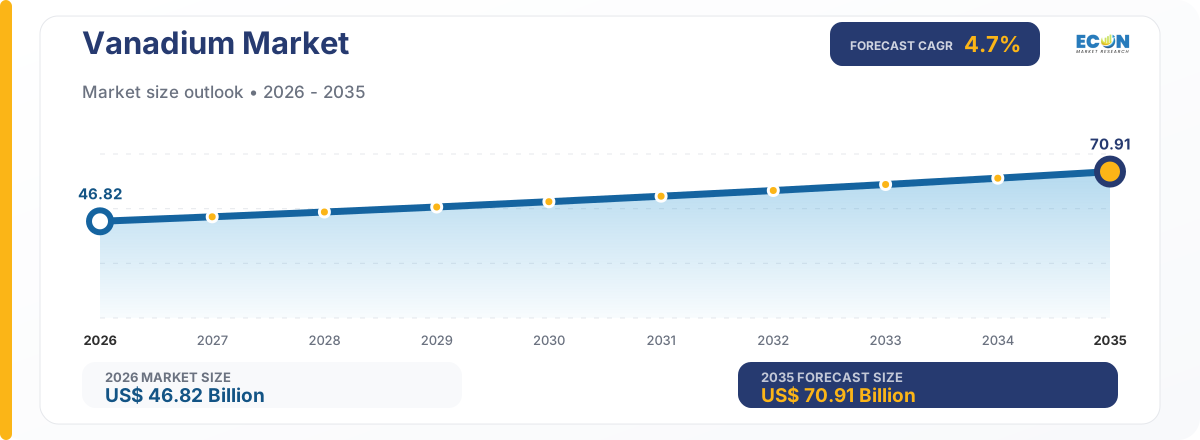
As per Econ Market Research analysis, the Global Vanadium Market generated revenue of US$ 46.82 Billion in 2026 and is forecast to achieve US$ 70.91 Billion by 2035, at a CAGR of 4.7% during the study period 2026–2035. The base year considered is 2025.
Vanadium, a versatile metal used primarily as an alloying agent in steel production, is gaining popularity in a variety of industries due to its distinct properties. Its high strength, temperature resistance, and ability to increase steel toughness make it indispensable in the production of high-performance materials for the construction, aerospace, and automotive industries. Furthermore, vanadium',s role in energy storage technologies, particularly in vanadium redox flow batteries (VRFB), places it as a key player in the renewable energy sector, contributing to grid stability and facilitating the transition to cleaner energy sources.
The global vanadium market is expanding rapidly, driven by rising steel production, infrastructure development, and increased demand for renewable energy solutions. China dominates the market in terms of production and consumption, followed by Russia and South Africa. However, geopolitical tensions and trade policies have the potential to influence market dynamics. Furthermore, advancements in VRFB technology and increased investment in renewable energy projects are expected to boost vanadium demand in the coming years. Sustainable mining practices and efforts to expand vanadium reserves are critical for ensuring a stable supply chain and meeting rising demand.
Vanadium Dynamics
The demand for steel is the primary driver of the market, as vanadium is an important alloying element that increases the strength and durability of steel. Infrastructure development, urbanization, and industrialization all contribute to steady steel demand, which has an impact on vanadium consumption. Furthermore, the shift to lightweight materials in the automotive and aerospace industries to improve fuel efficiency and reduce emissions drives up vanadium demand.
Geopolitical tensions and trade policies have a significant impact on vanadium market dynamics. Variations in trade relations between major vanadium-producing and consuming countries can cause supply chain disruptions and price fluctuations. Furthermore, regulatory initiatives to reduce carbon emissions and promote renewable energy sources drive the adoption of vanadium redox flow batteries (VRFB), creating additional demand for vanadium.
Technological advancements, particularly in energy storage solutions, are reshaping the vanadium market landscape. The increasing efficiency and cost-effectiveness of VRFBs make them a viable option for grid-scale energy storage, thereby expanding vanadium',s applications beyond traditional steel production. Furthermore, ongoing research and development efforts aimed at improving vanadium extraction methods and recycling technologies contribute to sustainable market growth.
Vanadium Drivers
Rising Steel Production
The vanadium market is primarily driven by rising steel demand, which is being fuelled by infrastructure development, urbanization, and industrialization. Vanadium',s role as an alloying element in steel improves its strength, toughness, and corrosion resistance, making it essential in a variety of industries, including construction, automotive, and aerospace. As economies grow and construction activity increases, so does the demand for high-quality vanadium-containing steel. Furthermore, stringent regulations focusing on building safety and durability add to the demand for vanadium-enhanced steel, particularly in earthquake-prone regions.
Growing Adoption of Renewable Energy
The growing reliance on renewable energy sources, combined with the need for grid stability and energy storage solutions, represents a significant growth opportunity for the vanadium market. Vanadium redox flow batteries (VRFBs) are emerging as a promising technology for renewable energy storage due to their scalability, long cycle life, and high efficiency. As countries around the world commit to reducing carbon emissions and increasing renewable energy capacity, the demand for VRFBs is expected to rise. Furthermore, government incentives and subsidies to promote energy storage technologies further stimulate the adoption of VRFBs, driving the demand for vanadium.
Vanadium Restraints:
Geopolitical Uncertainties
Geopolitical tensions and trade disputes among major vanadium-producing and consuming countries pose a significant restraint on the market. Fluctuations in trade relations and policies can lead to supply chain disruptions, affecting vanadium prices and availability. Moreover, trade tariffs and export restrictions imposed by certain countries can hinder the smooth flow of vanadium, exacerbating market instability and creating uncertainty for stakeholders across the value chain.
High Dependency on Steel Industry
The vanadium market',s reliance on the steel industry makes it susceptible to the cyclical nature of steel demand. Economic downturns, fluctuations in construction activity, and shifts in manufacturing trends all have the potential to reduce demand for vanadium. Furthermore, commoditization of steel and fierce competition among steel producers may limit the scope for premium pricing of vanadium-containing steel products, thereby restraining market growth.
Vanadium Opportunities:
Emerging Applications in Electronics and Healthcare
Beyond traditional steel production and energy storage, vanadium has the potential for a variety of new applications in electronics, healthcare, and catalysis. In the electronics industry, vanadium compounds are used to make high-performance batteries, supercapacitors, and electronic devices. Furthermore, ongoing research into vanadium-based pharmaceuticals and medical treatments demonstrates its potential in healthcare, such as anti-cancer therapies and insulin mimetics. Exploring these emerging markets and diversifying vanadium',s applications can open up new growth opportunities and reduce the market',s reliance on traditional sectors.
Segment Overview
By Production Process
Vanadium production involves two main techniques: aluminothermic reduction and silicon reduction. Aluminothermic reduction utilizes aluminum as a reducing agent to extract vanadium from raw materials such as vanadium pentoxide or vanadium oxides. This technique is commonly used for producing high-purity vanadium products suitable for specialized applications like aerospace alloys.
On the other hand, silicon reduction involves the reduction of vanadium oxides using silicon as the primary reducing agent. This method is preferred for bulk production of ferrovanadium alloys used in steelmaking and other industrial applications. Both processes have their advantages and are tailored to meet specific purity and cost requirements of different end-users.
By Grade Type
Vanadium products are graded according to their vanadium content, with FeV40, FeV50, FeV60, and FeV80 being the most common grades. These grades represent the percentage of vanadium in the alloy, with higher grades indicating a higher concentration of vanadium. FeV40 contains approximately 40% vanadium and is primarily used in steelmaking to improve steel strength and durability. The FeV50, FeV60, and FeV80 grades have higher vanadium content and are preferred for applications requiring superior performance, such as aerospace alloys and specialty steels.
By Application
Vanadium has numerous applications in a variety of industries, including iron and steel production, chemical manufacturing, titanium alloys, and others. Vanadium is an alloying element used in the iron and steel industry to improve the mechanical properties, corrosion resistance, and heat resistance of steel. In the chemical industry, vanadium compounds act as catalysts in a variety of chemical reactions, whereas in titanium alloys, vanadium improves strength and corrosion resistance. Vanadium also has applications in niche sectors like electronics, where it is used in batteries and supercapacitors.
By End-Use
Vanadium',s end uses include automotive, chemical manufacturing, energy storage, and others. Vanadium-containing steels are used in the automotive industry to manufacture engine parts, chassis, and suspension systems, all of which require high strength and lightweight properties. Vanadium catalysts are essential in chemical manufacturing processes such as Sulfuric Acid production and petrochemical refining.
The energy storage segment, particularly vanadium redox flow batteries (VRFBs), is expanding rapidly as vanadium',s role in grid-scale energy storage becomes more critical for renewable energy integration. Furthermore, vanadium finds applications in other sectors such as aerospace, electronics, and healthcare, emphasizing its versatility and broad impact across industries.
Vanadium Overview by Region
China dominates both production and consumption, thanks to its strong steel industry and growing investments in renewable energy technologies such as vanadium redox flow batteries (VRFBs). Other key producing regions include Russia, South Africa, and Brazil, which all contribute to varying degrees depending on their mining capacities and economic factors.
Asia-Pacific leads the consumption market, owing to rapid industrialization, infrastructure development, and rising automotive production in countries such as India and Japan. North America and Europe are also significant consumers, driven primarily by demand from the automotive, aerospace, and energy storage industries. However, geopolitical tensions, trade policies, and regulatory frameworks can influence market dynamics at the regional level.
For instance, trade disputes between major vanadium-producing and consuming countries can disrupt supply chains and affect market stability. Moreover, regional initiatives aimed at promoting sustainable mining practices and reducing carbon emissions are shaping market trends, with increasing emphasis on responsible sourcing and environmental stewardship.
Vanadium Market Competitive Landscape
Bushveld Minerals Limited, Largo Resources Ltd., VanadiumCorp Resource Inc., and Evraz PLC are some of the market',s leading players. These companies operate at various stages of the vanadium value chain, from mining and extraction to processing and distribution. Furthermore, integrated steel producers such as NIPPON STEEL CORPORATION and ArcelorMittal are major players who use vanadium to improve the properties of their steel products.
Collaboration and strategic partnerships are common in the industry, with companies forming alliances to gain access to vanadium resources, develop innovative technologies, and expand their market reach. Furthermore, investment in R&,D is a key competitive strategy, as businesses strive to develop new applications for vanadium and improve production efficiency. Market consolidation through mergers and acquisitions is also observed, with larger players seeking to strengthen their market position and diversify their product portfolios.
Vanadium Key Players:
Australian Vanadium Limited
Bushveld Minerals
EVRAZ
Largo Inc
VanadiumCorp Resource Inc
AMG
China Ansteel Group Corporation Limited
Glencore
HBIS GROUP
Treibacher Industrie AG
Tremond Metals Corp
Yilmaden
JAYESH
Vanadium Recent Developments
March 2023, Idemitsu Kosan Co., Ltd. has completed the acquisition of Vecco Group Pty Ltd. (Headquartered in Brisbane), a company actively involved in the vanadium industry in Australia.
Feb 2023, Singapore-headquartered VFlowTech, a provider of vanadium-based redox flow batteries, has secured $10 million in Series A funding. Real Tech Holdings, a VC firm based in Japan, LED the oversubscribed round. Returning investors include corporate backers such as SEEDS Capital, Wavemaker Partners, and Sing Fuels, alongside personal investors like Michael Gryseels, VFlowTech',s Chairman.
Vanadium Report Segmentation
Vanadium Market Report Scope & Segmentation
| Attributes | Details |
|---|---|
| Market Size (Current)Current market valuation | US$ 46.82 Billion in 2026 |
| Market Size (Forecast)Projected market valuation | US$ 70.91 Billion in 2035 |
| Growth RateCompound Annual Growth Rate | CAGR of 4.7% from 2026 to 2035 |
| Forecast PeriodAnalysis timeline | 2026 – 2035 |
| Base YearReference year for analysis | 2025 |
| Historical Data AvailablePast market data availability | Yes |
| Regional ScopeGeographical coverage | Global |
| Segments CoveredMarket segments analyzed | By Type
By Application
|
Frequently Asked Questions
Common questions about this report
The study period covers historical insights and forecast projections for the period 2026-2035.
About the Author
Market research expert with years of industry experience