

US Golf Simulator Market
US Golf Simulator Market Size, Share, Trends, Growth, and Industry Analysis, By Product Type (Simulator Systems, Software, Accessories), By Application (Commercial, Residential), By End-User (Golf Clubs andamp; Driving Ranges, Hotels andamp; Resorts, Private Homes), Regional Analysis and Forecast Period 2026-2035
Market Overview
As per Econ Market Research analysis, the Global US Golf Simulator Market was valued at US$ 0.54 Billion in 2026 and is expected to reach US$ 1.07 Billion by 2035, registering a CAGR of 7.97% during the forecast period 2026–2035. The base year considered is 2025.
US Golf Simulator Market Size 2025-2035 (USD Billion)

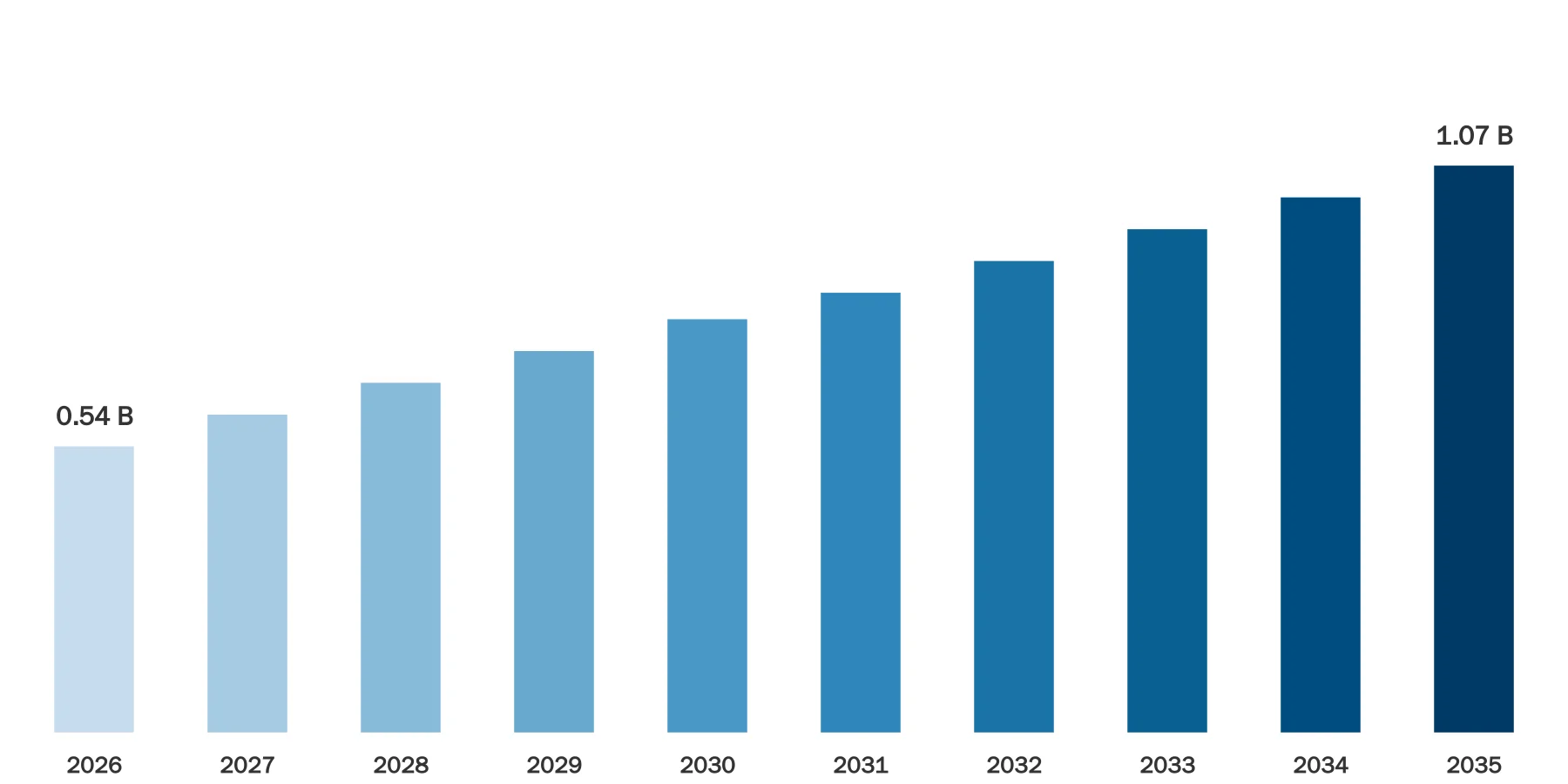
Source: Econ Market Research
Golf simulators combine a display (screen or projector), sensors (to track the ball), and software (to recreate golf courses). They let you play golf indoors, regardless of the time or weather. Golf simulators have become popular recently due to technological progress, rising interest in golf, and the ease of playing indoors. They allow golfers to practice, get feedback, and enjoy the game in a comfortable setting. As the demand for realistic and immersive golf experiences continues to rise, the US golf simulator market is poised for further expansion, with opportunities for innovation and new entrants to capitalize on this growing trend.
US Golf Simulator Dynamics
Golf',s popularity as a hobby and the need for indoor entertainment are driving the growth of golf simulators. They allow players to play golf without being restricted by weather or time constraints. Additionally, technological advancements like better sensors, realistic graphics, and better software have made the gameplay more realistic and immersive, boosting market demand.
Additionally, the rising adoption of virtual reality (VR) and Augmented Reality (AR) technologies further enriches the simulation experience, attracting a wider audience beyond traditional golfers. Furthermore, the COVID-19 pandemic has accelerated the adoption of home-based golf simulators as people seek safe alternatives to outdoor activities. However, challenges such as high initial investment costs and the need for adequate space may hinder market growth to some extent.
US Golf Simulator Drivers
Growing Popularity of Golf
Golf',s popularity has skyrocketed due to more TV coverage, more pro tournaments, and endorsements by famous people. This increased interest has led to a higher demand for golf-related products and activities, like golf simulators. Since more people are getting into golf, they',re looking for easy ways to hone their skills. Golf simulators are a great choice because they',re convenient and easy to use. The growing number of golf enthusiasts is a major reason why the American golf simulator market is thriving.
Advancements in Technology
Technological innovations play a crucial role in enhancing the capabilities and appeal of golf simulators. Improvements in sensor accuracy, graphics rendering, and software functionalities contribute to creating more realistic and immersive simulation experiences. For example, advanced sensors can accurately track ball flight and club movements, providing players with detailed feedback on their performance.
Similarly, sophisticated software algorithms replicate the physics of golfing environments, including terrain variations and weather conditions, further enhancing the simulation',s realism. Additionally, the integration of virtual reality (VR) and augmented reality (AR) technologies offers an even more immersive and interactive experience, attracting tech-savvy consumers and expanding the market',s reach. These technological advancements not only improve the quality of golf simulator products but also drive innovation and differentiation among manufacturers, stimulating market growth.
Restraints:
Buying a golf simulator can be costly, especially the fancy ones with lots of bells and whistles. This high upfront cost can scare off buyers, especially those who are not businesses or who are watching their budget. There are also ongoing expenses, like upkeep, software updates, and needing a place to put the simulator, which can put off even more buyers, especially those who are trying to save money.
Space Limitations
Golf simulators need a lot of room for the players to swing and for the equipment like screens and sensors to work well. But many people and businesses don',t have enough space for a simulator. This lack of space, especially in cities where property is limited and pricey, can make it hard for people to get golf simulators. Also, changing existing spaces to fit a simulator can be expensive and difficult, making it even harder for simulators to become popular in areas with space issues.
Opportunities:
Integration with Home Entertainment Systems
With the increasing convergence of entertainment technologies, there is a growing opportunity to integrate golf simulators with home entertainment systems and smart devices. By leveraging connectivity features and compatibility with platforms like gaming consoles, streaming services, and smart TVs, manufacturers can enhance the accessibility and versatility of golf simulation experiences. For instance, players could seamlessly transition from watching golf tournaments on TV to playing simulated rounds on their home simulator, creating a more immersive and interactive entertainment ecosystem. Additionally, incorporating voice commands, gesture recognition, and mobile app integration can further enhance the user experience and streamline interaction with golf simulator systems.
Segment Overview
By Offering
The US golf simulator market can be segmented by offering into simulator systems, simulator services, and simulator software. Simulator systems encompass the physical hardware components necessary for golf simulation, including screens, sensors, and tracking devices. These systems provide the foundation for immersive golfing experiences and are available in various configurations to suit different preferences and budgets.
Simulator services refer to supplementary offerings such as installation, maintenance, and customer support provided by manufacturers or third-party vendors. These services ensure optimal performance and longevity of the simulator systems, enhancing the overall user experience. Simulator software comprises the digital programs and applications that power the simulation experience, including game modes, course libraries, and performance analytics. High-quality software is essential for delivering realistic graphics, accurate ball tracking, and engaging gameplay, driving user satisfaction and loyalty.
By Product Type
The market is be categorized by product type into portable and built-in golf simulators. Portable simulators are designed for easy setup and mobility, making them suitable for users who require flexibility in their gaming environments or intend to use the simulator in multiple locations. These systems typically feature compact designs and lightweight components, allowing for convenient storage and transportation.
In contrast, built-in simulators are integrated into permanent structures such as homes, commercial establishments, or dedicated gaming rooms. These installations offer a seamless and customized experience, with the simulator seamlessly blending into the surrounding environment for a sleek and polished appearance. Built-in simulators may also incorporate additional features such as custom cabinetry, immersive audio-visual setups, and room-scale tracking capabilities, enhancing the overall aesthetic and functionality of the space.
By Simulator Type
Another segmentation criterion is by simulator type, which includes full swing simulators and virtual reality (VR) golf simulators. Full swing simulators utilize high-speed cameras or infrared sensors to track the entire trajectory of the golf ball, including launch angle, spin rate, and ball flight path. These systems provide comprehensive feedback on swing mechanics and ball performance, enabling users to analyse and refine their technique with precision.
In contrast, VR golf simulators leverage virtual reality headsets and motion tracking technology to immerse players in a digitally rendered golfing environment. Users can interact with the virtual world, explore realistic courses, and experience dynamic weather conditions, creating a highly immersive and engaging gameplay experience. VR simulators offer a unique blend of entertainment and realism, appealing to tech-savvy consumers and providing a novel approach to golf simulation.
By End-Use
The market is segmented by end-use into commercial space, corporate events, colleges and universities, amateur players, professional players, and other applications. Commercial spaces such as golf clubs, entertainment venues, and indoor golf centers represent key markets for golf simulators, offering recreational opportunities for players of all skill levels. Corporate events and team-building activities provide another avenue for simulator usage, fostering camaraderie and competition among employees.
Colleges and universities may integrate golf simulators into athletic programs or recreational facilities to enhance student engagement and promote wellness initiatives. Amateur players seeking to improve their skills or enjoy leisurely rounds of golf at home constitute a significant consumer segment for simulator products and services. Professional players use simulators for training purposes, supplementing their on-course practice with data-driven insights and virtual play. Additionally, golf simulators may find applications in niche markets such as retail showrooms, hospitality venues, and Experiential Marketing activations, catering to diverse user needs and preferences.
US Golf Simulator Overview by Region
Golf simulator technology is thriving in areas with a lot of golf lovers, like Florida, California, Texas, and the Northeast. These places have many golf courses, clubs, and facilities, which makes them a good place for golf simulators to grow. Also, cities where it',s hard or impossible to play golf outside because of bad weather or not enough space want indoor simulation solutions. The West Coast, particularly California, stands out as a hub for technological innovation and early adoption of immersive entertainment experiences, making it a fertile ground for golf simulator companies to showcase their latest offerings.
Moreover, affluent communities and luxury real estate markets in regions like Florida and the Hamptons drive demand for high-end built-in simulator installations, catering to discerning clientele seeking premium leisure amenities. However, market dynamics vary across regions based on factors such as population demographics, economic conditions, and cultural preferences. For instance, rural areas or regions with lower golf participation rates may exhibit slower uptake of golf simulator technology, requiring targeted marketing efforts and tailored product offerings to stimulate demand.
US Golf Simulator Market Competitive Landscape
Leading companies such as TrackMan, Full Swing Golf, and Foresight Sports have established themselves as key players, leveraging their technological expertise, brand recognition, and extensive product portfolios to maintain a competitive edge. These industry incumbents offer a range of simulator systems, software solutions, and supplementary services tailored to the needs of diverse customer segments, from individual consumers to commercial enterprises.
Additionally, partnerships with golf course operators, sports academies, and entertainment venues provide avenues for market expansion and brand exposure. However, the market also witnesses the emergence of innovative start-ups and niche players capitalizing on technological advancements and market niches. Companies like SkyTrak, OptiShot Golf, and TruGolf have carved out a niche by offering affordable, portable simulator solutions targeting budget-conscious consumers and amateur players.
Furthermore, the convergence of gaming technology and entertainment trends has attracted non-traditional players such as gaming console manufacturers, VR/AR developers, and software companies into the golf simulator space, intensifying competition and driving innovation. As competition intensifies, players in the market are investing in research and development, product differentiation, and strategic alliances to maintain their competitive position and capture new growth opportunities. Mergers and acquisitions are also prevalent, with larger companies seeking to expand their product offerings, geographic presence, and market reach through consolidation.
US Golf Simulator Market Leading Companies:
TrackMan Golf
SkyTrak
Foresight Sports
GOLFZON
Full Swing Golf
OptiShot Golf
TruGolf
US Golf Simulator Recent Developments
March 2024, TruGolf Holdings, Inc. a leading provider of golf simulation technology, has forged a licensing deal with mlSpatial, an AI and machine learning firm, to employ a jointly developed AI engine for its APOGEE launch monitor.
Dec 2023, X-Golf America, the leading indoor golf simulator entertainment brand, reveals the launch of a new corporate-owned venue situated at Nationals Park in Washington D.C., marking a significant partnership with the baseball team. This expansion, part of X-Golf',s 2024 growth strategy, introduces X-Golf Nationals Park as the brand',s second corporate location and the second collaboration with a Major League ballpark.
US Golf Simulator Report Segmentation
US Golf Simulator Market Report Scope & Segmentation
| Attributes | Details |
|---|---|
Market Size (Current) | US$ 0.54 Billion in 2026 |
Market Size (Forecast) | US$ 1.07 Billion in 2035 |
Growth Rate | CAGR of 7.97% from 2026 to 2035 |
Forecast Period | 2026 – 2035 |
Base Year | 2025 |
Historical Data Available | Yes |
Regional Scope | Global |
Segments Covered | By Product Type
By Application
By End-User
|
Frequently Asked Questions
Common questions about this report
The study period covers historical insights and forecast projections for the period 2026-2035.
About the Author
Market research expert with years of industry experience

Dipali Bhingare serves as the Market Research Director at Econ Market Research. With a focus on translating complex global economic shifts into actionable business intelligence, she oversees the strategic direction of comprehensive market studies. Her work empowers organizations to navigate volatile industries through data-driven forecasting and deep-dive competitive analysis.
Related Reports
Explore more market insights from the same category