

Tungsten Market
Tungsten Market Size, Share, Trends, Growth, and Industry Analysis, By Application (Tungsten Carbides, Electronics andamp; Electrical, Chemicals, Mill Products), By End-User (Automotive, Aerospace, Mining andamp; Construction, Oil andamp; Gas), Regional Analysis and Forecast Period 2026-2035
Tungsten Market Overview
As per Econ Market Research analysis, the Global Tungsten Market size amounted to US$ 7.6 Billion in 2026 and is anticipated to grow to US$ 11.6 Billion by 2035, recording a CAGR of 4.8% during 2026–2035. The base year taken for analysis is 2025.
Tungsten Market Size 2025-2035 (USD Billion)

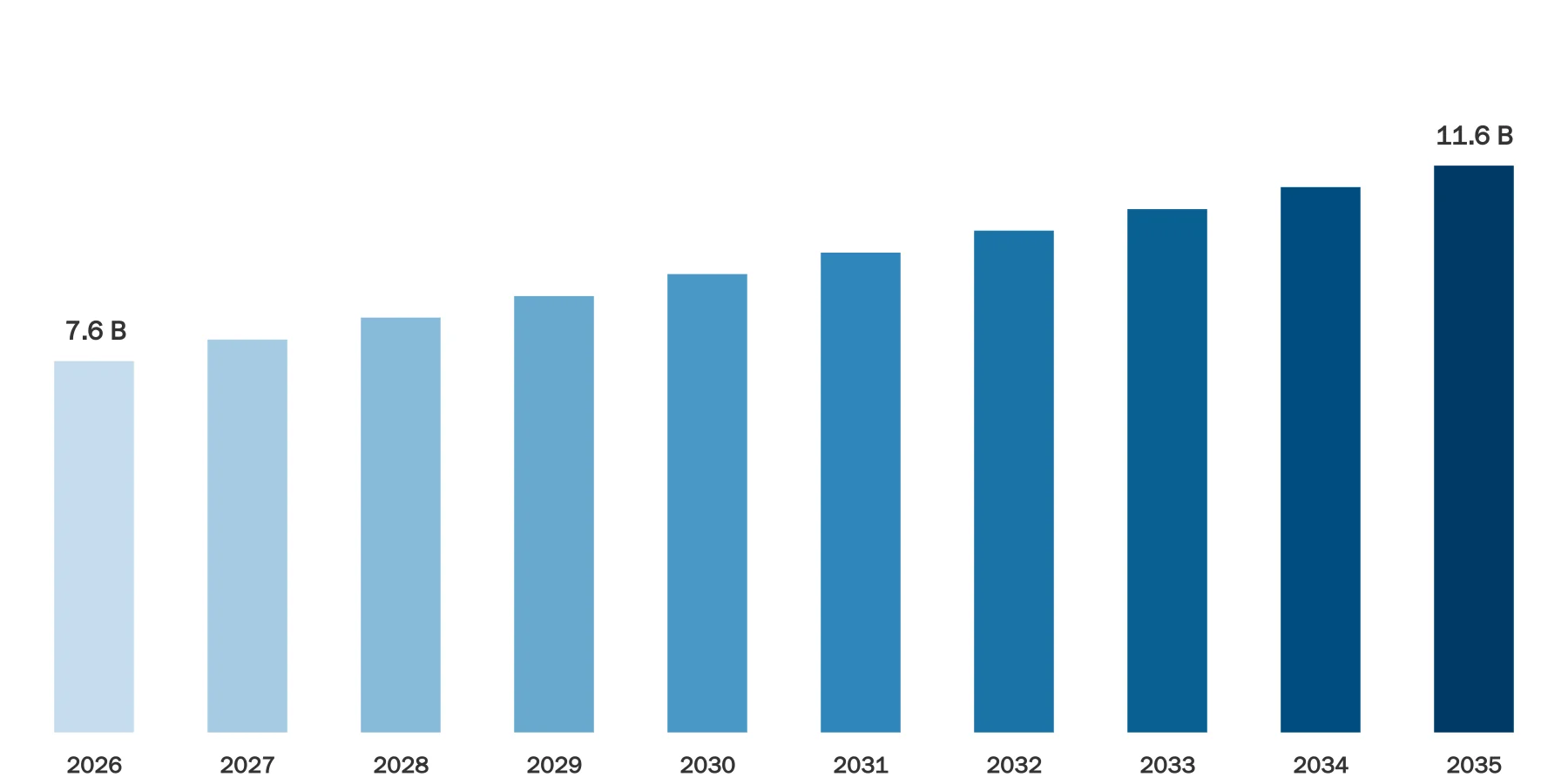
Source: Econ Market Research
Tungsten is primarily used in various industries such as aerospace, automotive, electronics, mining, and construction due to its unique properties. The market encompasses the extraction of tungsten ore, processing into various forms such as tungsten carbide, alloys, and chemicals, and its distribution across different regions. In recent years, the market has witnessed fluctuations influenced by factors like demand from end-user industries, geopolitical tensions, technological advancements, and environmental regulations.
China dominates the global tungsten market both in terms of production and consumption, followed by other key players like Russia, Vietnam, and Canada. Despite being a critical material in several key industries, the tungsten market faces challenges such as price volatility, supply chain disruptions, and environmental concerns associated with mining and processing. Nevertheless, ongoing research and development efforts aimed at improving tungsten recycling technologies, exploring alternative sources, and developing sustainable mining practices are expected to shape the future trajectory of the global tungsten market.
Tungsten Dynamics
The global tungsten market dynamics are influenced by a various factors, including fluctuating demand from end-user industries such as aerospace, automotive, electronics, and mining. Economic growth, technological advancements, and infrastructure development projects significantly impact the demand for tungsten, as it is essential in manufacturing components for various applications. Geopolitical tensions, trade policies, and regulatory changes also play a crucial role in shaping market dynamics, affecting the supply chain and pricing of tungsten.
China',s dominance in both tungsten production and consumption exerts a significant influence on market dynamics, with fluctuations in Chinese policies and regulations impacting global supply and prices. Furthermore, environmental concerns surrounding tungsten mining and processing practices have led to increased scrutiny and pressure for sustainable solutions, driving innovation in recycling technologies and promoting environmentally responsible mining practices.
Tungsten Drivers
Increasing Demand from Automotive Industry
The market for tungsten is significantly influenced by the automobile industry because the metal is used in many different products, such as Cutting Tools, engine parts, and transmission systems. Tungsten-based alloys are being used more frequently in the manufacture of lightweight, high-performance components as the need for lightweighting to increase fuel economy and lower emissions grows. The need for tungsten in the production of batteries and electrical contacts is further increased by the growth in the production of electric vehicles (EVs). The automobile industry is anticipated to experience a consistent increase in demand for tungsten due to its ongoing transition towards more technologically advanced and sustainable solutions.
Rapid Growth in Electronics and Electrical Industry
The electronics and electrical sector is another significant driver for the tungsten market, driven by the increasing adoption of electronic devices, telecommunications equipment, and renewable energy technologies. Tungsten',s unique properties, such as high electrical conductivity, thermal stability, and resistance to corrosion, make it an ideal material for semiconductor components, circuit boards, electrodes, and filaments.
The proliferation of smartphones, tablets, wearables, and smart home devices, along with the expansion of 5G infrastructure and renewable energy projects, fuels the demand for tungsten. Moreover, the miniaturization trend in electronics necessitates the use of high-performance materials like tungsten to meet the industry',s stringent performance requirements, thereby driving further growth in the market.
Restraints:
Price Volatility and Supply Chain Risks
Tungsten prices are susceptible to fluctuations due to factors such as changes in demand-supply dynamics, currency fluctuations, geopolitical tensions, and trade policies. Price volatility poses challenges for market participants, including manufacturers and end-users, in terms of planning production schedules, managing inventory, and pricing strategies. Moreover, the concentration of tungsten production in a few countries, particularly China, increases supply chain risks, such as disruptions in raw material supply, regulatory changes, and export restrictions, which can adversely impact market stability and pricing.
Environmental and Sustainability Concerns
The tungsten mining and processing industry faces mounting scrutiny and regulatory pressure regarding its environmental impact and sustainability practices. Extracting tungsten ore involves extensive mining operations, which can lead to habitat destruction, soil erosion, water pollution, and biodiversity loss if not managed properly. Additionally, the use of chemicals in ore processing and the generation of tailings pose environmental risks.
Heightened awareness of environmental issues and growing consumer demand for ethically sourced and environmentally friendly products are driving the adoption of sustainable practices across the tungsten supply chain. Consequently, industry stakeholders are increasingly focusing on implementing eco-friendly mining technologies, improving waste management practices, and enhancing resource efficiency to mitigate environmental risks and ensure long-term sustainability.
Opportunities:
Growing Focus on Tungsten Recycling
Tungsten recycling is becoming more and more important as a practical way to supply demand while reducing the environmental impact of primary manufacturing, as awareness of resource scarcity and environmental sustainability grows. Recycling tungsten has a number of advantages, such as lower carbon emissions, energy savings, and resource preservation. Recycling also lessens the need for original supplies and reduces supply chain risks brought on by unstable markets and geopolitical issues. Consequently, market participants have enough opportunity to leverage the increasing need for sustainable solutions and strengthen their competitive edge by investing in tungsten recycling technologies and infrastructure.
Segment Overview
By Form
Tungsten products are available in various forms to cater to diverse industrial applications. Foils, ribbons, wires, and tubes constitute the primary forms in which tungsten is manufactured and supplied to the market. Foils and ribbons are thin sheets of tungsten used in applications requiring flexibility and precision, such as heating elements, electrical contacts, and Medical Devices. Tungsten wires are renowned for their high tensile strength, temperature resistance, and conductivity, making them ideal for electronics, lighting, and heating applications. Tungsten tubes find utility in high-temperature environments, corrosion-resistant piping, and thermocouple protection sheaths.
By Type
The classification by type encompasses various tungsten compositions tailored to specific industrial requirements. Tungsten carbide, known for its exceptional hardness and wear resistance, is widely used in cutting tools, wear parts, and mining equipment. Metal alloys, comprising tungsten as a primary component along with other metals like nickel, cobalt, or iron, exhibit superior mechanical properties suitable for aerospace, automotive, and defence applications.
Mill products encompass a range of semi-finished tungsten materials, including bars, plates, and sheets, utilized in machining, welding, and construction. Permanent magnets containing tungsten offer high magnetic strength and stability, finding applications in motors, generators, and Magnetic Resonance Imaging (MRI) machines. Nanowires, with their nanoscale dimensions and unique electrical properties, hold promise for advanced electronics, sensors, and biomedical devices.
By Application
Tungsten',s versatility extends across a myriad of industrial applications, catering to diverse sectors such as automotive, aerospace, mining, and electronics. Automotive parts leverage tungsten',s high strength, heat resistance, and durability for components like engine valves, pistons, and transmission gears, enhancing performance and fuel efficiency. Aerospace components benefit from tungsten',s lightweight yet robust properties, with applications ranging from turbine blades and heat shields to aerospace fasteners and structural components.
In drilling, boring, and cutting equipment, tungsten tools and inserts exhibit superior hardness and wear resistance, enabling efficient machining of hard materials like steel, alloys, and composites. Logging equipment utilizes tungsten components for downhole drilling tools, bits, and sensors, withstanding extreme conditions encountered in oil and gas exploration. Electrical and electronics appliances rely on tungsten for filaments, contacts, and electrical components due to its high conductivity and thermal stability.
Metalworking, mining, and petroleum industries utilize tungsten for tooling, dies, and wear-resistant components in machining, excavation, and processing operations. The military sector employs tungsten in armour-piercing projectiles, munitions, and defence systems, capitalizing on its density and penetration capabilities. Additionally, tungsten finds applications in various other sectors, including medical devices, sports equipment, and jewelry, showcasing its versatility and importance across multiple industries.
Tungsten Overview by Region
Asia Pacific, led by China, dominates both production and consumption of tungsten, owing to abundant reserves and extensive industrial applications. China',s dominance in the market stems from its significant tungsten mining operations and large-scale manufacturing sector, which drives domestic demand and exports to international markets. Southeast Asian countries like Vietnam and Russia also contribute to global tungsten supply, albeit to a lesser extent.
North America and Europe represent substantial markets for tungsten products, with the United States, Canada, and several European nations supporting robust manufacturing and industrial sectors. These regions prioritize technological innovation, quality standards, and sustainability initiatives in tungsten production and usage. Furthermore, Latin America and the Middle East &, Africa regions exhibit growing potential in the tungsten market, fuelled by industrial development initiatives, infrastructure projects, and expanding automotive and electronics industries. Despite regional variations in production capabilities, market dynamics, and regulatory frameworks, the global tungsten market remains interconnected through trade networks, supply chains, and technological collaborations, fostering opportunities for growth and collaboration among regional players.
Tungsten Market Competitive Landscape
Leading mining companies such as China Minmetals Corporation, Chongyi Zhangyuan Tungsten Co., Ltd., and Kennametal Inc. dominate the upstream segment, leveraging their extensive reserves, advanced extraction technologies, and strategic partnerships to maintain market leadership. In the downstream segment, companies like Sandvik AB, Plansee Group, and H.C. Starck Tungsten GmbH specialize in the production of tungsten-based products, including carbides, alloys, powders, and components for various industries. These companies focus on innovation, research, and development to offer high-performance, customized solutions tailored to meet the evolving demands of end-user industries.
Additionally, the market witnesses significant competition from small and medium-sized enterprises (SMEs) specializing in niche applications, as well as emerging players seeking to capitalize on technological advancements and market opportunities. Intense competition prevails among market players in terms of product quality, pricing strategies, distribution networks, and customer service, driving continuous improvements in efficiency, sustainability, and value-added services. Strategic initiatives such as mergers and acquisitions, joint ventures, and alliances are common strategies adopted by key players to strengthen their market position, expand their geographic presence, and diversify their product portfolios.
Tungsten Market Leading Companies:
A.L.M.T. Corp.
Allegheny Technologies Incorporated (ATI)
Buffalo Tungsten Inc.
Umicore N.V.
Wolfram Company JSC
Xiamen Tungsten Co., Ltd.
China Tungsten and High-tech Materials Co., Ltd.
Chongyi Zhangyuan Tungsten Co., Ltd.
Masan High-Tech Materials
Kennametal Inc.
Sandvik AB
Mitsubishi Materials Corporation
Walter AG
Seco Tools AB
GWS Tool Group
Tungsten Report Segmentation
Tungsten Market Report Scope & Segmentation
| Attributes | Details |
|---|---|
Market Size (Current) | US$ 7.6 Billion in 2026 |
Market Size (Forecast) | US$ 11.6 Billion in 2035 |
Growth Rate | CAGR of 4.8% from 2026 to 2035 |
Forecast Period | 2026 – 2035 |
Base Year | 2025 |
Historical Data Available | Yes |
Regional Scope | Global |
Segments Covered | By Application
By End-User
|
Frequently Asked Questions
Common questions about this report
The study period covers historical insights and forecast projections for the period 2026-2035.
About the Author
Market research expert with years of industry experience

Related Reports
Explore more market insights from the same category