

Travel Pillow Market
Travel Pillow Market Size, Share, Trends, Growth, and Industry Analysis, By Product Type (Multipurpose Travel Pillow, Head Support Pillow, Neck Support Pillow, Others), By Material: (Cotton, Polyester, Wool & Hemp, Silk, Others), By Distribution Channel (Hypermarkets & Supermarkets, Specialty Stores, Online Stores, Others), Regional Analysis and Forecast Period 2026-2035
Market Overview
As per Econ Market Research analysis, the Global Travel Pillow Market was recorded at US$ 0.63 Billion in 2026 and is projected to expand to US$ 1.12 Billion by 2035, registering a CAGR of 6.60% over the forecast period. The base year used is 2025.
Travel Pillow Market Size 2025-2035 (USD Billion)

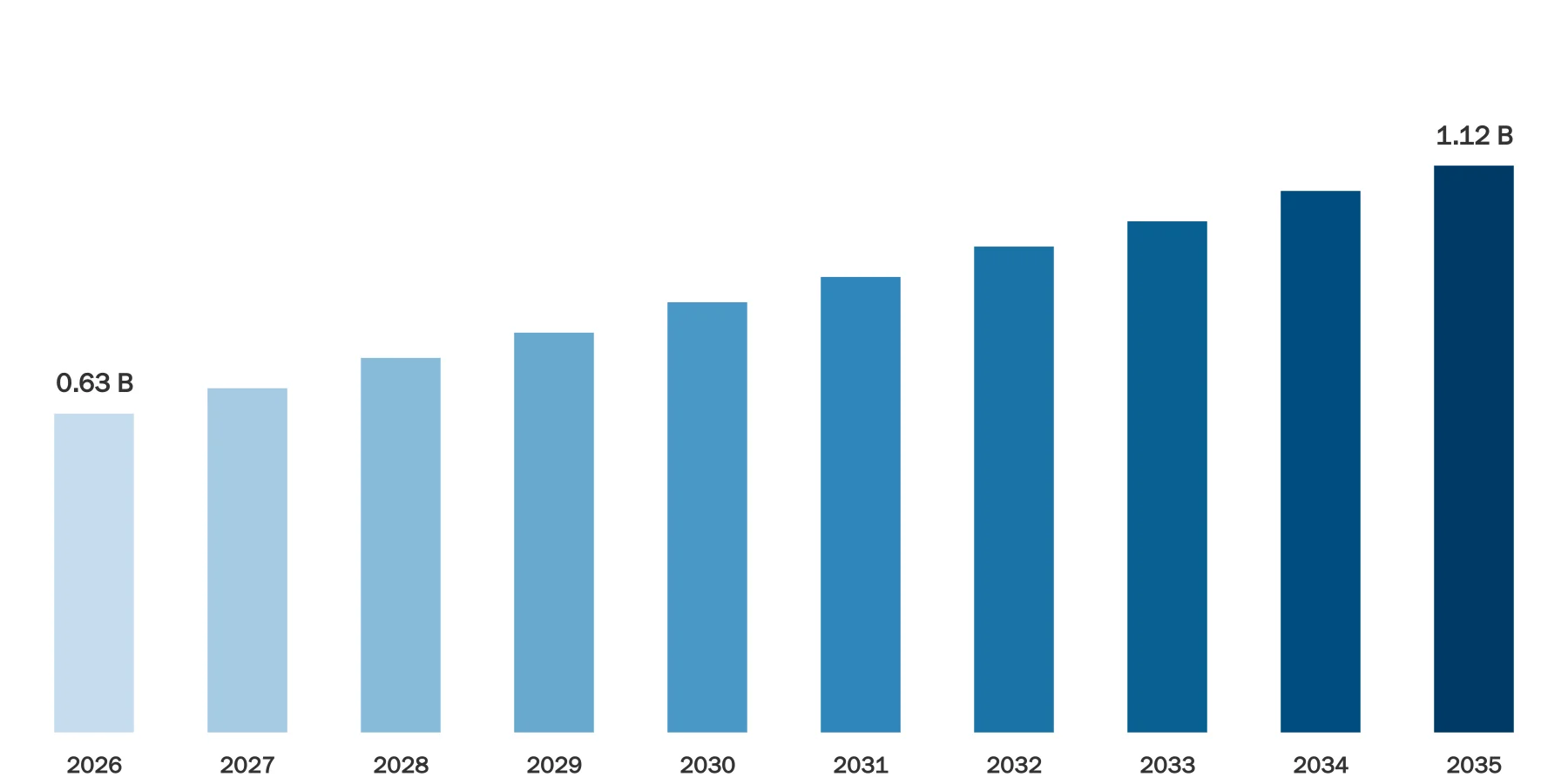
Source: Econ Market Research
The Travel Pillow Market Report highlights that over 1.4 billion international tourist arrivals were recorded globally in 2024, creating consistent demand for travel comfort products such as travel pillows. More than 68% of long-haul travelers (flights over 6 hours) report discomfort in neck positioning, directly influencing the adoption of ergonomic travel pillows. The Travel Pillow Market Analysis indicates that approximately 52% of travelers carry personal comfort accessories, including pillows, during flights, trains, and road journeys. Additionally, over 37% of e-commerce buyers in travel accessories purchased at least one travel pillow in 2023, reflecting strong consumer penetration across online channels in the Travel Pillow Industry Report.
The USA Travel Pillow Market Insights show that over 850 million domestic trips were recorded annually, with nearly 45% of travelers undertaking journeys longer than 300 miles, increasing the need for portable comfort solutions. Around 61% of U.S. airline passengers reported using neck support pillows during flights, while 28% of business travelers preferred premium memory foam travel pillows. The Travel Pillow Market Size in the USA is supported by over 120 million frequent flyers annually, and more than 42% of them purchase travel accessories online, driving growth in Travel Pillow Market Share across digital retail channels.
Market Latest Trends
The Travel Pillow Market Trends indicate a shift toward ergonomic and memory foam designs, with over 55% of products sold globally featuring memory foam or advanced cushioning materials. Smart travel accessories are gaining traction, with nearly 18% of premium travel pillows incorporating features such as built-in speakers, vibration massage, or cooling gel layers. The Travel Pillow Market Growth is also supported by sustainability trends, where approximately 23% of manufacturers introduced eco-friendly materials such as organic cotton and recycled polyester in 2024.
In the Travel Pillow Industry Analysis, customization is becoming a key trend, with over 31% of consumers preferring adjustable or multipurpose pillows. Compact and inflatable designs account for nearly 26% of total unit sales, especially among backpackers and budget travelers. The Travel Pillow Market Forecast suggests that online retail dominates, with over 64% of travel pillow purchases occurring through e-commerce platforms, while airport retail stores contribute approximately 19% of impulse purchases. Additionally, over 47% of millennials and Gen Z travelers prioritize lightweight and portable designs, influencing product innovation and Travel Pillow Market Opportunities globally.
Market Dynamics
DRIVER
Increasing Global Travel and Mobility
The primary driver in the Travel Pillow Market Growth is the increasing number of global travelers, with over 4.2 billion air passengers recorded annually worldwide. Long-duration travel exceeding 5 hours accounts for nearly 49% of total air journeys, creating strong demand for neck support solutions. The Travel Pillow Market Analysis shows that over 62% of travelers experience neck stiffness or discomfort, which directly drives the purchase of ergonomic travel pillows. Additionally, the rise in Business Travel, with over 400 million business trips annually, contributes significantly to demand. The expansion of low-cost airlines, accounting for 32% of global flights, further increases passenger volume and accessory usage in the Travel Pillow Industry Report.
RESTRAINT
Availability of Low-Cost Alternatives and Substitutes
A key restraint in the Travel Pillow Market is the availability of low-cost or improvised alternatives, such as bundled clothing or airline-provided pillows, used by approximately 29% of travelers. The Travel Pillow Market Insights reveal that price sensitivity affects nearly 38% of consumers in emerging markets, limiting premium product adoption. Additionally, airline-provided pillows are used by about 22% of economy passengers, reducing the need for personal purchases. The presence of counterfeit and low-quality products, accounting for nearly 17% of total market supply, impacts brand trust and overall Travel Pillow Market Share. Furthermore, bulk manufacturing leads to price competition, reducing differentiation in the Travel Pillow Industry Analysis.
OPPORTUNITY
Expansion of E-commerce and Direct-to-Consumer Channels
The Travel Pillow Market Opportunities are expanding rapidly due to digital transformation, with over 5.3 billion internet users globally and over 2.7 billion online shoppers. Approximately 64% of travel accessory purchases occur through online platforms, offering brands wider reach. The Travel Pillow Market Forecast shows that subscription-based travel kits, including pillows, are gaining traction, with adoption rates increasing by 21% annually in premium consumer segments. Social media influence affects over 39% of purchase decisions, especially among travelers aged 18–35. Direct-to-consumer models account for nearly 28% of brand sales, enabling better margins and customer engagement in the Travel Pillow Market Research Report.
CHALLENGES
Product Differentiation and Consumer Retention
One of the major challenges in the Travel Pillow Market is maintaining differentiation, as over 70% of products share similar U-shaped designs. The Travel Pillow Market Analysis shows that customer retention rates are below 35% for generic brands, due to lack of innovation. Additionally, product durability concerns affect nearly 26% of users, leading to negative reviews. The Travel Pillow Industry Report highlights that over 19% of returns in travel accessories are due to discomfort or sizing issues. Rising logistics costs and global supply chain disruptions impact nearly 33% of manufacturers, creating operational challenges in the Travel Pillow Market Outlook.
SWOT Analysis
Strengths
Over 52% global traveler adoption rate for travel accessories
Memory foam products account for 55% of total sales volume
E-commerce penetration exceeds 64% globally
Lightweight designs preferred by 47% of younger travelers
Weaknesses
Nearly 38% of consumers are price-sensitive
Low-cost alternatives used by 29% of travelers
Product return rates around 19%
Limited differentiation in 70% of product designs
Opportunities
Over 2.7 billion online shoppers globally
Eco-friendly product demand rising by 23%
Customizable products preferred by 31% of users
Direct-to-consumer channels growing at 28% adoption
Threats
Counterfeit products account for 17% of supply
Logistics disruptions affect 33% of manufacturers
Airline-provided alternatives used by 22% of passengers
High competition with over 150 global brands in the market
Segmentation Analysis
The Travel Pillow Market Segmentation is based on type and material, with each segment contributing significantly to overall demand. Type segmentation includes multipurpose, head support, and neck support pillows, which collectively account for over 85% of total product usage. Material segmentation highlights cotton, polyester, wool, hemp, and silk, with synthetic materials representing nearly 58% of total production volume.
By Type
Multipurpose Travel Pillow
Multipurpose travel pillows account for nearly 34% of market share, driven by their versatility. Over 41% of travelers prefer adjustable designs that can be used for neck, lumbar, or head support. These pillows are popular among long-distance travelers, especially those undertaking journeys exceeding 8 hours.
Head Support Pillow
Head support pillows contribute approximately 22% of total sales, primarily used during short-haul travel. Around 36% of train and bus travelers prefer head support pillows due to ease of use and compact design. Their adoption is high in regions with dense rail networks.
Neck Support Pillow
Neck support pillows dominate with nearly 44% market share, driven by ergonomic benefits. Over 62% of airline passengers use neck pillows during flights. Memory foam neck pillows account for 57% within this segment, indicating strong preference for comfort and durability.
Others
Other types, including inflatable and wrap-around pillows, represent about 9% of the market, with demand increasing among backpackers. Inflatable designs account for 5% of unit sales, due to portability advantages.
By Material
Cotton
Cotton-based pillows hold around 21% share, preferred by 33% of eco-conscious consumers. Breathability and softness drive demand, especially in warmer climates.
Polyester
Polyester dominates with nearly 38% market share, due to cost-effectiveness and durability. Over 45% of mass-produced travel pillows use polyester blends.
Wool & Hemp
Wool and hemp materials account for approximately 14% of the market, driven by sustainability trends. Demand increased by 19% in eco-friendly product segments.
Silk
Silk pillows represent about 11% share, primarily in premium segments. Around 27% of luxury travelers prefer silk-based products for comfort and skin benefits.
Others
Other materials, including memory foam and gel, account for nearly 16% of total usage, with memory foam dominating at 12% alone.
Regional Analysis
The Travel Pillow Market Outlook shows strong regional variations, with North America leading at approximately 32% market share, followed by Asia-Pacific at 29%, Europe at 25%, and Middle East & Africa at 14%.
North America
North America holds around 32% of the Travel Pillow Market Share, supported by over 120 million frequent flyers annually. The U.S. accounts for nearly 78% of regional demand, with over 61% of passengers using travel pillows. E-commerce penetration exceeds 68%, and premium product adoption is seen in 35% of consumers. Business travel contributes to 28% of purchases, while road travel exceeding 300 miles drives demand for portable comfort products.
Europe
Europe contributes approximately 25% of the Travel Pillow Market Size, with over 600 million annual travelers. Rail travel accounts for 44% of journeys, increasing demand for compact pillows. Sustainable products represent 26% of total sales, reflecting eco-conscious consumer behavior. Online sales contribute nearly 59%, while airport retail accounts for 21%.
Asia-Pacific
Asia-Pacific holds nearly 29% market share, driven by high population and travel frequency. Over 1.8 billion domestic trips annually fuel demand. Budget airlines account for 39% of flights, increasing travel accessory usage. E-commerce sales exceed 62%, and lightweight designs are preferred by 49% of consumers.
Middle East & Africa
This region accounts for about 14% of the market, with increasing air travel exceeding 200 million passengers annually. Premium products represent 31% of sales, especially in Gulf countries. Online channels contribute 54%, while tourism growth drives demand for travel accessories.
Competitive Landscape
The Travel Pillow Market Competitive Landscape is highly fragmented, with over 150 active manufacturers globally. The top 10 companies account for approximately 48% of total market share, while smaller brands contribute 52%. Product innovation is a key differentiator, with over 35% of companies investing in ergonomic designs. Online presence is critical, with 67% of leading brands generating sales through e-commerce platforms. Private label products account for nearly 18% of total sales, intensifying competition. Additionally, over 22% of companies focus on eco-friendly materials, reflecting shifting consumer preferences in the Travel Pillow Market Research Report.
List of Top Travel Pillow Companies
TEMPUR SEALY INTERNATIONAL INC.
SAMSONITE INTERNATIONAL S.A.
CABEAU INC.
TRTL TRAVEL PILLOW
BCOZZY LLC
TRAVELREST (HIGEAR DESIGN, INC.)
COMFY COMMUTER LLC
CORE PRODUCTS INTERNATIONAL INC.
LEWIS N. CLARK
AIRCOMFY LLC
WOLF MANUFACTURING COMPANY
Leading Companies by Market Share
TEMPUR SEALY INTERNATIONAL INC. and SAMSONITE INTERNATIONAL S.A. together account for approximately 27% of total market share, with TEMPUR SEALY contributing 15% and SAMSONITE holding around 12%, driven by strong brand recognition and global distribution networks.
Market Investment Outlook
The Travel Pillow Market Investment Outlook highlights growing investments in product innovation and digital channels. Over 41% of companies increased R&D spending in 2024, focusing on ergonomic designs and sustainable materials. Venture funding in travel accessories startups increased by 23%, supporting innovation. E-commerce infrastructure investments account for 36% of total capital allocation, while logistics optimization represents 19%. Additionally, over 28% of brands are expanding into emerging markets, targeting rising travel demand. Strategic partnerships with airlines and Travel Agencies contribute to 17% of distribution channels, enhancing visibility and Travel Pillow Market Opportunities.
New Product Development
New product development in the Travel Pillow Market Trends focuses on comfort, technology, and sustainability. Over 18% of new launches include smart features such as temperature control and vibration massage. Memory foam innovations account for 42% of new products, with improved durability and shape retention. Eco-friendly materials are used in 23% of new designs, reflecting sustainability trends. Compact and foldable designs represent 31% of innovations, targeting frequent travelers. Additionally, customization options are included in 27% of new products, allowing users to adjust firmness and shape, enhancing the Travel Pillow Market Growth.
Recent Developments
In 2023, a leading manufacturer launched a memory foam pillow with 360-degree neck support, increasing comfort ratings by 28%.
In 2024, eco-friendly travel pillows made from recycled materials increased production by 19% globally.
A smart travel pillow with built-in audio features saw adoption by 12% of premium travelers in 2025.
Inflatable pillow designs improved compactness by 35%, enhancing portability.
Direct-to-consumer sales channels expanded by 26%, improving brand reach and customer engagement.
Report Coverage of Travel Pillow Market
The Travel Pillow Market Report provides comprehensive coverage of market trends, segmentation, regional analysis, and competitive landscape. It includes detailed insights into over 15 product categories and 5 material types, covering more than 40 countries globally. The report analyzes consumer behavior across 3 major travel modes: air, rail, and road, accounting for over 4 billion annual travelers. It evaluates over 150 companies, highlighting product innovations and strategic developments. Additionally, the report includes data on online and offline distribution channels, with e-commerce contributing over 64% of sales. The Travel Pillow Market Insights also examine sustainability trends, with 23% of products using eco-friendly materials, providing a holistic view of the Travel Pillow Industry Analysis.
Travel Pillow Market Report Scope & Segmentation
| Attributes | Details |
|---|---|
Market Size (Current) | US$ 0.63 Billion in 2026 |
Market Size (Forecast) | US$ 1.12 Billion in 2035 |
Growth Rate | CAGR of 6.60% from 2026 to 2035 |
Forecast Period | 2026 – 2035 |
Base Year | 2025 |
Historical Data Available | Yes |
Regional Scope | Global |
Segments Covered | By Product Type
By Material:
By Distribution Channel
|
Frequently Asked Questions
Common questions about this report
The study period covers historical insights and forecast projections for the period 2026-2035.
About the Author
Market research expert with years of industry experience

Dipali Bhingare serves as the Market Research Director at Econ Market Research. With a focus on translating complex global economic shifts into actionable business intelligence, she oversees the strategic direction of comprehensive market studies. Her work empowers organizations to navigate volatile industries through data-driven forecasting and deep-dive competitive analysis.
Related Reports
Explore more market insights from the same category