

Tortilla Market
Tortilla Market Size, Share, Trends, Growth, and Industry Analysis, By Product Type (Corn Tortilla, Flour Tortilla, Wheat Tortilla, Tortilla Chips), By Nature (Organic, Conventional), By Distribution Channel (Retail, Food Service), Regional Analysis and Forecast Period 2026-2035
Market Overview
As per Econ Market Research analysis, the Global Tortilla Market accounted for US$ 44.67 Billion in 2026 and is expected to surpass US$ 69.35 Billion by 2035, witnessing a CAGR of 3% throughout 2026–2035. The analysis is based on 2025 as the base year.
Tortilla Market Size 2025-2035 (USD Billion)

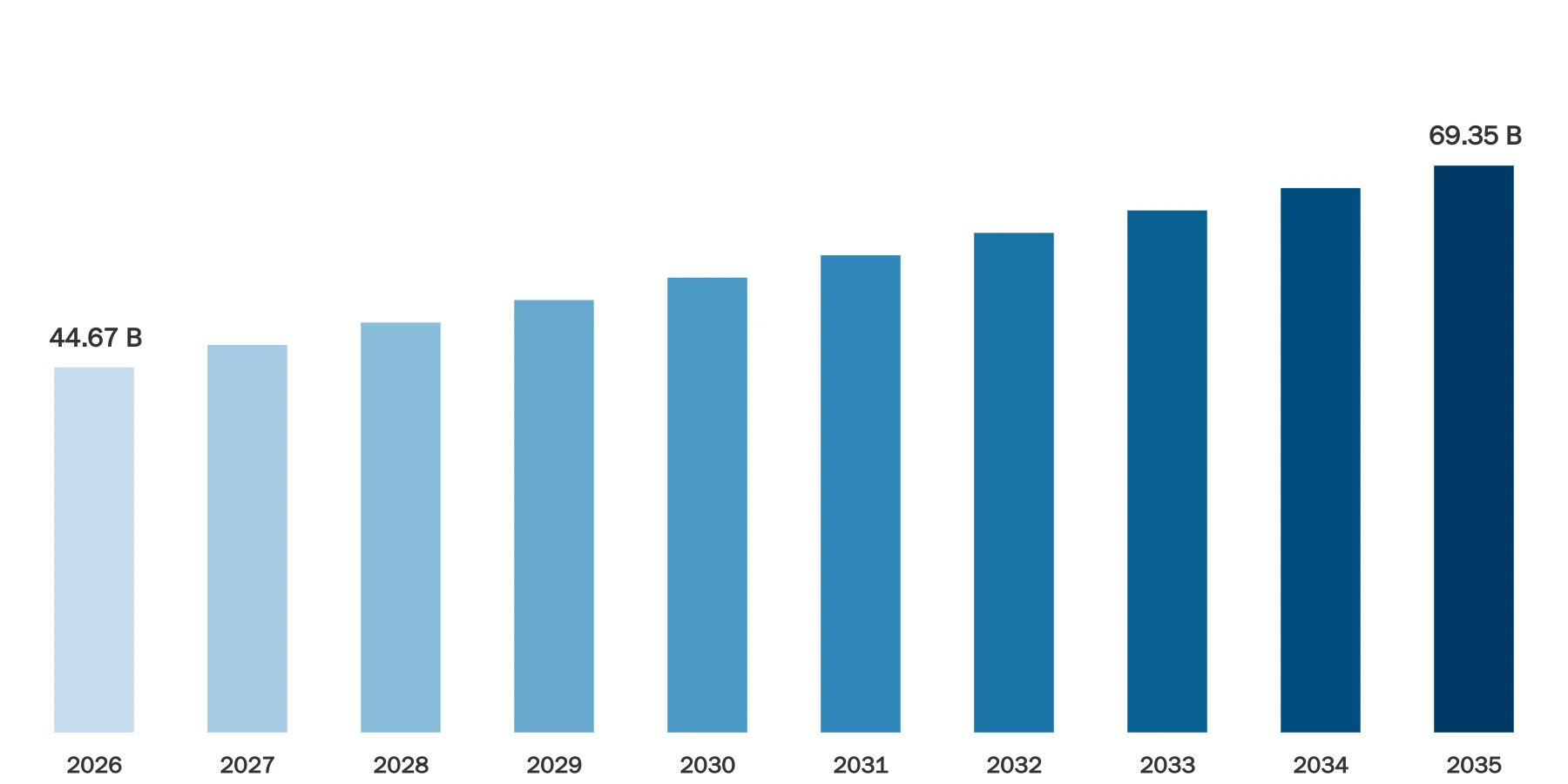
Source: Econ Market Research
Tortillas are typically made from wheat or corn flour, water, and sometimes salt and fat. They can be cooked on a hot griddle or comal, offering a flexible base for various fillings and toppings, ranging from meats and vegetables to cheese and sauces. The market for tortillas has experienced significant growth due to their widespread popularity and adaptability in different culinary traditions, including Mexican, Tex-Mex, and international fusion cuisines.
Factors driving this growth include increasing consumer demand for convenient and portable foods, the rising popularity of Latin American and Mexican cuisines globally, and the expanding market for ethnic and specialty foods. Health-conscious consumers are choosing tortillas instead of bread because they',re seen as healthier and lower in calories. Tortilla makers are creating healthier options, such as gluten-free and low-fat varieties, to match changing consumer tastes. Major food companies, local tortilla makers, and specialty producers are all trying to win over customers in this growing market.
Tortilla Dynamics
The tortilla market is growing because people want easy and different food choices, especially in cities where people are always busy. Tortillas are easy to use and can be made into many different dishes, making them a good fit for this trend. Also, more and more people are interested in Latin American and Mexican food, which has helped the tortilla market grow. People want to make these dishes at home and try new flavors, which is why tortillas are becoming more popular.
Additionally, health consciousness among consumers has spurred the demand for healthier tortilla options, leading manufacturers to innovate with gluten-free, whole grain, and organic varieties. On the supply side, the market is characterized by intense competition among both large multinational corporations and smaller regional producers, driving continuous product development and marketing efforts. Technological advancements in tortilla production, such as automated equipment and efficient packaging solutions, are also shaping the market landscape by improving manufacturing processes and reducing costs.
Tortilla Drivers
Rising Demand for Convenient and Versatile Foods
Due to the growing popularity of convenient and versatile food options, the tortilla market worldwide is expanding. Tortillas are a convenient base for various dishes, from traditional Mexican dishes to wraps and sandwiches. Their ease of use and portability make them ideal for busy urban consumers who need quick and easy meals and snacks. Additionally, the rise of home cooking and meal prepping has LED to an increased demand for ingredients that make meal assembly faster and simpler, such as tortillas. As a result, manufacturers are expanding their product offerings to include pre-cooked and ready-to-eat tortillas, catering to the needs of time-pressed consumers seeking convenient meal solutions.
Increasing Popularity of Latin American and Mexican Cuisines
The growing popularity of Latin American and Mexican dishes worldwide has created a surge in the demand for tortillas. People are becoming more open to exploring new flavors and are seeking authentic ingredients for home cooking. Tortillas, a key ingredient in these cuisines, have seen increased demand as consumers add them to their culinary arsenal.
The growing influence of multiculturalism and international travel has exposed consumers to a diverse range of flavors and food experiences, driving curiosity and experimentation with ethnic cuisines. This trend presents a lucrative opportunity for manufacturers to capitalize on the popularity of Latin American and Mexican foods by offering high-quality tortilla products that cater to evolving consumer tastes and preferences.
Restraints:
Raw Material Price Volatility
Price changes in raw materials like wheat and corn can be a big issue for tortilla makers. These materials are needed to make tortillas, so any price changes can affect the cost of making them and how much profit is made. Also, geopolitical events, the weather, and how the market is doing can all make prices go up and down, making it hard for manufacturers to know what to expect and how to handle their expenses.
To mitigate the impact of raw material price fluctuations, manufacturers may need to implement strategic sourcing strategies, explore alternative ingredients, or adjust pricing strategies to maintain profitability in the face of market uncertainties.
Supply Chain Disruptions
The global tortilla market is vulnerable to supply chain disruptions, which can arise from various factors such as transportation delays, labor shortages, natural disasters, or regulatory issues. Disruptions in the supply chain can disrupt production schedules, lead to inventory shortages, and impact product availability in the market. Moreover, in an increasingly interconnected global economy, disruptions in one part of the supply chain can have ripple effects across the entire value chain, affecting suppliers, manufacturers, distributors, and ultimately, consumers.
Opportunities:
Health and Wellness Trends
As the importance of health grows, the tortilla industry has a chance to benefit from consumers wanting healthier foods. Manufacturers can sell tortillas that appeal to health-conscious customers by making them from whole grains, without gluten, or with low carbs. Tortilla recipes can also be improved by adding healthy ingredients like flaxseed, chia seeds, or quinoa, which will make them more appealing to customers looking for better choices. By aligning with health and wellness trends, tortilla manufacturers can differentiate their products in the market and attract a broader customer base, including those with dietary restrictions or specific nutritional requirements.
Segment Overview
By Type
This segment encompasses various types of tortilla products catering to different culinary preferences and usage occasions. Tortilla chips are a popular snack item made from corn or flour tortillas, often seasoned and fried until crispy. Taco shells are another type, specifically designed to hold fillings for tacos, while tostadas are flat, crispy tortillas typically used as a base for savory toppings. Flour tortillas and corn tortillas are versatile flatbreads used in a wide range of dishes, from burritos and enchiladas to quesadillas and wraps. Each type of tortilla offers unique textures and flavors, catering to diverse consumer preferences and culinary applications.
By Distribution Channel
This segment refers to the various channels through which tortilla products reach consumers. Hypermarkets/supermarkets are major retail outlets that offer a wide selection of tortilla products, alongside other groceries and household items. Convenience stores provide convenient access to tortilla snacks and ready-to-eat meals for consumers on the go.
Discount stores offer value-oriented pricing on tortilla products, appealing to budget-conscious shoppers. Food and drink specialty stores focus on offering high-quality, artisanal tortilla products catering to discerning consumers seeking unique flavors and ingredients. Additionally, online channels provide the convenience of home delivery and access to a broader range of tortilla products, making them increasingly popular among busy consumers and those seeking specialty or niche products.
By Source
This segment refers to the primary ingredients used in tortilla production. Corn tortillas are made from corn masa, a dough made from ground maize mixed with water and sometimes lime. Corn tortillas have a distinct flavor and texture, commonly associated with traditional Mexican cuisine. On the other hand, flour tortillas are made from wheat flour, water, and other ingredients such as salt and fat.
Flour tortillas have a softer texture and milder flavor compared to corn tortillas, making them suitable for a variety of dishes, including sandwiches, wraps, and quesadillas. The choice of source can influence the taste, texture, and nutritional profile of tortilla products, catering to different dietary preferences and cultural traditions.
Tortilla Overview by Region
In North America, particularly in the United States and Mexico, tortillas hold a prominent place in the culinary landscape, with corn tortillas being a staple in traditional Mexican cuisine and flour tortillas enjoying widespread popularity in Tex-Mex dishes. The market in North America is characterized by a diverse range of products, including tortilla chips, taco shells, and a variety of tortilla types, distributed through a wide array of channels, from supermarkets to food trucks.
In Europe, the tortilla market is experiencing growth driven by increasing consumer interest in ethnic and fusion cuisines, leading to greater demand for tortilla products in both retail and foodservice sectors. The market in Asia Pacific is also expanding, fuelled by rising awareness of Mexican and Latin American cuisines, coupled with the growing influence of Western Fast Food chains and international food trends. Additionally, the Middle East and Africa present emerging opportunities for the tortilla market, as global food culture continues to penetrate these regions, creating demand for tortilla products as versatile alternatives to traditional flatbreads.
Tortilla Market Competitive Landscape
Major companies such as Grupo Bimbo, Mission Foods (owned by Gruma Corporation), and Old El Paso (part of General Mills) dominate the market with their extensive product portfolios, strong distribution networks, and significant marketing investments. These industry giants leverage economies of scale to maintain competitive pricing and offer a wide range of tortilla products to cater to diverse consumer preferences.
Regional players, particularly in key markets such as Mexico and the United States, contribute to market competitiveness by focusing on authentic flavors, locally sourced ingredients, and niche product offerings tailored to specific regional tastes. Additionally, artisanal tortillerias and specialty producers are gaining traction among discerning consumers seeking premium-quality, artisan-crafted tortillas made with traditional methods and premium ingredients.
Tortilla Market Leading Companies:
Gruma, S.A.B. de C.V.
PepsiCo Inc.
Easy Food Inc.
La Tortilla Factory Inc.
Liven S.A.
Ole Mexican Foods Inc.
Aranda&rsquo,s Tortilla Company Inc.
Arevalo Foods Inc.
Azteca Foods Inc.
Catallia Mexican Foods
Grupo Bimbo S.A.B. de C.V.
Tyson Foods Inc.
Tortilla Recent Developments
Feb 2024, Tortilla Mexican Grill PLC, the leading fast-casual Mexican restaurant chain in the UK, has officially announced Uber Eats and Just Eat as its chosen delivery partners after a thorough review of its delivery strategy, as stated on December 20th, 2023.
Jan 2021, La Tortilla Factory, Inc. (LTF) revealed that Flagship Food Group, LLC (Flagship) has committed to investing in the company to bolster its forthcoming expansion plans. With this agreement, Flagship will assume majority ownership of the company, while the esteemed third-generation Tamayo family members will maintain their integral roles as valued partners.
Tortilla Report Segmentation
Tortilla Market Report Scope & Segmentation
| Attributes | Details |
|---|---|
Market Size (Current) | US$ 44.67 Billion in 2026 |
Market Size (Forecast) | US$ 69.35 Billion in 2035 |
Growth Rate | CAGR of 3% from 2026 to 2035 |
Forecast Period | 2026 – 2035 |
Base Year | 2025 |
Historical Data Available | Yes |
Regional Scope | Global |
Segments Covered | By Product Type
By Nature
By Distribution Channel
|
Frequently Asked Questions
Common questions about this report
The study period covers historical insights and forecast projections for the period 2026-2035.
About the Author
Market research expert with years of industry experience

Dipali Bhingare serves as the Market Research Director at Econ Market Research. With a focus on translating complex global economic shifts into actionable business intelligence, she oversees the strategic direction of comprehensive market studies. Her work empowers organizations to navigate volatile industries through data-driven forecasting and deep-dive competitive analysis.
Related Reports
Explore more market insights from the same category