

Tiny Homes Market
Tiny Homes Market Size, Share, Trends, Growth, and Industry Analysis, By Type (Mobile Tiny Homes (on Wheels), Stationary Tiny Homes (Foundation)), By Application (Residential (Permanent Housing), Commercial (Vacation Rentals, Airbnbs)), Regional Analysis and Forecast Period 2026-2035
Tiny Homes Market Overview
As per Econ Market Research analysis, the Global Tiny Homes Market generated revenue of US$ 2.95 Billion in 2026 and is forecast to achieve US$ 6.5 Billion by 2035, at a CAGR of 9.16% during the study period 2026–2035. The base year considered is 2025.
Tiny Homes Market Size 2025-2035 (USD Billion)

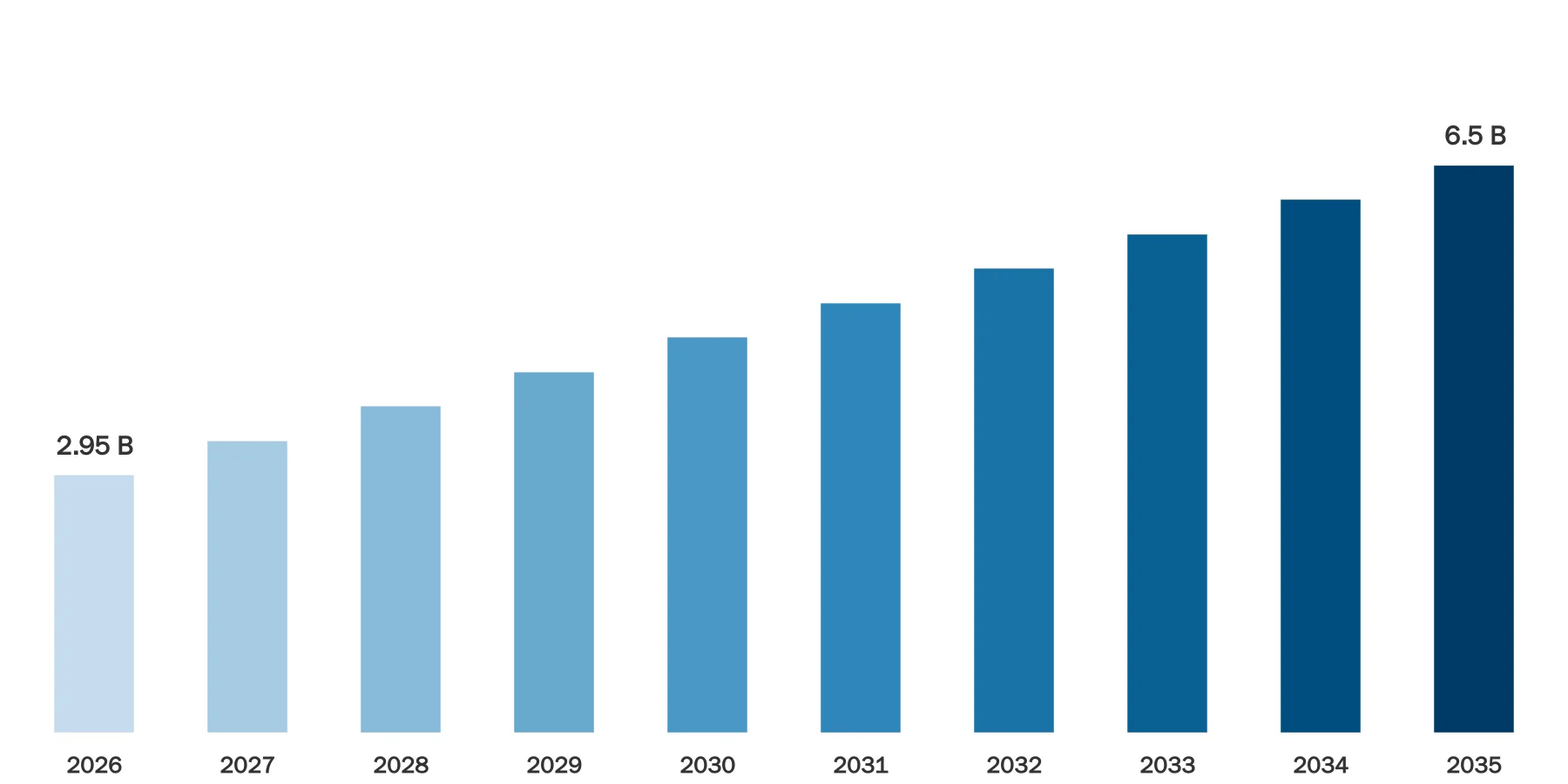
Source: Econ Market Research
Tiny homes, in general, are less than 500 square feet, which usually provide minimalist living for individuals or families who might be downsizing or looking for an environmentally-friendly abode. Most tiny houses come with many modern amenities, sustainable features like energy-efficient systems, compact designs, and ecologically-friendly building materials. A number of drivers, including ever-increasing house prices, desire for sustainability, and the beauty of minimalistic living, propel the tiny houses movement.
Several factors boost the market because of the traditional housing costs which are too expensive, increased demand for sustainable lifestyle, and more desire for mobility. Most clients are attracted by tiny homes that have low cost maintenance and lead a simple way of life. Moreover, new tiny home communities and off-the-grid living lifestyle are on a rise and gaining popularity. As a result, the market of tiny homes expands globally with growing demand from North America, Europe, and certain parts of the Asia-Pacific. The future seems bright for this market as an increasing number of people are demanding affordable and sustainable housing alternatives amidst urbanization, high rent, and the urgent need for better living solutions.
Dynamic Insights
As property prices continue to rise, especially in urban centers, many people are looking for cheaper alternatives to houses, and tiny homes are a cost-effective alternative. These homes allow people to downsize and live in more efficient, sustainable spaces without compromising on the comforts that they need. The desire to live a simpler, clutter-free life has also LED people to adopt minimalist living, and tiny homes are well-suited to this lifestyle. Another major driver of market growth is environmental sustainability.
Tiny homes are built using eco-friendly materials and energy-efficient systems, making them a great choice for environmentally conscious consumers. Governments and organizations around the world promote green building practices and sustainable living, and demand for tiny homes keeps increasing. Increased mobility preferences also influence the market, as many tiny homes are designed to be portable, offering the flexibility to move or live off-grid. This appeals to consumers who want more freedom and less dependency on traditional housing models. All these dynamics create a favorable environment for the tiny homes market, driving innovation and growth across various regions globally.
Drivers Insights
Rising Housing Costs
The soaring house prices-especially in metropolitan regions-make houses costlier as people can find shelter only after high rents, but home price raises the bars very high in purchasing or owning them. Tiny houses serve as more cost-effective as against traditional housing in such cities with a more meager amount spent on houses compared to building other houses. In addition, the current trend of people preferring affordable living spaces has also increased demand for tiny homes, as they offer an accessible route to homeownership for millennials and retirees who are looking for budget-friendly options. This affordability also extends to maintenance, utilities, and property taxes, making tiny homes an attractive choice for cost-conscious buyers.
Environmental Sustainability
As awareness about climate change and environmental degradation increases, more consumers are focusing on sustainability in lifestyle choices. Tiny homes fit the bill by being resource-efficient and waste-reducing. Eco-friendly materials are used in the construction of these homes, along with energy-efficient appliances and renewable energy sources like solar power. In addition, the smaller size of tiny homes means that they require fewer materials to build, thus reducing the carbon footprint of traditional homes. This appeal to environmentally conscious consumers is a big driver for the market, as more people embrace sustainable living practices and look for housing solutions that reflect their values.
Restraints Insights
Limited Space and Storage
One of the primary challenges of tiny homes is their limited living space. While their compact size is a selling point for some, others may find the lack of storage and the need to downsize their possessions a significant barrier. Tiny homes require individuals to adopt a minimalist lifestyle, which may not be suitable for everyone. Families, in particular, may struggle with the lack of space for growing children, pets, or even everyday items like clothing and furniture. This limitation can deter potential buyers who prioritize larger, more flexible living spaces, thus limiting the market&rsquo,s reach.
Zoning and Regulatory Restrictions
Zoning laws and building codes in many areas pose a significant challenge to the widespread adoption of tiny homes. Many municipalities have strict regulations that limit the size of homes, and tiny homes often do not meet the minimum square footage requirements for permanent residential buildings. Additionally, some regions have building codes that do not account for non-traditional housing models, creating hurdles for tiny home manufacturers and buyers. This regulatory uncertainty can lead to delays, higher costs, and legal complexities, which could deter potential customers from investing in tiny homes.
Opportunities Insights
Off-Grid Living
Another major potential for the tiny homes market is off-grid living. Most tiny homes are designed to be self-sufficient, using renewable energy sources like Solar Panels, wind turbines, and water collection systems. Off-grid living has been gaining momentum as people become more interested in sustainability and self-reliance, especially in rural or remote areas where traditional utilities may not be available or are too expensive. Tiny houses can prove to be very good off-the-grid houses for several reasons, they are quite small, hence portable, and easily connect with green technology. This is also an opportunity to have a self-sufficient independent lifestyle from that of the cities or just seeking a more environmentally friendly nature life.
Segment Analysis
By Material
Material-wise, tiny homes are generally classified into two categories: mobile and stationary. Mobile tiny homes are suitable for consumers who desire mobility and a more adventurous off-grid lifestyle, as they can be easily transported from one location to another. They are mostly built on wheels and can be easily changed according to location. On the other hand, stationary tiny homes are meant to be permanently fixed in one location. They provide more stability and are often better equipped for long-term living with greater space and amenities. This segmentation is important as it caters to different customer needs, with mobile homes appealing to those seeking portability and stationary homes to those desiring permanence.
By Area
By area, the market is divided into three segments: less than 130 sq. ft., 130-500 sq. ft., and more than 500 sq. ft. Tiny homes less than 130 sq. ft. are the smallest, offering minimalistic living with just enough space for basic amenities. These homes are typically chosen by single individuals or people looking for a weekend retreat. Homes in the 130-500 sq. ft. range are more common and are suitable for individuals, couples, or small families. They strike a balance between compact living and enough room for comfortable living. Homes larger than 500 sq. ft. offer more spacious interiors, typically appealing to those who want tiny homes but with a bit more room, allowing for larger furniture and additional amenities.
By Application
Tiny homes are applied in different ways through application, including household, commercial, industrial, and others. Household applications are the most common. Consumers use tiny homes as a primary residence or vacation home. They appeal to individuals or families who wish to downsize, reduce living costs, or live more sustainably.
Commercially, they use tiny houses as a business platform. This might include an office or a retail place, or hospitality such as a tiny hotel or even Airbnb rental. In industry, it can be a temporary shelter for workers who have to spend a few days at a job site or a mobile office. More uses may also be educational and as storage, hence the variety of applications across industries.
By Distribution Channel
Tiny homes can be sold through direct or distributorial distribution channels. Direct sales usually involve buying directly from a manufacturer or builder, thus giving consumers a better opportunity for customization and sometimes a better price. This method allows for more personalized service and understanding of its construction and design. Distributors are intermediaries who sell tiny homes from many different manufacturers. They offer a broader range of choices and would more likely attract buyers who want to go around or look at other versions and styles. Having a wide outreach in these channels is important to accommodate more consumers, offering alternatives through purchase options that depend on the buyer',s choice.
Regional Analysis
The market has been gaining traction in North America, especially in the United States and Canada, where housing prices are high, there is urbanization, and there is a growing interest in off-grid and mobile living. Many people and families are looking for affordable housing alternatives to expensive Real Estate, not only in rural areas but also in urban settings. Additionally, the culture of environmental sustainability in North America has contributed to the adoption of tiny homes, as many are built using eco-friendly materials and energy-efficient technologies.
In Europe, the market for tiny homes is growing rapidly, especially in countries like the UK, Germany, and France. With high property prices in the major cities, people have started to consider tiny homes as a viable downsizing or finding more affordable places to live. There is also growing awareness of sustainability and interest in minimalism within the European market. In some European countries, tiny homes are considered to be a potential solution for addressing the housing shortage, especially among the younger generations and retirees.
The Asia-Pacific region is also witnessing increased demand for tiny homes, particularly in countries like Australia, Japan, and New Zealand. Tiny homes are rising in popularity in Australia because of the high cost of housing and the desire to live a more simple life. In Japan, where space is limited and the population is high, tiny homes have become an easy solution for people, with the market slowly growing. Similarly, micro houses are able to provide solutions for affordable sustainable housing in rapid urbanization countries with growing population in the developing economies of Asia-Pacific.
Latin America and Middle East &, Africa markets are tiny homes in nascent stage, yet the prospects look very good. There are studies currently under way regarding the feasibility of using tiny homes as an innovative means of reducing housing shortages while creating low-cost housing opportunities that would otherwise not exist, particularly in rural or not fully developed regions. In this context, rising market adoption will be witnessed during the forecast period.
Competitive Landscape
Some of the key players in the market are manufacturers of mobile and stationary tiny homes. Some companies focus on luxury tiny homes, while others target affordable, modular solutions. Some of the leading companies in the market include Tumbleweed Tiny House Company, Escape Traveler, and Tiny Heirloom, offering a range of tiny homes catering to various customer needs-from high-end, custom-built homes to more basic models. They emphasize quality craftsmanship, sustainable materials, and energy-efficient systems in their offerings.
The small, regional companies and startups joining the market can also be observed, trying to take advantage of the growing need for tiny houses. New players tend to compete in niche spaces, such as eco-friendly options, off-the-grid options, or mobile houses for specific types of lifestyles. For instance, Wheelhaus specializes in high-end, movable tiny homes, while companies like Tiny Living focus on providing customizable and affordable tiny house kits for DIY enthusiasts. The growing popularity of tiny homes has also led to partnerships between builders and land developers to create tiny home communities, offering buyers ready-made solutions that include both homes and land.
The market also faces competition through distribution channels. Companies are reaching a wider market through both direct sales and distributors. As the demand for affordable, sustainable housing increases, the competition will probably increase, driving companies to innovate in terms of design, functionality, and environmental impact. The nature of the competitive landscape is also being modified by changing regulations, zoning laws, and local building codes that dictate the production and sale of tiny homes in different regions. This dynamic environment is creating fertile ground for innovation and expanding consumer choice.
List of Key Players:
CargoHome
Tiny Home Builders
Hä,uslein Pty Ltd
Skyline Champion Corporation
Tumbleweed Tiny House Company
ATLAS VANS
Tiny SMART House, Inc.
B&,B MICRO MANUFACTURING, INC.
TIMBERCARAFT TINY HOMES
New Frontier Design
Nestron
Recent Developments:
In July 2024, Continental has introduced its first prefabricated tiny house, named the ContiHome. This 30-square-meter, one-and-a-half-story unit is located in northern Germany, on Lake Belau, between Kiel and Lü,beck. Visitors can now book overnight stays through online platforms. Starting in the fall of 2024, the company will offer a second ContiHome for reservations near Amsterdam. With this initiative, the ContiTech group sector aims to attract vacation parks and campsites, providing their customers with a more luxurious experience compared to traditional camping options.
Tiny Homes Report Segmentation
Tiny Homes Market Report Scope & Segmentation
| Attributes | Details |
|---|---|
Market Size (Current) | US$ 2.95 Billion in 2026 |
Market Size (Forecast) | US$ 6.5 Billion in 2035 |
Growth Rate | CAGR of 9.16% from 2026 to 2035 |
Forecast Period | 2026 – 2035 |
Base Year | 2025 |
Historical Data Available | Yes |
Regional Scope | Global |
Segments Covered | By Type
By Application
|
Frequently Asked Questions
Common questions about this report
The study period covers historical insights and forecast projections for the period 2026-2035.
About the Author
Market research expert with years of industry experience

Dipali Bhingare serves as the Market Research Director at Econ Market Research. With a focus on translating complex global economic shifts into actionable business intelligence, she oversees the strategic direction of comprehensive market studies. Her work empowers organizations to navigate volatile industries through data-driven forecasting and deep-dive competitive analysis.
Related Reports
Explore more market insights from the same category