

Tile Grout Market
Tile Grout Market Size, Share, Trends, Growth, and Industry Analysis, By Type (Cementitious Grout (Sanded, Unsanded), Epoxy Grout, Furan Grout, Quarry-Type Grout), By Application (Residential (Kitchens, Bathrooms), Commercial (Malls, Offices), Industrial (Warehouses, Factories)), Regional Analysis and Forecast Period 2026-2035
Tile Grout Market Overview
As per Econ Market Research analysis, the Global Tile Grout Market was valued at US$ 3.73 Billion in 2026 and is expected to reach US$ 6.02 Billion by 2035, registering a CAGR of 5.4% during the forecast period 2026–2035. The base year considered is 2025.
Tile Grout Market Size 2025-2035 (USD Billion)

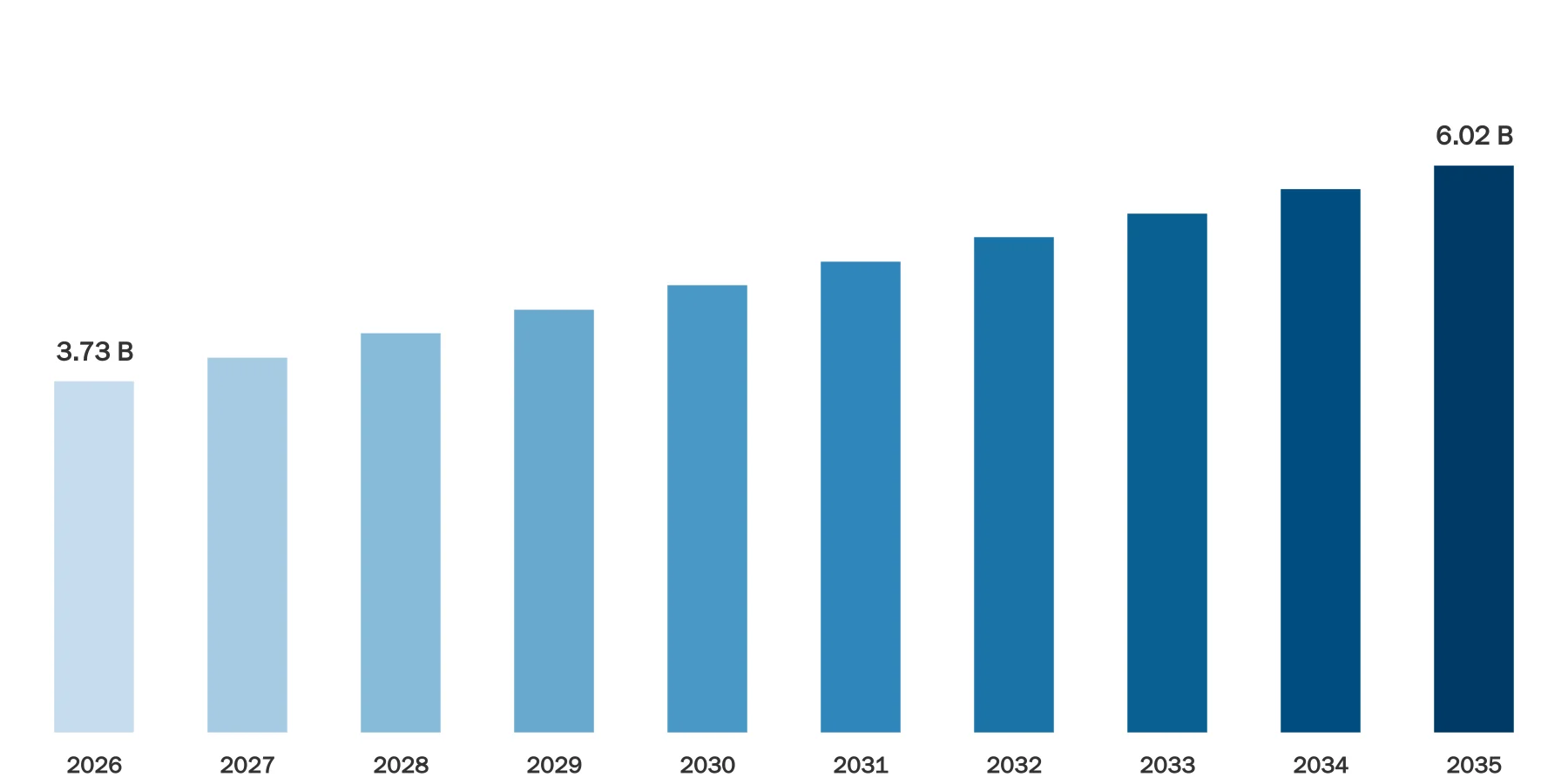
Source: Econ Market Research
Tile grout has multiple important functions: prevents tiles from moving from their locations, prevents water from running underneath them, and supports the prevention of mold and mildew from growing on the surface. Grouts come in cement-based, epoxy, or urethane types for specific application purposes, given the requirement of different types of projects, such as residential, commercial, or industrial usage. In recent times, the demand for tile grout has been prompted by the growing construction and renovation activities worldwide.
The amount of investment in home improvements and commercial spaces has upped the demand for robust, high-quality tile grout. In addition, demands for eco-friendly Building Material and technologies have further supported the development of sustainable options for grout. The market would tend to grow steadily due to factors such as urbanization, rising disposable incomes, and an increasing demand for aesthetically pleasing interior designs. Manufacturers will emphasize innovation, offering varieties in colors and finishes based on consumer preferences, expanding market reach.
Dynamic Insights
Most critical drivers of the market will be in the form of increased activities that include construction and renovation at both local and global levels with urbanization and rising incomes. Homeowners and other businesses are spending on stylish interiors, which increases their demand for high-quality grout. Hygiene standards and safety standards are other reasons why grout will be preferred as it resists moisture accumulation and causes no mold growth.
However, challenges are also prevalent in the market. Raw material price fluctuations affect production cost and, in turn, the pricing of the manufacturers. Another challenge is the availability of substitute products like adhesives and self-leveling compounds, which will impact the traditional grout market. Despite these challenges, major scope for growth exists in the development of more ecologically friendly and sustainable grout options, responding to growth in demand for environmentally responsible products. Technological advancements in the form of ready-to-use grouts and innovation in formulation are also playing their role in guiding the market toward increased convenience and performance.
Drivers Insights
Growing Construction and Renovation Activities
With increased urbanization and population growth, construction and renovation projects have multiplied all over the world. With cities expanding and infrastructure development, there is a high demand for residential and commercial spaces, which leads to the need for tile installation. Tile grout plays a crucial role in these projects by ensuring the integrity and longevity of tiled surfaces. Homeowners and businesses are doing their best to invest in modern aesthetics, which makes the market attractive for quality grout products. The trend is especially prominent in developing areas where high urban living standards prompt renovation or new builds.
Emphasis on Hygiene and Safety
With heightened awareness of health and hygiene, particularly in the wake of the COVID-19 pandemic, there is an increased demand for materials that enhance cleanliness in living and working environments. Tile grout prevents moisture accumulation, a factor that can lead to mold and mildew growth. Consumers are opting for grout solutions that offer antimicrobial properties, ensuring safer, healthier spaces. This shift is influencing product development, with manufacturers focusing on innovative formulations that incorporate these properties, thus expanding their market presence and catering to the evolving needs of health-conscious consumers.
Restraints Insights
Volatility in Raw Material Prices
The tile grout market is susceptible to raw material price fluctuations coming from cement, polymers, and additives. This variability directly impacts the cost of production, which translates into a pricing challenge for manufacturers. If raw material prices surge unexpectedly, this may make companies either suffer from low profitability or pass on the costs to the consumers, which may then affect demand. Additionally, long-term instability in prices poses strong barriers to long-term planning or investment in product development-a challenge very substantial for market players in trying to maintain competitive pricing.
Competition from Alternative Products
The tile grout market faces increasing competition from alternative Flooring solutions, such as adhesives, self-leveling compounds, and various types of vinyl and laminate flooring. These substitutes often require less maintenance and installation time, appealing to cost-conscious consumers looking for efficient and durable solutions. As these alternatives gain popularity, traditional grout products may see reduced demand, particularly in price-sensitive markets. This shift poses a challenge for grout manufacturers, necessitating innovation and differentiation to retain their market share.
Opportunities Insights
Development of Eco-Friendly Products
An increasing concern from the environmental awareness among the consumers gives the manufacturer the chance to innovate with the aim of offering greener grout options. Eco-friendly sustainable material, low VOC products, and recyclable packages appeal to the segment interested in ecological values. With investment in green technology and emphasis on the sustainability of products, companies will meet the consumer demand as well as have an opportunity for differentiation in the highly competitive market landscape. This is consistent with the broader environment and is, therefore, likely to be celebrated by consumers who wish to engage in responsible buying.
Segment Analysis
By Type
The tile grout market is divided into several different types, each suited for various applications and preferences. Unsanded grout contains fine sand particles that do not fill the grout line too much. It is often used in narrow lines with a smooth finish or applied easily. Perfect for wall tiles and even the most delicate surfaces. Fine sanded grout is filled with fine sands and provides increased strength. It is stronger than unsanded in more substantial joints in a floor tile.
Quarry grout is one that contains high density and hence its usage in heavy-duty applications where resistance to wear and tear is required. Last but not the least is epoxy grout, which belongs to the high-performance group. It is water resistant and chemical resistant. Therefore, it has more usage in wet places as well as harsh weather conditions.
By Application
In tile grout, application type can be divided into three, specifically residential, commercial, and industrial. Since requirements or demands are varied depending upon the application, so with the differences of needs end-users have in making each product unique. With regards to residential applications, for instance, the usage includes a kitchen, a bathroom, and living rooms with regard to tile grouts wherein the primary considerations for homeowners are aesthetics and resistance from water. A tile looks appealing but at the same time, is robust, has durability, and less messy.
The commercial application would be on offices, restaurants, and retail stores with high foot traffic. These spaces require more robust and resilient grout options. Here, functionality usually wins the day as businesses would want grout that could withstand frequent use but maintain an appealing appearance. Lastly, the industrial application would include manufacturing plants, warehouses, and other heavy-duty applications. Industrial grout will need to be extremely strong and chemical-resistant, with abrasion resistance in keeping with these demanding environments.
Regional Analysis
The market share in North America is the highest because the construction industry is strong and home renovation is high. High demand for superior aesthetic interior for residential and commercial applications drives the tile grout products market growth. In addition, this region',s shift towards greener building materials has inspired manufacturers to innovate and provide even greener grout. The next region with a history is Europe, where tiles were used in architecture and designs. This region requires environmentally sensitive high-performance grouts.
The reason is because more people are becoming aware of the environment. The leaders in this market have been Germany, France, and Italy, known for quality and designs in their construction projects. In fact, Asia-Pacific is the fast-growing market, driven by rapid urbanization and soaring disposable incomes, massive investment in infrastructural development. Countries such as China and India have seen a spate of construction, driving up tile and tile grout demands, respectively. The more middle class it is translated into house improvement and renovation expenditure which enhances the market even more.
Competitive Landscape
Market majors have dominated the market share on account of having larger portfolio of products, excellent brands, and wider networks across the distribution channel. A large number of such international players are developing products and are focusing on improving grouting quality, strength, aesthetics, and long term performance along with meeting diversified demands associated with residential, commercial, and industrial applications. They invest heavily in research and development to create new formulations that offer higher performance levels, such as improved moisture, stain, and chemical resistance, to cope with growing demand for customized grout solutions.
More importantly, regional players are rising in different markets to deliver local products that suit particular consumer preferences and construction practices. This promotes competition, driving innovation and price competitiveness. Companies are embracing more sustainability practices, which emphasize formulations and production methods considered more environmentally friendly and green building materials to keep up with consumer demand. More and more manufacturers are approaching strategic collaborations and partnerships with contractors, distributors, and construction firms to reach an even larger market and thereby increase their scope of service. Online channels for sales are also catching on in helping manufacturers extend their reach and respond to the rising trend of DIY home improvements.
List of Key Players:
Sika AG
Hexion
Five Star Products, Inc.
Saint-Gobain
Aditya Birla Chemicals
Bostik
The Euclid Chemical Company
New Japan Chemical Co. Ltd.
LATICRETE International, Inc.
Atul Ltd
Anhui Xinyuan Chemical Co. Ltd.
Kukdo Chemicals Co. Ltd.
Henkel AG
SIR Industriale
Global Tile Grout Report Segmentation
Tile Grout Market Report Scope & Segmentation
| Attributes | Details |
|---|---|
Market Size (Current) | US$ 3.73 Billion in 2026 |
Market Size (Forecast) | US$ 6.02 Billion in 2035 |
Growth Rate | CAGR of 5.4% from 2026 to 2035 |
Forecast Period | 2026 – 2035 |
Base Year | 2025 |
Historical Data Available | Yes |
Regional Scope | Global |
Segments Covered | By Type
By Application
|
Frequently Asked Questions
Common questions about this report
The study period covers historical insights and forecast projections for the period 2026-2035.
About the Author
Market research expert with years of industry experience

Related Reports
Explore more market insights from the same category