

Third-party Logistics Market Overview
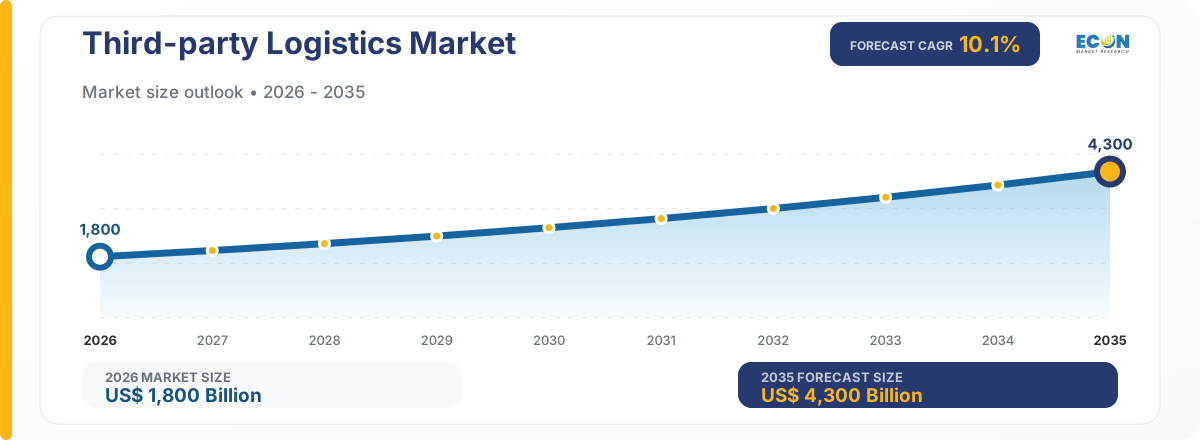
As per Econ Market Research analysis, the Global Third-party Logistics Market was estimated at US$ 1800 Billion in 2026 and is forecast to attain US$ 4300 Billion by 2035, expanding at a CAGR of 10.1% between 2026 and 2035. The base year for the study is 2025.
By providing outsourced logistics services including distribution, warehousing, and shipping, the third-party logistics (3PL) industry frees up enterprises to concentrate on their core skills. It offers knowledge, tools, and resources to streamline supply chain processes, raise productivity, and cut expenses. 3PL suppliers provide scalable solutions to a range of industries, including manufacturing, e-commerce, and retail, through their global network of facilities and carriers. 3PL firms help organizations become more competitive and expand in today',s ever-changing market by utilizing economies of scale and cutting-edge technology to expedite operations, enhance visibility, and guarantee on-time delivery.
Third-party Logistics Dynamics
The dynamics of the third-party logistics (3PL) sector are influenced by globalization, technological breakthroughs, and changing customer needs. Companies are depending more and more on 3PL providers to manage intricate supply chains, reduce risks, and adjust to shifting market conditions. The landscape is shaped by elements including the expansion of e-commerce, the need for speedier delivery, and sustainability regulations. To improve visibility and streamline operations, 3PL companies innovate using automation, IoT, and advanced analytics. Competitiveness and service offerings are also impacted by strategic alliances and market consolidation. Trade routes and logistics tactics are impacted by regulatory changes and geopolitical developments, which calls for agility and adaptability within the dynamic 3PL market ecosystem.
Third-party Logistics Drivers
E-Commerce Expansion
The third-party logistics (3PL) industry is driven by the growth of e-commerce, which stimulates an increase in online retail activity and calls for effective logistics solutions to handle inventories and fulfill orders. Businesses must modify their supply chains to fulfill rising demand and customer expectations for prompt and dependable delivery as more and more people purchase online for convenience, variety, and competitive cost. This development increases demand for third-party logistics (3PL) companies who focus on e-commerce logistics and provide scalable solutions to streamline the transit, fulfillment, and warehousing procedures.
Technological Advancements
Real-time tracking, predictive analytics, and automated decision-making are made possible by innovations like Artificial Intelligence, big Data Analytics, and the Internet of Things (IoT), which improve efficiency and visibility across the logistics process. Automation and robotics simplify warehouse operations, and cloud-based systems enable data sharing and cooperation between supply chain participants. These developments enable 3PL providers to fulfill changing client demands and maintain their competitiveness in the ever-changing logistics market by providing more flexible, responsive, and affordable solutions.
Restraints:
Infrastructure Limitations
Roads, ports, and storage facilities that are either out-of-date or insufficiently maintained cause delays, capacity issues, and higher expenses. These issues are made worse by inadequate technological integration, which reduces supply chain visibility and coordination. Infrastructure development is further hampered by bureaucratic inefficiency and regulatory obstacles. These limitations impair the efficacy and scalability of 3PL operations, making it more difficult for them to satisfy client needs and engage in profitable market competition.
Complexity of Integration
The third-party logistics (3PL) market is severely constrained by the complexity of integration, since it takes a great deal of time, money, and experience to integrate various systems, processes, and stakeholders. Information interchange inefficiencies and errors are frequently caused by compatibility problems across various software systems and data types. Moreover, client company resistance to change and organizational barriers impede smooth integration attempts. These difficulties make it more difficult to develop integrated, end-to-end logistics solutions, which restricts 3PL providers', capacity to offer their customers the best possible performance and value.
Opportunities:
Green Logistics and Sustainability Initiatives
In response to growing environmental consciousness and regulatory demands, green logistics and sustainability initiatives offer a strong opportunity in the third-party logistics (3PL) sector. Adopting environmentally friendly techniques like carbon footprint reduction, route optimization, and alternative fuels not only strengthens corporate social responsibility but also increases operational performance and cost-effectiveness. Furthermore, 3PL providers may stand out from the competition, draw in environmentally concerned customers, and help the logistics sector transition to a greener, more sustainable future by providing sustainable logistics solutions.
Omni-Channel Retailing
The third-party logistics (3PL) sector presents a great opportunity for omni-channel commerce, which meets the changing needs of consumers who want seamless shopping experiences across different channels. Retailers may improve consumer outreach and offer flexible fulfillment choices like ship-from-store and click-and-collect by connecting their online, mobile, and physical store channels. As a result of this trend, there is a growing need for 3PL services that can handle intricate logistics needs including order fulfillment, inventory management, and last-mile delivery. This puts 3PL providers in a strong position to profit from the expanding omni-channel retail market.
Segment Overview
By Service Type
Based on service type, the global third-party logistics market is divided into dedicated contract carriage (DCC), domestic transportation management, international transportation management, warehousing and transportation, and others. The domestic transportation management category dominates the market with the largest revenue share in 2023. Domestic transportation management is the process of streamlining transportation within a nation or area by utilizing knowledge of freight optimization, carrier selection, and route planning to cut expenses and increase efficiency.
In order to provide smooth cross-border logistics, international transportation management focuses on easing the flow of commodities across borders and handling customs clearance, documentation, and compliance. Transportation and warehousing services combine inventory movement and storage under one integrated management system, reducing processes and enhancing supply chain visibility of inventory.
By Transport
Based on the transport, the global third-party logistics market is categorized into railways, airways, waterways, and roadways. The roadways category leads the global third-party logistics market with the largest revenue share in 2023. Roadways are the most adaptable and popular kind of transportation since they can reach rural areas and provide door-to-door delivery services. For large-scale, long-distance freight shipping, especially for bulk commodities and intermodal shipments, railroads provide an economical and environmentally responsible solution. With their worldwide reach and quick delivery choices, airlines offer high-value or time-sensitive goods quick and efficient transportation. Waterways, such as rivers, seas, and canals, provide an affordable way to move large or bulky items across long distances, especially for bulk shipments and international trade.
By End-Use Industry
Based on end-use industry, the global third-party logistics market is segmented into automotive, technological, retailing, elements, food and beverages, healthcare, and others. The healthcare segment dominates the third-party logistics market. For the safe and efficient shipping of medications, medical equipment, and healthcare supplies all of which must meet strict standards for security, temperature control, and regulatory compliance the healthcare industry depends on dependable logistical services.
Specialized logistics solutions are needed by the automobile sector to carry cars, parts, and components, these solutions frequently involve intricate supply chains and just-in-time delivery requirements. For the timely and secure transportation of electronics, computer hardware, and other technology products to international markets, the technological industry depends on effective logistics services. The logistics requirements of both physical stores and online retailers are included in retailing. These requirements include order fulfillment, inventory control, and last-mile delivery services.
Third-party Logistics Overview by Region
The global third-party logistics market is categorized into North America, Europe, Asia-Pacific, and the Rest of the World. Asia-Pacific emerged as the leading region, capturing the largest market share in 2023. The region',s trade activity and consumer demand have surged due to rapid economic growth, industrialization, and urbanization. E-commerce is growing, and the manufacturing and retail sectors are also growing, which has increased need for scalable and effective logistics solutions. Furthermore, the advancement of infrastructure and upgrades to transportation networks have improved accessibility and connectedness, allowing for more efficient movement of goods.
Furthermore, Asia-Pacific',s status as a hub for logistics investment and expansion due to the existence of significant growing economies like China, India, and Southeast Asian countries has strengthened its dominance in the 3PL sector. Throughout the forecast period, North America is anticipated to post a significant CAGR. These include the area',s strong economic expansion, innovations in technology, and a flourishing e-commerce sector. Furthermore, North America has an advanced logistics infrastructure, which includes modern warehouses and effective transportation systems. Growth is also fueled by the growing demand from customers for quicker delivery times and the use of cutting-edge logistics technologies like automation and analytics. The region',s bright future is further enhanced by robust government backing for investment and trade, which puts North America in a strong position to continue growing in the third-party logistics sector.
Third-party Logistics Competitive Landscape
In the global third-party logistics market, a few major players exert significant market dominance and have established a strong regional presence. These leading companies remain committed to continuous research and development endeavors and actively engage in strategic growth initiatives, including product development, launches, joint ventures, and partnerships. By pursuing these strategies, these companies aim to strengthen their market position, expand their customer base, and capture a substantial share of the market.
Third-party Logistics Market Leading Companies:
BDP International
Burris Logistics
C.H. Robinson Worldwide, Inc.
CEVA Logistics,
DSV
DB Schenker Logistics
FedEx
J.B. Hunt Transport, Inc.
Kuehne + Nagel
Nippon Express
United Parcel Service of America, Inc
XPO Logistics, Inc
Yusen Logistics Co. Ltd., and various others.
Third-party Logistics Recent Developments
In December 2023, Yusen Logistics Co. Ltd. and Pickle Robot Company, a pioneer in robotic automation and physical artificial intelligence (AI), have formed a strategic alliance. Plans called for starting the partnership with the deployment of Pickle Unload technologies at the trans-loading facility of Yusen Logistics Co. Ltd. in Long Beach, California, which is part of the Contract Logistics Group.
In June 2023, Sunny Morning Foods, a well-known dairy brand and foodservice redistributor with headquarters in Florida, was successfully acquired by Honor Foods, a division of Burris Logistics. Honor Foods was able to improve its whole supply chain solutions and solidify its position in the dairy business thanks to this calculated move.
Third-party Logistics Market Report Segmentation
Third-party Logistics Market Report Scope & Segmentation
| Attributes | Details |
|---|---|
Market Size (Current) | US$ 1800 Billion in 2026 |
Market Size (Forecast) | US$ 4300 Billion in 2035 |
Growth Rate | CAGR of 10.1% from 2026 to 2035 |
Forecast Period | 2026 – 2035 |
Base Year | 2025 |
Historical Data Available | Yes |
Regional Scope | Global |
Segments Covered | By Service
By Transport Mode
By End-User
|
Frequently Asked Questions
Common questions about this report
The study period covers historical insights and forecast projections for the period 2026-2035.
About the Author
Market research expert with years of industry experience

Dipali Bhingare serves as the Market Research Director at Econ Market Research. With a focus on translating complex global economic shifts into actionable business intelligence, she oversees the strategic direction of comprehensive market studies. Her work empowers organizations to navigate volatile industries through data-driven forecasting and deep-dive competitive analysis.
Related Reports
Explore more market insights from the same category