

Thermal Interface Materials Market
Thermal Interface Materials Market Size, Share, Trends, Growth, and Industry Analysis, By Product (Greases andamp; Adhesives, Tapes andamp; Films, Gap Fillers, Metal-Based, Phase Change Materials, Others), By Application (Computers, Telecom, Medical Devices, Automotive Electronics, Consumer Durables, Industrial Machinery, Others), Regional Analysis and Forecast Period 2026-2035
Thermal Interface Materials Market Overview
As per Econ Market Research analysis, the Global Thermal Interface Materials Market reached a valuation of US$ 5.5 Billion in 2026 and is anticipated to grow to US$ 14 Billion by 2035, at a CAGR of 12.4% during the forecast timeline 2026–2035. The base year considered is 2025.
Thermal Interface Materials Market Size 2025-2035 (USD Billion)

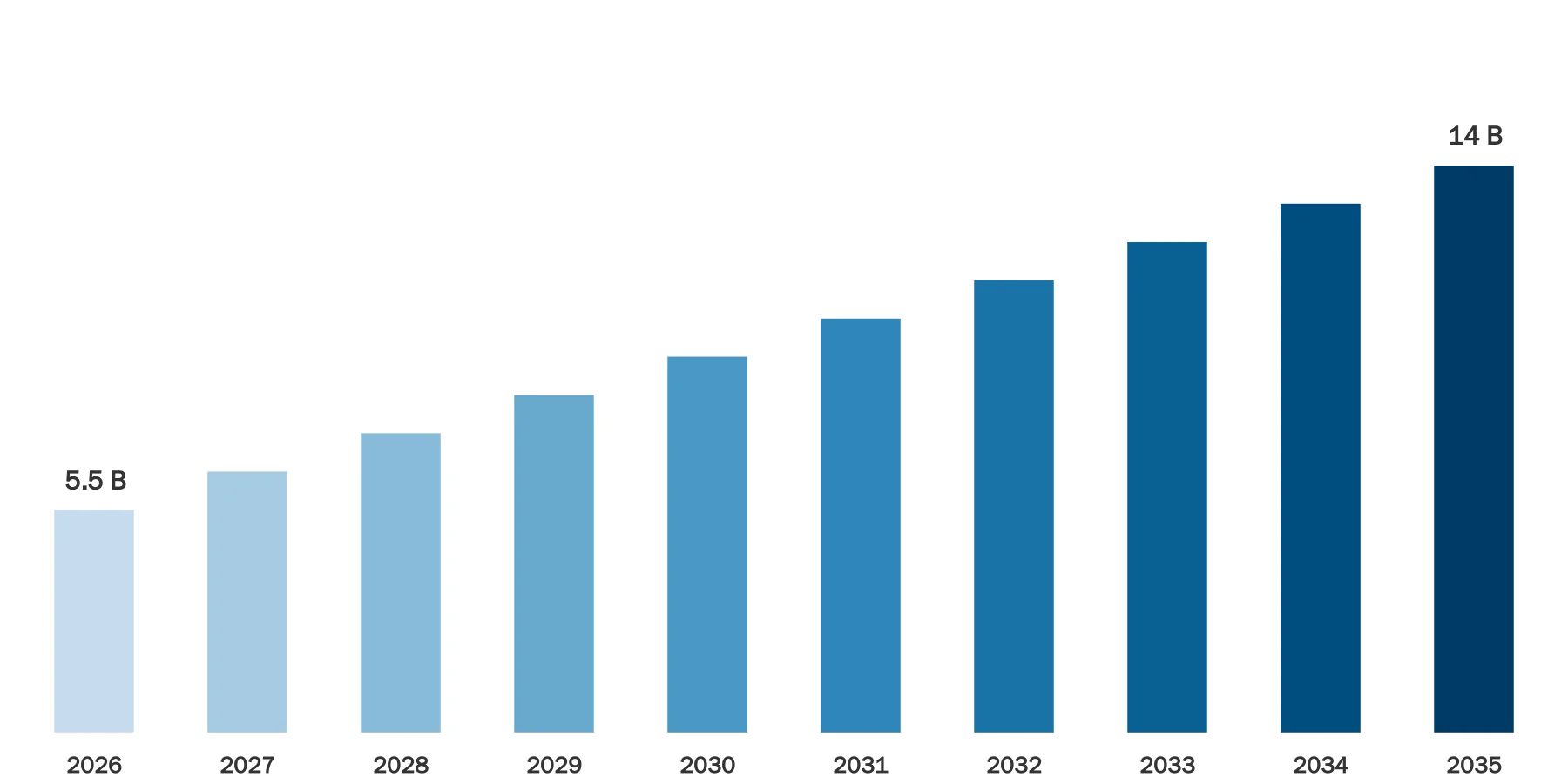
Source: Econ Market Research
The Thermal Interface Materials (TIM) refer to products that enhance heat transfer between surfaces, especially in electronic devices such as computers and smartphones. These materials are essential for efficiently dispersing heat, preventing devices from overheating, and ensuring optimal performance. TIMs are available in different types like adhesives, greases, and tapes, each designed for specific uses. As the demand rises for high-performance electronic devices, the TIM industry is booming as manufacturers look for improved Thermal Management solutions to boost their products', reliability and lifespan.
Over the past few years, improvements in technology have fuelled a desire for smaller yet more powerful electronic gadgets, resulting in increased heat production and the necessity for efficient methods to manage thermal effects. Also, stringent guidelines related to energy conservation and ecological responsibility have promoted the use of sustainable TIMs, thus affecting the market environment.
Thermal Interface Materials Dynamics
The market for Thermal Interface Materials (TIM) is influenced by various factors, including advancements in technology, a growing need for high-performance electronic devices, and compliance with regulations. The emergence of new technologies like 5G, Artificial Intelligence, and the Internet of Things (IoT) has increased the demand for smaller, more powerful devices, resulting in higher heat generation. This has created a greater need for efficient thermal management solutions, driving up the demand for TIMs. Additionally, the rise of electric vehicles (EVs) and renewable energy systems has also contributed to the growth of the TIM market, as these applications require effective heat dissipation for optimal performance and reliability.
Similarly, stringent guidelines on energy efficiency and environmental sustainability have a significant impact on the TIM market. Governments globally are enacting regulations to decrease carbon emissions and encourage the use of energy-efficient technologies, leading to an increase in eco-friendly TIMs. Manufacturers are prioritizing the creation of products with enhanced thermal conductivity and lower thermal resistance to comply with these standards and ensure top-notch performance. In addition, the increasing focus on developing new products and conducting research and development efforts by businesses adds to the change in TIM market.
Thermal Interface Materials Drivers
Rapid Technological Advancements
The ever-changing technology, especially with the rise of 5G networks, artificial intelligence, and Internet of Things (IoT), plays a crucial role in driving the Thermal Interface Materials (TIM) market forward. With the continuous progress in these areas, industry is seeing the creation of smaller yet more effective electronic gadgets that produce more heat. This leads to a growing need for effective thermal management solutions to sustain the durability and lifecycle of these devices. TIMs are essential in efficiently dispersing heat, hence rising their necessity across different sectors such as telecommunications, consumer electronics, and automotive.
Growing Demand for Electric Vehicles (EVs) and Renewable Energy
The global move towards sustainable energy solutions, like electric vehicles and renewable energy systems, is a major factor driving the Thermal Interface Materials (TIM) market. Electric vehicles and renewable energy systems depend on electronic components that produce a lot of heat when in use. Effective thermal management is crucial to ensure these systems perform well and last long. TIMs help dissipate heat efficiently, improving the overall efficiency and reliability of electric vehicles and renewable energy systems.
Thermal Interface Materials Restraints:
Cost Constraints
The high cost of high-performance thermal interface materials is a major issue in the TIM market. Advanced formulations that offer superior thermal conductivity and reliability are more expensive, making it difficult for manufacturers in cost-sensitive industries to afford them. The complexity of manufacturing processes and the requirement for specialized equipment also add to the overall cost of TIMs, making it challenging for them to be widely adopted, especially in markets where price is a key consideration.
Compatibility Issues and Material Selection
One challenge in the TIM market is the difficulty of finding the right material for specific applications due to compatibility issues. Electronic devices and systems have varying requirements for TIMs depending on factors like temperature, pressure, and surface materials. Choosing the wrong TIM or facing compatibility issues can result in inefficient heat dissipation, impacting the performance and reliability of electronic devices. Manufacturers frequently struggle to identify the best TIM for their needs, causing delays in product development and higher costs.
Thermal Interface Materials Opportunities:
Rising Demand for High-Performance Computing
The growing need for high-performance computing (HPC) applications like data centres, artificial intelligence, and cloud computing creates great opportunities for the Thermal Interface Materials (TIM) market. HPC systems produce a lot of heat while in operation, so it is essential to have effective thermal management solutions in place to ensure peak performance and reliability. TIMs are crucial for efficiently dissipating heat in HPC systems, leading to plenty of room for manufacturers to meet the changing demands of the market.
Segment Overview
By Product Type
By product type, the Thermal Interface Materials (TIM) is segmented into, Metal-based thermal interface materials utilize metal particles or foils to enhance thermal conductivity, making them ideal for applications requiring high heat dissipation efficiency. Gap fillers are materials that are soft and compressible, which are specifically made to fill in any gaps between components. They help with efficient heat transfer and also provide mechanical support. Thermal greases and pastes are made up of a thick compound that has high thermal conductivity. These are commonly used in electronics assembly to fill in tiny gaps between surfaces.
Thermal pads and films are a convenient and dependable option for managing thermal issues. They help with insulation and heat dissipation in electronic devices. Lastly, phase change materials can transition between solid and liquid states, which allows them to absorb and release heat as needed. This makes them perfect for applications that require precise temperature control. Thermal adhesives are great because they can help transfer heat and bond things together, making it easier to attach heat sinks and other parts. Thermal tapes are also helpful since they can be used temporarily or permanently to attach parts that generate heat, and they are easy to use and remove.
By Thermal Conductivity
By thermal conductivity, Thermal interface materials are segmented into high, medium, and low conductivity categories. High thermal conductivity TIMs have superior heat transfer abilities, making them ideal for tasks that demand efficient heat dissipation, like high-performance computing and Automotive Electronics. Medium conductivity TIMs strike a good balance between thermal efficiency and cost-effectiveness, serving a broad array of applications in consumer electronics and industrial machinery. Low conductivity TIMs provide insulation properties while enabling some level of heat transfer, fitting for situations where thermal regulation is crucial, such as medical devices and aerospace systems.
By Application
By application, thermal interface materials are segmented into medical devices and industrial machinery. Thermal interface materials (TIMs) are essential in the medical device industry to regulate heat from electronic components in devices like MRI machines, patient monitors, and surgical equipment. In the industrial sector, TIMs are vital for managing temperatures in machinery operating in tough conditions, preventing overheating and enhancing component longevity. Choosing the right TIM is critical for the performance, reliability, and safety of medical and industrial equipment.
Thermal Interface Materials Overview by Region
The market for Thermal Interface Materials (TIM) is dominated by North America and Europe, due to their well-established industries like electronics, automotive, and healthcare, as well as their strong focus on research and development. The Asia Pacific region is also seeing a boom in this market, fuelled by rapid industrial growth, rising use of electronic devices, and increased investments in infrastructure.
China, Japan, and South Korea lead the way in technological advancements, driving the TIM market',s expansion in the region. Moreover, the increasing popularity of electric vehicles and renewable energy systems is driving market expansion in the Asia Pacific region. Latin America, as well as the Middle East and Africa, are experiencing consistent growth in the TIM market due to the growth of industrial sectors and rising investments in infrastructure developments.
Thermal Interface Materials Market Competitive Landscape
The Thermal Interface Materials (TIM) market features a competitive landscape considered by the presence of several prominent players competing to gain market share through product innovation, strategic partnerships, and mergers and acquisitions. Key players such as Henkel AG &, Co. KGaA, Dow Inc., Laird Technologies, Inc., Parker Hannifin Corporation, and 3M Company dominate the market with their extensive product portfolios and global presence.
These companies focus on developing advanced TIM formulations with enhanced thermal conductivity, reliability, and eco-friendliness to cater to the diverse needs of industries such as electronics, automotive, and aerospace. Additionally, collaborations with OEMs and research institutions enable players to stay abreast of emerging technologies and market trends, strengthening their competitive position. Moreover, investments in manufacturing facilities and distribution networks further bolster their market presence, allowing them to effectively serve customers globally.
Thermal Interface Materials Market Leading Companies:
Henkel AG &, Co. KGaA
Dow Inc.
Laird Technologies, Inc.
Parker Hannifin Corporation
3M Company
Indium Corporation
Momentive Performance Materials Inc.
Zalman Tech Co., Ltd.
Wakefield-Vette, Inc.
Shin-Etsu Chemical Co., Ltd.
Aavid Thermalloy, LLC
Master Bond Inc.
Bergquist Company, Inc.
Lord Corporation
Thermal Interface Materials Recent Developments
June 2022, Dow Corning Corporation introduced a new Thermal Interface Material (TIM), DOWSIL TC-4040. This gap filler is designed for easy dispensing, possesses high thermal conductivity, and resists slumping. The launch of this new product is expected to enhance the company',s competitiveness in the TIM market.
May 2022, Arieca and ROHM Co., Ltd. collaborated on a research project to develop thermal interface materials for electric vehicles (EVs). The project focuses on creating SiC power modules for next-generation xEV applications using Arieca',s Liquid Metal Embedded Elastomer Technology.
Jan 2022, 3M expanded its operations in Clinton, Tennessee, with an investment of approximately USD 470 million. This expansion aims to add around 600 new jobs by 2025 at its plant in Clinton, Tennessee.
Thermal Interface Materials Report Segmentation
Thermal Interface Materials Market Report Scope & Segmentation
| Attributes | Details |
|---|---|
Market Size (Current) | US$ 5.5 Billion in 2026 |
Market Size (Forecast) | US$ 14 Billion in 2035 |
Growth Rate | CAGR of 12.4% from 2026 to 2035 |
Forecast Period | 2026 – 2035 |
Base Year | 2025 |
Historical Data Available | Yes |
Regional Scope | Global |
Segments Covered | By Product
By Application
|
Frequently Asked Questions
Common questions about this report
The study period covers historical insights and forecast projections for the period 2026-2035.
About the Author
Market research expert with years of industry experience

Dipali Bhingare serves as the Market Research Director at Econ Market Research. With a focus on translating complex global economic shifts into actionable business intelligence, she oversees the strategic direction of comprehensive market studies. Her work empowers organizations to navigate volatile industries through data-driven forecasting and deep-dive competitive analysis.
Related Reports
Explore more market insights from the same category