

Textile Finishing Agents Market
Textile Finishing Agents Market Size, Share, Trends, Growth, and Industry Analysis, By Product Type (Softening Agents, Repellent andamp; Release Agents, Flame Retardants, Antimicrobial Agents, Wrinkle-Free Agents), By Application (Apparel, Home Textiles, Technical Textiles), By End-User (Textile Mills, Contract Finishing Providers), Regional Analysis and Forecast Period 2026-2035
Textile Finishing Agents Market Overview
As per Econ Market Research analysis, the Global Textile Finishing Agents Market accounted for US$ 23.41 Billion in 2026 and is expected to surpass US$ 29.8 Billion by 2035, witnessing a CAGR of 2.7% throughout 2026–2035. The analysis is based on 2025 as the base year.
Textile Finishing Agents Market Size 2025-2035 (USD Billion)

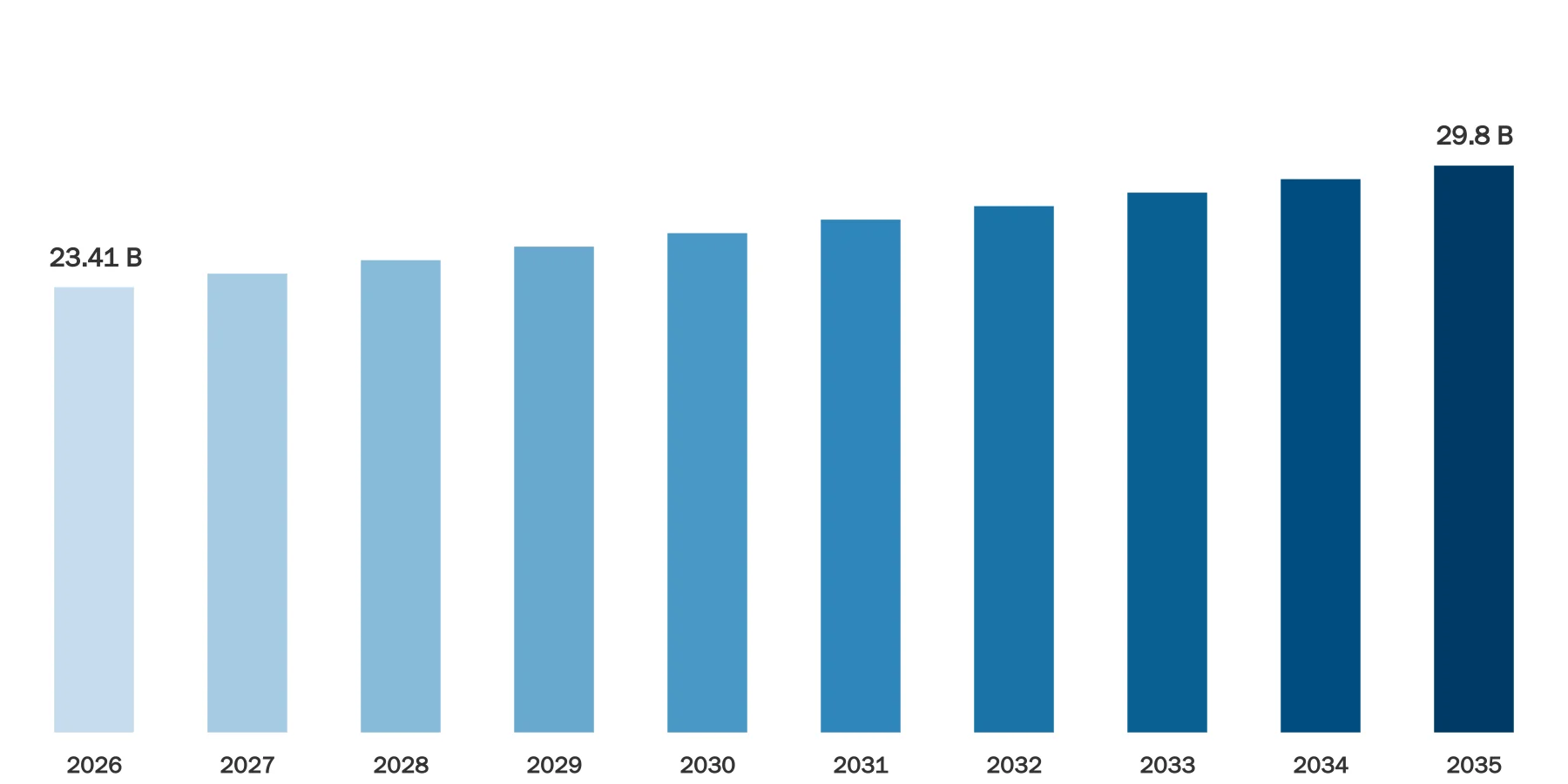
Source: Econ Market Research
The global textile finishing agents market encompasses a broad range of chemicals and additives used in the final stages of textile production to enhance the fabric',s appearance, texture, durability, and performance. Textile finishing agents are crucial in transforming raw textiles into finished products ready for consumer use, serving various purposes such as imparting softness, wrinkle resistance, water repellency, flame retardancy, and antimicrobial properties. These agents are applied through various processes including padding, spraying, and exhaust methods, tailored to meet specific requirements of different textile applications such as apparel, home textiles, technical textiles, and automotive textiles.
The market for textile finishing agents is driven by the growing demand for functional and value-added textiles, increasing awareness regarding sustainable practices, stringent regulations promoting eco-friendly products, and advancements in textile technology. Key players in the market continuously innovate to develop novel finishing agents that offer superior performance, meet regulatory standards, and align with evolving consumer preferences, thus contributing to the dynamic landscape of the global textile finishing agents market.
Textile Finishing Agents Dynamics
One significant driver is the increasing demand for functional textiles across various sectors, including apparel, automotive, and home textiles. Consumers seek textiles with enhanced properties such as water repellency, stain resistance, and antimicrobial effects, driving the demand for innovative finishing agents. Additionally, sustainability concerns are reshaping the market landscape, with a growing emphasis on eco-friendly and biodegradable finishing agents. Stringent regulations pertaining to chemical usage in textile production further contribute to this trend, prompting manufacturers to invest in research and development of greener alternatives.
Moreover, technological advancements in textile finishing processes, such as nanotechnology and microencapsulation, are expanding the possibilities for creating high-performance textiles with specialized functionalities. These advancements not only improve the quality and performance of finished textiles but also offer opportunities for differentiation and market competitiveness among manufacturers. However, challenges such as volatile raw material prices, fluctuating demand patterns, and supply chain disruptions can impact market dynamics.
Textile Finishing Agents Drivers
Growing Demand for Functional Textiles
The market for textile finishing agents is largely driven by the rising demand for textiles with improved functionalities like moisture management, UV protection, and odour control. Sportswear, outdoor clothing, and healthcare textiles are just a few of the industries where consumers are looking for high-performance textiles that are comfortable and add value. The need for multipurpose clothing, shifting lifestyles, and growing consciousness of health and wellness are the main drivers of this trend. Because of this, producers are spending money on R&,D to create novel textile finishing agents that have these features without sacrificing comfort or fabric quality.
Emphasis on Sustainability
One major factor influencing the market for textile finishing agents is sustainability. A move towards environmentally friendly and biodegradable finishing agents is being brought about by growing regulatory pressure and environmental concerns. The growing consciousness among consumers regarding the environmental consequences of their purchases has resulted in an increase in the demand for textiles made with sustainable materials and processes.
Manufacturers have a chance to capitalise on this trend by creating and marketing green finishing agents made from natural extracts or bio-based polymers, which are renewable resources. Furthermore, programmes that support the circular economy',s tenets&mdash,such as the recycling and upcycling of textile waste&mdash,are propelling innovation in sustainable textile finishing technologies and expanding the market.
Restraints:
Raw Material Price Volatility
Price changes for raw materials have the potential to affect the market for textile finishing agents, which could have an effect on industry participants', profit margins and costs of manufacturing. Key raw material prices, including those of chemicals, resins, and solvents, are impacted by a number of variables, including dynamics in supply and demand, geopolitical unrest, and changes in exchange rates. Manufacturers may face difficulties with planning, budgeting, and pricing strategies due to sudden price fluctuations. Furthermore, abrupt increases in the cost of raw materials could result in higher production costs that are eventually passed on to customers, thereby decreasing the market for finished textiles.
Regulatory Constraints
Stringent regulations governing chemical usage in textile production pose a significant restraint for the textile finishing agents market. Regulatory frameworks such as REACH (Registration, Evaluation, Authorization, and Restriction of Chemicals) in the European Union and similar regulations in other regions impose strict requirements on the safety, environmental impact, and labeling of chemicals used in textiles. Compliance with these regulations requires extensive testing, documentation, and certification, which can be time-consuming and costly for manufacturers.
Additionally, regulatory restrictions on certain chemical substances deemed hazardous or toxic may limit the use of traditional finishing agents, prompting the industry to seek alternative, safer formulations. While regulations aim to protect human health and the environment, they also create compliance challenges and add complexity to product development and market entry processes for textile finishing agents.
Opportunities:
Technological Advancements
Promising prospects for innovation and market expansion are offered by the swift progress made in textile finishing technologies. Technologies like microencapsulation, plasma treatment, and nanotechnology open up new possibilities for improving the functionalities and qualities of textiles. The application of nanotechnology has made it possible to create nanoscale coatings with antimicrobial, stain- and water-repellent qualities without sacrificing the breathability or comfort of fabric. Textiles can be given additional functions through the controlled release of active ingredients, such as fragrances or skincare agents, thanks to microencapsulation.
Textiles can have their surfaces modified to enhance adhesion, dyeability, and soil release qualities through the environmentally safe and sustainable alternative of plasma treatment. Not only do these technological advancements increase the functionalities that can be achieved in textile finishing, but they also help manufacturers stand out from the competition and differentiate their products.
Segment Overview
By Type
The textile finishing agents market can be segmented into two main categories based on their purpose: aesthetic and functional finishing agents. Aesthetic finishing agents are primarily concerned with enhancing the visual appeal and tactile properties of textiles. These agents may include dyes, pigments, optical brighteners, and fabric softeners, which improve the colors vibrancy, brightness, and softness of the fabric. On the other hand, functional finishing agents focus on imparting specific performance-enhancing properties to textiles, such as water repellency, flame retardancy, antimicrobial activity, and Fragrance retention. These agents contribute to the functionality and utility of textiles, making them suitable for various applications across industries.
By Product
Textile finishing agents can be categorized based on their specific functionalities and applications. Water-repellant agents create a barrier on the fabric surface, preventing water penetration and enhancing stain resistance. Flame retardant agents reduce the flammability of textiles, making them suitable for applications where fire safety is critical, such as upholstery and protective clothing. Softeners improve the hand feel and drape of textiles, enhancing comfort and wearability.
Antibacterial and antimicrobial agents inhibit the growth of bacteria and fungi on textiles, contributing to hygiene and odor control. Fragrance agents impart long-lasting scent to textiles, enhancing sensory experience and freshness. Additionally, there are other specialized finishing agents catering to specific needs such as wrinkle resistance, UV protection, and static control, among others.
By Application
The application segment categorizes textile finishing agents based on the end-use sectors where they are predominantly utilized. Apparel encompasses a wide range of clothing items, including casual wear, sportswear, formal attire, and innerwear, where textile finishing agents are applied to enhance comfort, performance, and aesthetic appeal.
Home furnishing includes textiles used in residential spaces such as bedding, curtains, upholstery, and rugs, where finishing agents are employed to improve durability, appearance, and functionality. Technical textiles refer to specialized textiles used in industrial, automotive, medical, and other technical applications, where finishing agents are crucial for meeting performance requirements such as strength, durability, and functionality.
Textile Finishing Agents Overview by Region
Developed regions such as North America and Europe dominate the market, characterized by a mature textile industry and high consumer demand for value-added and sustainable textiles. These regions are also at the forefront of technological innovation and regulatory compliance, driving the adoption of eco-friendly and performance-enhancing finishing agents. In Asia Pacific, rapid industrialization, urbanization, and rising disposable incomes fuel the growth of the textile industry, particularly in emerging economies like China, India, and Bangladesh.
The region serves as a manufacturing hub for textiles, supported by a large workforce and cost-effective production processes, driving the demand for textile finishing agents. Moreover, increasing awareness of sustainability and quality standards is shaping market dynamics in Asia Pacific, with a growing emphasis on eco-friendly and high-performance finishing agents. Latin America and the Middle East &, Africa regions exhibit moderate growth prospects for the textile finishing agents market, driven by expanding textile industries and improving consumer purchasing power. However, market growth in these regions is somewhat constrained by economic volatility, political instability, and infrastructure challenges.
Textile Finishing Agents Market Competitive Landscape
Major companies in the market include BASF SE, Huntsman Corporation, The Dow Chemical Company, Archroma, and Evonik Industries AG, among others. These companies invest significantly in research and development to innovate new finishing agents that meet evolving consumer demands, regulatory standards, and sustainability requirements. Strategic initiatives such as mergers and acquisitions, partnerships, and collaborations are common strategies employed by market players to expand their product portfolios, geographic reach, and technological capabilities.
Additionally, investments in production facilities, distribution networks, and marketing efforts play crucial roles in enhancing market competitiveness and brand visibility. Furthermore, companies focus on offering customized solutions and technical support to meet the specific needs of diverse end-use industries such as apparel, home textiles, automotive textiles, and technical textiles. While established players dominate the market with their extensive resources and market presence, smaller players and start-ups also contribute to market growth through niche product offerings and innovation.
Textile Finishing Agents Market Leading Companies:
Huntsman Corporation
BASF SE
Dow Chemical Company
Archroma
Evonik Industries AG
Rudolf GmbH
Zschimmer &, Schwarz GmbH
CHT Group
Wacker Chemie AG
Tanatex Chemicals B.V.
DyStar Group
Textile Finishing Agents Recent Developments
June 2023, Modern Meadow, a prominent biofabrication firm focusing on sustainable material development, is delighted to unveil its strategic alliance with Navis TubeTex, a renowned supplier of advanced finishing machinery for the global textile sector. This partnership seeks to revolutionize the dyeing, finishing, and Coating Equipment sector by amalgamating Modern Meadow',s state-of-the-art Bio-Alloy technology with Navis TubeTex',s sophisticated Gaston Systems foam technology equipment.
Textile Finishing Agents Report Segmentation
Textile Finishing Agents Market Report Scope & Segmentation
| Attributes | Details |
|---|---|
Market Size (Current) | US$ 23.41 Billion in 2026 |
Market Size (Forecast) | US$ 29.8 Billion in 2035 |
Growth Rate | CAGR of 2.7% from 2026 to 2035 |
Forecast Period | 2026 – 2035 |
Base Year | 2025 |
Historical Data Available | Yes |
Regional Scope | Global |
Segments Covered | By Product Type
By Application
By End-User
|
Frequently Asked Questions
Common questions about this report
The study period covers historical insights and forecast projections for the period 2026-2035.
About the Author
Market research expert with years of industry experience

Dipali Bhingare serves as the Market Research Director at Econ Market Research. With a focus on translating complex global economic shifts into actionable business intelligence, she oversees the strategic direction of comprehensive market studies. Her work empowers organizations to navigate volatile industries through data-driven forecasting and deep-dive competitive analysis.
Related Reports
Explore more market insights from the same category