

Sustainable Stationery Market
Sustainable Stationery Market Size, Share, Trends, Growth, and Industry Analysis, By Product (Paper Products, Writing Instruments, Art & Craft Supplies, Desk Accessories), By Application (Educational Institutes, Personal Use, Commercial, Others), By Sales Channel (E-Commerce Stores, Supermarkets/Hypermarkets), Regional Analysis and Forecast Period 2026-2035
Sustainable Stationery Market Overview
As per Econ Market Research analysis, the Global Sustainable Stationery Market was recorded at US$ 11.39 Billion in 2026 and is projected to expand to US$ 17.53 Billion by 2035, registering a CAGR of 4.9% over the forecast period. The base year used is 2025.
Sustainable Stationery Market Size 2025-2035 (USD Billion)

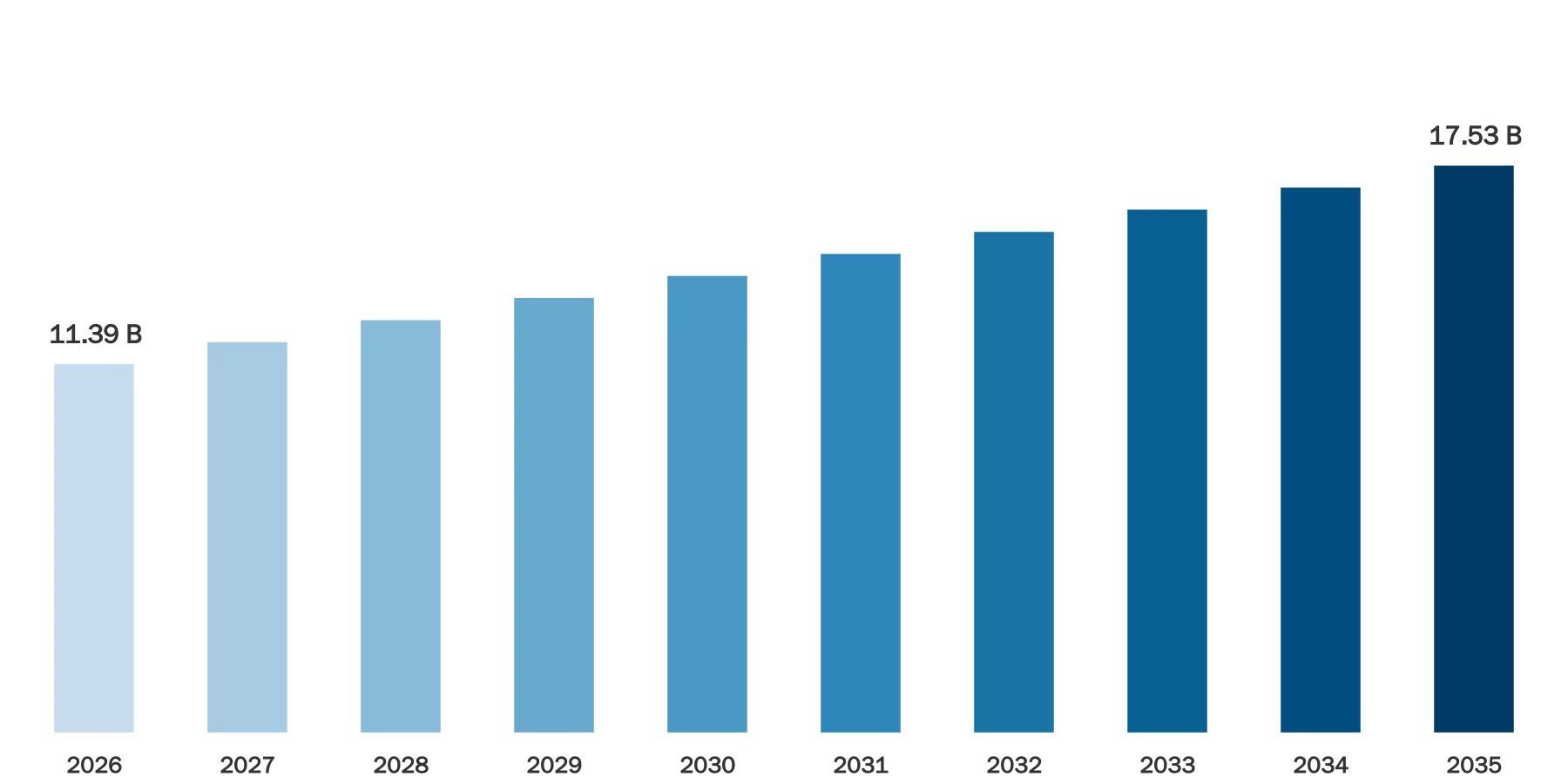
Source: Econ Market Research
The Sustainable Stationery Market is expanding due to increasing demand for recycled notebooks, biodegradable pens, refillable markers, FSC-certified paper, and plastic-free packaging across schools, offices, and commercial institutions. More than 62% of institutional buyers in 2025 preferred recycled paper products for procurement contracts, while nearly 48% of consumers under the age of 35 purchased eco-friendly stationery at least once every quarter. Paper products accounted for over 45% of sustainable stationery consumption globally, driven by educational demand and corporate sustainability targets. More than 70 countries implemented stricter waste reduction and recycling regulations between 2022 and 2025, increasing adoption of reusable writing instruments and low-emission manufacturing processes. Sustainable Stationery Market Trends continue to emphasize recyclable packaging, soy-based inks, and bamboo-based accessories.
USA Sustainable Stationery Market
The USA Sustainable Stationery Market represents one of the largest regional demand centers due to strong school enrollment, corporate ESG programs, and eco-conscious retail purchasing. More than 49 million K-12 students in the United States use school stationery annually, while over 68% of office procurement managers reported preference for recycled paper products in 2025. Approximately 55% of online stationery buyers in the country searched specifically for “eco-friendly notebooks” or “recycled office supplies” during back-to-school seasons. Sustainable pens made from recycled PET and Biodegradable Polymers increased shelf penetration by 31% between 2022 and 2025. North America remained a dominant regional contributor due to high per-capita stationery consumption and increasing sustainable procurement policies among educational institutions and government offices.
European Sustainable Stationery Market
The European Sustainable Stationery Market benefits from strict environmental directives, paper recycling infrastructure, and consumer awareness regarding plastic reduction. Germany, France, Italy, and the Nordic countries collectively accounted for more than 52% of European sustainable stationery demand in 2025. Over 74% of paper collected in Europe entered recycling systems, supporting recycled notebook and copier paper production. More than 40% of stationery products sold in Western Europe carried eco-label certifications such as FSC or PEFC. European schools increasingly adopted refillable pens and chlorine-free paper, while nearly 58% of B2B buyers preferred suppliers with carbon reduction commitments. Sustainable Stationery Industry Analysis shows rising adoption of bamboo rulers, biodegradable adhesives, and compostable packaging across retail chains and institutional procurement channels.
Market Latest Trends
The Sustainable Stationery Market is witnessing rapid transformation through biodegradable materials, refillable products, and recycled paper innovations. More than 45% of newly launched stationery products in 2025 included at least one recyclable or compostable component. Recycled paper notebooks gained strong demand due to rising educational consumption and workplace sustainability programs. Approximately 39% of global consumers preferred stationery with plastic-free packaging, while over 28% selected refillable pens over disposable alternatives.
Digital integration is also influencing Sustainable Stationery Market Growth. Smart notebooks with reusable pages and erasable writing technology increased adoption among students and hybrid office workers. More than 18% of premium stationery launches between 2023 and 2025 included reusable writing systems or app-enabled note storage features. Bamboo pencils, seed-infused plantable pencils, and wheat-straw desk accessories gained popularity across Asia-Pacific and Europe.
E-commerce channels contributed significantly to Sustainable Stationery Market Share, accounting for nearly one-third of global stationery transactions. Eco-conscious search terms such as “recycled notebook bulk order,” “sustainable office supplies,” and “eco-friendly school stationery” increased by over 42% during seasonal school procurement cycles. Manufacturers also shifted toward soy-based inks, water-based adhesives, and low-emission manufacturing facilities to align with carbon reduction targets. Sustainable Stationery Market Forecast data indicates that institutional procurement and environmentally certified products will remain major purchasing priorities.
Market Dynamics
The Sustainable Stationery Market Outlook is shaped by increasing environmental awareness, educational expansion, digital retail penetration, and corporate sustainability mandates. More than 60% of educational institutions globally introduced waste reduction programs between 2022 and 2025. Approximately 47% of office procurement departments integrated sustainability criteria into vendor selection processes. Recycled paper consumption increased significantly in North America and Europe due to stricter environmental regulations and rising demand for low-carbon office supplies. Sustainable Stationery Market Insights indicate strong momentum for biodegradable plastics, refillable writing instruments, and FSC-certified paper products across institutional and commercial applications.
DRIVER
Increasing Demand for Eco-Friendly Educational and Office Supplies
Educational institutions and businesses are increasingly prioritizing sustainable procurement. More than 1.5 billion students worldwide require notebooks, writing instruments, and paper products annually, creating substantial demand for environmentally responsible alternatives. Around 68% of schools in developed economies implemented sustainability guidelines for classroom supplies by 2025. Corporate offices also accelerated adoption of recycled copier paper and refillable pens to support ESG reporting and carbon reduction commitments.
Paper products remain the dominant segment, accounting for over 45% of total stationery demand globally. More than 74% of paper collected in Europe is recycled into secondary paper products, supporting sustainable notebook and office paper manufacturing. In addition, over 52% of Gen Z consumers actively prefer brands offering biodegradable or reusable stationery. Sustainable Stationery Market Research Report findings indicate that eco-label certifications significantly influence institutional purchasing decisions.
RESTRAINT
Competition from Digital Learning and Paperless Workspaces
The growing shift toward digital classrooms and paperless offices restrains the Sustainable Stationery Market. More than 62% of universities in developed countries implemented digital assignment systems by 2025, reducing paper consumption. Tablet penetration in schools increased steadily, while cloud-based documentation systems lowered office demand for traditional stationery products.
Hybrid work models also affected office stationery consumption. Approximately 36% of companies reduced centralized office supply purchases after adopting remote work structures. Digital note-taking applications and stylus-enabled devices reduced notebook demand among students and professionals. In addition, sustainable raw materials such as bamboo fiber, recycled polymers, and biodegradable plastics often cost 18% to 25% more than conventional alternatives, limiting affordability in price-sensitive markets. Sustainable Stationery Industry Analysis highlights that balancing sustainability with competitive pricing remains a major operational challenge for manufacturers.
OPPORTUNITY
Expansion of E-Commerce and Green Procurement Programs
E-commerce platforms are creating significant opportunities for Sustainable Stationery Market Growth. Nearly 33% of global stationery purchases now occur through online channels, with eco-friendly keywords experiencing annual search growth above 40% during school and office procurement periods. Online platforms allow smaller sustainable brands to reach institutional buyers and environmentally conscious consumers without extensive physical retail infrastructure.
Government green procurement programs are also generating opportunities. More than 70 countries implemented sustainability-focused procurement regulations between 2022 and 2025. Educational authorities increasingly require recycled paper content and plastic-free packaging for school supply tenders. Businesses adopting ESG standards are purchasing certified sustainable stationery in bulk volumes. Asia-Pacific markets, particularly India and China, are witnessing rising demand for bamboo pencils, recycled notebooks, and Biodegradable Packaging due to expanding student populations and urbanization trends.
CHALLENGES
Raw Material Volatility and Supply Chain Limitations
The Sustainable Stationery Market faces challenges related to raw material availability, supply chain consistency, and certification compliance. Recycled paper prices fluctuated by more than 15% between 2023 and 2025 due to varying collection volumes and transportation costs. Manufacturers relying on biodegradable plastics and bamboo materials experienced sourcing delays in several regions.
Certification standards also create operational complexity. FSC, PEFC, and eco-label compliance processes require extensive documentation and periodic audits, increasing production costs for small and medium-sized manufacturers. Nearly 29% of sustainable stationery startups reported difficulty maintaining stable supplier networks for recycled inputs. In developing economies, recycling infrastructure remains limited, affecting availability of post-consumer raw materials. Sustainable Stationery Market Opportunities depend heavily on scalable recycling systems, efficient logistics, and affordable sustainable materials.
SWOT Analysis
Strengths
More than 45% of sustainable stationery demand comes from paper products manufactured using recycled materials.
Over 68% of educational institutions in developed economies adopted sustainability-focused procurement standards by 2025.
Consumer preference for eco-friendly packaging increased by approximately 39% globally.
E-commerce contributes nearly 33% of stationery transactions, improving accessibility for sustainable brands.
Weaknesses
Sustainable raw materials cost 18% to 25% more than conventional plastics and virgin paper.
Digital learning adoption reduced traditional paper consumption in over 60% of universities.
Limited recycling infrastructure affects supply consistency in emerging economies.
Small manufacturers face certification and compliance costs exceeding operational budgets.
Opportunities
More than 1.5 billion students globally create recurring annual demand for sustainable school supplies.
Online searches for eco-friendly stationery products increased by over 42% between 2023 and 2025.
Corporate ESG initiatives expanded institutional demand for recycled office products.
Asia-Pacific accounts for more than 42% of global stationery market expansion potential.
Threats
Increased adoption of tablets and cloud-based note systems reduces paper demand.
Fluctuations in recycled paper supply impact production planning and pricing stability.
Counterfeit eco-label claims reduce consumer trust in sustainable products.
Competition from low-cost conventional stationery remains strong in developing regions.
Segmentation Analysis
The Sustainable Stationery Market is segmented by product type, application, and sales channel. Paper products dominate global demand due to widespread use in schools and offices. Educational institutes remain the leading application segment because of continuous notebook and writing material consumption among students. E-commerce stores are rapidly expanding due to convenience, wider product availability, and eco-conscious online shopping behavior. Sustainable Stationery Market Share continues to increase in recycled notebooks, refillable pens, biodegradable art supplies, and bamboo desk accessories. Institutional procurement and online retail are key growth drivers across developed and emerging economies.
By Product
Paper Products, Writing Instruments, Art & Craft Supplies, and Desk Accessories form the major product categories in the Sustainable Stationery Market. Paper products account for more than 45% of market demand due to high consumption of notebooks, copier paper, sticky notes, and journals in educational and commercial sectors. Recycled paper usage increased significantly as over 74% of collected paper in Europe entered recycling systems.
Writing instruments represent another important segment, supported by demand for refillable pens, recycled plastic markers, and bamboo pencils. More than 31% of eco-friendly pen launches between 2023 and 2025 utilized recycled PET materials. Art & craft supplies gained traction among schools and hobby consumers, with water-based paints and biodegradable adhesives becoming more common. Desk accessories such as bamboo organizers, cork mouse pads, and recycled plastic trays witnessed increased commercial demand. Sustainable Stationery Market Trends indicate that reusable and refill-based products are replacing disposable stationery items in institutional procurement programs.
By Application
Educational Institutes account for the largest application share in the Sustainable Stationery Market due to large-scale annual consumption of notebooks, paper sheets, art supplies, and writing instruments. More than 1.5 billion students globally require stationery products each academic year. Schools increasingly procure FSC-certified paper and plastic-free packaging products to meet sustainability objectives.
Personal Use remains a strong segment, especially among environmentally conscious millennials and Gen Z consumers. Approximately 52% of consumers below 35 years prefer eco-friendly stationery brands. Commercial applications also contribute significantly, driven by corporate ESG targets and sustainable office procurement programs. Offices increasingly purchase recycled copier paper and refillable pens in bulk quantities. The “Others” category includes government institutions, NGOs, and creative studios that prioritize sustainable supplies. Sustainable Stationery Market Insights show that institutional buyers influence large-volume purchasing trends globally.
By Sales Channel
E-Commerce Stores and Supermarkets/Hypermarkets are the major sales channels in the Sustainable Stationery Market. E-commerce stores account for nearly one-third of global stationery transactions due to product variety, subscription delivery models, and direct-to-consumer marketing strategies. Online searches for “eco-friendly office supplies” and “recycled notebooks bulk order” increased by over 40% during back-to-school procurement seasons.
Supermarkets and hypermarkets remain important due to high product visibility and seasonal sales campaigns. Large retail chains increasingly allocate dedicated shelf space to sustainable stationery categories, particularly in North America and Europe. Approximately 48% of consumers purchasing eco-friendly stationery still prefer physical inspection before buying premium notebooks or writing instruments. Hybrid omnichannel strategies are becoming common among manufacturers seeking stronger Sustainable Stationery Market Share across educational and office procurement sectors.
Regional Analysis
The Sustainable Stationery Market demonstrates strong regional variation based on educational enrollment, recycling infrastructure, environmental regulations, and consumer awareness. North America and Europe lead in certified sustainable product adoption, while Asia-Pacific dominates manufacturing and consumption volume. Middle East & Africa markets are gradually expanding due to educational investments and urban retail growth.

North America
North America accounts for a substantial share of the Sustainable Stationery Market due to high educational spending, corporate sustainability initiatives, and mature recycling systems. The region contributes approximately 28% of global sustainable stationery demand. The United States dominates regional consumption with more than 49 million K-12 students requiring annual stationery supplies.
More than 68% of office procurement managers in North America prioritize recycled paper and refillable writing instruments. Educational institutions increasingly implement green purchasing policies, supporting FSC-certified notebooks and biodegradable packaging adoption. E-commerce penetration exceeds 35% of stationery transactions in the region, supported by high digital purchasing behavior.
Canada also demonstrates strong adoption of recycled office products and paper recycling systems. More than 70% of collected paper in North America enters recycling streams, supporting sustainable paper production. Sustainable Stationery Market Analysis indicates that premium eco-friendly brands perform strongly among urban consumers seeking low-plastic and carbon-conscious products. Refillable markers, recycled PET pens, and bamboo desk accessories are gaining significant retail visibility across major commercial channels.
Europe
Europe represents approximately 30% of global Sustainable Stationery Market Share due to strict environmental policies and advanced recycling infrastructure. Germany, France, the United Kingdom, and Nordic countries remain major regional contributors. More than 74% of paper waste in Europe is recycled, supporting large-scale production of recycled notebooks and copier paper.
European consumers demonstrate high awareness of eco-label certifications, with over 40% of stationery products carrying FSC or PEFC certification. Schools increasingly use chlorine-free paper and refillable writing systems to comply with sustainability objectives. Corporate procurement policies also support low-emission office supplies and biodegradable packaging.
The region is witnessing rising demand for plantable pencils, bamboo rulers, and compostable adhesives. More than 58% of B2B buyers in Western Europe prioritize suppliers with carbon reduction targets. Sustainable Stationery Market Forecast data suggests that Sustainable Packaging regulations and circular economy policies will continue influencing product development. Retailers across Europe increasingly dedicate shelf space to eco-friendly office and school supplies.
Asia-Pacific
Asia-Pacific accounts for the largest consumption and manufacturing base in the Sustainable Stationery Market, contributing more than 42% of market expansion potential. China, India, Japan, and South Korea remain key regional markets due to large student populations and increasing urbanization.
India and China collectively represent hundreds of millions of school-going students, creating recurring annual demand for notebooks, pencils, and writing materials. Rising middle-class populations and educational investments support strong stationery consumption. Eco-friendly product awareness is also improving, particularly in urban regions. Bamboo pencils, recycled notebooks, and refillable pens gained strong traction between 2023 and 2025.
Japan leads in innovative sustainable stationery design, including erasable pens and reusable notebooks. More than 33% of online stationery transactions in Asia-Pacific now include eco-friendly product filters. E-commerce growth supports small and medium-sized sustainable brands entering regional markets. Sustainable Stationery Industry Report findings indicate that government waste reduction policies and rising paper recycling rates are improving long-term market potential across Asia-Pacific economies.
Middle East & Africa
The Middle East & Africa Sustainable Stationery Market is gradually expanding due to educational investments, retail modernization, and environmental awareness initiatives. Regional demand remains lower than North America and Europe, but adoption of eco-friendly school and office supplies is increasing steadily.
Gulf countries are investing heavily in educational infrastructure, leading to rising demand for notebooks, writing instruments, and art supplies. Schools in urban regions increasingly adopt recycled paper products and low-plastic packaging. South Africa remains one of the leading African markets due to established retail networks and growing sustainability awareness.
More than 45% of regional stationery sales still occur through supermarkets and traditional retail channels, although online sales are increasing in metropolitan areas. Corporate sustainability initiatives in the UAE and Saudi Arabia are supporting procurement of recycled office paper and refillable pens. Sustainable Stationery Market Opportunities in the region are linked to expanding educational access, rising literacy rates, and increasing awareness of waste reduction strategies. Manufacturers focusing on affordable eco-friendly products are gaining stronger market penetration.
Competitive Landscape
The Sustainable Stationery Market is highly competitive, with global manufacturers focusing on recycled materials, refillable product systems, biodegradable packaging, and innovative eco-designs. Companies compete through product certification, raw material sourcing, online retail expansion, and sustainable branding strategies. More than 40% of major product launches between 2023 and 2025 incorporated recycled plastics, bamboo fiber, or FSC-certified paper.
Manufacturers are increasing investments in recyclable packaging and carbon reduction initiatives. Several leading brands expanded plant-based pen production and refillable writing systems to reduce single-use plastic waste. Online retail partnerships and direct-to-consumer platforms have become major competitive strategies, especially as e-commerce contributes nearly one-third of global stationery transactions.
Product differentiation is increasingly focused on durability, recyclability, and environmental certifications. Companies are also collaborating with educational institutions and corporate procurement departments to secure large-volume contracts. Sustainable Stationery Market Research Report analysis indicates that innovation in biodegradable materials and reusable product systems remains central to long-term competitive positioning. Regional manufacturers in Asia-Pacific are strengthening exports of recycled paper products and bamboo accessories to North America and Europe.
List of Top Sustainable Stationery Companies
Faber-Castell
Kokuyo Co., Ltd.
BIC (Société BIC)
3M
Pilot Corporation
STAEDTLER
Muji (Ryohin Keikaku)
ACCO Brands
Onyx and Green
Sprout World (Plantable Pencils)
21 Fools / Jalebi (Eco-gifting)
Leading Companies by Market Share
Faber-Castell holds a significant position in the Sustainable Stationery Market due to large-scale production of FSC-certified pencils and water-based coloring products distributed in more than 100 countries. The company manufactures millions of wood pencils daily using sustainably managed forests and eco-certified raw materials.
BIC (Société BIC) maintains strong market presence through refillable pens, recycled plastic products, and global retail distribution networks. The company increased recycled material integration across several writing instrument categories between 2023 and 2025 while expanding sustainable packaging initiatives in Europe and North America.
Market Investment Outlook
The Sustainable Stationery Market Outlook remains favorable for manufacturers, institutional suppliers, recycled paper processors, and eco-material innovators. Investments are increasing in paper recycling facilities, biodegradable polymer development, and sustainable packaging systems. More than 70 countries introduced waste reduction regulations between 2022 and 2025, supporting demand for recyclable stationery products.
Educational procurement programs remain a major investment opportunity because over 1.5 billion students require recurring stationery supplies annually. Corporate ESG programs are also driving bulk procurement contracts for recycled copier paper, refillable pens, and eco-friendly desk accessories. Investors are increasingly supporting startups focused on bamboo stationery, plantable pencils, and reusable notebook technologies.
E-commerce infrastructure continues attracting investments due to rising online stationery purchases. Approximately 33% of global stationery transactions now occur online, creating opportunities for direct-to-consumer sustainable brands. Asia-Pacific remains an attractive production hub because of manufacturing capacity, expanding educational populations, and rising urbanization. Sustainable Stationery Market Opportunities are strongest in recycled paper manufacturing, refillable writing systems, and low-plastic packaging innovations.
New Product Development
Innovation in the Sustainable Stationery Market is centered on biodegradable materials, reusable product systems, and digital integration. More than 45% of new stationery launches in 2025 included recycled or compostable components. Plantable pencils containing seed capsules gained popularity among schools and eco-conscious consumers, especially in Europe and Asia-Pacific.
Reusable notebooks with wipe-clean pages and app-based scanning technology expanded adoption among students and hybrid workers. Manufacturers also introduced bamboo fiber notebooks, wheat-straw pen barrels, and algae-based inks to reduce dependence on petroleum-derived plastics. Approximately 31% of eco-friendly pen launches utilized recycled PET materials between 2023 and 2025.
Packaging innovation remains another major development area. Companies increasingly use plastic-free boxes, soy-based inks, and compostable wrapping materials. Refillable markers and modular desk organizers are becoming common in commercial office environments. Sustainable Stationery Market Trends indicate that future product development will prioritize circular economy principles, including refill systems, recyclability, and reduced carbon footprint manufacturing processes.
Recent Developments
In 2025, several global stationery manufacturers increased recycled plastic integration in pen production lines, with some product categories containing more than 50% post-consumer recycled material.
During 2024, multiple European stationery brands expanded FSC-certified notebook portfolios as over 40% of regional consumers preferred certified eco-friendly paper products.
In 2023, plantable pencil adoption increased significantly across educational campaigns, with seed-based pencil products distributed in schools across more than 20 countries.
Between 2023 and 2025, e-commerce sales of eco-friendly stationery products increased by more than 30% in Asia-Pacific due to rising online school supply purchases and urban consumer awareness.
In 2025, manufacturers introduced refillable marker systems reducing single-use plastic waste by approximately 60% compared with traditional disposable markers.
Report Coverage of Sustainable Stationery Market
The Sustainable Stationery Market Report provides comprehensive analysis of product categories, applications, sales channels, regional performance, competitive positioning, and emerging innovation trends. The report evaluates paper products, writing instruments, art & craft supplies, and desk accessories with detailed assessment of recycled content, biodegradable materials, and reusable product systems.
The report covers demand analysis across educational institutes, personal use, commercial offices, and government procurement sectors. It includes evaluation of e-commerce growth, supermarket distribution trends, and institutional purchasing behavior. More than 70 countries implementing sustainability-focused regulations are analyzed to understand policy influence on product adoption and recycling infrastructure.
Regional coverage includes North America, Europe, Asia-Pacific, and Middle East & Africa with market share insights, educational consumption patterns, and environmental policy assessment. Sustainable Stationery Market Insights also include analysis of online purchasing behavior, eco-label certification trends, refillable writing systems, and recyclable packaging innovations. Competitive profiling evaluates leading manufacturers based on sustainable product launches, material sourcing strategies, and global distribution expansion.
Sustainable Stationery Market Report Scope & Segmentation
| Attributes | Details |
|---|---|
Market Size (Current) | US$ 11.39 Billion in 2026 |
Market Size (Forecast) | US$ 17.53 Billion in 2035 |
Growth Rate | CAGR of 4.9% from 2026 to 2035 |
Forecast Period | 2026 – 2035 |
Base Year | 2025 |
Historical Data Available | Yes |
Regional Scope | Global |
Segments Covered | By Product
By Application
By Sales Channel
|
Frequently Asked Questions
Common questions about this report
The study period covers historical insights and forecast projections for the period 2026-2035.
About the Author
Market research expert with years of industry experience

Related Reports
Explore more market insights from the same category