

Surety Market
Surety Market Size, Share, Trends, Growth, and Industry Analysis, By Bond Type (Contract Surety Bond, Commercial Surety Bond, Fidelity Surety Bond, Court Surety Bond), By End-User (Individuals, Enterprises), Regional Analysis and Forecast Period 2026-2035
Surety Market Overview
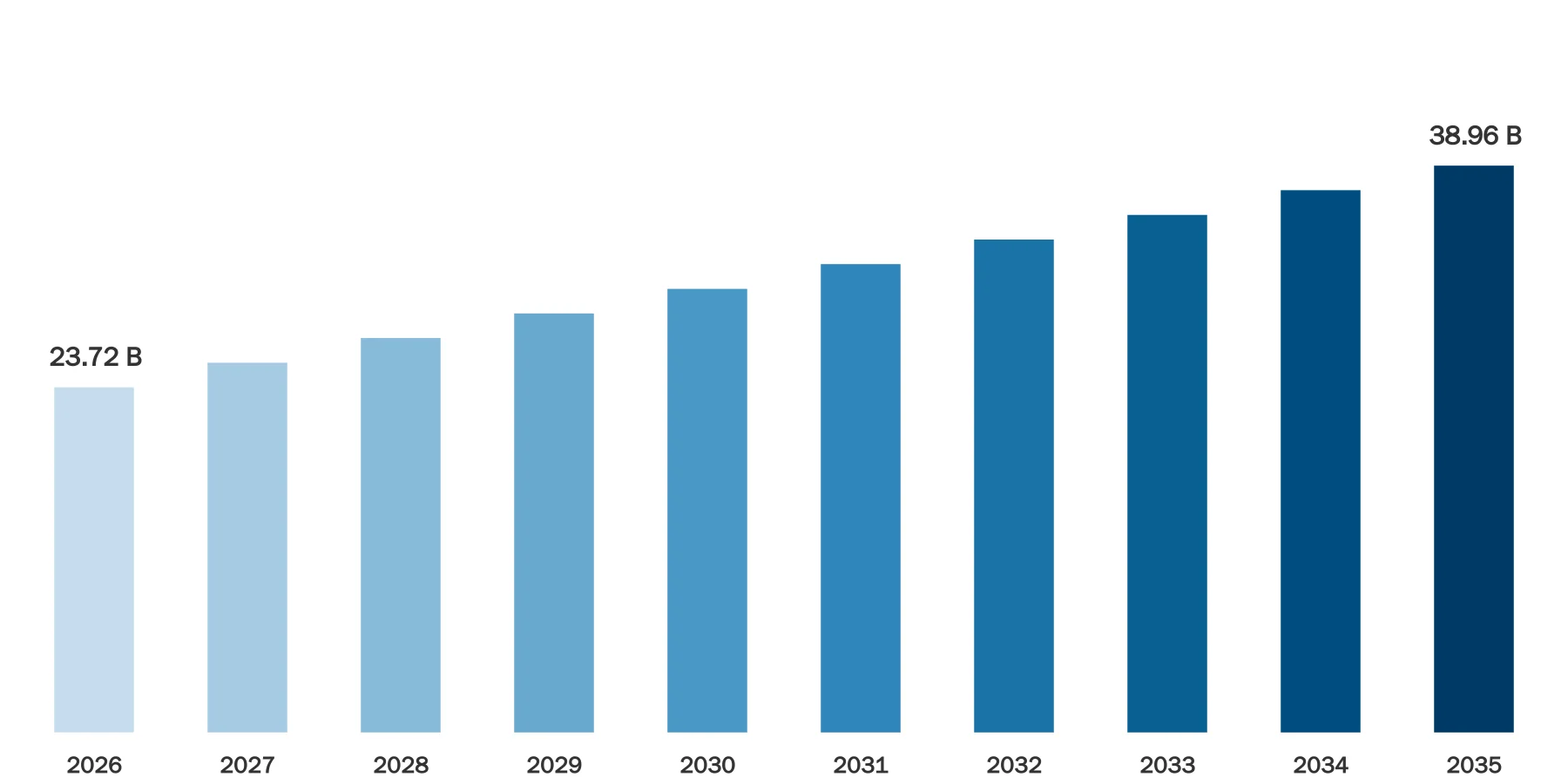
As per Econ Market Research analysis, the Global Surety Market generated revenue of US$ 23.72 Billion in 2026 and is forecast to achieve US$ 38.96 Billion by 2035, at a CAGR of 5.67% during the study period 2026–2035. The base year considered is 2025.
Surety Market Size 2025-2035 (USD Billion)

Source: Econ Market Research
The surety market is part of the insurance sector and provides financial guarantees or bonds to ensure that the bonded party fulfils their obligations. A surety bond comprises three parties: the principal (the person who needs the bond), the obligee (the person who requests the bond), and the surety company (the company that provides the bond). These bonds are used in industries such as construction, finance, Real Estate, and transportation to protect the obligee from noncompliance by the principal. Increased construction activity, infrastructure projects, government regulations, economic conditions, and technological improvements are likely to promote expansion in the worldwide surety business.
Surety Market Dynamics
The growing use of digital payment services around the world to enable quicker client payments is driving the global surety market. In contactless payments, innovative software, clever hardware, and astute services combine to improve conventional payment methods and usher in intelligent transactions. Additionally, card issuers are expanding the use of contactless payment card technologies globally at a rapid pace, contributing to the growth of the industry.
The market is growing due to innovations and developments in payment security technologies, both in terms of products and services continuity. Moreover, a lack of confidence brought on by data theft, security concerns, and unauthorised use of contactless payment methods is probably going to restrict market expansion over the course of the forecast period.
Surety Market Drivers
Lower Interest Rates and Reduced Risk
Surety bonds are essential for lowering risk for lenders, which benefits borrowers by lowering interest rates. Surety bonds provide lenders trust by offering a financial guarantee, which encourages them to extend loans at favorable terms. This risk-reduction component acts as a powerful engine, luring additional players into the surety market and fostering its expansion.
Localization and Global Expansion
The surety industry has changed in favour of globalization, whereas it had previously given preference to local businesses. Major players in the sector are opening up shop in developing countries, taking advantage of the opportunities provided by growing economic activity. Global companies can also successfully compete by using local underwriters who understand the specifics of their local market. This dual approach of global expansion and localization will enable the surety market to reach a larger audience and grow faster.
Restraints
In the surety market, certain constraints can affect its dynamics. One such restraint is the limited availability of surety bonds for larger projects due to the maximum guarantee amount imposed by regulatory authorities. This restriction, like the Insurance Regulatory and Development Authority of India',s (IRDAI) 30% cap on project value, may limit surety companies', capacity to provide comprehensive coverage. Furthermore, market limits might occur as a result of the stringent underwriting standards and capital requirements imposed on surety companies, particularly affecting smaller competitors with limited resources, who may encounter compliance and market entry issues.
Opportunities
The evolving technological landscape creates substantial opportunity for surety organisations to improve their operations and client experience. Surety organisations are capable of enhancing their risk assessment and underwriting processes by integrating Data Analytics and Artificial Intelligence, resulting in more accurate and timely choices.
Furthermore, developments in digital platforms enable consumers to apply and maintain surety bonds through online channels, giving real-time information and self-service capabilities. The use of technology, such as blockchain, improves claims administration by increasing transparency and decreasing the risk of fraud. Overall, employing technology in the surety business provides prospects for increased efficiency, cost savings, and greater client satisfaction.
Segment Overview
By Bond Type
Bonds are classified into four types: contract surety bonds, commercial surety bonds, fidelity surety bonds, and court surety bonds. Commercial and contract surety bonds are the most common, protecting both public and private interests, whereas court and fidelity surety bonds protect against lawsuit and theft. Premiums for all types of surety bonds are determined by the performance of the firm and the credit score of its owner, and normally range from 1% to 15% of the bond amount.
By End User
The worldwide surety market serves a wide range of end consumers from various industries. The primary end users include businesses, contractors, construction organisations, government agencies, suppliers, service providers, and individuals. Among these, the enterprises sub-segment is expected to increase significantly. This is due to the growing use of surety agreements, in which one party bears responsibility for a borrower',s debt obligations in the event of default. Such agreements shield consumers from potential financial losses caused by untrustworthy businesses, fuelling the expansion of the enterprises sub segment in the global surety market.
Surety Market Overview by Region
North America
North America is poised to maintain its dominance in the surety market throughout the forecast period. This can be attributed to several factors. Firstly, the region benefits from a robust construction industry, which drives the demand for contract bonds. Additionally, North America has well-established regulatory frameworks and a mature surety market infrastructure, providing stability and confidence to market participants. Furthermore, the presence of major economies like the United States and Canada contributes to the region',s strong market position. With these advantages, North America is expected to continue leading the surety market in the coming years.
Asia-Pacific
The Asia Pacific surety market is expanding rapidly as a result of numerous factors. Major factors are the region',s rapid economic development and large expenditures in construction and infrastructure projects. Surety bonds are in high demand as cities and populations develop in nations such as China and India. Furthermore, favourable government policies and activities boosting infrastructure development fuel the market',s expansion. With these favourable conditions and the region',s rising economies.
Surety Market Competitive Landscape
The glass dinnerware market is highly competitive, with multiple established players competing for dominance. These significant industrial players have a substantial market presence and well-established reputations. To acquire a competitive advantage, these players invest in ongoing research and development. They also actively pursue strategic expansion activities such as new product launches, alliance formation, and joint venture exploration, all with the goal of strengthening their market position and extending their consumer base.
Surety Market Leading Companies:
American Contractors Indemnity Company
U.S. Specialty Insurance Company
Merchants Bonding Company
Great Midwest Insurance Company
The Gray Casualty &, Surety Company
The Ohio Casualty Insurance Company
Markel Insurance Company
The Gray Insurance Company
Travelers Casualty &, Surety Company
Contractors Bonding and Insurance Company
Surety Market Report Scope & Segmentation
| Attributes | Details |
|---|---|
Market Size (Current) | US$ 23.72 Billion in 2026 |
Market Size (Forecast) | US$ 38.96 Billion in 2035 |
Growth Rate | CAGR of 5.67% from 2026 to 2035 |
Forecast Period | 2026 – 2035 |
Base Year | 2025 |
Historical Data Available | Yes |
Regional Scope | Global |
Segments Covered | By Bond Type
By End-User
|
Frequently Asked Questions
Common questions about this report
The study period covers historical insights and forecast projections for the period 2026-2035.
About the Author
Market research expert with years of industry experience

Dipali Bhingare serves as the Market Research Director at Econ Market Research. With a focus on translating complex global economic shifts into actionable business intelligence, she oversees the strategic direction of comprehensive market studies. Her work empowers organizations to navigate volatile industries through data-driven forecasting and deep-dive competitive analysis.
Related Reports
Explore more market insights from the same category