

Submersible Pumps Market
Submersible Pumps Market Size, Share, Trends, Growth, and Industry Analysis, By Product (Borewell, Openwell, Non-Clog), By Drive (Electric, Hydraulic, Others), By End Use (Agriculture, Construction & Building Services, Water & Wastewater, Power Generation, Oil & Gas, Chemical, Others), Regional Analysis and Forecast Period 2026-2035
Market Overview
As per Econ Market Research analysis, the Global Submersible Pumps Market was valued at US$ 13.98 Billion in 2026 and is expected to reach US$ 21.43 Billion by 2035, registering a CAGR of 5.1% during the forecast period 2026–2035. The base year considered is 2025.
Submersible Pumps Market Size 2025-2035 (USD Billion)

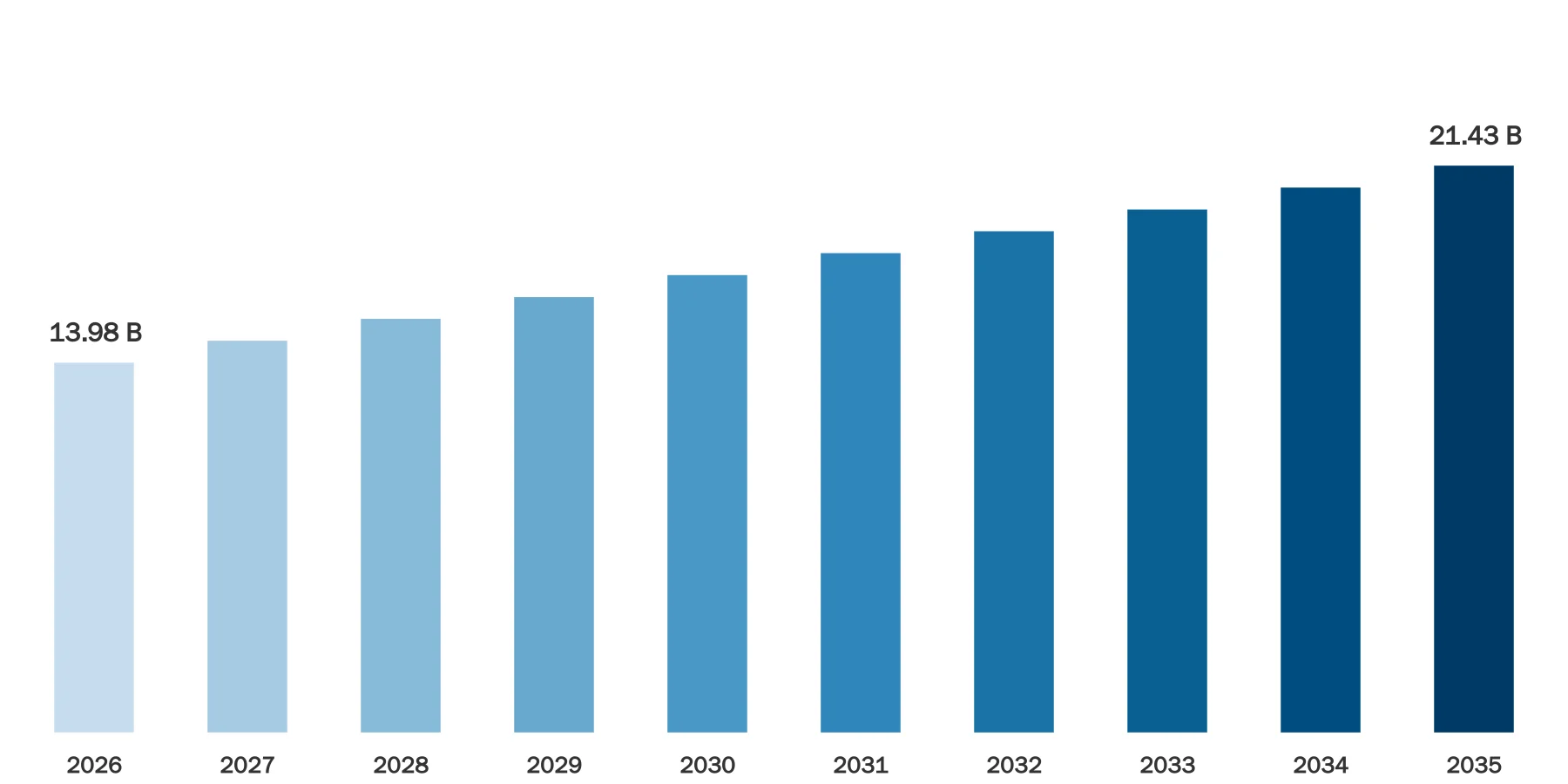
Source: Econ Market Research
The Submersible Pumps Market plays a critical role in water extraction, wastewater treatment, oil handling, and irrigation systems worldwide. Submersible pumps operate fully submerged in liquid and are widely used in agriculture, municipal water systems, construction, and mining sectors. Globally, more than 65% of groundwater extraction systems rely on submersible pumping technology, particularly in irrigation and municipal water supply. Over 2.4 billion people depend on groundwater resources, creating strong demand for efficient pumping solutions. In agriculture alone, nearly 70% of irrigation water withdrawals require pumping systems, with submersible pumps widely adopted due to efficiency levels exceeding 80% in modern multi-stage designs. The Submersible Pumps Market Analysis shows that installations across municipal wastewater facilities exceed 140,000 treatment plants worldwide, all of which require multiple pumping units for operations.
The USA Submersible Pumps Market demonstrates strong demand due to extensive groundwater utilization, municipal infrastructure, and energy sector operations. The United States operates more than 16 million water wells, including 13 million residential wells and 3 million agricultural and industrial wells, creating significant demand for submersible pump systems. Agricultural irrigation covers over 58 million acres of farmland, with approximately 35% relying on pumped groundwater systems. Municipal wastewater infrastructure in the U.S. includes more than 15,000 wastewater treatment facilities, many operating multiple submersible pumps for sludge and sewage handling. Additionally, the country has over 2,600 active mines and drilling operations, where submersible pumps are used for dewatering systems that remove thousands of cubic meters of water daily.
Market Latest Trends
The Submersible Pumps Market Trends indicate strong technological innovation, digital monitoring, and efficiency improvements across industrial and municipal applications. Smart pump technology is rapidly gaining adoption, with more than 28% of newly installed pumps integrated with digital monitoring systems capable of real-time diagnostics. These intelligent systems measure parameters such as flow rate, pressure levels, vibration levels, and motor temperature, enabling predictive maintenance that can reduce operational downtime by 30–40%.
Energy efficiency remains another critical trend shaping the Submersible Pumps Industry Analysis. Modern submersible pump motors can achieve efficiency levels exceeding 90%, compared with older models operating at 65–75% efficiency levels. Globally, electric motors used in pumping systems account for nearly 45% of industrial electricity consumption, encouraging industries to adopt high-efficiency pump technologies. Variable frequency drives (VFDs) integrated with submersible pumps can reduce energy consumption by 20–35% by adjusting pump speed according to demand.
Urbanization is also accelerating demand. By 2030, nearly 60% of the global population will live in urban areas, requiring extensive wastewater infrastructure. Urban wastewater treatment facilities process approximately 360 billion cubic meters of wastewater annually, and submersible pumps are essential for sewage transport, sludge handling, and flood control systems.
The Submersible Pumps Market Outlook also highlights increased adoption in flood management systems. Climate change has increased the frequency of extreme rainfall events, with flood-related incidents increasing by nearly 134% since 2000, prompting cities to install high-capacity submersible drainage pumps capable of handling flow capacities exceeding 1,000 cubic meters per hour.
Market Dynamics
DRIVER
Increasing Demand for Groundwater Extraction and Agricultural Irrigation
The primary growth driver for the Submersible Pumps Market Growth is the rising demand for groundwater extraction and irrigation systems. Agriculture consumes nearly 70% of global freshwater withdrawals, and pumping systems are essential for irrigation in regions lacking natural water distribution. In countries such as India and China, more than 60 million irrigation pumps are currently operational, with submersible pumps accounting for a large proportion of installations in borewells and tube wells.
In India alone, approximately 30 million agricultural pump sets are used for irrigation, with nearly 60% connected to groundwater wells deeper than 30 meters, where submersible pumps are the preferred solution. Modern borewell pumps are capable of lifting water from depths exceeding 300 meters, making them critical for deep groundwater extraction.
Municipal water supply systems also depend heavily on pumping infrastructure. Cities with populations exceeding 1 million residents typically operate more than 200 pumping stations to maintain water supply distribution networks. As urban populations grow and water demand increases by approximately 1% annually, the demand for reliable submersible pumping systems continues to rise across municipal utilities and infrastructure projects.
RESTRAINT
High Energy Consumption and Maintenance Costs
Despite strong demand, the Submersible Pumps Market Analysis faces restraints related to energy consumption and operational costs. Pumping systems are among the largest energy consumers in industrial and municipal infrastructure. Globally, pumping systems account for nearly 10% of total electricity consumption, particularly in water treatment, oil extraction, and mining operations.
Submersible pump motors typically operate within power ranges of 0.5 kilowatts to 750 kilowatts, depending on application requirements. Larger pumps used in municipal sewage systems or mining operations can operate continuously for 20–24 hours per day, increasing energy consumption and maintenance requirements.
Maintenance challenges also arise due to pump submersion in corrosive or abrasive fluids. Pumps used in wastewater facilities must withstand solids concentrations exceeding 5–10%, which can cause mechanical wear and reduce operational lifespan. Maintenance intervals typically occur every 8,000 to 12,000 operating hours, requiring pump removal and servicing, which increases operational costs for municipalities and industrial operators.
OPPORTUNITIES
Expansion of Wastewater Treatment Infrastructure
The expansion of wastewater treatment infrastructure presents major opportunities for the Submersible Pumps Market Opportunities segment. Globally, more than 80% of wastewater generated in developing countries remains untreated, highlighting significant infrastructure investment potential.
The global wastewater volume generated each year exceeds 380 billion cubic meters, requiring extensive pumping systems for collection, treatment, and disposal. Submersible pumps are widely used in sewage lift stations and sludge transport systems.
Emerging economies are investing heavily in sanitation infrastructure. For example, more than 1,200 new wastewater treatment facilities have been planned across Asia and Africa over the past decade to support urban populations exceeding 500 million residents. Each facility typically installs between 20 and 150 pumping units, depending on plant capacity.
Industrial Wastewater Treatment also contributes to demand. Industries such as mining, chemicals, and food processing produce wastewater volumes exceeding 70 cubic meters per hour per facility, requiring robust pumping systems capable of handling solid particles and corrosive liquids.
CHALLENGES
Operational Reliability in Harsh Industrial Environments
One of the major challenges in the Submersible Pumps Industry Report is maintaining operational reliability in harsh industrial environments. Submersible pumps operating in mining and oil extraction sites often encounter abrasive fluids containing sand particles exceeding 2 millimeters in diameter, which can significantly increase wear on impellers and seals.
Mining operations require continuous dewatering systems capable of removing 500 to 5,000 cubic meters of water per hour, often from depths exceeding 150 meters. Pump failures can halt mining operations and result in safety risks.
Temperature conditions also present challenges. Submersible pumps used in geothermal and oil extraction applications may operate in temperatures exceeding 120°C, requiring specialized materials such as stainless steel or corrosion-resistant alloys.
Another challenge is power supply stability in remote areas. Rural agricultural regions and mining sites often experience voltage fluctuations exceeding 10–15%, which can damage electric pump motors and reduce operational life expectancy.
SWOT Analysis
Strengths
High operational efficiency levels exceeding 80–90% in modern pump designs
Ability to operate at depths exceeding 300 meters in borewell applications
Widely used across 4 major industries: agriculture, mining, municipal utilities, and construction
Reduced noise levels compared with surface pumps, typically below 70 decibels
Weaknesses
High installation costs due to specialized well drilling and pump assembly
Energy consumption accounting for nearly 10% of industrial electricity use
Maintenance complexity due to submerged operation environments
Pump motor overheating risk when operating continuously beyond 24 hours
Opportunities
Over 380 billion cubic meters of wastewater generated annually worldwide
Urban population expected to exceed 5 billion people by 2030, increasing water infrastructure demand
Rising demand for deep groundwater extraction systems in drought-prone regions
Smart pump monitoring technologies adopted in more than 25% of new installations
Threats
Increasing electricity costs affecting pump operating expenses
Growing adoption of solar-powered irrigation pumps replacing conventional systems
Groundwater depletion in regions where water tables drop more than 1 meter annually
Supply chain disruptions affecting electric motor components and steel materials
Segmentation Analysis
The Submersible Pumps Market Segmentation is primarily categorized by product type and drive type, with each segment serving specific industrial and municipal applications. Borewell and openwell pumps are widely used in groundwater extraction systems, while non-clog pumps dominate wastewater and sewage handling applications. Electric drives account for the majority of installations due to higher efficiency levels exceeding 85%, while hydraulic drives are used in heavy industrial environments requiring high pressure and torque. These segmentation patterns help industries choose pump designs capable of handling fluid flow rates ranging from 5 cubic meters per hour to over 1,500 cubic meters per hour, depending on operational requirements.
By Product
Borewell
Borewell submersible pumps represent a major segment of the Submersible Pumps Market Share, accounting for nearly 45% of installations globally. These pumps are widely used for deep groundwater extraction in agricultural irrigation and municipal water supply systems. Borewell pumps operate in narrow wells with diameters ranging between 100 millimeters and 250 millimeters and can lift water from depths exceeding 300 meters. Agricultural irrigation systems alone operate more than 60 million borewell pumping units worldwide, particularly in Asia where groundwater irrigation supports nearly 40% of crop production.
Openwell
Openwell submersible pumps are commonly used in shallow wells, reservoirs, and tanks where water depth typically ranges from 5 meters to 30 meters. These pumps represent approximately 30% of global installations and are widely adopted in residential water supply systems and small agricultural farms. Openwell pumps typically operate with motor capacities ranging between 0.5 horsepower and 10 horsepower, delivering flow rates of 20 to 200 liters per minute depending on application needs.
Non-Clog
Non-clog submersible pumps are designed for wastewater and sewage handling applications where fluids contain suspended solids. These pumps represent nearly 25% of the global submersible pump market share and are widely used in municipal sewage treatment plants. Non-clog pumps can handle solid particles up to 50 millimeters in diameter and operate with flow capacities exceeding 1,000 cubic meters per hour in large wastewater facilities.
By Drive
Electric
Electric drives dominate the Submersible Pumps Industry Analysis, accounting for nearly 80% of global installations. Electric submersible pumps operate with motors ranging from 0.37 kilowatts to 750 kilowatts, enabling applications across agriculture, municipal utilities, and industrial sectors. Electric pumps are widely used due to efficiency levels exceeding 85%, reduced noise emissions, and compatibility with automated monitoring systems.
Hydraulic
Hydraulic drive submersible pumps represent approximately 12% of the market, primarily used in heavy industrial environments such as mining and offshore drilling operations. Hydraulic pumps operate under high-pressure conditions exceeding 350 bar, enabling efficient fluid handling in challenging environments where electric power supply is limited.
Others
Other drive technologies, including pneumatic and diesel-powered submersible pumps, account for nearly 8% of installations. These pumps are commonly used in construction and emergency flood control applications where portable pumping systems are required. Portable submersible pumps used in disaster management can remove 500 cubic meters of water per hour, enabling rapid drainage in flooded areas.
Regional Analysis
The Submersible Pumps Market Outlook varies significantly across regions due to differences in water infrastructure, industrial development, and agricultural irrigation needs. Asia-Pacific represents the largest market due to widespread groundwater irrigation systems, while North America and Europe focus on municipal wastewater infrastructure and industrial pumping systems.
North America
North America accounts for approximately 24% of the global Submersible Pumps Market Share, driven by extensive water infrastructure and industrial operations. The United States operates more than 15,000 wastewater treatment plants, each equipped with multiple submersible pumping units for sewage and sludge transport. Municipal pumping stations process nearly 34 billion gallons of wastewater daily.
Agricultural irrigation across the region covers over 60 million hectares, with groundwater extraction systems playing a significant role in water supply. Submersible pumps are commonly installed in wells with depths exceeding 100 meters, supporting irrigation for crops such as corn, soybeans, and wheat.
The mining industry also contributes to pump demand. North America operates more than 2,000 active mining sites, where dewatering pumps remove groundwater volumes exceeding 10,000 cubic meters per day in some locations.
Europe
Europe represents nearly 22% of the global Submersible Pumps Market, driven by strong wastewater management regulations and industrial water treatment infrastructure. The European Union operates more than 22,000 wastewater treatment plants, many of which use multiple submersible pumping systems for sludge transport and water recirculation.
Water recycling and environmental regulations have increased the demand for energy-efficient pumping technologies. Pump efficiency standards require Industrial Pumps to meet minimum efficiency levels exceeding 80%, encouraging replacement of older pumping systems.
Agriculture in Southern Europe also relies on groundwater pumping systems for irrigation across approximately 20 million hectares of farmland, particularly in Spain, Italy, and Greece where water scarcity has increased reliance on deep groundwater wells.
Asia-Pacific
Asia-Pacific dominates the Submersible Pumps Market Size with a market share exceeding 40%, largely due to extensive irrigation infrastructure and population growth. The region contains more than 60% of the global population, increasing water supply and wastewater management requirements.
India alone operates over 30 million irrigation pumps, while China operates more than 20 million groundwater extraction pumps supporting agricultural production. Rice cultivation across Asia requires water usage exceeding 2,500 liters per kilogram of rice, creating strong demand for irrigation pumping systems.
Urbanization across Asia-Pacific has also increased wastewater generation. Cities across the region produce more than 150 billion cubic meters of wastewater annually, requiring extensive sewage pumping infrastructure.
Middle East & Africa
The Middle East & Africa region accounts for approximately 14% of the Submersible Pumps Market Share, driven primarily by water scarcity and groundwater extraction requirements. Many countries in the region rely on deep groundwater wells exceeding 500 meters in depth to supply drinking water and irrigation systems.
Agricultural irrigation systems in the Middle East consume nearly 85% of available freshwater resources, requiring high-capacity pumping systems. Submersible pumps used in desert agriculture often operate under temperatures exceeding 45°C.
Mining operations across Africa also generate strong demand for dewatering pumps. More than 1,000 mining projects operate across the continent, many requiring continuous pumping systems capable of removing thousands of cubic meters of groundwater daily.
Competitive Landscape
The Submersible Pumps Market Competitive Landscape is characterized by strong competition among global manufacturers focusing on efficiency improvements, product durability, and digital monitoring technologies. Major manufacturers produce pumps capable of handling flow capacities ranging from 5 cubic meters per hour to more than 2,000 cubic meters per hour depending on application requirements.
More than 150 global manufacturers operate in the submersible pump industry, including specialized companies focusing on wastewater management, oil extraction, and agricultural irrigation systems. Manufacturers invest heavily in research and development to improve motor efficiency levels beyond 90%, while reducing vibration levels and improving seal durability.
The industry also focuses on corrosion-resistant materials such as stainless steel, cast iron, and high-strength polymers to extend pump lifespan beyond 15 years in industrial environments. Digital monitoring systems are increasingly integrated into pumps, allowing operators to monitor parameters such as motor load, temperature, and vibration levels remotely.
Large companies operate manufacturing facilities across 30 to 50 countries, enabling global distribution networks supporting municipal utilities, agricultural irrigation projects, and industrial facilities.
List of Top Submersible Pumps Companies
Xylem
Sulzer Ltd.
KSB SE & Co. KGaA
Grundfos Holding A/S
Atlas Copco
Flowserve
WILO SE
Homa Pump Technology
LEO PUMP
VANSAN Water Technologies
Grindex
HCP PUMP MANUFACTURER CO., LTD.
EBARA International Corporation
SLB
KIRLOSKAR BROTHERS LIMITED
Top Companies with Highest Market Share
Grundfos Holding A/S and Xylem hold the highest share in the Submersible Pumps Market, together accounting for nearly 20–25% of global installations across municipal, agricultural, and industrial sectors. Grundfos operates production facilities in more than 50 countries and manufactures over 16 million pump units annually.
Xylem supplies pumping equipment to over 150 countries, with product portfolios including sewage pumps capable of handling flow capacities exceeding 1,500 cubic meters per hour.
Market Investment Outlook
The Submersible Pumps Market Investment Outlook highlights strong infrastructure investment in water management, wastewater treatment, and irrigation systems. Governments and private utilities are investing heavily in pumping infrastructure to address water scarcity and urban sanitation challenges.
Global water infrastructure investment exceeds hundreds of billions annually, with a large portion allocated to pumping systems used in water distribution networks and wastewater facilities. Municipal sewage systems require pumping stations every 2 to 5 kilometers along pipeline networks to maintain water flow.
Agricultural irrigation projects also drive investments. More than 300 million hectares of irrigated farmland worldwide rely on pumping systems for water distribution. Submersible pumps are widely installed in irrigation wells where water tables exceed 20 meters in depth.
Mining and oil extraction industries invest heavily in dewatering systems to remove groundwater during excavation. Large-scale mining operations may install 20 to 50 pumping units across a single mine site to maintain safe operating conditions.
New Product Development
Innovation in the Submersible Pumps Market Industry Analysis focuses on improving energy efficiency, durability, and digital monitoring capabilities. Manufacturers are developing pumps equipped with smart sensors capable of monitoring vibration, pressure, and temperature in real time, enabling predictive maintenance.
Advanced motor designs now achieve efficiency levels exceeding 90%, reducing electricity consumption in large pumping stations. Some manufacturers are introducing pumps with permanent magnet motors, which can reduce energy losses by 10–15% compared with conventional induction motors.
Corrosion-resistant materials such as duplex stainless steel are increasingly used in pump construction, enabling operation in saline water environments where chloride concentrations exceed 20,000 milligrams per liter.
Manufacturers are also developing compact pumps capable of handling high flow rates while occupying 30% less installation space, making them suitable for urban wastewater pumping stations where infrastructure space is limited.
Recent Developments
In 2023, a major pump manufacturer launched a high-efficiency submersible wastewater pump capable of handling solid particles up to 75 millimeters in diameter.
In 2024, a new digital pump monitoring system was introduced that tracks 15 operational parameters, including vibration, motor temperature, and flow rate.
In 2024, an industrial pump manufacturer developed a corrosion-resistant submersible pump designed for seawater desalination plants operating with salinity levels exceeding 35 grams per liter.
In 2025, a mining equipment company introduced a heavy-duty submersible pump capable of removing 3,000 cubic meters of water per hour from underground mines.
In 2025, a pump manufacturer released a permanent magnet motor pump design capable of reducing electricity consumption by up to 12% compared with conventional motor systems.
Submersible Pumps Market Report Scope & Segmentation
| Attributes | Details |
|---|---|
Market Size (Current) | US$ 13.98 Billion in 2026 |
Market Size (Forecast) | US$ 21.43 Billion in 2035 |
Growth Rate | CAGR of 5.1% from 2026 to 2035 |
Forecast Period | 2026 – 2035 |
Base Year | 2025 |
Historical Data Available | Yes |
Regional Scope | Global |
Segments Covered | By Product
By Drive
By End Use
|
Frequently Asked Questions
Common questions about this report
The study period covers historical insights and forecast projections for the period 2026-2035.
About the Author
Market research expert with years of industry experience

Related Reports
Explore more market insights from the same category