

Study Abroad Service Market
Study Abroad Service Market Size, Share, Trends, Growth, and Industry Analysis, By Service Type (University Admission Services, Test Preparation (IELTS/TOEFL), Visa & Immigration Assistance, Counseling Services, Others), By Program Type (Undergraduate, Postgraduate, Diploma, Certification Programs), By Destination (USA, UK, Canada, Australia, Germany, Others), By Mode (Online Counseling, Offline Counseling), By End-User (Students, Working Professionals), Regional Analysis and Forecast Period 2026-2035
Study Abroad Service Market Overview
As per Econ Market Research analysis, the Global Study Abroad Service Market valuation stood at US$ 35.8 Billion in 2026 and is expected to reach US$ 81.02 Billion by 2035, growing at a steady CAGR of 9.50% from 2026 to 2035. 2025 serves as the base year.
Study Abroad Service Market Size 2025-2035 (USD Billion)

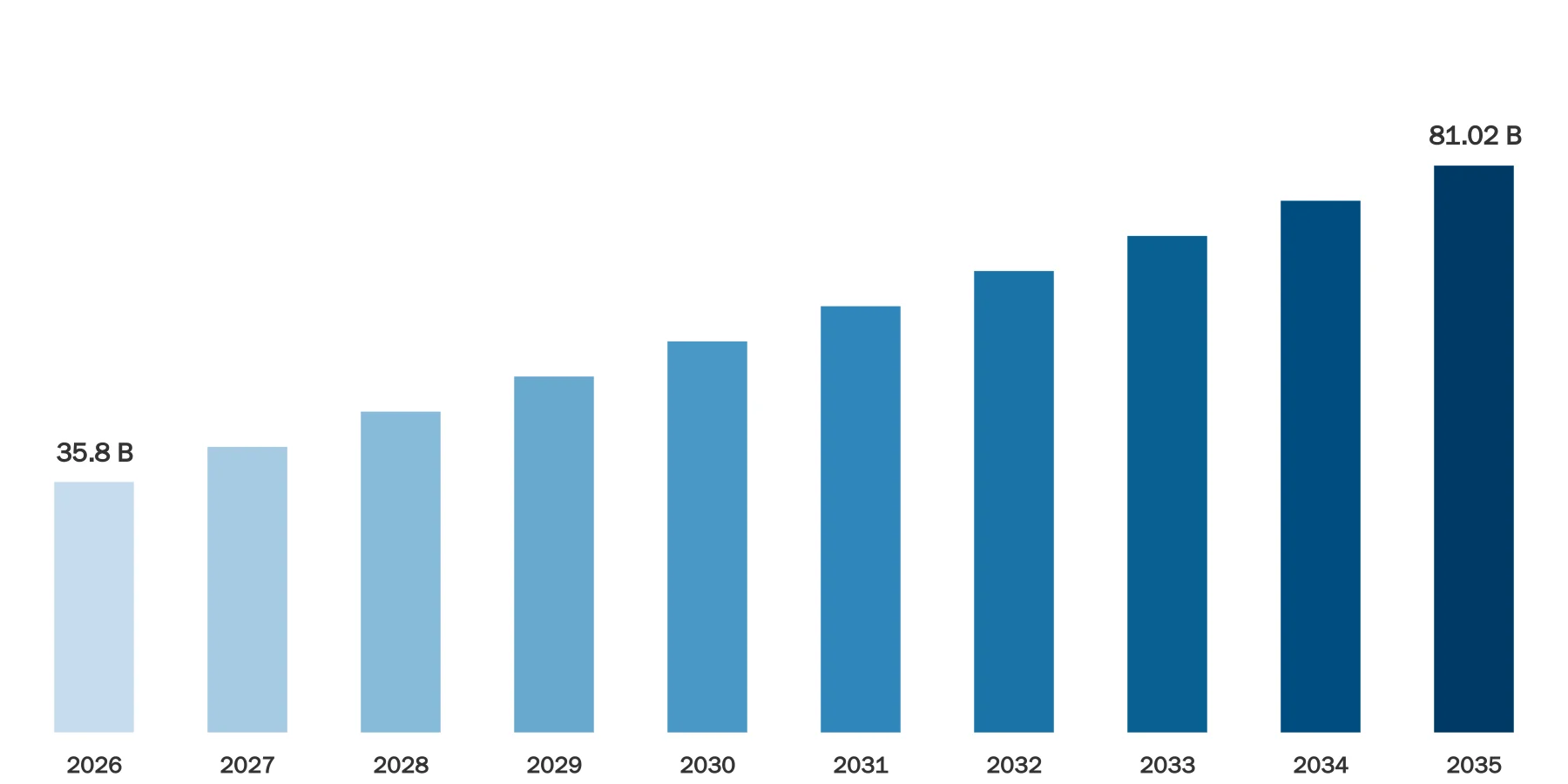
Source: Econ Market Research
The Study Abroad Service Market is driven by more than 6.4 million international students globally in 2023, with projections indicating an increase to over 8.0 million by 2030. More than 55% of students rely on third-party consultants for admission, visa processing, and financial planning. Around 72% of study abroad applicants seek assistance for application documentation, while 48% use services for scholarship guidance. Digital platforms now account for over 60% of initial consultations, indicating a strong shift toward online advisory ecosystems. Approximately 35% of students opt for bundled services, including counseling, visa support, and accommodation arrangements, highlighting integrated service demand.
The USA Study Abroad Service Market hosts over 1.05 million international students in 2023, accounting for approximately 16% of global student mobility. More than 68% of students in the USA originate from Asia, with India contributing nearly 25% and China around 30%. STEM programs account for 52% of enrollments, making them the dominant segment. Around 75% of international students in the USA use at least one external service provider for application or visa assistance. Additionally, 40% of students utilize education agents, while 30% rely on digital platforms for direct university applications, reflecting a hybrid service model adoption.
Market Latest Trends
The Study Abroad Service Market Trends show a strong digital transformation, with over 65% of service providers offering AI-driven counseling tools in 2024. Virtual consultations increased by 80% between 2020 and 2024, while chatbot usage for student queries rose by 45% annually. Data Analytics is used by 50% of agencies to match students with universities based on academic profiles and financial capacity. Another major trend includes diversification of destinations, with non-traditional countries witnessing a 30% rise in student inflow. Short-term programs such as diplomas and certifications now account for 28% of total study abroad enrollments. Additionally, 40% of students prioritize post-study work visas, influencing service packages. Sustainability awareness is also growing, with 25% of students considering carbon footprint and eco-friendly campuses when choosing institutions.
Market Dynamics
The Study Abroad Service Market Analysis highlights that global student mobility exceeded 6 million individuals annually, with services covering admission, visa, financial planning, and accommodation. Approximately 70% of students depend on consultants, while 30% directly engage with institutions. The increasing number of international universities, exceeding 30,000 globally, has intensified competition and demand for professional guidance. Technological integration, including AI and CRM systems, has improved service efficiency by 35%, while regulatory complexities across 50+ countries have increased reliance on expert consultation.
DRIVER
Increasing Demand for International Education
The primary driver of the Study Abroad Service Market Growth is the rising demand for international education, with global tertiary enrollment surpassing 235 million students in 2023. Approximately 20% of students express interest in studying abroad, and 15% actively apply each year. Countries such as Canada, Australia, and the UK saw student intake increases of 18%, 22%, and 16% respectively. Additionally, 60% of employers prefer candidates with international exposure, driving student interest. Scholarships have increased by 25% globally, while government-backed mobility programs support over 500,000 students annually, further fueling demand for structured services.
RESTRAINT
High Cost of Study Abroad Programs
A major restraint in the Study Abroad Service Market is the high cost of education abroad, with tuition fees ranging from $10,000 to $50,000 annually across major destinations. Living expenses can add $12,000 to $25,000 per year, making affordability a critical issue. Around 45% of students abandon plans due to financial constraints, while 30% depend on education loans. Currency fluctuations impact 20% of applicants, and visa rejection rates of 10%–20% in certain countries further discourage applicants. These financial barriers reduce market penetration in developing regions.
OPPORTUNITY
Expansion of Emerging Study Destinations
Emerging destinations such as Germany, Ireland, and Singapore have seen student growth rates of over 25% annually. Germany alone hosts more than 400,000 international students, offering low or no tuition fees in public universities. Around 35% of students now consider alternative destinations, driven by affordability and visa flexibility. Online platforms supporting multi-country applications increased user engagement by 50%, creating opportunities for service providers to expand globally. Additionally, government partnerships with over 70 countries enhance student mobility programs, creating untapped market potential.
CHALLENGES
Regulatory and Visa Complexities
The Study Abroad Service Market faces challenges due to complex visa regulations across more than 100 immigration systems worldwide. Visa approval rates vary from 60% to 90%, depending on the destination and applicant profile. Policy changes occur annually in over 40% of major study destinations, affecting student planning. Documentation requirements include 10–20 mandatory documents, increasing processing time by 30%. Additionally, fraud cases in student applications account for 5%–8% of total submissions, leading to stricter scrutiny and compliance requirements for service providers.
SWOT Analysis
Strengths
Over 6.4 million global students drive consistent demand
70% reliance on consultants ensures service relevance
Digital adoption exceeds 60% across platforms
More than 30,000 global institutions create vast opportunities
Weaknesses
High service dependency in only 55% of regions
Cost barriers impact 45% of potential applicants
Limited awareness in rural markets below 35% penetration
Service fragmentation across thousands of small agencies
Opportunities
Emerging destinations growing at 25%+ student intake
AI adoption improving efficiency by 35%
Online Education demand rising by 40% globally
Government-funded programs exceeding 500,000 scholarships annually
Threats
Visa rejection rates reaching 20% in some regions
Policy changes affecting 40% of destinations annually
Fraud cases impacting 5%–8% of applications
Increasing competition with over 10,000 service providers globally
Segmentation Analysis
The Study Abroad Service Market is segmented by Service Type, Program Type, Destination, Mode, and End-User, each contributing differently to market share. Service Type includes counseling, visa assistance, and financial planning, while Program Type includes undergraduate, postgraduate, and diploma courses. Destination segmentation reflects student preferences across North America, Europe, and Asia-Pacific. Mode includes online and offline services, with online accounting for over 60% usage. End-users include individual students and institutions, with students forming nearly 85% of demand.
By Service Type
The Service Type segment includes admission counseling, visa processing, financial advisory, and accommodation services. Admission counseling accounts for approximately 40% of total service demand, as over 70% of students seek help with university selection. Visa processing contributes nearly 25% share, with documentation complexity involving 10–20 steps per application. Financial advisory services represent 20%, driven by 30% of students relying on education loans. Accommodation and travel support contribute 15%, with 50% of students requiring housing assistance. Integrated service packages are chosen by 35% of users, showing preference for bundled offerings.
By Program Type
Program Type segmentation shows undergraduate programs accounting for 45% of enrollments, while postgraduate programs contribute 40%. Diploma and certificate programs hold 15% share, driven by shorter durations of 1–2 years. STEM programs dominate with 52% enrollment, followed by business programs at 30%. Healthcare and arts programs collectively contribute 18%. Approximately 60% of postgraduate applicants seek research-based programs, while 35% prefer professional degrees, indicating diverse academic demand.
By Destination
North America holds around 35% market share, followed by Europe at 30%, and Asia-Pacific at 25%. Emerging regions contribute 10% but are growing rapidly. The USA alone hosts over 1 million students, while Canada enrolls over 800,000 students. The UK attracts more than 600,000 students annually, while Australia hosts over 500,000 students. Germany and France collectively account for over 700,000 students, reflecting strong European demand. Around 35% of students now choose alternative destinations, indicating diversification trends.
By Mode
Online mode dominates with over 60% market share, driven by digital consultations and application platforms. Offline services still account for 40%, especially in developing regions where digital penetration is below 50%. Virtual counseling sessions increased by 80%, while mobile app usage rose by 55%. Hybrid models are used by 45% of service providers, combining physical offices and digital platforms. Automated application systems reduce processing time by 30%, enhancing efficiency.
By End-User
Individual students represent 85% of the market, while institutions account for 15%. Among students, 65% are aged between 18–30 years, making them the primary demographic. Universities partner with over 10,000 agencies globally, forming institutional demand. Approximately 40% of students rely on family funding, while 30% use loans, influencing service requirements. Corporate-sponsored education programs account for 5% of end-users, indicating niche demand.
Regional Analysis
The Study Abroad Service Market Outlook shows strong regional variations, with North America leading at 35% share, followed by Europe at 30%, Asia-Pacific at 25%, and Middle East & Africa at 10%. Student mobility is influenced by visa policies, tuition costs, and employment opportunities, with over 60% of students choosing English-speaking countries.
North America
North America dominates with approximately 35% market share, driven by over 1.8 million international students across the USA and Canada. The USA alone hosts 1.05 million students, while Canada exceeds 800,000 enrollments. Around 70% of students use Professional Services, and 50% prioritize STEM programs. Visa approval rates range between 70%–85%, influencing service demand. More than 60% of applications are processed digitally, while 40% still involve agent-based assistance. Scholarship programs support over 200,000 students annually, further boosting service demand.
Europe
Europe accounts for 30% of global market share, with over 2 million international students. Germany leads with 400,000 students, followed by the UK with 600,000 students. France and the Netherlands collectively host over 500,000 students. Around 55% of students use study abroad services, particularly for visa and accommodation. Tuition-free education in some countries attracts 30% of applicants. Visa processing times average 4–12 weeks, requiring structured support services.
Asia-Pacific
Asia-Pacific holds 25% market share, with countries like Australia hosting over 500,000 students. China and India together contribute more than 50% of outbound students globally. Approximately 65% of students from this region rely on agents, while 35% use digital platforms. Japan, South Korea, and Singapore are emerging destinations with 20% growth in student inflow. Scholarships and exchange programs support over 150,000 students annually.
Middle East & Africa
This region contributes 10% of the market, with over 500,000 outbound students. The UAE and Saudi Arabia account for 40% of regional demand. Around 60% of students use consultancy services, while 20% rely on government-sponsored programs. Visa approval rates exceed 75% for certain destinations. Africa shows rising demand, with student mobility increasing by 15% annually, driven by improving education awareness.
Competitive Landscape
The Study Abroad Service Market Share is highly fragmented, with over 10,000 service providers globally. Top players collectively account for approximately 25%–30% of the market, while regional players dominate 70% share. Digital platforms have increased competition, with 50% of new entrants offering online-only services. Established companies maintain partnerships with over 1,500 universities, providing access to diverse programs. Customer acquisition costs have increased by 20%, while digital marketing accounts for 45% of lead generation. AI-based matching tools improve conversion rates by 30%, giving competitive advantage to tech-driven companies.
List of Top Study Abroad Service Companies
IDP Education
AECC Global
ApplyBoard
Leverage Edu
SI-UK
Edwise International
Global Opportunities Pvt Ltd.
KC Overseas Education
Y-Axis Overseas Careers
Canam Consultants
Fateh Education
Leading Companies by Market Share
IDP Education and ApplyBoard are leading players, collectively accounting for approximately 15%–18% of global market share. IDP operates in over 30 countries, serving more than 500,000 students annually, while ApplyBoard partners with over 1,500 institutions and processes more than 300,000 applications each year.
Market Investment Outlook
The Study Abroad Service Market Forecast indicates increasing investments in digital platforms, with over $500 million invested globally in edtech solutions supporting international education services between 2022 and 2024. Venture capital funding in this sector grew by 35% in deal volume, focusing on AI-driven counseling and application automation. Startups represent 40% of new investments, while established companies expand through acquisitions in over 20 countries. Around 60% of investments target Asia-Pacific, driven by high outbound student volumes. Strategic partnerships between universities and service providers increased by 25%, enhancing market penetration.
New Product Development
Innovation in the Study Abroad Service Industry includes AI-based university matching systems used by 55% of leading platforms. Mobile applications now support 70% of application processes, while blockchain verification is adopted by 15% of institutions to reduce fraud. Virtual reality campus tours are offered by 25% of service providers, enhancing student experience. Automated visa documentation tools reduce errors by 30%, improving approval rates. Additionally, personalized dashboards track application progress for 80% of users, improving transparency and engagement.
Recent Developments
In 2023, a major platform expanded partnerships to over 1,500 universities, increasing application processing capacity by 40%.
In 2024, AI counseling tools were adopted by 60% of leading providers, improving student matching accuracy by 35%.
In 2023, digital application submissions surpassed 65% of total applications globally.
In 2025, virtual consultation sessions exceeded 80% usage among international applicants.
In 2024, scholarship matching platforms increased student funding success rates by 25%.
Report Coverage of Study Abroad Service Market
The Study Abroad Service Market Research Report covers analysis across more than 50 countries, including data on over 6.4 million international students. It evaluates segmentation across 5 major categories and includes insights into over 10,000 service providers. The report examines regulatory frameworks in 100+ immigration systems, along with student preferences across 30,000 global institutions. It includes analysis of digital adoption, which exceeds 60% usage, and highlights emerging destinations with 25% growth rates. Additionally, it assesses competitive dynamics, investment trends, and technological advancements influencing the market.
Study Abroad Service Market Report Scope & Segmentation
| Attributes | Details |
|---|---|
Market Size (Current) | US$ 35.8 Billion in 2026 |
Market Size (Forecast) | US$ 81.02 Billion in 2035 |
Growth Rate | CAGR of 9.50% from 2026 to 2035 |
Forecast Period | 2026 – 2035 |
Base Year | 2025 |
Historical Data Available | Yes |
Regional Scope | Global |
Segments Covered | By Service Type
By Program Type
By Destination
By Mode
By End-User
|
Frequently Asked Questions
Common questions about this report
The study period covers historical insights and forecast projections for the period 2026-2035.
About the Author
Market research expert with years of industry experience

Dipali Bhingare serves as the Market Research Director at Econ Market Research. With a focus on translating complex global economic shifts into actionable business intelligence, she oversees the strategic direction of comprehensive market studies. Her work empowers organizations to navigate volatile industries through data-driven forecasting and deep-dive competitive analysis.
Related Reports
Explore more market insights from the same category