Specialty Adhesives Market Overview
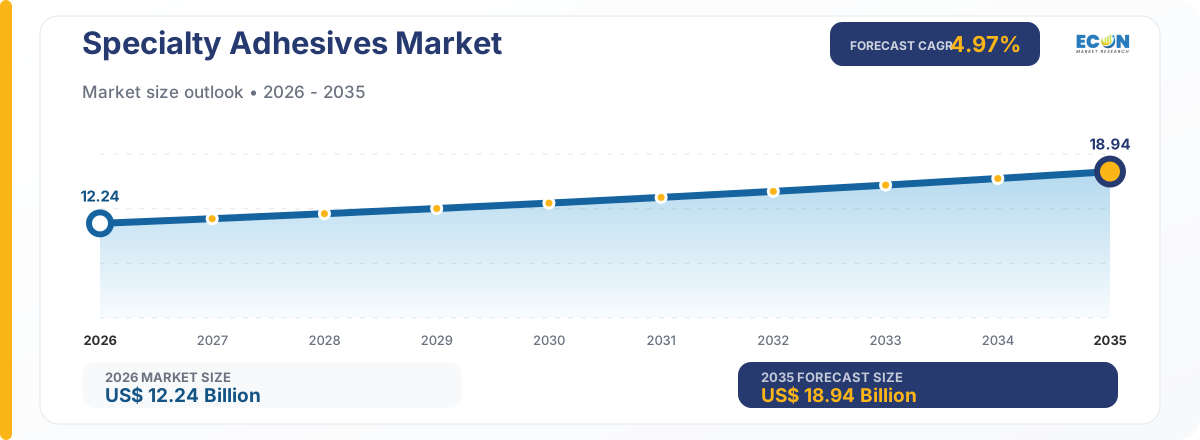
As per Econ Market Research analysis, Global Specialty Adhesives Market size stood at US$ 12.24 Billion in 2026 and is projected to reach US$ 18.94 Billion by 2035, growing at a CAGR of 4.97% over the forecast period 2026–2035. 2025 is taken as the base year.
Specialty adhesives are designed to provide unique properties such as high temperature resistance, flexibility, chemical resistance, or rapid curing times, meeting the stringent requirements of various sectors including automotive, aerospace, construction, electronics, healthcare, and packaging. These adhesives offer enhanced performance characteristics compared to standard adhesives, often tailored to specific substrates like metals, plastics, composites, and elastomers. The market for specialty adhesives continues to expand driven by technological advancements, stringent regulatory requirements, and the growing demand for lightweight, durable, and eco-friendly bonding solutions across a wide spectrum of industries.
The market for specialty adhesives worldwide has grown rapidly in recent years, driven by rising R&,D spending, adhesive technology advancements, and the growing need for high-performance bonding solutions in vital industries. As end-user requirements and regulatory standards change, manufacturers are concentrating on creating sophisticated formulations with enhanced bonding strength, durability, and environmental sustainability. Furthermore, the market is expanding due to the increasing use of specialty adhesives in cutting-edge applications like flexible electronics, medical devices, renewable energy systems, and lightweight Automotive Components. Prominent industry participants are proactively participating in tactical partnerships, mergers, and acquisitions to fortify their product lines, broaden their market reach, and seize new prospects in various end-user industries.
Specialty Adhesives Dynamics
Technological advancements and innovations in adhesive formulations drive market growth, as manufacturers strive to meet evolving end-user requirements for high-performance bonding solutions across diverse industries. Moreover, increasing investments in research and development activities fuel the development of advanced adhesives with enhanced properties such as improved strength, durability, and environmental sustainability, further propelling market expansion. Market dynamics are also greatly influenced by regulatory compliance and environmental sustainability concerns. Manufacturers are increasingly concentrating on creating environmentally friendly adhesive formulations that satisfy strict regulations while reducing their negative effects on the environment.
In addition, new growth opportunities for market players are presented by the expanding use of specialty adhesives in cutting-edge applications like flexible electronics, medical devices, and renewable energy systems. In addition, it is common for major industry players to engage in strategic alliances, mergers, and acquisitions with the goal of broadening their product offerings, boosting their market share, and seizing newly emerging opportunities and trends. However, there are significant obstacles to market expansion and profitability, including unstable raw material prices, supply chain disruptions, and competition from alternative bonding technologies.
Specialty Adhesives Drivers
Technological Advancements:
The global specialty adhesives market is growing as a result of ongoing technological advancements. As adhesive formulations are further refined through research and development, manufacturers will be able to launch products that are more environmentally sustainable, have better bonding qualities, and are more durable. For example, the advancement of nano-adhesives enables stronger molecular bonds, meeting the needs of industries that need precise bonding solutions. Additionally, improvements in curing technologies allow for quicker production cycles, which decrease manufacturing cycle times and boost overall efficiency.
Increasing Demand from Emerging Applications:
The growing market is being driven primarily by the growing use of specialty adhesives in new applications. Specialty adhesives are being used more and more in industries like medical devices, flexible electronics, and renewable energy systems to meet crucial bonding needs. Biocompatible adhesives are highly sought after in the medical field for uses like wound closure and medical device assembly. Adhesives that can stick to unusual substrates and still be flexible and durable are also needed due to the explosive growth of flexible electronics. The need for specialised adhesive solutions is anticipated to increase as these industries continue to develop and innovate, propelling market expansion even further.
Restraints:
Volatile Raw Material Prices:
Price fluctuations for raw materials pose a serious problem for companies that produce specialty adhesives. Important raw materials like resins, solvents, and additives can have different costs depending on a number of variables like supply chain disruptions, geopolitical unrest, and shifts in demand throughout the world. Because of this volatility, manufacturers find it difficult to remain competitive and maintain stable prices in the market. It also affects production costs and profit margins. Businesses frequently use risk management techniques, look into alternate sourcing options, and invest in sustainable manufacturing techniques to lessen their reliance on erratic raw material markets in an effort to mitigate this constraint.
Competition from Alternative Bonding Technologies:
The specialty adhesives market faces stiff competition from alternative bonding technologies such as mechanical fastening, welding, and soldering. Depending on the application requirements, end-users may opt for alternative methods that offer cost-effectiveness, higher bonding strength, or faster processing times. Moreover, advancements in Additive Manufacturing techniques like 3D printing present new challenges by enabling direct fabrication of complex components without the need for traditional bonding methods. To address this restraint, manufacturers focus on developing specialty adhesives with unique properties and performance advantages over alternative bonding technologies, emphasizing factors such as versatility, ease of use, and environmental sustainability.
Opportunities:
Focus on Sustainable Development:
Within the specialty adhesives sector, there are opportunities for innovation and market differentiation due to the growing emphasis on sustainability and environmental stewardship. Manufacturers are spending in R&,D for bio-based, renewable, and non-toxic adhesive formulations as a result of consumers', demands for eco-friendly products and stricter regulations. Businesses can obtain a competitive advantage and attract an increasing number of environmentally conscious consumers and businesses by providing sustainable adhesive solutions that minimise environmental impact throughout the product lifecycle. Furthermore, by promoting innovation and market expansion in the specialty adhesives industry, companies can align with sustainability goals through initiatives like recycling programmes, carbon footprint reduction, and circular economy practices.
Segment Overview
By Product
Specialty adhesives encompass a diverse range of formulations tailored to specific bonding requirements and substrates. Cyanoacrylates, known for their fast-curing properties and high bond strength, find applications in industries requiring rapid assembly and strong adhesion to various materials such as metals, plastics, and rubber. Polyvinyl acetate adhesives offer excellent adhesion to porous materials such as wood and paper, making them suitable for woodworking, packaging, and paper bonding applications.
Polyurethane adhesives provide exceptional strength, flexibility, and resistance to harsh environmental conditions, making them ideal for automotive, construction, and aerospace applications where durability and performance are critical. Acrylic adhesives offer versatility, with formulations ranging from structural adhesives to pressure-sensitive adhesives, catering to a wide range of industries and applications with their high bond strength, transparency, and weather resistance.
By End-Use:
The specialty adhesives market serves diverse end-use industries, each with unique requirements and challenges. In the aerospace sector, specialty adhesives play a crucial role in aircraft assembly, bonding composite materials, and structural components to ensure lightweight construction and high performance. In the automotive industry, specialty adhesives are used for bonding lightweight materials, sealing joints, and enhancing vehicle durability, contributing to fuel efficiency and crash resistance. Construction applications rely on specialty adhesives for structural bonding, flooring installation, and weatherproofing, providing durable and reliable bonding solutions for diverse building materials.
Marine applications demand specialty adhesives with superior resistance to water, salt, and extreme temperatures for boat building, hull repair, and marine equipment assembly. In the medical field, specialty adhesives are used for medical device assembly, wound closure, and surgical procedures, requiring biocompatibility, sterilization resistance, and skin-friendly formulations. Military applications leverage specialty adhesives for bonding and sealing critical components in weapons systems, vehicles, and aircraft, ensuring performance and reliability in demanding environments.
Specialty Adhesives Overview by Region
North America represents a prominent market for specialty adhesives, driven by robust industrial infrastructure, technological advancements, and a strong presence of key market players. The region',s automotive, aerospace, and electronics industries are major consumers of specialty adhesives, emphasizing high-performance bonding solutions for lightweight construction, advanced composites, and electronic device assembly. Moreover, stringent environmental regulations and increasing emphasis on sustainability propel demand for eco-friendly adhesive formulations in the region.
Europe remains a significant market for specialty adhesives, driven by the automotive sector',s focus on lightweighting initiatives, stringent regulatory standards, and growing adoption of specialty adhesives in construction and healthcare applications. Additionally, the region',s strong emphasis on innovation and research fosters the development of advanced adhesive technologies catering to diverse end-use requirements. Asia-Pacific emerges as a rapidly growing market for specialty adhesives, fuelled by expanding industrialization, infrastructure development, and rising disposable incomes.
Countries such as China, Japan, South Korea, and India witness robust demand for specialty adhesives across automotive, construction, electronics, and packaging industries, driven by rapid urbanization and increasing investments in infrastructure projects. Moreover, the region',s burgeoning electronics and automotive sectors drive demand for specialty adhesives with advanced bonding properties, fuelling market growth further. Latin America and the Middle East &, Africa regions present untapped potential for market expansion, characterized by growing industrialization, infrastructure development, and increasing investments in key end-use sectors.
Specialty Adhesives Market Competitive Landscape
Major companies such as Henkel AG &, Co. KGaA, 3M Company, Sika AG, Dow Inc., and H.B. Fuller Company dominate the market with their extensive product offerings, global distribution networks, and strong brand reputation. These companies invest significantly in research and development to introduce innovative adhesive formulations tailored to meet evolving end-user requirements across various industries. Moreover, strategic initiatives such as mergers, acquisitions, and partnerships enable market players to strengthen their market position, expand into new geographical regions, and capitalize on emerging market opportunities.
Regional players also play a crucial role in the competitive landscape, offering specialized adhesive solutions catering to local market preferences and industry requirements. Additionally, emphasis on sustainability, eco-friendly formulations, and regulatory compliance are becoming increasingly important factors shaping competition within the specialty adhesives market. Market players are focusing on developing bio-based adhesives, reducing carbon footprint, and adopting circular economy practices to align with environmental sustainability goals and gain a competitive edge in the market.
Specialty Adhesives Market Leading Companies:
Henkel GmbH &, Co. KGaA
3M
Avery Dennison Corp.
H.B. Fuller
Arkema Group
Sika AG
RPM International Inc.
LINTEC Corp.
Huntsman Corp.
Illinois Tool Works Inc.
Wacker Chemie AG
Pidilite Industries Ltd.
Berry Global, Inc.
Specialty Adhesives Recent Developments
May 2023, Polytec PT, a German-based company, specializes in the development of Thermal Interface Materials for batteries and engineering adhesives tailored for the electronics market. The company achieves approximately &euro,15 million in sales and operates primarily from its main production facility located in Karlsbad, Germany.
Global Specialty Adhesives Report Segmentation
Specialty Adhesives Market Report Scope & Segmentation
| Attributes | Details |
|---|---|
| Market Size (Current)Current market valuation | US$ 12.24 Billion in 2026 |
| Market Size (Forecast)Projected market valuation | US$ 18.94 Billion in 2035 |
| Growth RateCompound Annual Growth Rate | CAGR of 4.97% from 2026 to 2035 |
| Forecast PeriodAnalysis timeline | 2026 – 2035 |
| Base YearReference year for analysis | 2025 |
| Historical Data AvailablePast market data availability | Yes |
| Regional ScopeGeographical coverage | Global |
| Segments CoveredMarket segments analyzed | By Product Type
By End-Use Industry
|
Frequently Asked Questions
Common questions about this report
The study period covers historical insights and forecast projections for the period 2026-2035.
About the Author
Market research expert with years of industry experience