Spandex Market Overview
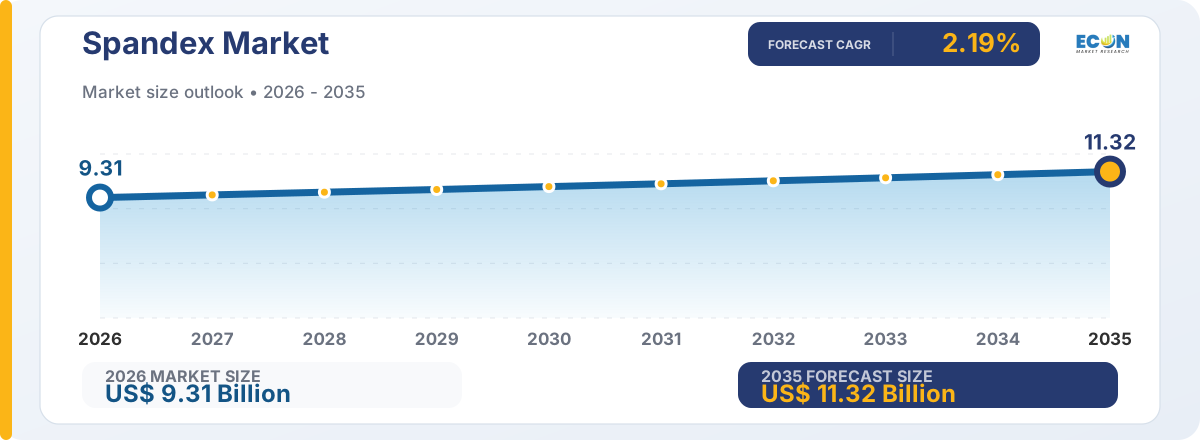
As per Econ Market Research analysis, the Global Spandex Market was estimated at US$ 9.31 Billion in 2026 and is forecast to attain US$ 11.32 Billion by 2035, expanding at a CAGR of 2.19% between 2026 and 2035. The base year for the study is 2025.
The global spandex market refers to the market for elastic textile fibres made chiefly of polyurethane. Spandex is a synthetic material recognized for its flexibility. Spandex is stronger and more durable than Natural Rubber. It may stretch up to five times its length. Spandex is utilized in a wide variety of clothes, particularly skin-tight garments. Spandex fibres are unaffected by water, although they are temperature sensitive. This fabric can stretch to 5-8 times its regular size and is often used in form-fitting consumer garments. In most situations, pure spandex is not utilized in clothes, instead, modest amounts of this fabric are woven with other synthetic, semi-synthetic, or organic fibres. The market is driven by increasing use of spandex in Sportswear products.
Market Dynamics
The market dynamics of spandex are influenced by several factors. The increasing use of spandex in sportswear products drives the market growth. However, the increasing use of substitutes such as natural rubber latex (NRL) and polybutylene terephthalate (PBT) act as restraints. Opportunities arise from the rising demand of eco-friendly and bio-based spandex. The nature of competition is highly intense, with various companies striving to gain a competitive edge through product differentiation, price and quality. As the market evolves and consumer demand continues to rise, the dynamics of the global spandex market are expected to remain dynamic and highly competitive.
Market Drivers
The increasing use of spandex in sportswear
The global spandex market is being driven by the increasing use of spandex in sportswear. Spandex is a synthetic fibre known for its elasticity and stretch. Spandex is added to sportswear to improve the fit, comfort and performance of the garment. Spandex is used in a wide range of sportswear such as: Running shoes and clothing, yoga pants and leggings, swimsuits and sports bras. Thus, with the increasing popularity of fitness and athleisure wear the demand for spandex sportswear is driving the market of the global spandex market during the forecast period.
Restraints
Increasing use of substitutes such as natural rubber latex (NRL) and polybutylene terephthalate (PBT)
The global spandex market faces a restraint by the Increasing use of substitutes such as natural rubber latex (NRL) and polybutylene terephthalate (PBT). NRL and PBT are both synthetic fibres that offer similar properties to spandex, such as elasticity and stretch and are also less expensive. NRL is used in a wide range of applications such as Medical Devices, sportswear and apparel while PBT is used in automotive parts, electrical components and packaging. Thus, with the increasing use of NRL and PBT as substitutes for spandex is having a negative impact on the hindering the global spandex market growth during the forecast period.
Opportunities:
Eco-friendly and bio-based spandex
The global spandex market presents significant opportunities driven by the rising demand for eco-friendly and bio-based spandex. Eco-friendly and bio-based spandex are made from sustainable materials such as recycled PET bottles or plant based materials. Eco-friendly and bio-based spandex have lower environmental impact as compared to traditional spandex and also cost-effective with improved performance such as moisture wicking and durability.
The increasing awareness and consumer demand for sustainable products made from recycled materials, bio-based materials is driving the market growth. The government regulations to reduce the environmental impact of textile industry are also contributing the market growth. Thus, with the growing demand for eco-friendly and bio-based spandex among the manufacturers creates a new opportunity in the global spandex market during the forecast period.
Segment Overview
By Fabric type
The global spandex market is segmented based on fabric type into two categories: two-way and four-way. Four way spandex segments is dominating the market due to the increasing demand for active-wear and sportswear. Four-way stretch spandex is a spandex that can stretch in all four directions. It is commonly used in clothes that require a high degree of stretch, such as yoga trousers, dancewear, and compression garments. Two-way spandex is spandex that can stretch in only one direction. Leggings, sports bras, and swimsuits are examples of clothes that require comfort and form-fittingness. This segmentation allows consumers to choose the spandex fabric type best suits their specific needs, preferences, and budgetary constraints.
By production method
The global spandex market is categorized based on product types into solution dry spinning, solution wet spinning. Solution dry spinning segment is dominating the market segment due to its relatively simple and cost-effective production method. Solution dry spinning is the most popular spandex production method, accounting for more than 90% of the global market share. It is a relatively basic process that includes dissolving a pre-polymer in a solvent and then spinning it through a spinneret to form fibres. The fibres are then dried and cured to make spandex yarn.
Solution wet spinning is a more difficult production method than solution dry spinning, but it generates spandex fibres with superior quality qualities, such as greater strength and flexibility. Solution wet spinning entails dissolving a pre-polymer in a solvent and then spinning it through a spinneret into a coagulating bath. The fibres are then washed, dried, and cured to make spandex yarn. This segmentation allows consumers to choose the type of production method that aligns with their specific needs and preferences.
By Application
The global spandex market is segmented based on application into apparels, medical, other applications. Apparels segment is dominating the market segment due to its increasing demand for active-wear and sportswear. Spandex is commonly seen in apparels such as sportswear, active-wear, and swimwear. It is also found in underwear, lingerie, and other form-fitting clothing. Spandex is found in many medical goods, including bandages, compression garments, and surgical hoses. It',s also found in diapers and other incontinence items. Spandex is also utilized in a range of other products, including toys, furniture, and car interiors. It',s also used in industrial products like conveyor belts and hoses. This market segmentation enables tailored solutions for various application types, catering to requirements and preferences.
Market Overview by Region
Asia Pacific
Asia Pacific currently dominates the global spandex market, and this dominance is expected to continue in the future. The region's large population, growing urbanization, and the growing demand for spandex in the apparel, medical and other applications are driving the demand for spandex. As the demand for spandex continues to rise, Asia Pacific is projected to maintain its leading position in the market in the coming years.
North America
North America is experiencing significant growth in the global spandex market, with a significant Compound Annual Growth Rate (CAGR). The North America region growth is driven by the increasing demand for comfortable and form-fitting garments, as well as the growing popularity of active-wear and sportswear. With the increasing demand for spandex in sportswear, North America is expected to witness a substantial CAGR in the coming years.
Competitive Landscape
The competitive landscape of the global spandex market is marked by a wide array of players competing for market dominance. Several key players have introduced new and improved spandex products with improved quality and technological innovation. Additionally, various other manufacturers are actively contributing to the market with their unique offerings. The competition is fierce, with companies continually striving to gain an edge through technological innovations, customer-centric features, and expanding their product ranges. As consumer demand for spandex continues to grow, the global spandex market is anticipated to witness even more intense competition among these players.
Key Players:
INVISTA
Asahi Kasei Corporation
Hyosung Corporation
Zhejiang Huafon Spandex Co., Ltd.
Yantai Tayho Advanced Materials Co., Ltd.
Indorama Industries Ltd.
TK Chemical Corporation
Taekwang Industrial Co., Ltd.
Jiangsu Shuangliang Spandex Co., Ltd.
Xiamen Lilong Spandex Co., Ltd.
Toray Industries, Inc.
Teijin Limited
Far Eastern New Century Corporation
Reliance Industries Limited
Xinxiang Bailu Chemical Fiber Co., Ltd.
Recent Developments
April 2023, Lianyungang LDZ New Aoshen Spandex Co., Ltd. has launched two innovative spandex products: spandex with temperature-sensitive shape memory properties and spandex with odor-neutralizing capabilities.
October 2023, The Lycra Company has unveiled its latest innovations for the apparel industry, which are set to debut in 2025. Among the new offerings are Lycra Adaptive and Lycra Xfit, both of which are sustainable fibers and technologies. Additionally, the company plans to introduce Qira, a ground-breaking bio-derived spandex, by the close of 2024.
Spandex Market Report Scope & Segmentation
| Attributes | Details |
|---|---|
| Market Size (Current)Current market valuation | US$ 9.31 Billion in 2026 |
| Market Size (Forecast)Projected market valuation | US$ 11.32 Billion in 2035 |
| Growth RateCompound Annual Growth Rate | CAGR of 2.19% from 2026 to 2035 |
| Forecast PeriodAnalysis timeline | 2026 – 2035 |
| Base YearReference year for analysis | 2025 |
| Historical Data AvailablePast market data availability | Yes |
| Regional ScopeGeographical coverage | Global |
| Segments CoveredMarket segments analyzed | By Technology
By Application
|
Leading companies covered in this report
- Hyosung TNC
- Hu峰 (Huafon Chemical)
- INVISTA (The LYCRA Company)
- Asahi Kasei
- Xinxiang Chemical Fiber
- Indorama Industries
Frequently Asked Questions
Common questions about this report
The study period covers historical insights and forecast projections for the period 2026-2035.
About the Author
Market research expert with years of industry experience

Dipali Bhingare serves as the Market Research Director at Econ Market Research. With a focus on translating complex global economic shifts into actionable business intelligence, she oversees the strategic direction of comprehensive market studies. Her work empowers organizations to navigate volatile industries through data-driven forecasting and deep-dive competitive analysis.