

Solar Chair Market
Solar Chair Market Size, Share, Trends, Growth, and Industry Analysis, By Product Type (Solar Bench, Solar Chair), By Application (Parks, Sidewalks, Campuses, Others), Regional Analysis and Forecast Period 2026-2035
Solar Chair Market Overview
As per Econ Market Research analysis, the Global Solar Chair Market generated revenue of US$ 1.53 Billion in 2026 and is forecast to achieve US$ 3.71 Billion by 2035, at a CAGR of 10.29% during the study period 2026–2035. The base year considered is 2025.
Solar Chair Market Size 2025-2035 (USD Billion)

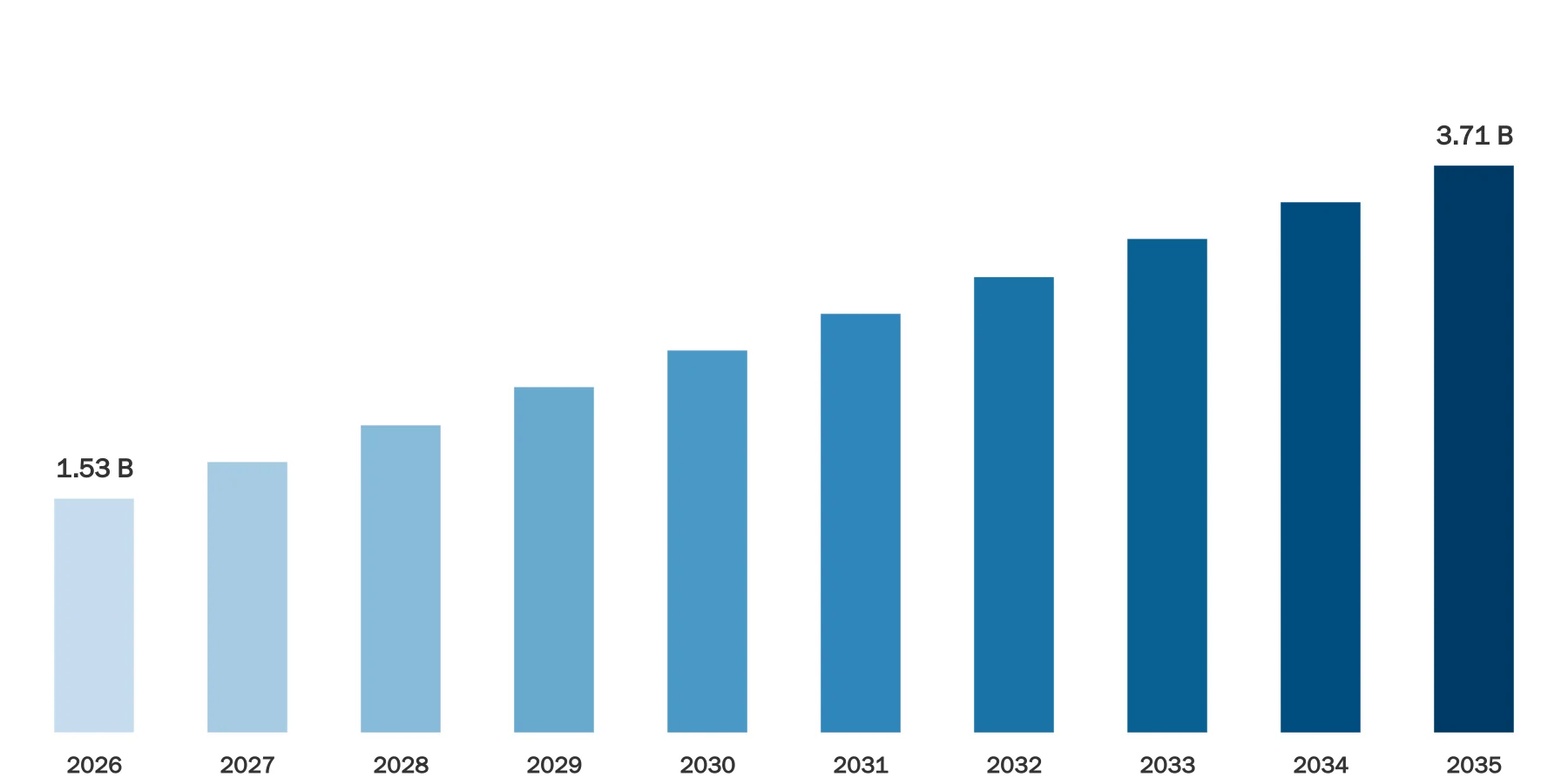
Source: Econ Market Research
Solar Chair integrate renewable energy technology with traditional seating, offering users the convenience of sustainable energy solutions in outdoor environments. As the demand for eco-friendly products continues to rise, the Solar Chair market has witnessed significant growth, driven by increasing awareness of environmental issues and the need for alternative energy sources. Key players in this market include manufacturers, suppliers, and retailers, all contributing to the expansion of solar-powered seating options across various sectors such as hospitality, public spaces, and recreational areas. With advancements in solar technology and design innovation, the Global Solar Chair market is poised for further development, catering to the growing demand for sustainable and energy-efficient outdoor furniture solutions worldwide.
Solar Chair Dynamics
Numerous factors that affect supply and demand also have an impact on the dynamics of the solar chair industry. Demand for sustainable solutions, such as solar-powered chairs, has increased due to growing environmental consciousness and worries about climate change. More and more customers are looking for goods that reduce their carbon impact and support renewable energy projects. The need for solar chairs is further increased by the rising acceptance of outdoor recreation activities and the growing need for easy ways to charge electronic devices, particularly at parks, beaches, and camping areas.
Supply-side dynamics are shaped by technological advancements and innovations in solar panel manufacturing and chair design. Ongoing research and development efforts aim to improve the efficiency and durability of Solar Panels while reducing production costs, making Solar Chairs more accessible and affordable to a wider range of consumers. Moreover, collaborations between furniture manufacturers and renewable energy companies facilitate the integration of solar technology into chair designs, enhancing functionality and aesthetics. As a result, the market is witnessing a proliferation of Solar Chair options with varying features and designs, catering to diverse consumer preferences and applications.
The Solar Chair market dynamics are also greatly influenced by government policies and subsidies that encourage the use of renewable energy. Tax credits, subsidies, and legislative frameworks that encourage Solar Energy investments encourage firms and customers to adopt solar-powered products, such as furniture. With rising adoption rates and global market penetration, the Solar Chair market is anticipated to maintain its growth trajectory as these policies change and become more supportive of renewable energy efforts.
Solar Chair Drivers
Rising Environmental Awareness
Growing concerns about climate change and environmental degradation are driving the adoption of sustainable solutions, including solar-powered furniture like chairs. Consumers are increasingly conscious of their carbon footprint and are seeking products that align with their eco-friendly values. Solar Chairs offer an attractive option for environmentally conscious consumers as they provide a renewable energy source for outdoor seating while reducing reliance on traditional energy sources. As environmental awareness continues to increase globally, the demand for Solar Chairs is expected to rise, bolstering market growth.
Technological Advancements
Innovation in the solar chair business is being driven by continuous improvements in chair design and solar panel technology. The integration of solar electricity into chair designs has become easier for manufacturers due to advancements in solar panel efficiency, durability, and cost-effectiveness. Furthermore, improvements in production techniques and materials allow for the creation of more useful and aesthetically beautiful Solar Chairs that satisfy a range of customer preferences. Solar Chairs are becoming more and more effective, economical, and adaptable as technology advances, which is broadening their appeal and propelling market expansion.
Restraints:
One of the primary restraints hindering the widespread adoption of Solar Chairs is their relatively high initial cost compared to traditional chairs. The integration of solar panels and associated components increases the manufacturing cost of Solar Chairs, making them more expensive for consumers upfront. This higher upfront cost may deter budget-conscious consumers from investing in Solar Chairs, especially in regions with limited disposable income or where conventional seating options are readily available at lower prices.
Weather Dependence
Solar Chairs rely on sunlight to generate electricity, making them susceptible to weather conditions such as cloudy days or limited sunlight hours. In regions with unpredictable weather patterns or extended periods of overcast skies, the efficiency and performance of Solar Chairs may be compromised, affecting their usability and functionality. Weather dependence poses a challenge for consumers relying on Solar Chairs for outdoor seating or charging needs, potentially limiting their appeal and practicality in certain environments.
Opportunities:
Integration with Smart Feature
By adding smart features like LED illumination, wireless charging, and Internet of Things connectivity, Solar Chairs can have their utility improved. By adding these cutting-edge capabilities, Solar Chairs can satisfy customers', increasing need for connected and technologically sophisticated outdoor furniture solutions by providing them with more convenience and versatility. Furthermore, intelligent features can raise user satisfaction and energy efficiency, which will increase the attractiveness and market potential of solar chairs.
Segment Overview
By Material
Solar Chairs are manufactured using various materials, including metal, plastic, wood, and others. Metal Solar Chairs offer durability and strength, making them suitable for outdoor use in various environments. Plastic Solar Chairs are lightweight and often more affordable, making them a popular choice for budget-conscious consumers. Wood Solar Chairs provide a natural and aesthetic appeal, blending well with outdoor surroundings and offering comfort and elegance. Additionally, other materials such as rattan or Composite Materials may be used, offering unique design options and enhancing the overall aesthetics of Solar Chairs.
By Type
Solar Chairs are categorized into folding and non-folding types. Folding Solar Chairs are designed for portability and convenience, allowing users to easily transport and store them when not in use. These chairs are ideal for outdoor events, picnics, and camping trips, offering flexibility and versatility. Non-folding Solar Chairs, on the other hand, are more stationary and typically designed for long-term use in outdoor spaces such as gardens, patios, or public parks. These chairs provide stability and comfort, making them suitable for relaxation and leisure activities.
By Application
Solar Chairs find applications across various sectors, including commercial, industrial, and residential settings. In commercial spaces such as parks, beaches, and tourist attractions, Solar Chairs offer seating options equipped with charging capabilities, enhancing the visitor experience and promoting sustainability. In industrial settings, Solar Chairs may be used in outdoor work areas or employee break areas, providing comfortable seating while harnessing solar energy for lighting or device charging. Residential applications include backyard patios, gardens, and outdoor living spaces, where Solar Chairs serve as eco-friendly seating options that blend aesthetics with functionality, allowing homeowners to enjoy the benefits of solar energy while relaxing outdoors.
Solar Chair Overview by Region
In regions with abundant sunlight and strong environmental awareness, such as North America and Europe, the demand for Solar Chairs is relatively high. These regions often have supportive government policies and incentives promoting renewable energy adoption, contributing to the market',s expansion. Additionally, urbanization trends and a growing emphasis on outdoor leisure activities further drive the demand for Solar Chairs in these regions.
In Asia Pacific, particularly in countries like China and India, rapid urban development, coupled with increasing disposable income levels, is fueling the demand for innovative outdoor furniture solutions, including Solar Chairs. However, market growth in Asia Pacific may face challenges due to factors like infrastructure limitations and economic disparities across different countries. In regions with emerging economies in Latin America, Africa, and the Middle East, there is a growing interest in renewable energy technologies, including solar-powered products like chairs. However, market growth in these regions may be slower compared to more developed markets due to factors such as limited awareness, affordability issues, and infrastructure constraints.
Solar Chair Market Competitive Landscape
Established companies such as SunPower Corporation, BioLite, and Yingli Solar dominate the market with their extensive product offerings and strong brand recognition. These companies invest heavily in research and development to enhance the performance and design of their Solar Chairs, catering to the evolving needs of consumers. Additionally, strategic collaborations with retailers, distributors, and technology partners enable these companies to expand their market reach and tap into new customer segments. Furthermore, the market also sees the emergence of smaller, niche players specializing in specific segments or regions. These companies often focus on niche markets such as luxury outdoor furniture or target specific geographical regions where demand for Solar Chairs is growing rapidly.
While these smaller players may lack the resources and scale of larger competitors, they can differentiate themselves through unique product features, customized solutions, and agile business strategies. Additionally, start-ups and innovative entrepreneurs are entering the market with novel concepts and designs, disrupting traditional norms and driving innovation in the Solar Chair industry. Moreover, the competitive landscape is influenced by factors such as pricing strategies, distribution networks, and brand reputation. Companies strive to maintain a competitive edge by offering competitive pricing, efficient supply chains, and superior customer service. As competition intensifies and market dynamics evolve, companies are also exploring opportunities in adjacent markets such as outdoor lighting, portable power solutions, and smart home integration.
Solar Chair Market Leading Companies:
EcoFlow Tech
Goal Zero
Renogy
Anker Innovations Limited
BioLite Inc.
Nekteck Inc.
Suaoki
X-DRAGON
ALLPOWERS
RAVPower
BigBlue
Solar Chair Report Segmentation
Solar Chair Market Report Scope & Segmentation
| Attributes | Details |
|---|---|
Market Size (Current) | US$ 1.53 Billion in 2026 |
Market Size (Forecast) | US$ 3.71 Billion in 2035 |
Growth Rate | CAGR of 10.29% from 2026 to 2035 |
Forecast Period | 2026 – 2035 |
Base Year | 2025 |
Historical Data Available | Yes |
Regional Scope | Global |
Segments Covered | By Product Type
By Application
|
Frequently Asked Questions
Common questions about this report
The study period covers historical insights and forecast projections for the period 2026-2035.
About the Author
Market research expert with years of industry experience

Dipali Bhingare serves as the Market Research Director at Econ Market Research. With a focus on translating complex global economic shifts into actionable business intelligence, she oversees the strategic direction of comprehensive market studies. Her work empowers organizations to navigate volatile industries through data-driven forecasting and deep-dive competitive analysis.
Related Reports
Explore more market insights from the same category