

Soft Drinks Market
Soft Drinks Market Size, Share, Trends, Growth, and Industry Analysis, By Product Type (Carbonated Soft Drinks (CSD), Bottled Water, Fruit Juices andamp; Nectars, Energy andamp; Sports Drinks, RTD Tea andamp; Coffee), By Distribution Channel (Supermarkets/Hypermarkets, Convenience Stores, Online Retail, Foodservice/HoReCa), Regional Analysis and Forecast Period 2026-2035
Soft Drinks Market Overview
As per Econ Market Research analysis, the Global Soft Drinks Market generated revenue of US$ 743.06 Billion in 2026 and is forecast to achieve US$ 1162.64 Billion by 2035, at a CAGR of 5.1% during the study period 2026–2035. The base year considered is 2025.
Soft Drinks Market Size 2025-2035 (USD Billion)

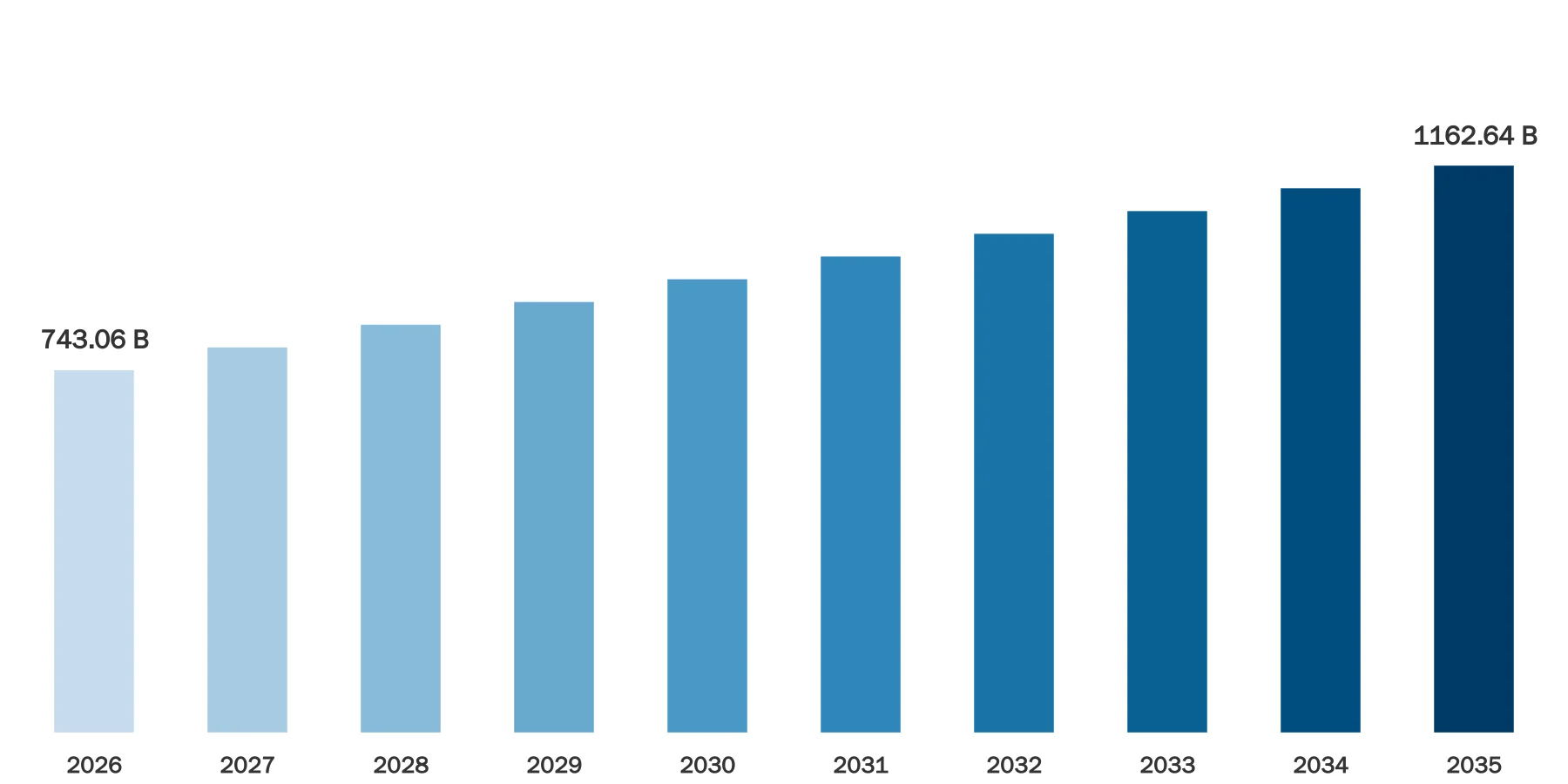
Source: Econ Market Research
Soft drinks are categorized into several forms, such as sodas, juices, Energy Drinks, bottled water, and iced teas. Soft drinks are consumed in almost every part of the world and come in many flavors, sizes, and packages to suit a wide range of tastes and preferences. In the last few years, the market has seen steady growth, mainly due to the increasing demand for refreshing beverages among consumers, especially in emerging economies. However, health-conscious trends have led to a shift toward low-sugar, low-calorie, and natural ingredient options.
Despite the rising popularity of healthier alternatives like bottled water and functional beverages, traditional soft drinks, particularly carbonated sodas, continue to dominate in many regions. Apart from that, there are emerging trends in high-priced and artisan soft drinks plus product innovations, on the other hand, issues faced by this industry include restrictions to sugar consumption content and a heavy burden due to packaging wastes, yet, remains an enormous percentage of worldwide soft beverages. Thereby, owing to its customer size and developing diversified products lines, the future years for soft drink consumption all around the globe seem promising as steadily growing end.
Dynamic Insights
Higher consumption of soft drinks is, therefore, contributed by urbanization and rising disposable income, mainly in emerging economies. Moreover, innovations in flavors, packaging, and formulation, such as low-sugar, organic, and functional drinks, have all added to this growth. The trend toward healthy lifestyles and awareness among consumers regarding the adverse impact of sugar-containing beverages has made the industry adjust by making healthy options like bottled water, fruit juices, and sugar-free beverages. There is also an increasing demand for on-the-go beverages where consumers want ready-to-drink options.
Conversely, health-conscious trends and stricter regulation of sugar content and plastic packaging create an additional challenge to the market. Taxes are imposed by governments on sugary drinks and healthy consumption patterns are encouraged while pushing the manufacturer to decrease sugar content in products. Environmental degradation of plastic waste also increases awareness of sustainability and promotes Sustainable Packaging. Despite these challenges, the soft drinks market remains on the growth track, as companies innovate within new product categories, such as energy drinks, functional beverages, and plant-based drinks, to attract an even broader consumer base and adapt to changing preferences. Benefit from growing e-commerce and online ordering more purchases options for consumers.
Drivers Insights
Rising Disposable Income and Urbanization
As disposable incomes increase, particularly in emerging economies, consumers are spending more on non-essential goods, including soft drinks. Urbanization also plays a significant role in this growth, as more people move to cities where access to a wide variety of beverages is easier. In urban areas, busy lifestyles and higher purchasing power have led to a surge in demand for convenient and readily available soft drinks.
The growth in disposable income enables consumers to afford premium and innovative beverage options, such as health-focused drinks, flavored sodas, and energy drinks. As a result, the global market is seeing increased consumption, especially in regions like Asia-Pacific, Latin America, and Africa, where urban populations are rapidly expanding.
Innovation and Product Diversification
The soft drinks market enjoys the constant innovation that creates growth. Manufacturers are finding new flavours, formulations, and kinds of products based on changing consumer preferences. There is a significant increase in demand for healthier alternatives such as low-calorie, sugar-free, functional beverages offering nutritional benefits such as hydration, immunity support, and a boost.
Health-conscious consumers are being attracted by innovations like plant-based drinks, probiotic beverages, and functional waters. The introduction of biodegradable or recyclable bottles, for example, is one innovation in environmental packaging. People are becoming environmentally conscious, hence increasing the consumption of these goods. These diversified products enable the company to cater to niche markets and appeal to wider consumer markets, which contributes to the sustaining growth of the market.
Restraints Insights
Health Concerns and Sugar Taxes
One of the main restraints affecting the soft drinks market is the growing concern about health risks associated with sugary beverages. The rising awareness of the link between sugar consumption and obesity, diabetes, and other health conditions has led to a shift in consumer preferences towards healthier drinks. Governments around the world have introduced sugar taxes, restricting the sale of sugary drinks or imposing higher taxes on them to curb health issues like obesity. These taxes, along with public health campaigns, have created a barrier for the traditional soft drink sector, particularly carbonated sodas. Consumers are opting for alternatives, such as water, fruit juices, or beverages with reduced sugar content, which are impacting the demand for traditional soft drinks.
Environmental Impact and Packaging Waste
Environmental impact through plastic waste generated from beverage packaging is becoming an increasing concern among consumers and manufacturers. Soft drinks have been conventionally packaged in single-use plastic bottles and cans, significantly contributing to plastic pollution in the world. Increasing environmental awareness among consumers demands more sustainable options for packaging beverages.
Governments are implementing stricter regulations on plastic usage and waste management, further stressing the need for beverage companies to adapt to environmentally friendly solutions. The shift to greener packaging, such as biodegradable or recyclable bottles, also carries a cost in terms of added expenses and logistics. This is another significant constraint for the market growth, as the companies are subjected to regulatory pressure and consumer expectations to reduce their environmental footprint.
Opportunities Insights
E-commerce and Direct-to-Consumer Sales
With e-commerce and Online Grocery shopping becoming a significant business opportunity for soft drinks, more consumers are increasingly switching from the traditional retailing channel to shop online for their requirements. This opportunity can be fully leveraged by companies by providing soft drinks on online platforms to enable direct sales to consumers, as well as home delivery services, which have become increasingly in demand. In addition, the e-commerce model enables brands to offer subscription services where consumers can regularly receive their favorite beverages at discounted prices, further enhancing customer loyalty. This shift in shopping habits provides an opportunity for soft drink companies to expand their reach, particularly in regions with limited access to physical retail stores.
Segment Analysis
By Product Type
By product type, the market includes carbonated soft drinks and non-carbonated soft drinks, which offer a variety of beverages catering to different consumer preferences. Carbonated soft drinks, including sodas and fizzy drinks, continue to dominate in terms of volume due to their widespread popularity. Non-carbonated soft drinks, on the other hand, are seeing growing demand, driven by consumers seeking healthier alternatives. This segment includes bottled water, which remains a staple, along with fruit beverages, sports drinks, and tea &, coffee-based beverages, which are gaining traction due to the increasing health-consciousness among consumers.
By Distribution Channel
By distribution channel, the market is divided into supermarkets/hypermarkets, convenience stores, online retailers, foodservice (restaurants, café,s, etc.), and others. Supermarkets and hypermarkets remain the largest distribution channel, offering consumers a wide range of soft drink options in one location. Convenience stores provide more accessible options for on-the-go consumers, while online retailers are experiencing rapid growth, driven by the rise of e-commerce and home delivery trends. The foodservice channel, including restaurants and café,s, also plays a key role, as consumers often purchase soft drinks alongside meals.
By Packaging
The packaging category has bottles, such as plastic and glass, cans, Tetra Paks, and pouches. All these options provide specific advantages according to the product type and consumer preferences. Bottles are the most preferred for soft drinks because they are convenient, portable, and very economical. While plastic bottles dominate, glass bottles are less frequently used for more premium and niche beverages because it provides an upper-class feel to the product, is also environmental friendly, but is not a widely used one.
Cans are also widely used for packaging because they are strong, and carbonated drinks can easily be stored in cans without losing carbonation. Tetra Paks and pouches, which have been more predominantly used for the packaging of fruit juices and other tea-based drinks, have better shelf life and storage capabilities as well as reducing environmental impact.
Regional Analysis
North America continues to be the biggest market for soft drinks, fueled by the massive consumption of carbonated soft drinks, especially in the United States. Iconic brands dominate this market. In the last few years, though, there has been a clear trend towards healthier choices, including bottled water, fruit beverages, and sports drinks, as health consciousness increases among consumers. The Europe market is another significant portion. There is an increasing trend in premium soft drinks and functional beverages. Organic and low-sugar beverages have also gained popularity as a result of stricter regulations regarding sugar content and environmental concerns due to packaging waste.
Markets in Asia-Pacific are experiencing rapid growth of soft drinks, with countries like China, India, and Japan undergoing a huge increase of urbanization, increase of disposable incomes, and expansiveness of the middle class. Non-carbonated soft drinks, including bottled water and tea-based soft drinks, are popular, consumers are increasingly turning to healthier and more natural beverages. Latin America is both a challenge and an opportunity because the high volumes of traditional sugary beverages continue to be consumed, but a growing preference for healthier drinks, such as fruit juices and functional beverages, is emerging.
The Middle East &, Africa region is showing steady growth, especially in bottled water and energy drinks, driven by a combination of hot climates and increasing health awareness. Overall, this global soft drink market is looking towards healthier drinks and more sustainable packages, and is being led to diversify on the whole in regions as both local consumers make their demands as well as local regulatory pressures get stronger.
Competitive Landscape
The Coca-Cola Company, PepsiCo, and Nestlé,, among others, lead the carbonated soft drinks market, owing to their broad product lines, well-established brand franchises, and large distribution systems. While the two carbonated soft drink giants have remained dominant, Coca-Cola and PepsiCo, respectively, the two have continued to diversify their offerings beyond carbonated soft drinks into areas like bottled water, fruit drinks, and healthy drinks, like low-calorie soft drinks and energy drinks, as consumers demand healthier beverages. These companies also look into sustainability seriously, as is the reduction in plastic packaging while introducing recyclable or biodegradable materials.
In addition to the major players, there are several regional and local brands which are gaining ground in the soft drinks market, particularly in emerging economies. These brands often focus on the local taste buds, offering region-specific flavors or culturally relevant products. For instance, in Asia-Pacific, companies like Tingyi Holding Corp and Suntory Beverage &, Food enjoy a high penetration level with several non-carbonated beverages, for example, teas and fruit juices, that reflect the health consciousness of the Asian consumer.
As well, growth in craft and premium beverages led to new players, mostly smaller companies, with focus on innovative, natural ingredients and unique flavors. E-commerce companies have also helped in a big way to change the competitive matrix to let well-established players and the new ones get their share of market. With the vast demand for functional drinks, plant-based drinks, and sugar-free beverages, companies never stop innovating according to the needs of the consumer, and hence, the competitive environment is very dynamic.
List of Key Players:
Refresco Group BV
Starbucks Corp.
Purity Soft Drinks Ltd.
PepsiCo Inc.
Parle Agro Pvt Ltd.
Otsuka Holdings Co. Ltd.
POSTOBON S.A
Tata Consumer Products Ltd.
Nestle SA
Red Bull GmbH
National Beverage Corp.
Suntory Holdings Ltd.
Monster Energy Co.
Recent Developments:
In Jan 2025, Reliance Consumer Products Limited has ventured into the rehydration market with the introduction of RasKik Gluco Energy, a beverage that blends electrolytes, glucose, and natural lemon juice. Priced at Rs 10, the product is aimed at individuals seeking energy and hydration during physical activities.
In June 2023, Bisleri International, a leader in India',s packaged drinking water market and a pioneer of carbonated soft drinks (CSD) in the country, has introduced three new exciting flavors &ndash, Bisleri Pop (orange-flavored carbonated drink), Bisleri Rev (cola-flavored carbonated drink), and Bisleri Spyci Jeera, while continuing to offer its popular zesty lemon-minty flavor. The new fizzy drinks range is designed to cater to the modern tastes of Gen Z, who seek bold and refreshing flavors. Each beverage offers a distinct and vibrant taste that delivers a unique, functional refreshment experience.
Global Soft Drinks Report Segmentation:
Soft Drinks Market Report Scope & Segmentation
| Attributes | Details |
|---|---|
Market Size (Current) | US$ 743.06 Billion in 2026 |
Market Size (Forecast) | US$ 1162.64 Billion in 2035 |
Growth Rate | CAGR of 5.1% from 2026 to 2035 |
Forecast Period | 2026 – 2035 |
Base Year | 2025 |
Historical Data Available | Yes |
Regional Scope | Global |
Segments Covered | By Product Type
By Distribution Channel
|
Frequently Asked Questions
Common questions about this report
The study period covers historical insights and forecast projections for the period 2026-2035.
About the Author
Market research expert with years of industry experience

Related Reports
Explore more market insights from the same category