

Soccer Balls Market
Soccer Balls Market Size, Share, Trends, Growth, and Industry Analysis, By Size (Size 3, Size 4, Size 5, Mini), By End-User (Professional, Amateur/Clubs, Recreational), By Distribution Channel (Sporting Goods Stores, Hypermarkets/Supermarkets, Online Retail), Regional Analysis and Forecast Period 2026-2035
Soccer Balls Market Overview
As per Econ Market Research analysis, the Global Soccer Balls Market valuation stood at US$ 3.4 Billion in 2026 and is expected to reach US$ 7.63 Billion by 2035, growing at a steady CAGR of 9.42% from 2026 to 2035. 2025 serves as the base year.
Soccer Balls Market Size 2025-2035 (USD Billion)

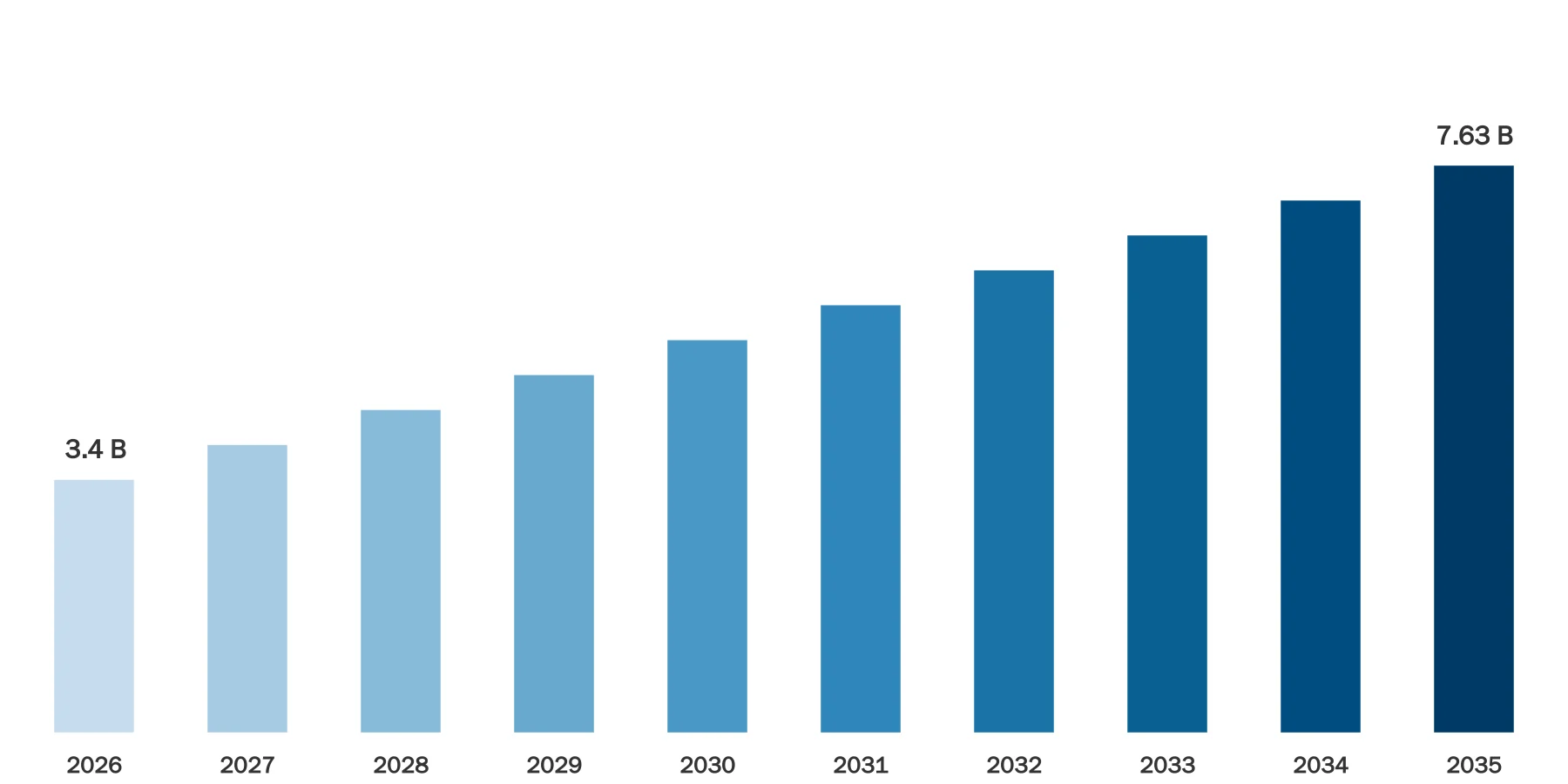
Source: Econ Market Research
The Soccer Balls Market is a highly standardized yet evolving segment within the global sports equipment industry, with over 250 million soccer balls produced annually across more than 60 manufacturing countries. Approximately 70% of production is concentrated in Asia, with Pakistan alone contributing nearly 40 million units per year. FIFA regulations define ball circumference between 68–70 cm and weight between 410–450 grams for professional matches, ensuring uniformity across global competitions. Synthetic leather materials such as polyurethane account for over 85% of total soccer ball production, replacing traditional leather. Demand is driven by more than 265 million active soccer players worldwide, including 5 million registered referees and officials.
The USA Soccer Balls Market demonstrates steady demand supported by over 4.8 million registered youth soccer players and more than 9,000 organized leagues. Approximately 60% of soccer ball purchases in the USA are linked to amateur and youth segments, while professional and collegiate programs account for around 20%. The country imports over 25 million soccer balls annually, with domestic production contributing less than 10% of total supply. Size 5 balls dominate with nearly 55% market share, reflecting adult participation levels. Online retail accounts for over 35% of soccer ball sales in the USA, while sporting goods stores contribute nearly 40% of distribution volume.
Market Latest Trends
The Soccer Balls Market Trends indicate a strong shift toward advanced material engineering and sustainability, with over 65% of newly launched soccer balls incorporating thermally bonded panels instead of stitched designs. Thermally bonded balls reduce water absorption by up to 10% compared to stitched balls, improving durability in wet conditions. Smart soccer balls with embedded sensors have gained traction, with over 15% of professional training programs integrating connected balls that track speed, spin, and trajectory using microchips weighing less than 15 grams.
Sustainability is a key trend, with nearly 30% of manufacturers adopting recycled polyester and bio-based polyurethane materials. FIFA-certified eco-friendly balls now account for approximately 12% of tournament-level usage. Additionally, machine-stitched balls still dominate entry-level segments with over 50% share due to cost advantages of 20–30% lower production costs compared to thermally bonded balls.
Customization and branding are also expanding, with over 25% of soccer balls sold featuring club logos or personalized designs. E-commerce growth has driven global accessibility, with online platforms contributing to more than 40% of global sales in urban markets. Increasing participation in women’s soccer, which has grown by over 30% in the past decade, further supports innovation and demand diversification.
Market Dynamics
The Soccer Balls Market Analysis highlights strong participation rates, technological innovation, and institutional support as key factors shaping industry performance. With over 211 FIFA member associations and more than 1.5 billion viewers for global tournaments, demand for standardized and high-performance soccer balls continues to rise. Manufacturing hubs produce over 700,000 units per week during peak seasons, reflecting high-volume demand cycles. However, supply chain disruptions and raw material price volatility, particularly in synthetic polymers, impact production consistency.
DRIVER
Increasing Global Participation in Soccer
The primary driver of Soccer Balls Market Growth is the increasing number of soccer participants worldwide, exceeding 265 million players across more than 200 countries. Youth participation programs have expanded by over 20% in the last 10 years, with school-level tournaments accounting for nearly 45% of total ball consumption. Government initiatives in over 50 countries promote grassroots soccer development, leading to increased procurement of training equipment. Major tournaments held every 4 years generate demand spikes of up to 30% in host regions. Additionally, over 70% of professional clubs replace match balls every 3–6 games, contributing to consistent demand cycles.
RESTRAINT
Price Sensitivity in Emerging Markets
Price sensitivity remains a major restraint, particularly in emerging economies where over 60% of consumers prefer low-cost machine-stitched balls priced 30–50% lower than premium variants. Synthetic raw materials such as polyurethane and rubber have experienced price fluctuations of up to 15% annually, affecting production costs. Counterfeit products account for nearly 20% of sales in some regions, reducing brand trust and impacting legitimate manufacturers. Additionally, limited purchasing power in rural areas restricts adoption of high-quality balls, with over 40% of players using substandard equipment lacking FIFA certification.
OPPORTUNITY
Technological Integration and Smart Soccer Balls
Technological innovation presents significant Soccer Balls Market Opportunities, with smart soccer balls gaining adoption in over 25 professional academies globally. Embedded sensors can measure speed up to 150 km/h and track spin rates exceeding 600 rpm. Training analytics platforms connected to these balls improve player performance metrics by nearly 20%. The growing Esports and virtual training segment, involving over 100 million users globally, also drives demand for interactive equipment. Additionally, eco-friendly manufacturing processes reduce carbon emissions by up to 25%, attracting environmentally conscious consumers and organizations.
CHALLENGES
Supply Chain and Labor Dependency
The Soccer Balls Market faces challenges related to labor-intensive manufacturing, with over 60% of production relying on hand stitching processes requiring 2–3 hours per ball. Countries like Pakistan employ more than 60,000 workers in ball manufacturing, making the industry vulnerable to labor shortages and wage fluctuations. Logistics disruptions can delay shipments by 10–15 days, especially during peak seasons. Quality consistency is another challenge, as rejection rates in bulk production can reach 8–10% due to defects in stitching or panel bonding. Compliance with international standards also increases operational complexity for smaller manufacturers.
SWOT Analysis
Strengths
Standardized specifications with 68–70 cm circumference ensure global uniformity across 200+ countries
High participation base of over 265 million players drives consistent demand
Durable synthetic materials used in 85% of balls enhance lifespan up to 12 months
Strong institutional backing from over 211 football associations worldwide
Weaknesses
Labor-intensive production requiring 2–3 hours per ball increases dependency on manual work
Price sensitivity affects over 60% of consumers in developing regions
Counterfeit products account for nearly 20% of market volume
Limited product differentiation in entry-level segments with over 50% similarity
Opportunities
Smart soccer balls adoption increasing by over 15% in training programs
Sustainable materials reducing environmental impact by up to 25%
Women’s soccer participation rising by over 30% globally
E-commerce channels contributing over 40% of urban sales
Threats
Raw material price volatility fluctuating by 10–15% annually
Supply chain disruptions causing delays of up to 15 days
Competition among over 100 global and regional manufacturers
Regulatory compliance requirements increasing production costs by 5–8%
Segmentation Analysis
The Soccer Balls Market Segmentation is categorized by size, end-user, and distribution channel, reflecting diverse usage patterns across professional, amateur, and recreational segments. Application varies from competitive matches to training sessions, with installation methods including stitched, thermally bonded, and hybrid constructions. Over 65% of premium balls use thermal bonding, while 50% of entry-level balls rely on machine stitching for cost efficiency.
By Size
Size 5 soccer balls dominate the Soccer Balls Market Share with approximately 55% usage, primarily among players aged 12 years and above. These balls weigh between 410–450 grams and are used in over 90% of professional matches globally. Size 4 balls account for nearly 25% of the market, designed for players aged 8–12 years, with weights ranging from 350–390 grams. Size 3 balls represent around 12% of the market and are widely used in youth training programs involving players under 8 years. Mini balls, with less than 8% share, are primarily used for skill development and promotional purposes. Over 70% of youth academies utilize multiple ball sizes to enhance skill progression.
By End-User
Amateur and club-level users dominate the Soccer Balls Market with approximately 50% share, driven by over 100,000 registered clubs worldwide. Recreational users account for nearly 30% of demand, with casual play contributing to high-volume purchases of low-cost balls. Professional usage represents around 20% of the market, but these balls have higher durability standards and are replaced more frequently, often after 3–5 matches. Training academies purchase balls in bulk, with average orders exceeding 200 units per season. Additionally, over 60% of schools include soccer in their sports curriculum, further supporting amateur segment growth.
Distribution Channel
Sporting goods stores hold the largest share of approximately 40% in the Soccer Balls Market, offering specialized products and expert guidance. Hypermarkets and supermarkets account for nearly 25% of sales, focusing on affordability and accessibility. Online retail has grown significantly, contributing over 35% of global sales, driven by discounts of 10–20% and wider product availability. Mobile commerce accounts for nearly 60% of online purchases, reflecting increasing smartphone penetration. Bulk procurement by institutions often occurs through direct manufacturer contracts, representing nearly 15% of total distribution volume.
Regional Analysis
The Soccer Balls Market Outlook shows strong regional variation, with Asia-Pacific leading production and Europe dominating consumption due to high participation rates. North America exhibits growing demand driven by youth programs, while Middle East & Africa show emerging growth supported by infrastructure development.
North America
North America accounts for approximately 20% of the Soccer Balls Market Share, with the USA contributing over 75% of regional demand. More than 4.8 million youth players drive consistent consumption, with schools and colleges purchasing over 10 million balls annually. Professional leagues utilize high-quality thermally bonded balls in over 95% of matches. Canada contributes nearly 15% of regional demand, supported by over 1 million registered players. Online sales represent over 40% of total distribution, reflecting advanced digital infrastructure. Seasonal demand peaks during Spring and fall, accounting for nearly 60% of annual sales.
Europe
Europe holds around 30% of the Soccer Balls Market Share, supported by over 70 million active players and more than 15,000 professional clubs. Countries such as Germany, the UK, and Spain collectively account for over 50% of regional consumption. Professional leagues replace match balls every 2–4 games, generating consistent demand. Training academies purchase over 5 million balls annually across the region. Sustainable products account for nearly 20% of sales, reflecting environmental awareness. Stadium attendance exceeding 200 million annually also drives merchandising and branded ball sales.
Asia-Pacific
Asia-Pacific dominates production with over 60% of global output, while consumption accounts for approximately 25% of the Soccer Balls Market Share. Pakistan produces over 40 million balls annually, followed by China and India contributing a combined 30 million units. Youth participation exceeds 100 million players across the region, driving demand for low-cost balls. School programs account for nearly 50% of consumption. Export volumes exceed 70% of total production, supplying markets in Europe and North America. Online sales are growing rapidly, contributing over 30% of urban market distribution.
Middle East & Africa
The Middle East & Africa region accounts for nearly 10% of the Soccer Balls Market Share, with over 50 million active players. Infrastructure investments in sports facilities have increased by over 20% in the past decade, boosting demand. Countries such as South Africa and the UAE lead regional consumption, accounting for nearly 40% of demand. Recreational usage dominates with over 60% share, while professional leagues contribute around 15%. Import dependency exceeds 80%, with most products sourced from Asia. Grassroots programs supported by international organizations distribute over 2 million balls annually across schools and communities.
Competitive Landscape
The Soccer Balls Market Competitive Landscape is highly fragmented, with over 100 global and regional manufacturers competing across premium and budget segments. Leading companies account for approximately 35–40% of total market share, while smaller manufacturers dominate local markets with low-cost offerings. Product differentiation is driven by material quality, panel construction, and branding, with premium balls priced 2–3 times higher than entry-level variants.
Technological innovation is a key competitive factor, with over 20% of leading brands investing in thermally bonded designs and smart ball integration. Manufacturing capacity varies significantly, with top producers capable of delivering over 10 million units annually. Sponsorship agreements with over 50 professional leagues enhance brand visibility and influence purchasing decisions. Additionally, private-label production accounts for nearly 25% of global output, enabling retailers to offer cost-effective alternatives.
List of Top Soccer Balls Companies
Adidas
Nike
Puma
Wilson (Amer Sports)
Select Sport
Molten
Under Armour
Umbro
Mitre Sports
Decathlon (Kipsta)
Lotto Sport
New Balance
Leading Companies by Market Share
Adidas and Nike collectively account for approximately 25–30% of the Soccer Balls Market Share, with Adidas supplying official match balls for over 10 major international tournaments and producing more than 15 million units annually. Nike holds a share of around 10–12%, supplying balls to over 30 professional leagues and producing approximately 8 million units per year.
Market Investment Outlook
The Soccer Balls Market Investment Outlook reflects increasing capital allocation toward advanced manufacturing and sustainable materials, with over 30% of manufacturers investing in automation technologies to improve production efficiency by 15–20%. Facilities in Asia have expanded capacity by over 10 million units annually to meet global demand. Investments in research and development account for approximately 5–7% of operational budgets among leading companies, focusing on durability and performance enhancements.
Private equity participation has increased, with over 15 investment deals recorded in the past 5 years targeting sports equipment manufacturers. Infrastructure development in emerging markets has LED to the construction of over 2,000 new sports facilities, boosting demand for training equipment. Additionally, government funding programs in more than 40 countries support grassroots soccer initiatives, distributing millions of soccer balls annually. Digital sales platforms have also attracted investment, improving supply chain efficiency by reducing delivery times by up to 20%.
New Product Development
New product development in the Soccer Balls Market focuses on performance optimization and sustainability, with over 50 new models launched annually by leading brands. Thermally bonded balls now feature up to 32 panels with seamless surfaces, reducing air resistance by nearly 8%. Smart soccer balls equipped with sensors can track over 10 performance metrics, including speed, spin, and trajectory, enhancing training effectiveness.
Eco-friendly innovations include balls made from recycled materials, reducing plastic usage by up to 40%. Water-resistant coatings have improved durability, allowing balls to maintain performance after exposure to moisture for over 90 minutes. Lightweight designs reduce ball weight by up to 5%, improving control and accuracy. Additionally, customization technologies enable mass production of personalized balls, with production cycles reduced by 20% through digital printing techniques.
Recent Developments
In 2023, a leading manufacturer introduced a thermally bonded ball with 20% improved durability compared to previous models.
In 2024, smart soccer balls with embedded chips measuring speed up to 150 km/h were adopted by over 25 training academies.
In 2025, eco-friendly balls using 40% recycled materials were launched, reducing environmental impact significantly.
In 2023, production facilities in Asia increased capacity by over 5 million units annually to meet rising global demand.
In 2024, online sales platforms recorded a 15% increase in soccer ball transactions, driven by mobile commerce growth.
Report Coverage of Soccer Balls Market
The Soccer Balls Market Report provides comprehensive coverage of industry trends, segmentation, regional performance, and competitive dynamics, analyzing over 100 manufacturers and more than 50 product variants. The report evaluates production volumes exceeding 250 million units annually and examines material usage patterns, with synthetic materials accounting for over 85% of total output.
The Soccer Balls Market Research Report includes detailed segmentation by size, end-user, and distribution channel, covering over 10 key countries and 4 major regions. It analyzes demand patterns across professional, amateur, and recreational segments, representing over 265 million players globally. The report also assesses technological advancements, including smart ball adoption rates of 15% in training programs.
Additionally, the Soccer Balls Industry Analysis examines supply chain structures, export volumes exceeding 70% in Asia-Pacific, and distribution channels contributing over 40% through online platforms. The scope includes regulatory standards, product innovations, and investment trends, providing actionable insights for stakeholders operating across manufacturing, distribution, and retail segments.
Soccer Balls Market Report Scope & Segmentation
| Attributes | Details |
|---|---|
Market Size (Current) | US$ 3.4 Billion in 2026 |
Market Size (Forecast) | US$ 7.63 Billion in 2035 |
Growth Rate | CAGR of 9.42% from 2026 to 2035 |
Forecast Period | 2026 – 2035 |
Base Year | 2025 |
Historical Data Available | Yes |
Regional Scope | Global |
Segments Covered | By Size
By End-User
By Distribution Channel
|
Frequently Asked Questions
Common questions about this report
The study period covers historical insights and forecast projections for the period 2026-2035.
About the Author
Market research expert with years of industry experience

Related Reports
Explore more market insights from the same category