Smart TV Market Overview
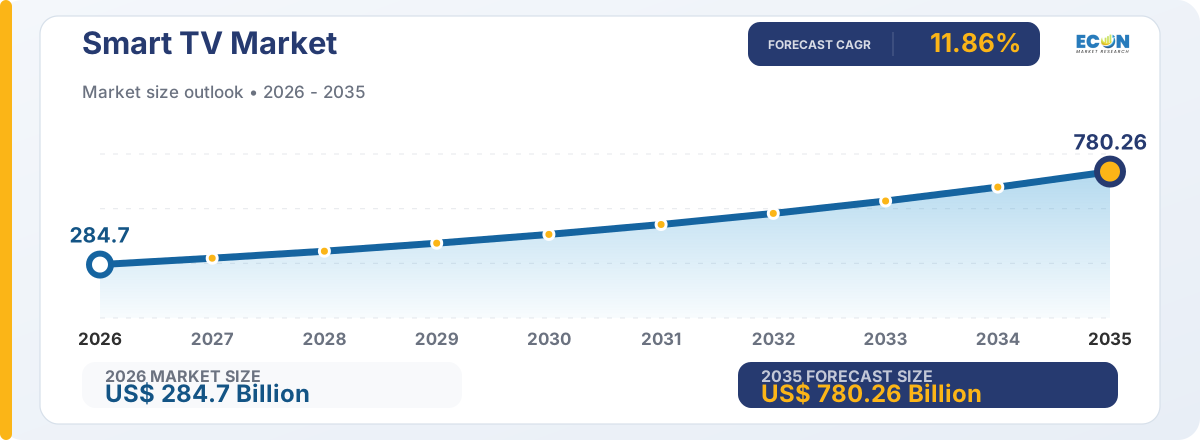
As per Econ Market Research analysis, the Global Smart TV Market accounted for US$ 284.7 Billion in 2026 and is expected to surpass US$ 780.26 Billion by 2035, witnessing a CAGR of 11.86% throughout 2026–2035. The analysis is based on 2025 as the base year.
With its interactive capabilities and internet access, smart TVs are revolutionizing the way people watch television. These televisions provide a smooth combination of connectivity and content thanks to built-in voice control, app ecosystems, and streaming services. The market is defined by advancements that improve visual experiences, like OLED and 4K displays. At the vanguard of the digital entertainment revolution, the global smart TV industry is a dynamic and ever-evolving landscape driven by rising consumer demand for on-demand content and advances in display technology.
SMART TV MARKET:
Smart TV Market Dynamics
Dynamic factors, such as the quickening pace of technology breakthroughs, the growing trend of Home Entertainment, and the growing desire from consumers for immersive content experiences, are shaping the global smart TV market. Connectivity options and flawless streaming are made possible by evolving standards like 5G. Manufacturers are competing harder than ever to include cutting-edge capabilities like voice recognition, AI-driven interfaces, and IoT connection. Further influencing market dynamics are content collaborations and the growth of streaming services. The fluid and competitive environment of the worldwide smart TV industry is being shaped by these trends, with price competitiveness and customer preferences for larger screens and greater resolutions playing major roles.
Smart TV Market Drivers
Technological Advancements
Technological developments are a major force behind the worldwide smart TV market, driving ongoing innovation and changing the home entertainment scene. Modern display technologies like OLED and 4K are integrated into smart TVs to provide better visual experiences. Artificial Intelligence improves user interfaces by allowing for features like voice recognition and customized recommendations. These developments not only meet customer expectations for enhanced interactive features and better image quality, but they also push manufacturers to stay competitive by making continuous enhancements. Smart TVs are at the forefront of contemporary entertainment thanks to the unwavering quest for technological superiority, which creates a dynamic and constantly changing industry.
Integration of Voice Recognition and IoT
By offering a practical and hands-free control interface, voice recognition technology improves user interaction. In addition to improving the user experience overall, this feature supports the movement toward fluid, organic interactions with technology. Furthermore, by incorporating IoT features, smart TVs can become essential parts of networked smart homes, giving customers easy access to operate a variety of appliances and services. Smart TVs are becoming more and more popular as a result of the convergence of voice recognition and IoT, which places them as essential hubs within the networked ecosystem of contemporary households.
Restraints:
Smart TVs with cutting-edge features and technology come with higher initial costs, which turns off price-conscious buyers. This financial barrier makes it difficult for businesses to penetrate new markets, especially in areas where cost is a major factor. Because of this, a sizable section of the consumer base might decide against upgrading to smart TVs or stick with traditional TVs, which would restrict market growth. To overcome this limitation and encourage greater accessibility in the rapidly changing digital home entertainment market, manufacturers must strike a balance between cutting-edge functionality and cost.
Privacy and Security Concerns
Smart TV data collecting has sparked concerns about potential privacy violations and illegal access. Software flaws in the product could put customers at risk for security breaches and erode consumer trust. Unauthorized monitoring or data abuse incidents make prospective buyers more hesitant. Smart TV manufacturers must address consumers', growing worries about digital privacy. In the changing world of connected home entertainment, consumers prioritize protecting their personal information, so failing to implement strong privacy and security measures may impede market growth.
Opportunities:
Rising Demand for 8K and Advanced Display Technologies
The market for ultra-high-resolution screens is being driven by consumers who want unmatched visual experiences. By providing cutting-edge 8K screens and other cutting-edge technologies, manufacturers can profit from this trend by appealing to enthusiasts and early adopters. Businesses may distinguish their goods and draw in a discriminating customer base by offering immersive viewing and exceptional image quality. This chance enables smart TV makers to stay on the cutting edge of display technology, encouraging creativity and preserving a competitive advantage in the ever-changing home entertainment market.
Expansion of 5G Networks
Improved connectivity and data transfer speeds provided by 5G are making it possible to watch high-quality video on smart TVs with ease as it becomes more widely available. As entertainment experiences become more instantaneous and immersive, manufacturers have the chance to profit from this progression. In order to satisfy customers', expectations for a more responsive and seamless watching experience, smart TVs that utilize 5G connectivity can provide quicker downloads, reduced latency, and enhanced general performance. Makers of smart TVs can capitalize on a new era of entertainment powered by connectivity by time-stamping their expansion with 5G network growth.
Segment Overview
By Screen Size
Based on screen size, the global smart TV market is divided into below 32 inches, 32 to 45 inches, 46 to 55 inches, 56 to 65 inches, and above 65 inches. The 46 to 55 inches category dominates the market with the largest revenue share in 2023. The 56 to 65-inch range serves bigger living rooms, while the 46 to 55-inch sector targets individuals looking for a more immersive viewing experience. Over-65-inch smart TVs are made for home theaters and provide a cinematic experience. With their modest size and useful display, TVs under 32 inches are great for cramped areas like kitchens or bedrooms. Fitting well in a variety of situations, the 32 to 45-inch category strikes a compromise between size and functionality.
By Resolution
Based on the resolution, the global smart TV market is categorized into 4K UHD TV, HDTV, full HD TV, and 8K TV. The full HD TV category leads the global smart TV market with the largest revenue share in 2023. Full HD TVs are ideal for a variety of uses since they offer a crisp, detailed image. They are still widely available on the market and typically have smaller screens, particularly in more affordable variants. When HDTVs were first released, they represented a huge technological development by providing users with a superior visual experience. They can be used for a variety of tasks, such as gaming, watching HD broadcasts, and streaming video, and are still in widespread usage.
By Operating System
Based on the operating system, the global smart TV market is segmented into Android TV, webOS, Tizen, Roku, and others. The Android TV segment dominates the smart TV market. The Android TV operating system is intended for use with set-top boxes, smart TVs, and streaming devices. With access to a vast selection of apps, games, and streaming services from the Google Play Store, it offers an easy-to-use interface. The operating system known as webOS was created especially for LG smart TVs. WebOS is well-known for its visually beautiful and user-friendly interface, which makes multitasking and navigation easier. Samsung',s exclusive operating system, Tizen, powers its smart TVs in addition to wearables and smartphones.
By Technology
Based on technology, the global smart TV market is divided into QLED, OLED, LED, and others. The QLED category dominates the market with the largest revenue share in 2023. Quantum Dot technology, in which minuscule Semiconductor particles known as quantum dots are integrated into the display, is used in QLED televisions. When these quantum dots are exposed to the LED backlight, they release various hues of light. Organic materials used in OLED TVs release light when an electric current is applied. OLED TVs, in contrast to conventional LED TVs, don',t need an additional backlight because every pixel in them is self-illuminating.
Smart TV Market Overview by Region
The global smart TV market is categorized into North America, Europe, Asia-Pacific, and the Rest of the World. Asia-Pacific emerged as the leading region, capturing the largest market share in 2023. The region has experienced a rise in demand for cutting-edge consumer electronics and is home to major manufacturers like Samsung and LG.
Asia-Pacific smart TV market supremacy may be attributed to growing tech-savvy populations in countries like China, India, and South Korea, as well as a preference for high-quality entertainment and state-of-the-art technology. In this competitive and dynamic industry, the growth of digital infrastructure and e-commerce has further expedited the adoption of smart TVs. Throughout the forecast period, North America is anticipated to post a significant CAGR.
High consumer spending power, a tech-savvy populace, and a strong preference for high-end entertainment experiences are all contributing causes to this expansion. The region',s strong uptake of smart TVs is fueled by ongoing technological breakthroughs as well as rising consumer demand for cutting-edge features like 4K UHD and smart capabilities. The existence of significant industry competitors, a solid digital infrastructure, and changing customer preferences also support the market',s steady expansion in North America for smart TVs.
Smart TV Market Competitive Landscape
In the global smart TV market, a few major players exert significant market dominance and have established a strong regional presence. These leading companies remain committed to continuous research and development endeavors and actively engage in strategic growth initiatives, including product development, launches, joint ventures, and partnerships. By pursuing these strategies, these companies aim to strengthen their market position, expand their customer base, and capture a substantial share of the market.
Smart TV Market Leading Companies:
Haier Inc
Intex Technologies
Koninklijke Philips N.V.
LG Electronics
Panasonic Corporation
Samsung Electronics Co. Ltd
Sansui Electric Co. Ltd
Sony Corporation
TCL Electronics Holdings Limited
Toshiba Solutions
Hisense International, and various others.
Smart TV Market Recent Developments
In September 2023, by acquiring the New York business 605, iSpot expanded its TV ad measurement technology. The acquisition of New York-based 605 by TV advertising tech startup iSpot.tv was the company',s fourth acquisition in less than three years.
In September 2022, In India, Samsung introduced its Frame line of smart TVs. To provide immersive entertainment, these TVs come equipped with features like matte display, art mode, and movable bezels.
In April 2022, With the launch of its Neo QLED 8K smart TV line, Samsung Electronics Co. Ltd. Televisions with screens as large as 65 and 85 inches were part of this launch. Additionally, Samsung Electronics Co. Ltd. offers discounts to customers so they may buy TVs for less money, which raises demand for the company',s goods.
In April 2022, The BRAVIA XR 86X95K 4K Mini LED TV, which boasts cutting-edge XR Backlight Master Drive technology, was unveiled by Sony India. With variable refresh rate, auto low latency mode, auto HDR tone, and auto game mode, this smart TV can play 4K 120fps videos.
Smart TV Market Report Segmentation
Smart TV Market Report Scope & Segmentation
| Attributes | Details |
|---|---|
| Market Size (Current)Current market valuation | US$ 284.7 Billion in 2026 |
| Market Size (Forecast)Projected market valuation | US$ 780.26 Billion in 2035 |
| Growth RateCompound Annual Growth Rate | CAGR of 11.86% from 2026 to 2035 |
| Forecast PeriodAnalysis timeline | 2026 – 2035 |
| Base YearReference year for analysis | 2025 |
| Historical Data AvailablePast market data availability | Yes |
| Regional ScopeGeographical coverage | Global |
| Segments CoveredMarket segments analyzed | By Resolution
By Screen Size
By Panel Type
|
Leading companies covered in this report
- Samsung Electronics
- LG Electronics
- Sony Corporation
- TCL
- Hisense
- Skyworth
- Vizio
- Xiaomi
- Panasonic
Frequently Asked Questions
Common questions about this report
The study period covers historical insights and forecast projections for the period 2026-2035.
About the Author
Market research expert with years of industry experience

Dipali Bhingare serves as the Market Research Director at Econ Market Research. With a focus on translating complex global economic shifts into actionable business intelligence, she oversees the strategic direction of comprehensive market studies. Her work empowers organizations to navigate volatile industries through data-driven forecasting and deep-dive competitive analysis.