

Smart Greenhouse Market
Smart Greenhouse Market Size, Share, Trends, Growth, and Industry Analysis, By Component (HardwareHVAC Systems, LED Grow Lights, Sensors, Irrigation Systems, Climate Control Systems, Others), By Type (Glass, Plastic), By Farming Type (Hydroponics, Aeroponics, Soil-Based Cultivation, Others), By Crop Type (Fruits & Vegetables, Flowers & Ornamentals, Nursery Crops, Herbs & Medicinal Plants), By End Use (Commercial Growers, Research & Educational Institutes, Retail & Garden Centers, Others), Regional Analysis and Forecast Period 2026-2035
Smart Greenhouse Market Overview
As per Econ Market Research analysis, the Global Smart Greenhouse Market reached a valuation of US$ 6.69 Billion in 2026 and is anticipated to grow to US$ 23.97 Billion by 2035, at a CAGR of 15.4% during the forecast timeline 2026–2035. The base year considered is 2025.
Smart Greenhouse Market Size 2025-2035 (USD Billion)

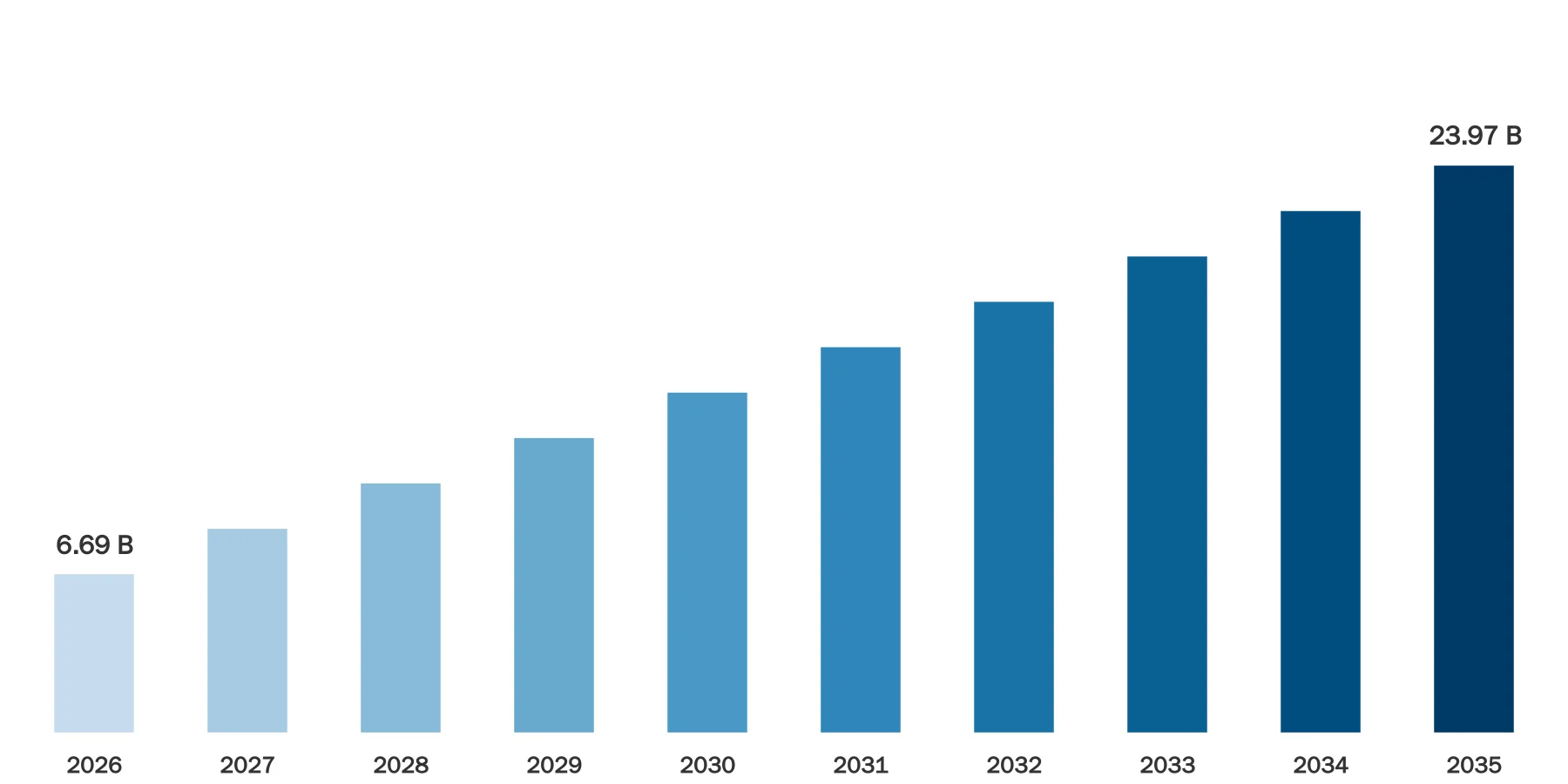
Source: Econ Market Research
The Smart Greenhouse Market is expanding rapidly with over 2.1 million hectares of greenhouse cultivation globally in 2024, of which nearly 38% is integrated with automation systems. Smart greenhouse systems incorporate IoT sensors, climate control systems, and AI-based monitoring, improving crop yield by 25–35% per cycle. Controlled environment agriculture has reduced water usage by up to 70% and increased productivity per square meter by 3–5 times compared to traditional farming. Smart greenhouse adoption is highest in high-value crops such as tomatoes, cucumbers, and leafy greens, which account for over 60% of global greenhouse output.
The USA Smart Greenhouse Market is driven by advanced agricultural technologies, with approximately 12,000 hectares of greenhouse farming, of which 45% are technologically advanced smart systems. The U.S. produces over 3.5 million tons of greenhouse-grown vegetables annually, with smart systems improving yield efficiency by 30% and reducing energy consumption by 18–22%. States such as California and Arizona contribute nearly 50% of greenhouse production, while indoor vertical greenhouse setups have grown by 28% between 2022 and 2024. Labor shortages have increased automation adoption by 40% in large-scale greenhouse operations.
Market Latest Trends
The Smart Greenhouse Market Trends indicate strong growth in automation, AI integration, and climate optimization technologies. Approximately 52% of newly constructed greenhouses globally in 2024 include IoT-enabled monitoring systems, while AI-based crop analytics adoption has increased by 33% year-on-year. Automated irrigation systems are now used in over 65% of smart greenhouses, reducing water wastage by up to 60%.
Energy-efficient greenhouses using LED grow lights account for 48% of installations, with energy consumption reduced by 20–30% compared to traditional lighting systems. Solar-powered greenhouse systems have increased by 18% globally, especially in regions with high solar irradiance. Additionally, robotic harvesting solutions are being deployed in 15% of advanced greenhouse facilities, improving harvesting efficiency by 25%.
Hydroponic systems dominate the smart greenhouse segment with a share exceeding 55%, while aeroponic systems are growing at a faster adoption rate of 22% annually in unit installations. Data-driven agriculture platforms are now integrated in over 40% of large-scale greenhouses, enabling predictive analytics and crop optimization. These Smart Greenhouse Market Insights highlight increasing digital transformation across agriculture.
Market Dynamics
DRIVER
Increasing Demand for High-Yield Sustainable Agriculture
The primary driver of the Smart Greenhouse Market Growth is the rising demand for sustainable and high-yield agricultural practices. Global food demand is expected to increase by over 50% by 2050, while arable land availability is declining at a rate of 0.3% annually. Smart greenhouse systems enable yield improvement of up to 300% per square meter, making them essential for urban and Vertical Farming. Water scarcity has also accelerated adoption, as smart irrigation systems reduce consumption by 50–70%. Additionally, controlled environments reduce pesticide usage by up to 80%, improving food safety standards. Increasing urbanization, with over 56% of the global population living in cities, is further driving demand for localized greenhouse farming solutions.
RESTRAINT
High Initial Investment and Infrastructure Costs
One of the major restraints in the Smart Greenhouse Market Analysis is the high initial cost of installation and infrastructure. Setting up a fully automated greenhouse can cost 2–3 times more than traditional greenhouse systems, with hardware components such as sensors, climate controllers, and lighting systems accounting for over 60% of total costs. Maintenance expenses add another 10–15% annually. Small and medium-scale farmers, who represent over 70% of global agricultural producers, face financial constraints limiting adoption. Additionally, energy requirements for advanced systems can increase operational costs by 20–25%, particularly in regions lacking renewable energy integration.
OPPORTUNITY
Expansion of Urban Farming and Vertical Agriculture
Urban farming presents a significant opportunity for the Smart Greenhouse Market Outlook. Vertical farming installations have increased by 35% globally between 2022 and 2025, with smart greenhouses forming a key component. Urban smart greenhouse systems can produce 10–15 times more crops per acre compared to conventional farming. The adoption of modular greenhouse systems has grown by 27%, enabling deployment in urban rooftops and industrial spaces. Government initiatives supporting sustainable agriculture have increased funding by over 20% in multiple regions, accelerating adoption. Additionally, integration with AI and big data is expected to improve yield prediction accuracy by over 85%.
CHALLENGES
Technical Complexity and Skill Gap
The Smart Greenhouse Industry faces challenges related to technical complexity and workforce skill gaps. Operating advanced greenhouse systems requires expertise in IoT, Data Analytics, and environmental control, yet only 30–35% of agricultural workers globally are trained in digital farming technologies. System failures or sensor inaccuracies can reduce crop yield by 10–15%, impacting profitability. Cybersecurity concerns have also emerged, with over 12% of smart agricultural systems reporting vulnerabilities. Additionally, interoperability issues between different hardware and software platforms affect 25% of greenhouse operators, leading to inefficiencies.
SWOT Analysis
Strengths
Smart greenhouses increase crop yield by 25–300% per unit area
Water usage reduction of 50–70% improves sustainability
Automation reduces labor dependency by 40%
Controlled climate improves crop quality consistency by over 90%
Weaknesses
Initial investment is 2–3 times higher than traditional systems
Energy consumption increases by 20–25% without renewable integration
Limited technical expertise among 65–70% of farmers
Maintenance costs account for 10–15% annually
Opportunities
Urban farming growth at 35% installation increase globally
AI-based agriculture improving efficiency by 30–40%
Expansion of hydroponics covering over 55% of systems
Government support increasing funding by 20%+
Threats
Cybersecurity risks affecting 12% of smart systems
Climate variability impacting energy costs by 15–20%
Market fragmentation with over 100 technology providers globally
Supply chain disruptions affecting component availability by 10–12%
Segmentation Analysis
The Smart Greenhouse Market is segmented by Component and Farming Type, with hardware dominating due to high installation requirements, while hydroponics leads farming methods due to efficiency.
By Component
Hardware
Hardware accounts for approximately 55% of the Smart Greenhouse Market Share, including sensors, climate control systems, and lighting solutions. Environmental sensors are installed in over 70% of smart greenhouses, monitoring temperature, humidity, and CO₂ levels. LED lighting systems improve plant growth efficiency by 20–25%, while automated irrigation hardware reduces water usage by up to 60%. Hardware costs represent over 60% of initial investment, making it the most critical segment.
Software
Software contributes nearly 25% of the market share, focusing on analytics, monitoring platforms, and AI-based crop management systems. Cloud-based platforms are used in over 45% of smart greenhouses, enabling real-time data analysis. Predictive analytics software improves yield forecasting accuracy by 85%, while automation software reduces operational errors by 30%. Software integration is increasing at a rate of 28% annually.
Services
Services hold around 20% share, including installation, maintenance, and consulting. Maintenance services are required in over 80% of installations annually, while consulting services improve system efficiency by 15–20%. Training services are growing due to the skill gap, with demand increasing by 25% globally.
By Farming Type
Hydroponics
Hydroponics dominates with over 55% market share, offering water efficiency improvements of up to 70%. Crop yield increases by 30–50%, and nutrient delivery precision improves plant growth rates by 20%. Hydroponic systems are used in over 60% of commercial smart greenhouses.
Aeroponics
Aeroponics holds approximately 15% share, with faster growth cycles of 20–25% compared to hydroponics. Water usage is reduced by 90%, making it the most efficient method. Adoption is increasing by 22% annually, particularly in research and high-value crop cultivation.
Soil-Based Cultivation
Soil-based systems account for 20% share, primarily in hybrid greenhouses. Yield improvements are limited to 15–20%, but setup costs are 30–40% lower than hydroponic systems. This segment remains relevant for traditional farmers transitioning to smart systems.
Others
Other methods, including aquaponics, hold around 10% share, combining fish farming with plant cultivation. Productivity improvements reach 25–30%, while water recycling efficiency exceeds 80%.
Regional Analysis
The Smart Greenhouse Market shows strong regional variation, with North America and Europe leading due to technological adoption, while Asia-Pacific shows rapid expansion with over 40% of new installations globally.
North America
North America accounts for approximately 30% of global market share, driven by technological advancements and large-scale greenhouse operations. The U.S. contributes nearly 75% of regional installations, with over 45% of greenhouses using smart technologies. Canada has increased greenhouse farming area by 18% since 2022, particularly in controlled environment agriculture. LED lighting adoption exceeds 60%, and automation systems are used in over 50% of facilities. Labor shortages have led to a 40% increase in automation adoption, while water-saving technologies have reduced consumption by 50–60%.
Europe
Europe holds around 28% market share, with countries like the Netherlands leading in smart greenhouse adoption. The Netherlands alone accounts for over 10,000 hectares of greenhouse farming, with 80% using advanced automation systems. Energy-efficient systems reduce consumption by 25%, and renewable energy integration exceeds 35% of installations. Smart irrigation systems are used in over 70% of greenhouses, improving water efficiency significantly. Government policies supporting sustainable agriculture have increased adoption rates by 20% annually.
Asia-Pacific
Asia-Pacific dominates growth with over 40% of new installations, driven by countries like China, India, and Japan. China has over 1 million hectares of greenhouse cultivation, with 35% transitioning to smart systems. India has increased smart greenhouse adoption by 25% between 2022 and 2025, supported by government subsidies. Japan leads in precision agriculture, with over 50% of greenhouses using AI-based systems. Water-saving technologies reduce usage by 60–70%, and yield improvements reach 30–40%.
Middle East & Africa
The Middle East & Africa region holds approximately 12% market share, with high adoption in water-scarce regions. Smart greenhouse systems reduce water usage by 70–80%, making them essential in desert climates. Countries like UAE and Saudi Arabia have increased greenhouse installations by 30% since 2022. Solar-powered systems account for 25% of installations, reducing energy costs. Africa is witnessing growth in pilot projects, with adoption increasing by 18% annually.
Competitive Landscape
The Smart Greenhouse Market Competitive Landscape is highly fragmented, with over 100 global players offering hardware, software, and integrated solutions. Leading companies focus on automation, AI integration, and energy-efficient systems. Market leaders collectively account for approximately 40–45% of total installations, while smaller players dominate niche segments. Strategic partnerships have increased by 30% between 2023 and 2025, particularly in IoT and AI integration. Companies are investing heavily in R&D, with 15–20% of annual budgets allocated to innovation. Product differentiation is based on system efficiency, energy consumption reduction, and scalability, with advanced systems improving yield efficiency by up to 35%.
List of Top Smart Greenhouse Companies
Henan Yutuo Agricultural Technology Co.,Ltd.
Intellias
Koidra Inc.
Netafim
Novedades Agrícolas, S.A.
Priva
Softweb Solutions Inc.
SPAGNOL srl
Synnefa, Inc.
Wadsworth Controls
YANMAR HOLDINGS CO., LTD.
Optimal Labs Limited
Viemose DGS
Leading Companies by Market Share
Netafim and Priva together account for approximately 18–22% of global smart greenhouse installations, with Netafim leading irrigation systems used in over 110 countries, and Priva specializing in climate control systems deployed in more than 100,000 greenhouse projects worldwide.
Market Investment Outlook
The Smart Greenhouse Market Investment Outlook shows increasing capital allocation toward automation and sustainable agriculture. Investments in Smart Agriculture technologies exceeded 25% growth in project funding between 2023 and 2025, with greenhouse projects accounting for over 30% of total agri-tech investments. Venture capital funding for indoor farming increased by 28%, focusing on AI-driven greenhouse solutions. Government subsidies support up to 40% of installation costs in certain regions, accelerating adoption. Private investments in vertical farming infrastructure have increased by 35%, with smart greenhouses forming a core component. Infrastructure investments in renewable energy integration for greenhouses have grown by 20%, reducing operational costs and improving sustainability.
New Product Development
Innovation in the Smart Greenhouse Market is focused on automation, AI, and energy efficiency. AI-powered climate control systems improve environmental precision by up to 90%, while new sensor technologies provide real-time monitoring with 95% accuracy. Autonomous robots for planting and harvesting are being deployed in 15–20% of advanced greenhouses, improving efficiency by 25%. LED lighting innovations have reduced energy consumption by 30%, while improving plant growth rates by 20%. Modular greenhouse systems are gaining popularity, with installation time reduced by 40%. Integration of blockchain for supply chain tracking is emerging, with adoption increasing by 12% annually.
Recent Developments
In 2023, AI-based greenhouse management systems improved yield efficiency by 30% in pilot projects
In 2024, automated irrigation systems reduced water consumption by 60% in commercial installations
In 2024, LED lighting upgrades reduced energy usage by 25% across large-scale greenhouses
In 2025, robotic harvesting systems increased productivity by 20–25% in selected facilities
In 2025, solar-powered greenhouse projects expanded by 18% globally
Report Coverage of Smart Greenhouse Market
The Smart Greenhouse Market Report provides comprehensive insights into global adoption trends, covering over 2.1 million hectares of greenhouse cultivation. The report includes analysis of key components such as hardware, software, and services, with hardware accounting for over 55% of installations. It evaluates farming methods including hydroponics, aeroponics, and soil-based cultivation, with hydroponics dominating at 55% share. Regional analysis covers North America, Europe, Asia-Pacific, and Middle East & Africa, representing over 90% of global installations. The report also examines technological advancements such as AI, IoT, and automation, which improve yield efficiency by 25–35%. Additionally, it highlights investment trends, competitive landscape, and new product innovations shaping the industry.
Smart Greenhouse Market Report Scope & Segmentation
| Attributes | Details |
|---|---|
Market Size (Current) | US$ 6.69 Billion in 2026 |
Market Size (Forecast) | US$ 23.97 Billion in 2035 |
Growth Rate | CAGR of 15.4% from 2026 to 2035 |
Forecast Period | 2026 – 2035 |
Base Year | 2025 |
Historical Data Available | Yes |
Regional Scope | Global |
Segments Covered | By Component
By Type
By Farming Type
By Crop Type
By End Use
|
Frequently Asked Questions
Common questions about this report
The study period covers historical insights and forecast projections for the period 2026-2035.
About the Author
Market research expert with years of industry experience

Related Reports
Explore more market insights from the same category