

Smart Glass Market
Smart Glass Market Research Report: By Technology (Electrochromic, Polymer Dispersed Liquid Crystal, Suspended Particle Devices, Thermochromics, and Photochromic), By Application (Architectural, Transportation, Automotive, Aircraft, Marine, Consumer Electronics, and Power Generation), and Region (North America, Europe, Asia-Pacific, and Rest of the World) Global Industry Analysis, Size, Share, Growth, Trends, Regional Analysis, Competitor Analysis and Forecast
Market Overview
As per Econ Market Research analysis, Global Smart Glass Market size stood at US$ 5 Billion in 2026 and is projected to reach US$ 10.3 Billion by 2035, growing at a CAGR of 8.4% over the forecast period 2026–2035. 2025 is taken as the base year.
Smart Glass Market Size 2025-2035 (USD Billion)

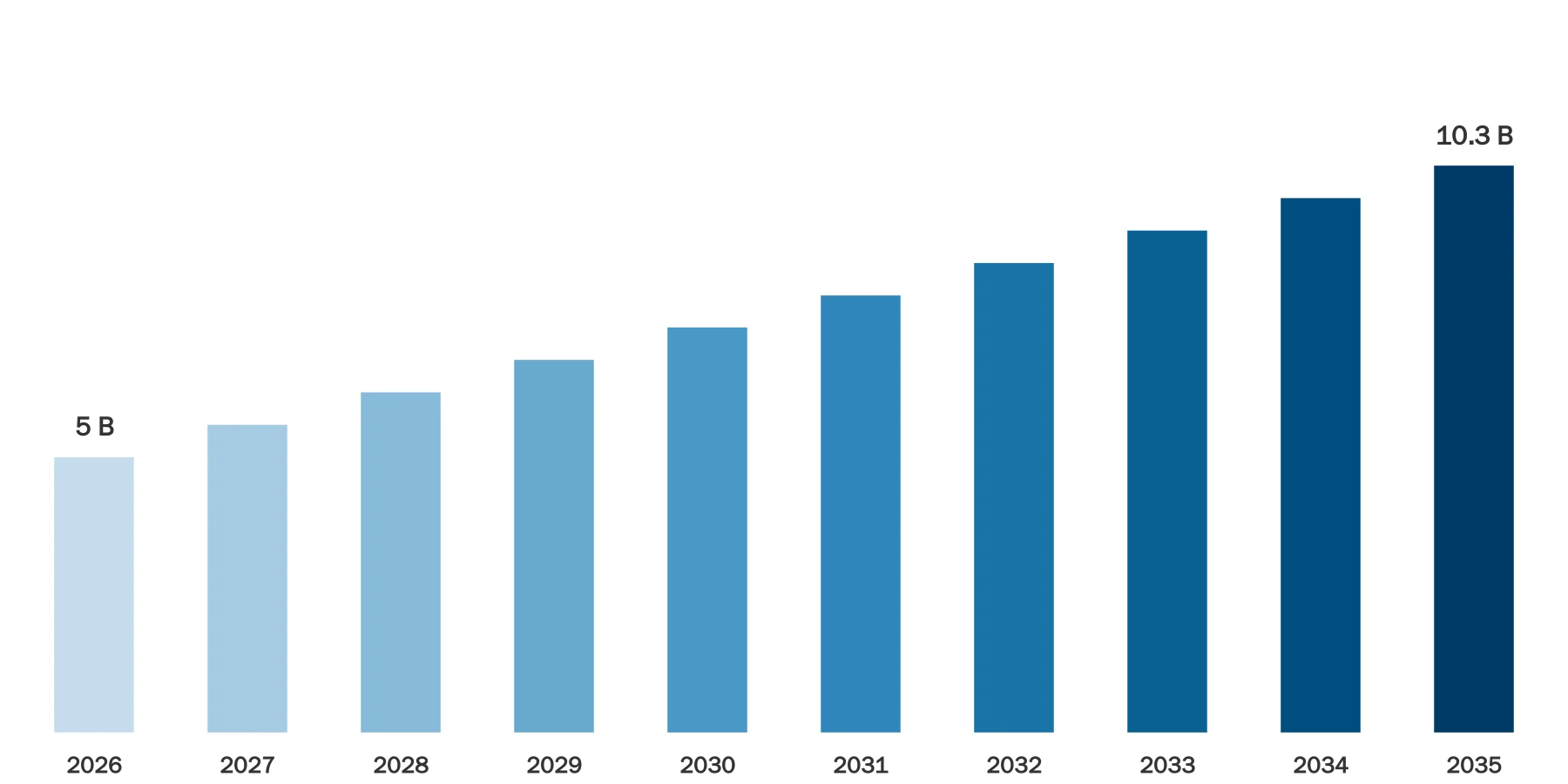
Source: Econ Market Research
Smart glass, also referred to as switchable glass or electrochromic glass, is an innovative technology that allows windows and glass surfaces to alter their transparency or opaqueness upon command. It employs different methods such as electrochromism, suspended particle devices, or liquid crystal technology to modify the light transmission characteristics of the glass. The implementation of smart glass grants flexible control over privacy, reduction of glare, energy efficiency, and aesthetic attractiveness.
By utilizing an electric current or a control system, users have the ability to switch the glass from being see-through to non-transparent, or adjust it to various intermediate states. This technology finds diverse applications across various sectors, including architecture, automotive, aviation, and consumer electronics. Smart glass presents a versatile and futuristic solution that revolutionizes our interaction with glass surfaces, greatly improving our living and working environments.
Smart Glass Market Dynamics
The smart glass market is propelled by various significant factors. The increasing requirement for energy-efficient solutions in buildings and the demand for sustainable infrastructure contribute to the adoption of smart glass. Smart glass enables dynamic control over the amount of light and heat entering a space, thereby reducing dependence on artificial lighting and air conditioning and resulting in energy conservation. The growing emphasis on enhanced privacy and security in both residential and commercial applications also drives the demand for smart glass.
The ability to instantly switch the glass from transparent to opaque provides a convenient privacy solution, eliminating the need for curtains or blinds. Moreover, the rising interest in smart homes and the integration of Internet of Things (IoT) technologies further fuels the market, as smart glass can be seamlessly incorporated into automated systems to enhance convenience and comfort. Additionally, the automotive industry seeks smart glass for improved safety, glare reduction, and augmented reality displays.
Smart Glass Market Drivers
Increasing Demand for Energy Efficiency
The growing need for energy-efficient solutions in buildings drives the adoption of smart glass. By dynamically controlling light and heat transmission, smart glass reduces reliance on artificial lighting and air conditioning, resulting in significant energy savings.
Restraints
Technical Challenges
Developing smart glass with reliable performance and durability poses technical challenges. Achieving long-term stability, maintaining optical clarity, and ensuring smooth switching transitions are areas that require continued research and development.
Opportunities
Technological Advancements
Ongoing advancements in smart glass technology can lead to improved performance, cost reduction, and expanded functionality. Innovations in materials, switching mechanisms, and manufacturing processes can unlock new opportunities in the market.
Segment Overview
By Technology
Based on the technology, the global smart glass market is segmented into electrochromic, polymer dispersed liquid crystal, suspended particle devices, thermochromics, and photochromic. The electrochromic segment is dominating the market with the largest revenue share of around 78.2% in 2022. Electrochromic smart glass presents notable benefits such as convenient control over light transmission, energy efficiency, and enhanced privacy. Users can effortlessly adjust the tint of the glass to their liking, reducing the need for curtains or blinds. Moreover, electrochromic smart glass contributes to energy conservation by reducing reliance on artificial lighting and air conditioning. The dominant position of this segment can also be attributed to advancements in electrochromic technology, resulting in improved performance and durability of the glass. Additionally, the increasing adoption of electrochromic smart glass across commercial and residential buildings, automotive applications, and the aerospace sector has further propelled its market share, establishing it as the largest segment in the smart glass market.
By Application
Based on the application, the global smart glass market is segmented into architectural, transportation, automotive, aircraft, marine, consumer electronics, and power generation. The transportation segment is dominating the market with the largest revenue share of around 45.8% in 2022. Several key factors contribute to this trend. The automotive sector has experienced a notable increase in the demand for smart glass, primarily driven by the growing adoption of electric and autonomous vehicles.
Smart glass offers a range of advantages, including glare reduction, improved visibility, and augmented reality displays, thereby enhancing the overall driving experience and safety. Similarly, the aviation industry has embraced smart glass technology for cabin windows, empowering passengers to control their immediate surroundings and enjoy enhanced comfort during flights. Furthermore, the integration of smart glass in trains, buses, and other forms of public transportation further reinforces the dominance of the transportation segment.
Smart Glass Market Overview by Region
By Region, the global Smart Glass Market has been divided into North America, Europe, Asia-Pacific, and the Rest of the World. North America dominated the market with around 30.2% of the global market in 2022. The demand for innovative and technologically advanced solutions in North America has been fueled by the region',s strong economic growth and high levels of disposable income. North America serves as a hub for numerous technology companies and research institutions, fostering continuous advancements in smart glass technology.
Additionally, the stringent energy efficiency regulations and sustainability initiatives in the region have driven the adoption of smart glass in both commercial and residential buildings. Furthermore, the well-established construction industry in North America has a strong emphasis on integrating smart building solutions, which has further propelled the demand for smart glass. The presence of key market players, robust infrastructure, and a favorable business environment have all contributed to North America's prominent position in the smart glass market.
Smart Glass Market Competitive Landscape
In the global smart glass market, a small number of prominent players hold significant market dominance and have established a strong regional presence. These key participants are committed to ongoing research and development initiatives. Additionally, they actively engage in strategic growth endeavors such as product development, product launches, joint ventures, and partnerships. By pursuing these strategies, these companies aim to strengthen their market position and expand their customer base to capture a substantial share of the market.
Key Players
AGC Inc.
ChromoGenics
Corning Incorporated
Gauzy Ltd.
Gentex Corporation
Guardian Industries
Kinestral Technologies, Inc.
Nippon Sheet Glass Co., Ltd.
PPG Industries, Inc.
RavenWindow
Research Frontiers Inc.
Saint-Gobain S.A.
Showa Denko Materials Co., Ltd.
Smartglass International Limited
VELUX Group
Smart Glass Market Recent Developments
In January 2022, Halio, Inc. unveiled an AI-driven smart glass system with notable features such as quick reaction, tint colour clarity, continuous tint uniformity, and cloud-based technology enabling autonomous functionality. Furthermore, the rising adoption of electric cars equipped with cutting-edge technologies is expected to fuel demand for smart glass in the region's automotive industry.
Smart Glass Market Report Scope & Segmentation
| Attributes | Details |
|---|---|
Market Size (Current) | US$ 5 Billion in 2026 |
Market Size (Forecast) | US$ 10.3 Billion in 2035 |
Growth Rate | CAGR of 8.4% from 2026 to 2035 |
Forecast Period | 2026 – 2035 |
Base Year | 2025 |
Historical Data Available | Yes |
Regional Scope | Global |
Segments Covered | By Technology
By Application
By Control Mode
|
Frequently Asked Questions
Common questions about this report
The study period covers historical insights and forecast projections for the period 2026-2035.
About the Author
Market research expert with years of industry experience

Dipali Bhingare serves as the Market Research Director at Econ Market Research. With a focus on translating complex global economic shifts into actionable business intelligence, she oversees the strategic direction of comprehensive market studies. Her work empowers organizations to navigate volatile industries through data-driven forecasting and deep-dive competitive analysis.
Related Reports
Explore more market insights from the same category