

Smart Diapers Market
Smart Diapers Market Size, Share, Trends, Growth, and Industry Analysis, By Product (Diapers with Sensors, Detachable Sensors), By End-User (Babies, Adults (Incontinence Care)), By Distribution Channel (Online Retail, Offline Retail (Pharmacies, Supermarkets)), Regional Analysis and Forecast Period 2026-2035
Smart Diapers Market Overview
As per Econ Market Research analysis, the Global Smart Diapers Market valuation stood at US$ 0.96 Billion in 2026 and is expected to reach US$ 2.78 Billion by 2035, growing at a steady CAGR of 12.6% from 2026 to 2035. 2025 serves as the base year.
Smart Diapers Market Size 2025-2035 (USD Billion)

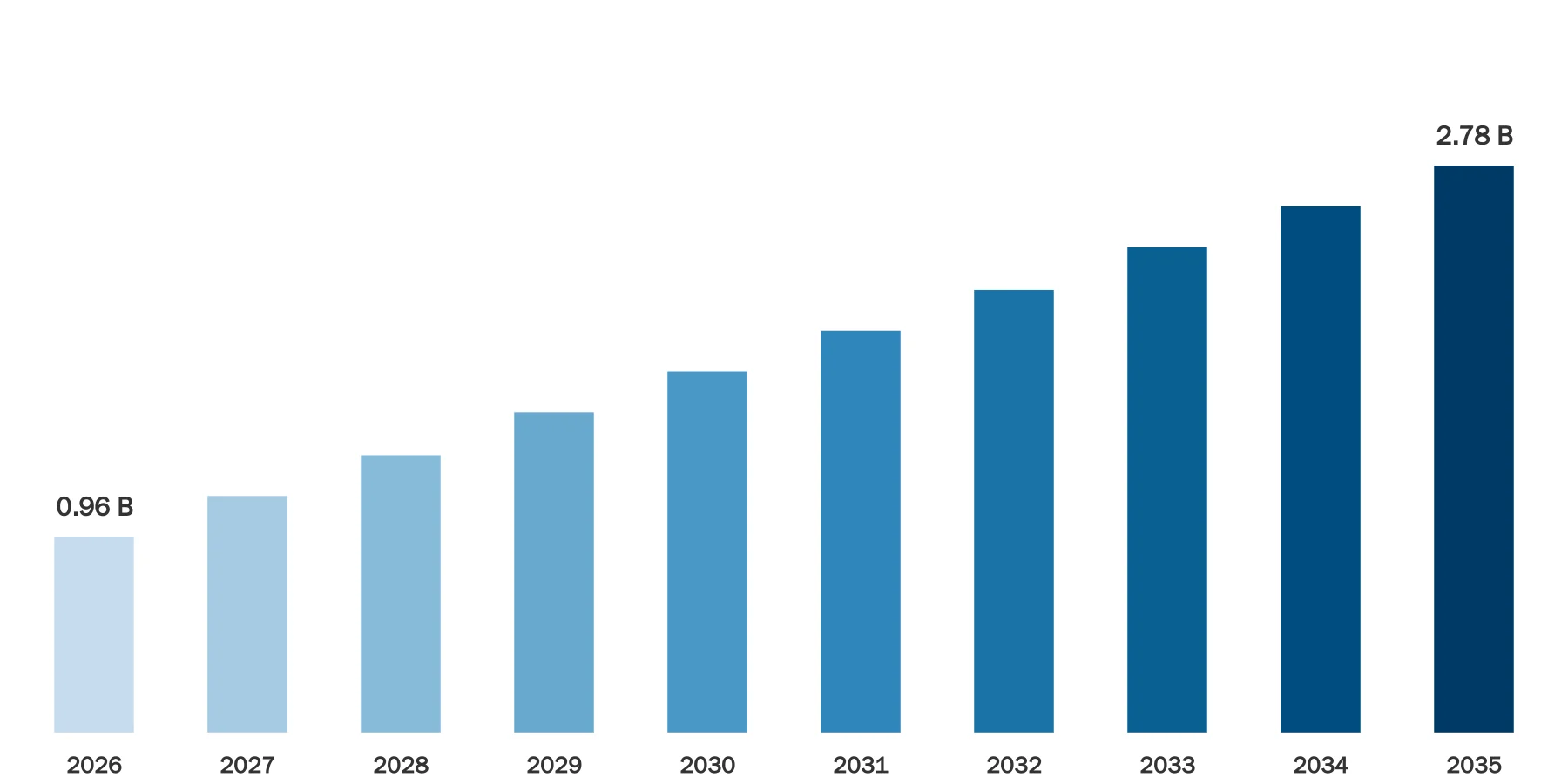
Source: Econ Market Research
Smart diapers use sensors, wireless connectivity, and other advanced technologies to track various aspects of a baby',s health and well-being, including urine or stool levels, temperature, and activity patterns. The market for smart diapers is expanding rapidly due to rising concerns about infant health and hygiene, increased adoption of wearable technology, and rising demand for convenient baby care solutions from parents.
Companies in this market are constantly innovating to create smarter, more efficient diaper products with real-time monitoring and alerts, enhancing caregiver convenience and peace of mind. The global smart diapers market is expected to expand further as technology advancements enable the development of more sophisticated and affordable smart diaper solutions, catering to the evolving needs and preferences of parents worldwide.
Smart Diapers Dynamics
One key driver is parents', growing awareness of infant health and hygiene, which is creating a demand for innovative baby care solutions. Furthermore, the convenience provided by smart diapers, which allow for real-time monitoring of a baby',s health parameters such as urine or stool levels and temperature, is driving market growth. Furthermore, the rising adoption of wearable technology in various sectors, including childcare, is boosting the market, as parents seek convenient and efficient ways to monitor their babies', well-being.
On the other hand, factors such as high initial costs associated with smart diaper products and concerns regarding data privacy and security pose challenges to market growth. While technological advancements have LED to the development of more sophisticated and affordable smart diaper solutions, cost remains a barrier for some consumers. Furthermore, issues related to data privacy and security, including the collection and storage of sensitive information from infants, raise apprehensions among parents and caregivers.
Smart Diapers Drivers
Increasing Awareness and Concerns for Infant Health and Hygiene
Parents around the world are becoming more aware of the importance of proper hygiene and monitoring their infants', health. Smart diapers provide a convenient solution by displaying real-time information about a baby',s health parameters such as urine or stool levels, temperature, and activity patterns. This awareness, combined with a desire to ensure the safety of their children, is driving demand for smart diapers. As parents seek more efficient and reliable ways to monitor their babies', health, the market for smart diapers is rapidly growing.
Rapid Technological Advancements and Adoption of Wearable Technology
The smart diapers market is being driven primarily by rapid technological advancement, particularly in the field of wearable devices. Manufacturers are constantly innovating to incorporate sensors, wireless connectivity, and other advanced features into diaper products, making them more intelligent and functional. These technological advancements not only improve the functionality of smart diapers, but also make them more affordable and accessible.
Furthermore, the growing adoption of wearable technology in a variety of industries, including healthcare and childcare, is raising awareness and acceptance of smart diaper solutions among parents. As technology advances, the market for smart diapers is expected to grow further, with more sophisticated and user-friendly products emerging.
Smart Diapers Restraints:
High Initial Costs and Affordability Concerns
The relatively high initial costs of smart diapers are a major impediment to their market growth. Smart diapers, which include advanced technology features like sensors and wireless connectivity, are typically more expensive than traditional diapers. This higher cost may deter price-sensitive consumers from purchasing smart diapers, particularly in regions with lower disposable incomes. Despite the potential long-term benefits and convenience offered by smart diapers, affordability remains a significant barrier to widespread adoption.
Data Privacy and Security Concerns
Another challenge for the smart diapers market is growing concern about data privacy and security. Smart diapers collect sensitive health information, such as urine or stool levels and temperature, raising privacy concerns among parents and caregivers. There are concerns about the storage and handling of this data, as well as the possibility of unauthorized access or misuse. Manufacturers must address these concerns by implementing strong data security measures and transparent privacy policies to ensure consumer trust and confidence.
Smart Diapers Opportunities:
Collaborations and Partnerships for Technological Innovation
Collaboration among technology companies, healthcare providers, and childcare experts offers a promising opportunity to drive technological innovation in the smart diaper market. By pooling their knowledge and resources, stakeholders can speed up the development of smarter, more advanced diaper solutions with improved functionality and usability.
Collaborations can help integrate cutting-edge technologies like Artificial Intelligence and machine learning, improving the accuracy and reliability of smart diaper sensors and analytics. Furthermore, collaborations with healthcare professionals can help validate smart diaper products', efficacy in monitoring infant health and detecting early signs of potential health problems. By encouraging collaboration and innovation, stakeholders can unlock new opportunities for growth and differentiation in the competitive smart diapers market.
Segment Overview
By Product Type
The market for smart diapers is divided into two categories based on product type: babies and adults. Smart diapers designed for babies are the most popular segment, catering to the needs of infants and toddlers. These diapers include sensors and advanced technology features that monitor a baby',s health parameters, such as urine or stool levels and temperature, and provide parents and caregivers with real-time insights. In recent years, there has been an increase in demand for smart diapers for adults, especially among the elderly and those with medical conditions.
These diapers offer similar monitoring capabilities as those for babies, but are tailored to adult users', unique needs and requirements, providing enhanced comfort, dignity, and convenience. The adult segment of the smart diapers market presents opportunities for addressing the growing aging population and the rising prevalence of incontinence issues, driving demand for innovative adult care solutions.
By Application
The smart diapers market is further divided into three applications: universal care, community care, and clinical care. Universal care encompasses the widespread use of smart diapers in everyday settings, such as homes and daycare centers, to monitor the health and well-being of both babies and adults. The use of smart diapers in community-based settings, such as assisted living facilities and nursing homes, allows caregivers to remotely monitor multiple individuals', health parameters using centralized systems.
Clinical care is the use of smart diapers in healthcare settings, such as hospitals and clinics, to monitor patients', health and provide timely interventions. Each application segment of the smart diapers market addresses specific needs and scenarios, ranging from personal use to professional healthcare settings, contributing to the overall market growth and diversification of product offerings.
By Distribution Channel
The smart diapers market is segmented by distribution channel into two categories: online and retail. Online distribution channels include e-commerce platforms and online retailers, offering consumers the convenience of purchasing smart diapers from the comfort of their homes and accessing a wide range of product options and brands. Retail distribution channels encompass brick-and-mortar stores, supermarkets, pharmacies, and specialty baby care stores, providing consumers with the opportunity to physically examine and purchase smart diapers in-store.
Both distribution channels play vital roles in reaching target consumers and expanding market reach, catering to diverse preferences and shopping behaviors. The online segment of the smart diapers market is experiencing rapid growth due to the increasing popularity of online shopping and the convenience of doorstep delivery, while retail channels remain essential for providing personalized assistance and customer support to shoppers.
Smart Diapers Overview by Region
North America dominates the market, owing to high consumer awareness, technological advancements, and a growing emphasis on infant and Elderly Care. The region has a well-established healthcare infrastructure and a strong presence of key market players, which helps to drive widespread adoption of smart diaper technology. In Europe, growing concerns about aging populations and rising healthcare costs are driving demand for smart diapers, particularly in countries with large elderly populations like Germany and Italy.
Asia Pacific is experiencing rapid market growth, driven by rising disposable incomes, urbanization, and changing lifestyles, particularly in emerging economies such as China and India. The region',s large population base and increasing investments in healthcare infrastructure are driving market expansion. In Latin America and the Middle East &, Africa, the market for smart diapers is gradually gaining traction, supported by improving healthcare infrastructure and growing awareness of infant and elderly care. However, challenges such as affordability and accessibility remain barriers to widespread adoption in these regions.
Smart Diapers Market Competitive Landscape
Pampers (Procter &, Gamble), Huggies (Kimberly-Clark Corporation), and Luvs (Procter &, Gamble) are market leaders thanks to their diverse product offerings, strong brand recognition, and widespread distribution networks. These companies invest heavily in R&,D to improve product features and functionality, uphold quality standards, and meet changing consumer preferences.
Market leaders use strategic collaborations with healthcare providers and technology partners, as well as technological advancements, to gain a competitive advantage. The market also features a multitude of smaller players and start-ups specializing in niche segments or innovative technologies, contributing to market diversification and fostering innovation. Mergers and acquisitions are common strategies adopted by companies to expand their market presence, consolidate their market position, and gain access to new technologies and markets.
Smart Diapers Key Players:
Verily
ElderSens
Pixie Scientific
SINOPULSAR
Monit Corp.
Opro9
Simativa
Abena Nova
Indiegogo
Smartipants
Smart Diapers Report Segmentation
Smart Diapers Market Report Scope & Segmentation
| Attributes | Details |
|---|---|
Market Size (Current) | US$ 0.96 Billion in 2026 |
Market Size (Forecast) | US$ 2.78 Billion in 2035 |
Growth Rate | CAGR of 12.6% from 2026 to 2035 |
Forecast Period | 2026 – 2035 |
Base Year | 2025 |
Historical Data Available | Yes |
Regional Scope | Global |
Segments Covered | By Product
By End-User
By Distribution Channel
|
Frequently Asked Questions
Common questions about this report
The study period covers historical insights and forecast projections for the period 2026-2035.
About the Author
Market research expert with years of industry experience

Dipali Bhingare serves as the Market Research Director at Econ Market Research. With a focus on translating complex global economic shifts into actionable business intelligence, she oversees the strategic direction of comprehensive market studies. Her work empowers organizations to navigate volatile industries through data-driven forecasting and deep-dive competitive analysis.
Related Reports
Explore more market insights from the same category