

Shared Mobility Market
Shared Mobility Market Size, Share, Trends, Growth, and Industry Analysis, By Service Model (Ride-Hailing, Bike Sharing, Car Sharing, Scooter Sharing), By Vehicle Type (Cars, Two-wheelers, Others), By Business Model (P2P, B2C, B2B), Regional Analysis and Forecast Period 2026-2035
Shared Mobility Market Overview
As per Econ Market Research analysis, the Global Shared Mobility Market was recorded at US$ 451.2 Billion in 2026 and is projected to expand to US$ 953.73 Billion by 2035, registering a CAGR of 8.68% over the forecast period. The base year used is 2025.
Shared Mobility Market Size 2025-2035 (USD Billion)

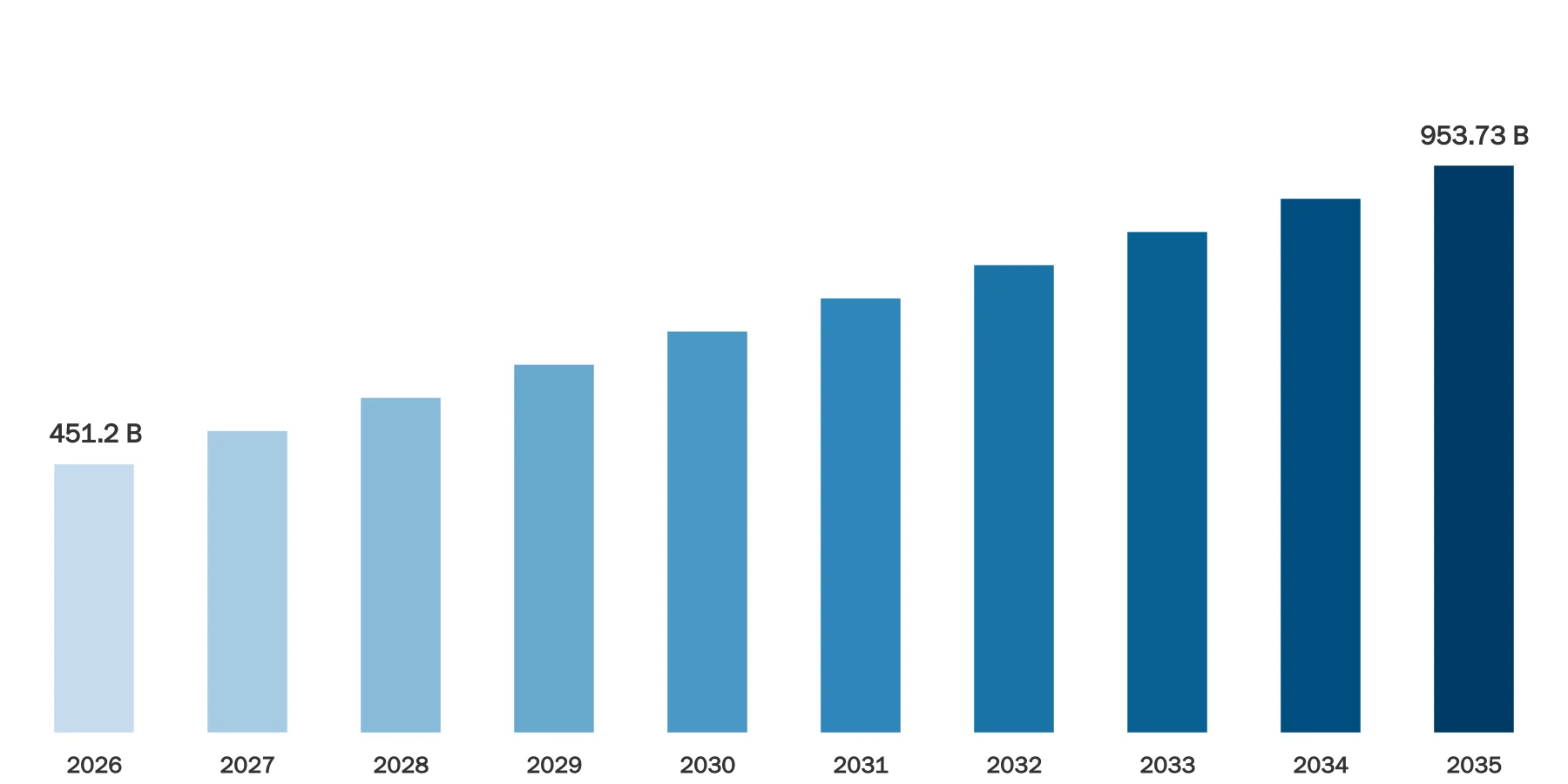
Source: Econ Market Research
Shared mobility is when transportation services are shared among users with the help of technology platforms. This includes ridesharing, bike-sharing, scooter-sharing, and car-sharing. The Global Shared Mobility Market has seen a big increase in the past few years because of more people living in cities, worries about the environment, and the desire for cheaper transportation choices. The market is growing because of things like more people having smartphones and internet access, which makes it easy to book and pay for shared rides, as well as the convenience and flexibility that shared mobility options provide.
One of the main factors driving the Global Shared Mobility Market is the change in how people choose to get around, moving towards more environmentally friendly and effective forms of transportation. As people become more aware of environmental concerns, they are turning to shared mobility services instead of owning their own cars.
Shared mobility helps decrease traffic jams and carbon emissions, while also saving money for individuals. Additionally, when shared mobility services are connected with public transportation, it gives commuters more convenient and dependable ways to travel. Despite facing regulatory hurdles, concerns about data privacy and security, and competition from traditional transportation providers, the market for shared mobility is set to grow due to companies innovating and collaborating to meet the changing demands of urban mobility.
Shared Mobility Dynamics
The Global Shared Mobility Market is constantly changing due to technological advancements, evolving consumer preferences, and regulatory frameworks. Innovations like mobile apps and GPS tracking have transformed how shared mobility services are used, making them more convenient and accessible. The rise of electric and Autonomous Vehicles is set to revolutionize the market, providing eco-friendly and efficient transportation options that help combat air pollution and traffic congestion.Consumer preferences are pivotal in shaping the market dynamics of shared mobility. The increase in urbanization, along with the higher costs of owning a car and a heightened environmental awareness, has boosted the call for shared transportation choices.
Millennials and younger individuals, specifically, are welcoming the Sharing Economy and placing a higher emphasis on experiences rather than ownership. This trend is propelling the acceptance of ridesharing, bike-sharing, and other shared mobility services. Additionally, certain trends within the market have been sped up by the COVID-19 pandemic, like the need for contactless payment methods and the inclusion of hygiene and safety protocols. Regulations and policies play a significant role in shaping market dynamics, as governments take steps to encourage shared mobility while addressing issues such as safety, liability, and fair competition.
Shared Mobility Drivers
Urbanization and Population Growth
As more people move to cities around the world, they are encountering problems like traffic jams, pollution, and poor transportation. Shared transportation services are stepping in to help with customizable, affordable, and eco-friendly travel choices. The growth of cities is leading to an increased need for shared transportation, especially in busy areas were getting around efficiently is important. Moreover, the clustering of businesses, schools, and entertainment in city centres is creating a perfect setting for shared transportation services to flourish, meeting the varied transportation needs of locals and tourists alike.
Technological Advancements
The shared mobility market is experiencing significant innovation due to rapid advancements in technology, including mobile connectivity, Data Analytics, and vehicle automation. Mobile applications make it simple for users to access and book shared transportation services, while GPS and real-time tracking systems streamline routing and enhance service efficiency.
The rise of electric and autonomous vehicles is transforming the shared mobility industry by providing sustainable and cost-effective alternatives to conventional transportation methods. These technological improvements improve the user experience, lower operational costs, and set the stage for the future development and expansion of shared mobility services.
Restraints:
Regulatory Challenges
The shared mobility market is dealing with regulatory issues regarding licensing, insurance, liability, and safety standards. Regulations differ from region to region and can struggle to keep up with the fast changes in shared mobility services. This uncertainty in regulations can slow down market growth, make it harder for new players to enter the market, and raise costs for current providers. Additionally, regulatory frameworks may vary between urban and rural areas, making it more difficult for shared mobility solutions to grow and expand.
Infrastructure Limitations
Shared mobility services depend greatly on the current transportation infrastructure, including roads, parking lots, and public transportation systems. Problems with infrastructure, like crowded roads or a lack of bike lanes, can make shared mobility services less efficient and accessible, causing disruptions and unhappy customers. Additionally, implementing electric and self-driving vehicles needs investments in charging stations, maintenance facilities, and communication networks. Infrastructure issues can hold back the growth and long-term success of shared mobility solutions, especially in areas with underdeveloped transportation systems.
Opportunities:
Rural and Suburban Expansion
While shared mobility services have mainly concentrated on cities, there is an increasing chance to branch out into rural and suburban regions as well. Rural areas frequently encounter limited transportation choices, making shared mobility services a beneficial supplement to current transit options. Additionally, suburban regions with sparse population densities and scattered land use patterns can exploit adaptable and on-demand transportation solutions provided by shared mobility providers. Venturing into rural and suburban markets necessitates custom service offerings, strategic alliances with local stakeholders, and investments in infrastructure and promotional campaigns to cater to distinctive transportation requirements and preferences.
Segment Overview
By Type
This section classifies shared transportation services into different categories like ride-sourcing, private, ride-sharing, and vehicle rental/leasing. Ride-sourcing services like Uber and Lyft connect passengers with drivers using mobile apps to provide on-demand transportation. Private shared transportation services involve carpooling and vanpooling agreements between individuals or groups, encouraging cost-sharing and alleviating traffic congestion.
Ride-sharing platforms allow people to share rides with others headed in the same direction, increasing vehicle occupancy and lowering travel expenses. Vehicle rental/leasing services provide short-term access to vehicles, ranging from traditional car rentals to newer models like electric scooters and bicycles, catering to diverse transportation needs and preferences.
By Vehicle Type
This section categorizes shared mobility vehicles into different types like buses and coaches, micro-mobility solutions, passenger cars, and light commercial vehicles (LCVs). Buses and coaches are often seen in urban and suburban areas as a way to provide transportation for large groups of people. Micro-mobility solutions, such as electric scooters, bikes, and mopeds, offer convenient and eco-friendly options for short trips in cities. Passenger cars, including sedans and SUVs, are used in services like ride-hailing and car-sharing, which aim to provide comfort and convenience for passengers. Light commercial vehicles (LCVs) are used for shared transportation of goods and passengers, serving businesses, delivery services, and logistics companies.
By Business Model
The different types of shared mobility services are categorized based on their business models: business-to-business (B2B), peer-to-peer (P2P), and business-to-consumer (B2C). B2B services are designed for corporations and organizations, offering transportation solutions for employee commuting, corporate events, and business trips. P2P platforms allow individual users to directly share vehicles and rides without intermediaries. B2C services focus on individual consumers, offering transportation options like ride-sharing, bike-sharing, and vehicle rental through digital platforms and mobile apps. Each business model offers distinct advantages and opportunities for shared mobility providers, depending on the target market and operational requirements.
Shared Mobility Overview by Region
The shared transportation market has different trends in various regions worldwide. In North America, well-known companies such as Uber and Lyft are the key players in the market. The region has a solid set of regulations and a high rate of smartphone usage, which has helped in the wide acceptance of shared transportation services. On the other hand, Europe has a mix of public transportation options and a rising interest in eco-friendly mobility choices. Ride-sharing and bike-sharing services are particularly popular in cities such as London, Paris, and Berlin, where the focus on urbanization and environmental issues has increased the demand for alternative transportation solutions.
In countries like China, India, and Japan, big cities are seeing a lot of money being put into shared transportation like electric cars and smart traffic systems. In Latin America and the Middle East &, Africa, there is a lot of room for companies that offer shared transportation, with more people moving to cities and traffic getting worse. But there are obstacles like complex rules, not enough infrastructure, and differences in how much money people have. Overall, the shared transportation market is growing quickly and facing different challenges in different places, depending on things like how cities are growing, the rules around transportation, and what people want.
Shared Mobility Market Competitive Landscape
The competitive landscape of the shared mobility market is characterized by intense rivalry among key players striving to capture market share and expand their service offerings. Established companies such as Uber, Lyft, and Didi Chuxing dominate the ride-sourcing segment globally, leveraging their extensive networks, brand recognition, and technological expertise to attract customers. Meanwhile, traditional car rental companies like Hertz and Enterprise have entered the market by integrating shared mobility services into their existing business models.
In the bike-sharing and scooter-sharing sectors, companies like Lime and Bird compete fiercely for market dominance, deploying innovative strategies to differentiate their offerings and gain a competitive edge. Additionally, automotive manufacturers such as BMW and Ford are investing in mobility-as-a-service (MaaS) platforms and launching their own shared mobility initiatives to diversify revenue streams and adapt to changing consumer preferences. As the shared mobility market continues to evolve, new entrants and start-ups are also emerging, disrupting traditional transportation models and contributing to the competitive intensity of the industry.
Shared Mobility Market Leading Companies:
Uber Technologies Inc.
Lyft Inc.
Didi Chuxing Technology Co.
LimeBike
Bird Rides Inc.
The Hertz Corporation
Enterprise Holdings Inc.
Bayerische Motoren Werke AG (BMW)
Ford Motor Company
Grab Holdings Inc.
Zipcar Inc.
Meitetsu Kyosho Co., Ltd.
Trans-cab Services Pte Ltd.
ANI Technologies Pvt. Ltd. (Ola Cabs)
car2go AG
BlaBlaCar
PT Aplikasi Karya Anak Bangsa (Gojek)
Shared Mobility Recent Developments
In October 2023, Meitetsu Kyosho Co., Ltd. introduced two new Kariteco Bike stations in Nagoya, offering vehicle services like car sharing, leasing, and insurance.
In July 2023, Grab acquired Trans-cab, a Singapore taxi operator, gaining access to its maintenance facilities, fuel operations, and car rental services. Grab also plans to integrate its driver app into Trans-cab taxis.
In March 2023, Zipcar, Inc. expanded its carshare program in New York City, bringing its services to Kew Gardens Hills in Queens, West Village in Manhattan, and Bedford Park in the Bronx.
Shared Mobility Report Segmentation
Shared Mobility Market Report Scope & Segmentation
| Attributes | Details |
|---|---|
Market Size (Current) | US$ 451.2 Billion in 2026 |
Market Size (Forecast) | US$ 953.73 Billion in 2035 |
Growth Rate | CAGR of 8.68% from 2026 to 2035 |
Forecast Period | 2026 – 2035 |
Base Year | 2025 |
Historical Data Available | Yes |
Regional Scope | Global |
Segments Covered | By Service Model
By Vehicle Type
By Business Model
|
Frequently Asked Questions
Common questions about this report
The study period covers historical insights and forecast projections for the period 2026-2035.
About the Author
Market research expert with years of industry experience

Dipali Bhingare serves as the Market Research Director at Econ Market Research. With a focus on translating complex global economic shifts into actionable business intelligence, she oversees the strategic direction of comprehensive market studies. Her work empowers organizations to navigate volatile industries through data-driven forecasting and deep-dive competitive analysis.
Related Reports
Explore more market insights from the same category