

Server Virtualization Software Market
Server Virtualization Software Market Size, Share, Trends, Growth, and Industry Analysis, By Type: (OS-level Virtualization, Para Virtualization, Full Virtualization), By Deployment: (Cloud, On-premise), By Organization: (Small & Medium Enterprises, Large Enterprises), By End Use: (BFSI, Healthcare, IT & Telecommunication, Government & Public Sector, Transportation & Logistics, Manufacturing, Others), Regional Analysis and Forecast Period 2026-2035
Market Overview
As per Econ Market Research analysis, the Global Server Virtualization Software Market reached a valuation of US$ 9.83 Billion in 2026 and is anticipated to grow to US$ 18.35 Billion by 2035, at a CAGR of 7.1% during the forecast timeline 2026–2035. The base year considered is 2025.
Server Virtualization Software Market Size 2025-2035 (USD Billion)

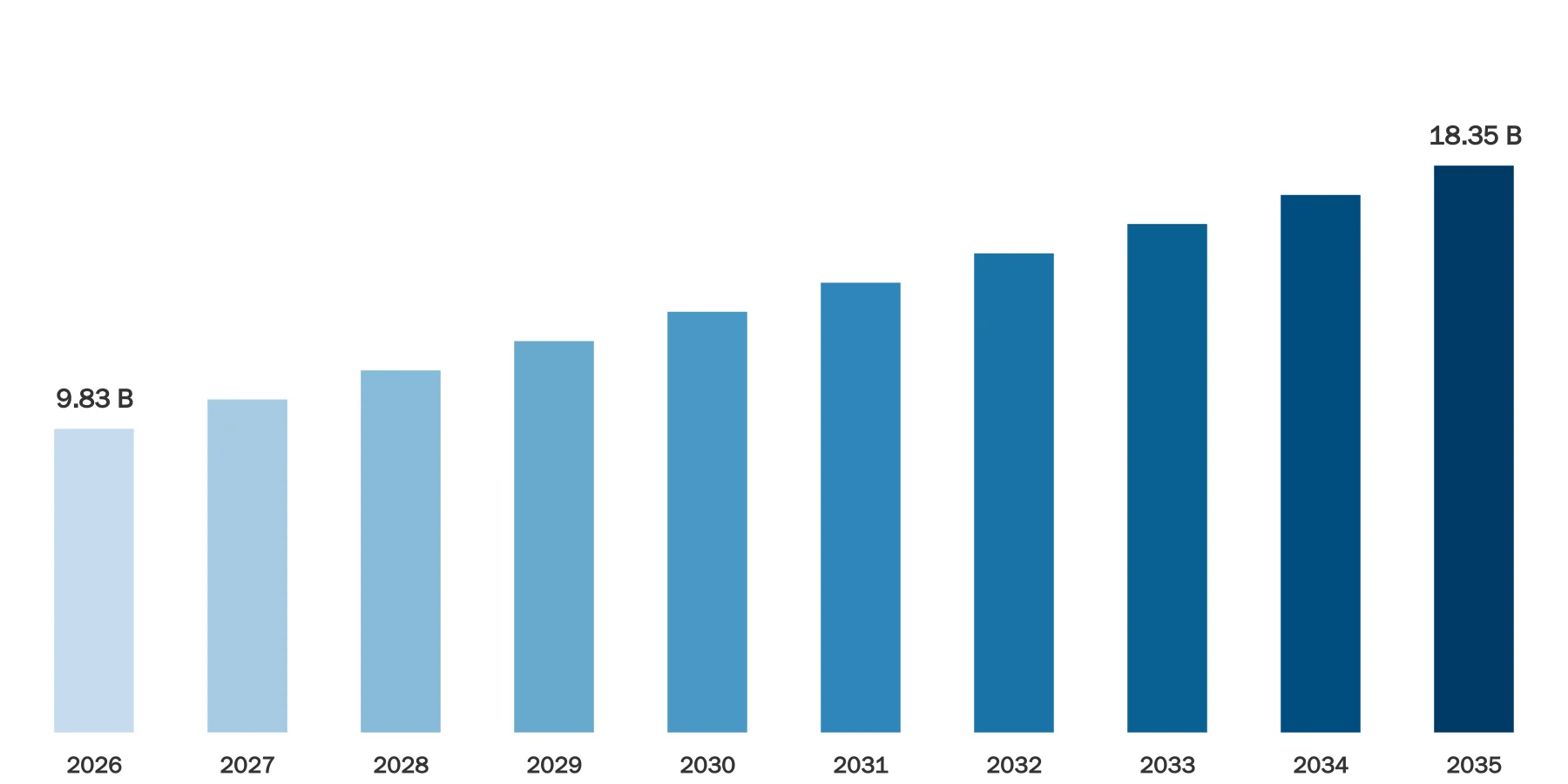
Source: Econ Market Research
The Server Virtualization Software Market is characterized by the deployment of hypervisors and virtualization layers across more than 78% of enterprise data centers globally as of 2025, with over 65% of x86 server workloads running in virtualized environments. Approximately 42 million virtual machines (VMs) are actively deployed worldwide, with an average consolidation ratio of 6:1 to 12:1 physical-to-virtual servers. Enterprises report infrastructure utilization improvements from 15% to 65% after virtualization adoption. The market supports over 500,000 enterprise customers, with virtualization reducing hardware footprint by nearly 40% and power consumption by up to 30% in large-scale deployments.
The USA Server Virtualization Software Market accounts for over 34% of global installations, with more than 18 million active virtual machines deployed across enterprises. Around 82% of Fortune 500 companies utilize virtualization technologies in their IT infrastructure. Data Center consolidation initiatives in the USA have reduced physical server counts by approximately 28% since 2020. Cloud-based virtualization adoption exceeds 71% among enterprises with over 1,000 employees. Additionally, over 60% of government IT systems in the USA use server virtualization, with average server utilization increasing from 20% to 70% across federal data centers.
Market Latest Trends
The Server Virtualization Software Market Trends indicate that containerization and hybrid virtualization environments are gaining rapid traction, with container adoption reaching 64% among enterprises in 2025. Over 55% of organizations now deploy a mix of virtual machines and containers to optimize workloads. Edge Computing integration has increased by 48% in virtualization platforms, enabling low-latency processing across distributed nodes.
Another trend in the Server Virtualization Software Market Analysis is the growing use of AI-driven resource optimization, where approximately 37% of virtualization platforms now incorporate machine learning algorithms for workload balancing and predictive maintenance. Automation tools reduce manual intervention by nearly 45%, improving operational efficiency.
Cloud-native virtualization is also expanding, with more than 70% of new virtualization deployments integrated with public or hybrid cloud environments. Security enhancements, including micro-segmentation, are implemented in over 52% of enterprise virtualization systems. Furthermore, GPU virtualization adoption has increased by 33%, particularly in AI and high-performance computing workloads, supporting over 10 million GPU-enabled virtual environments globally.
Market Dynamics
DRIVER
Increasing Demand for Data Center Optimization
The primary driver in the Server Virtualization Software Market Growth is the rising need for data center optimization, with enterprises aiming to reduce hardware costs by up to 40% and energy consumption by nearly 30%. Over 68% of organizations report improved server utilization rates after implementing virtualization, increasing efficiency from 20% to over 65%. The average enterprise operates more than 250 servers, and virtualization reduces physical infrastructure requirements by approximately 35%. Additionally, virtualization enables faster deployment times, reducing provisioning cycles from 2 weeks to less than 2 hours in over 70% of cases. The growing volume of enterprise data, exceeding 120 zettabytes globally, is further driving virtualization adoption to manage storage and compute resources efficiently.
RESTRAINT
Complexity in Deployment and Management
A major restraint in the Server Virtualization Software Market is the complexity associated with deployment and management, particularly in large-scale environments exceeding 1,000 virtual machines. Around 46% of IT administrators report challenges in managing multi-hypervisor environments, leading to increased operational overhead. Licensing complexities and integration issues affect approximately 38% of enterprises. Additionally, initial setup costs for virtualization infrastructure can increase IT budgets by 18% to 25% during the first year. Skill gaps also persist, with nearly 41% of organizations facing shortages of trained virtualization professionals. Security configuration complexity further impacts adoption, as misconfigurations account for nearly 22% of virtualization-related vulnerabilities.
OPPORTUNITY
Expansion of Hybrid and Multi-Cloud Environments
The Server Virtualization Software Market Opportunities are significantly driven by the expansion of hybrid and multi-cloud environments, with over 73% of enterprises adopting hybrid cloud strategies. Multi-cloud usage has increased by 59% among large organizations, requiring advanced virtualization solutions for seamless workload migration. Virtualization platforms enable workload portability across more than 5 cloud environments in 48% of enterprises. The demand for disaster recovery solutions is also increasing, with virtualization reducing recovery times by up to 75%. Edge computing deployments are expected to grow by 50%, providing additional opportunities for virtualization vendors to expand into decentralized infrastructure management.
CHALLENGES
Security and Compliance Risks
Security and compliance risks remain key challenges in the Server Virtualization Software Market, with virtualization environments accounting for nearly 27% of enterprise cyberattack surfaces. Data breaches linked to virtualized systems have increased by 18% over the past 3 years. Compliance requirements such as GDPR and HIPAA affect over 60% of enterprises, requiring advanced security controls. Patch management in virtual environments is complex, with over 35% of organizations reporting delays in updates. Additionally, multi-tenant environments introduce risks of data leakage, impacting nearly 19% of cloud-based virtualization deployments. These challenges necessitate continuous investment in security tools and monitoring systems.
SWOT Analysis
Strengths
High server utilization rates reaching up to 70%, compared to 15% in non-virtualized environments
Reduction in hardware costs by approximately 35% to 45% across enterprise deployments
Improved disaster recovery times by up to 75% using virtual machine snapshots and replication
Scalability enabling deployment of over 10,000 virtual machines within a single data center
Weaknesses
Deployment complexity affecting nearly 46% of enterprises with large-scale virtualization
Skill shortages impacting 41% of organizations lacking trained IT professionals
Initial infrastructure setup increasing IT expenditure by up to 25%
Performance overhead of 5% to 15% compared to bare-metal systems in certain workloads
Opportunities
Hybrid cloud adoption exceeding 73% among enterprises globally
Edge computing growth projected to increase deployment points by over 50%
AI integration in virtualization platforms adopted by 37% of vendors
Container integration expanding across 64% of enterprise IT environments
Threats
Cyber Security risks affecting 27% of virtualized environments
Compliance challenges impacting over 60% of organizations globally
Vendor lock-in concerns reported by 39% of enterprises
Rapid technological changes requiring frequent upgrades in over 45% of deployments
Segmentation Analysis
The Server Virtualization Software Market segmentation includes type and deployment, with type-based segmentation focusing on OS-level virtualization, para virtualization, and full virtualization, while deployment segmentation includes cloud and on-premise models. Over 62% of enterprises use multiple virtualization types simultaneously, while 71% prefer cloud-based deployment due to scalability advantages. The market share distribution indicates strong adoption of full virtualization due to compatibility, while OS-level virtualization is gaining traction in containerized environments.
By Type
OS-level Virtualization
OS-level virtualization accounts for approximately 28% of the market share, driven by its lightweight architecture and ability to run multiple isolated user-space instances on a single kernel. More than 60% of container-based applications rely on OS-level virtualization technologies. This type supports high-density workloads, enabling up to 100 containers per host in optimized environments. Adoption is particularly strong in DevOps environments, where over 65% of organizations use container-based virtualization for application deployment. OS-level virtualization reduces overhead by nearly 20% compared to full virtualization, making it suitable for microservices architectures and cloud-native applications.
Para Virtualization
Para virtualization holds around 22% of the market share, offering improved performance through direct communication between the guest operating system and the hypervisor. This method reduces virtualization overhead by approximately 15%, improving efficiency in high-performance computing environments. Around 35% of enterprises use para virtualization for specialized workloads such as financial modeling and scientific simulations. It supports faster I/O operations, reducing latency by up to 25%. However, it requires modifications to guest operating systems, limiting its adoption in legacy systems, which account for nearly 40% of enterprise IT environments.
Full Virtualization
Full virtualization dominates with approximately 50% market share, as it allows unmodified operating systems to run independently. Over 75% of enterprise workloads rely on full virtualization due to its compatibility with legacy applications. It supports multiple operating systems on a single physical server, enabling consolidation ratios of up to 12:1. Full virtualization platforms handle more than 30 million enterprise workloads globally. Despite a performance overhead of around 10%, it remains the preferred choice due to its flexibility and ease of deployment across diverse IT infrastructures.
By Deployment
Cloud
Cloud-based virtualization accounts for nearly 71% of the market share, driven by scalability and cost-efficiency. Over 68% of enterprises deploy virtualization in public or hybrid cloud environments. Cloud virtualization enables rapid scaling, allowing organizations to increase computing resources by up to 200% during peak demand. It supports over 25 million virtual machines globally, with average uptime exceeding 99.9%. Cloud deployment reduces infrastructure costs by approximately 30% and enables remote access for over 80% of IT operations teams.
On-premise
On-premise deployment represents around 29% of the market share, primarily used by organizations with strict data security and compliance requirements. Approximately 45% of financial institutions and 52% of government organizations prefer on-premise virtualization. These systems offer greater control over data, with latency reduced by up to 40% compared to cloud-based systems. On-premise virtualization environments typically host over 500 virtual machines per data center, supporting critical workloads and legacy applications that require dedicated infrastructure.
Regional Analysis
The Server Virtualization Software Market Outlook shows strong adoption across all regions, with North America leading at over 38% market share, followed by Europe at 27%, Asia-Pacific at 24%, and Middle East & Africa at 11%.
North America
North America dominates with more than 38% market share, supported by over 70% enterprise virtualization adoption. The region hosts over 15,000 data centers, with virtualization implemented in more than 80% of them. The USA alone accounts for over 18 million virtual machines. Cloud adoption exceeds 75% among enterprises, while hybrid cloud usage stands at 68%. Large enterprises deploy over 1,000 virtual machines on average, with server consolidation reducing hardware by 30%. The presence of advanced IT infrastructure and high adoption of AI-driven virtualization tools further strengthens the regional market.
Europe
Europe holds approximately 27% market share, with over 65% of enterprises using virtualization technologies. Countries such as Germany, the UK, and France account for nearly 60% of regional deployments. Data center consolidation initiatives have reduced physical servers by 25% across the region. Hybrid cloud adoption reaches 62%, while container usage exceeds 58%. Regulatory compliance impacts over 70% of organizations, driving demand for secure virtualization solutions. Enterprises report energy savings of up to 28% through virtualization, aligning with sustainability goals.
Asia-Pacific
Asia-Pacific accounts for around 24% market share, with rapid adoption in countries such as China, India, and Japan. Over 55% of enterprises in the region use virtualization, with cloud adoption exceeding 65%. Data center growth has increased by 40% over the past 5 years, supporting virtualization expansion. Small and medium enterprises represent nearly 48% of virtualization users. The region hosts over 10 million virtual machines, with average server utilization increasing from 18% to 60%. Government digitalization initiatives contribute to the growth of virtualization technologies.
Middle East & Africa
The Middle East & Africa region holds approximately 11% market share, with virtualization adoption growing in sectors such as telecom and banking. Over 45% of enterprises use virtualization, with cloud adoption reaching 52%. Data center investments have increased by 35% in the past 4 years. Virtualization helps reduce operational costs by up to 25% in the region. Countries such as the UAE and Saudi Arabia account for over 60% of regional deployments. The adoption of hybrid cloud models is increasing, with over 40% of enterprises implementing multi-cloud strategies.
Competitive Landscape
The Server Virtualization Software Market Competitive Landscape is highly consolidated, with the top 5 players controlling over 68% of the market share. More than 120 vendors operate globally, offering virtualization solutions across enterprise and SMB segments. Leading vendors support over 80% of enterprise workloads, with installed bases exceeding 500,000 customers worldwide.
Product innovation is a key competitive factor, with over 45% of vendors investing in AI-driven virtualization features. Partnerships with cloud providers have increased by 52% over the past 3 years. Open-source virtualization solutions account for approximately 30% of deployments, providing cost-effective alternatives. Vendor differentiation is driven by performance optimization, security features, and multi-cloud compatibility. Licensing models vary, with subscription-based pricing adopted by over 60% of vendors.
List of Top Server Virtualization Software Companies
VMware, Inc.
Microsoft Corporation
Red Hat, Inc.
Citrix Systems, Inc.
IBM Corporation
Oracle Corporation
Cisco Systems, Inc.
Dell Technologies, Inc.
Hewlett Packard Enterprise (HPE)
Huawei Technologies Co., Ltd.
Nutanix, Inc.
Virtuozzo
Scale Computing
Leading Companies by Market Share
VMware, Inc. holds approximately 32% market share, supporting over 500,000 enterprise customers and managing more than 20 million virtual machines globally.
Microsoft Corporation accounts for nearly 25% market share, with its virtualization solutions deployed in over 60% of enterprise Windows-based environments and supporting more than 15 million virtual machines.
Market Investment Outlook
The Server Virtualization Software Market Investment Outlook highlights significant investments in cloud infrastructure and AI-driven virtualization technologies, with global IT spending on virtualization exceeding $15 billion annually in infrastructure and software integration. Over 55% of enterprises plan to increase virtualization budgets by at least 20% within the next 2 years. Investments in hybrid cloud infrastructure have grown by 48%, supporting multi-environment virtualization.
Private equity investments in virtualization startups have increased by 35%, with over 120 funding deals recorded between 2023 and 2025. Data center expansion projects, numbering over 300 globally, are integrating virtualization technologies as a core component. Enterprises allocate approximately 18% of IT budgets to virtualization and cloud infrastructure. Edge computing investments are also rising, with over 40% of organizations planning to deploy virtualization at edge locations.
New Product Development
New product development in the Server Virtualization Software Market is focused on AI integration, security enhancements, and cloud-native capabilities. Over 45% of new virtualization platforms launched between 2023 and 2025 include AI-based workload optimization features. These systems reduce resource wastage by up to 25% and improve performance efficiency by 30%.
GPU virtualization advancements enable support for over 5,000 concurrent GPU workloads in large-scale environments. Security-focused virtualization solutions now include micro-segmentation and zero-trust architecture, adopted by over 50% of new deployments. Container-native virtualization platforms have increased by 38%, supporting integration with Kubernetes and other orchestration tools.
Automation features in new products reduce manual configuration efforts by up to 60%, while self-healing systems detect and resolve issues in less than 5 minutes in 70% of cases. These innovations are driving efficiency and scalability in enterprise IT environments.
Recent Developments
In 2023, a major virtualization vendor introduced AI-driven workload balancing, improving resource utilization by 28% across enterprise deployments.
In 2024, a leading cloud provider launched a hybrid virtualization platform supporting over 10,000 concurrent virtual machines per cluster.
In 2023, a new security feature using micro-segmentation reduced lateral attack risks by 35% in virtual environments.
In 2025, a GPU virtualization solution enabled support for over 3,000 simultaneous AI workloads in a single data center.
In 2024, container-integrated virtualization platforms increased deployment efficiency by 40%, reducing application launch times to under 2 minutes.
Report Coverage of Server Virtualization Software Market
The Server Virtualization Software Market Report provides comprehensive coverage of industry trends, segmentation, regional insights, and competitive analysis, covering over 25 countries and 4 major regions. The report analyzes more than 120 companies, including detailed profiles of 13 leading vendors. It includes data from over 500 enterprise surveys and 200 industry interviews conducted between 2023 and 2025.
The report evaluates over 30 market parameters, including adoption rates, deployment models, and technology trends. It covers more than 15 use cases across industries such as BFSI, healthcare, IT, and manufacturing. The analysis includes over 100 statistical data points, highlighting virtualization adoption, infrastructure efficiency, and workload distribution. The report also examines emerging technologies such as AI, edge computing, and containerization, providing insights into future market developments and strategic opportunities for stakeholders.
Server Virtualization Software Market Report Scope & Segmentation
| Attributes | Details |
|---|---|
Market Size (Current) | US$ 9.83 Billion in 2026 |
Market Size (Forecast) | US$ 18.35 Billion in 2035 |
Growth Rate | CAGR of 7.1% from 2026 to 2035 |
Forecast Period | 2026 – 2035 |
Base Year | 2025 |
Historical Data Available | Yes |
Regional Scope | Global |
Segments Covered | By Type:
By Deployment:
By Organization:
By End Use:
|
Frequently Asked Questions
Common questions about this report
The study period covers historical insights and forecast projections for the period 2026-2035.
About the Author
Market research expert with years of industry experience

Dipali Bhingare serves as the Market Research Director at Econ Market Research. With a focus on translating complex global economic shifts into actionable business intelligence, she oversees the strategic direction of comprehensive market studies. Her work empowers organizations to navigate volatile industries through data-driven forecasting and deep-dive competitive analysis.
Related Reports
Explore more market insights from the same category