

Seaweed Extracts Biostimulant Market
Seaweed Extracts Biostimulant Market Size, Share, Trends, Growth, and Industry Analysis, By Species (Brown Algae, Red Algae, Green Algae), By Form (Liquid, Dry (Powder/Granule)), By Crop Type (Fruits andamp; Vegetables, Cereals andamp; Grains, Oilseeds andamp; Pulses, Turf andamp; Ornamentals), By Application Method (Foliar Treatment, Soil Treatment, Seed Treatment), Regional Analysis and Forecast Period 2026-2035
Seaweed Extracts Biostimulant Market Overview
As per Econ Market Research analysis, the Global Seaweed Extracts Biostimulant Market was valued at approximately US$ 1.58 Billion in 2026 and is predicted to reach US$ 5.27 Billion by 2035, expanding at a CAGR of 14.34% over the forecast duration. The base year is 2025.
Seaweed Extracts Biostimulant Market Size 2025-2035 (USD Billion)

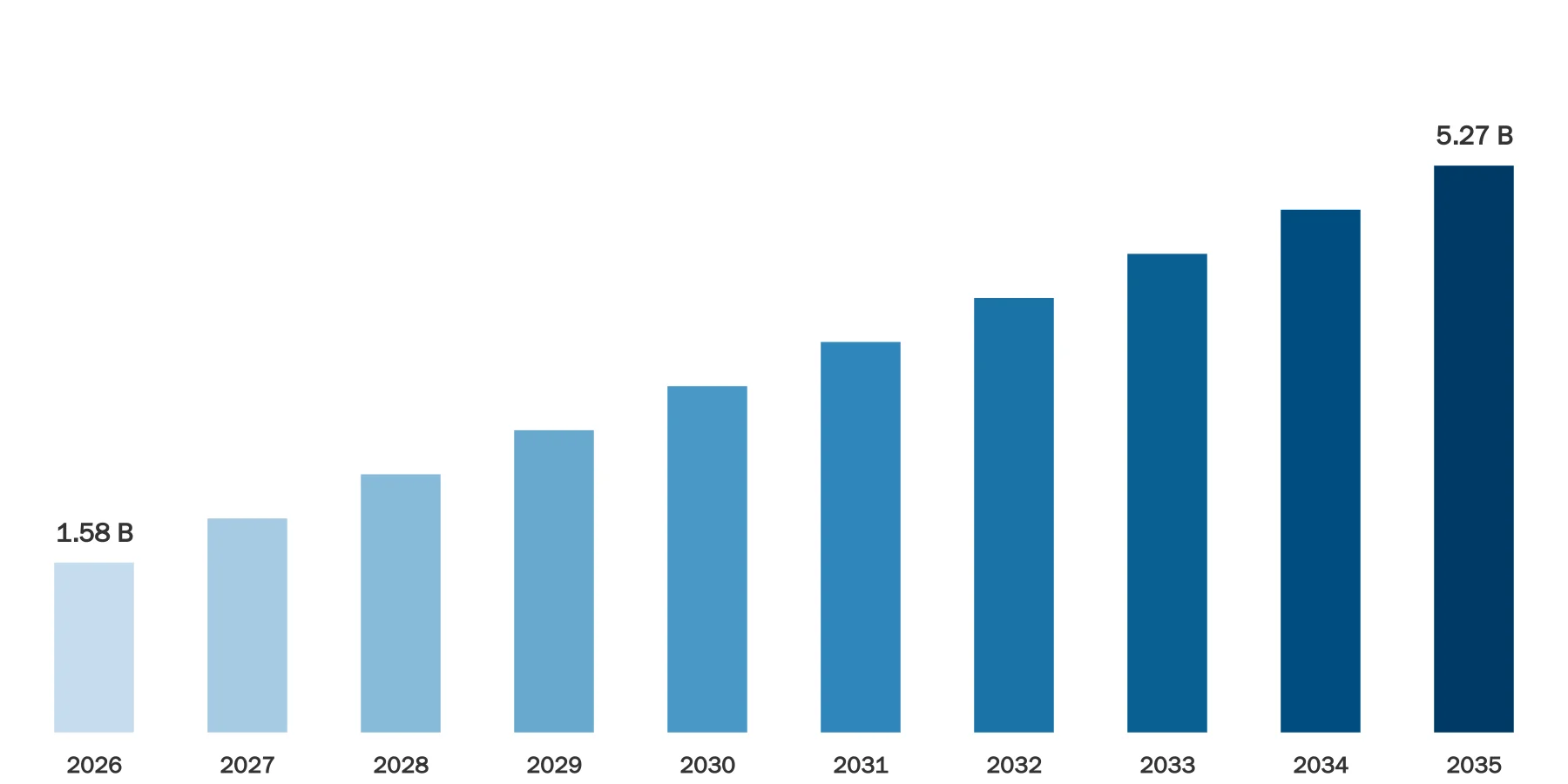
Source: Econ Market Research
Seaweed Extracts contain nutrients, hormones, and other useful compounds that induce plant survival in otherwise hostile environments. This has driven enormous interest in the agricultural sector as it fosters sustainable farming with reduced dependence on synthetic fertilizers. The market for seaweed extracts Bio Stimulants is emerging rapidly in response to growing interest from producers who seek organic and sustainable agricultural solutions that do not impair the environment at negligible environmental impact.
Seaweed extracts, which provide nutrients but also improve soil health and enhance plant resistance to pests and diseases, are an excellent choice. In terms of markets, North America, Europe, and Asia-Pacific are some of the primary markets for these products, with many companies investing in research and development to create effective formulations. Meanwhile, as consumers continue to seek healthier food options, the demand for seaweed extracts Biostimulants is envisioned to increase sharply and thus become the essential component of modern agriculture.
Dynamic Insights
Some drivers of rising demand for sustainable agriculture and organic farming include growing environmental concerns that led farmers to look for natural solutions to improve crop productivity and soil health. Seaweed extracts have nutrient-rich properties and can make plants more resistant to both biotic and abiotic stress, making it an attractive practice for those looking for environmentally friendly alternatives.
Factors challenging biostimulants include regulatory concerns and some lack of knowledge regarding the benefits of biostimulants among farmers. This market is on the increase, so there needs to be education and outreach to increase adoption rates, especially in those developing regions where traditional farming techniques are mainly used. Additionally, availability of raw materials and the need for standardization of the production process can hinder growth in the market.
Drivers Insights
Rising Demand for Sustainable Agriculture
With increased awareness of the sustainability of the environment, farmers are now looking for solutions that will be more environmentally friendly. Filled with all necessary nutrients and biostimulants, seaweed extracts are organic materials, therefore an alternative to synthetic fertilizers, which support soil health and better crop yields with fewer chemical inputs. With the rise in consumer preferences for organic produce, the demand for sustainable farming practices and the use of seaweed extracts is likely to increase substantially. This is more so in regions whose governments increasingly favor organic farming and propel the use of biostimulants in agricultural practices.
Improved Crop Resilience and Productivity
Seaweed extracts have been shown to enhance plant growth and resilience against environmental stressors such as drought, salinity, and pests. The application of these extracts stimulates root development, improves nutrient uptake, and boosts overall plant vigor. As climate change poses challenges to traditional farming methods, the ability of seaweed extracts to support plant health in adverse conditions is a crucial driver for their market growth. Farmers are increasingly recognizing the value of biostimulants in achieving higher crop yields, making seaweed extracts an integral part of modern agricultural strategies.
Restraints Insights
The seaweed extracts biostimulant market faces significant regulatory hurdles that can impede growth. Different regions have varying regulations regarding the approval and use of biostimulants in agriculture. The lengthy and complex registration processes can discourage new entrants and slow down product commercialization. Additionally, inconsistent regulations across countries can create challenges for manufacturers seeking to expand their market reach. These regulatory barriers can limit the availability of innovative products in the market and hinder the overall growth of the industry.
Limited Awareness and Knowledge
Despite the benefits of seaweed extracts, there remains a lack of awareness and understanding among some farmers about their advantages and proper usage. Many growers continue to rely on conventional fertilizers and practices, unaware of the potential improvements biostimulants can offer. This knowledge gap can slow the adoption of seaweed extracts, particularly in regions with traditional farming methods. Education and outreach programs are necessary to inform farmers about the benefits, application methods, and success stories associated with seaweed extracts to overcome this restraint.
Opportunities Insights
Research and Development Innovations
There is substantial opportunity for growth in the seaweed extracts biostimulant market through research and development (R&,D). Ongoing studies are exploring new formulations and extraction methods that enhance the efficacy of seaweed extracts. Innovations in product development can lead to targeted solutions that cater to specific crops and environmental conditions. Collaborations between agricultural companies, universities, and research institutions can drive technological advancements, resulting in more effective and versatile biostimulant products. This focus on R&,D can open new markets and applications, thereby expanding the overall market landscape.
Segment Analysis
By Species
This segmentation is primarily focused on the types of seaweed used to create biostimulants, namely brown algae, red algae, and green algae. Brown algae, such as kelp, are rich in minerals, growth hormones, and trace elements that promote plant growth and enhance stress tolerance. Red algae, known for their high content of phycoerythrin and other beneficial compounds, are effective in improving nutrient availability and plant health. Green algae, on the other hand, are recognized for their growth-promoting properties and can enhance soil fertility. Each type of algae offers unique benefits, making them suitable for different agricultural applications and contributing to the diverse range of products in the biostimulant market.
By Crop Type
This segment categorizes biostimulants based on the types of crops they are applied to, including fruits and vegetables, cereals and grains, oilseeds and pulses, turf and ornamentals, and others. The use of seaweed extracts in fruits and vegetables can enhance yield, quality, and resistance to diseases, making them essential for commercial growers.
In cereals and grains, these biostimulants can improve root development and nutrient uptake, leading to higher productivity. Oilseeds and pulses benefit from enhanced soil health and improved stress resistance. Additionally, turf and ornamental applications focus on aesthetic quality and growth vigor, showing the versatility of seaweed extracts across different agricultural sectors.
By Application Method
This segmentation focuses on how seaweed extracts are applied to crops, including foliar treatment, soil treatment, and seed treatment. Foliar treatment involves spraying the extracts directly onto plant leaves, allowing for quick absorption and immediate benefits, such as enhanced nutrient uptake and improved plant resilience. Soil treatment involves incorporating seaweed extracts into the soil, which helps in improving soil structure, fertility, and microbial activity. Seed treatment, where the extracts are applied to seeds before planting, promotes germination and early growth, ensuring a healthy start for the crops. Each method serves specific needs and provides distinct advantages, allowing farmers to choose the best approach based on their crop requirements.
By Form
The market can be further segmented based on the physical form of the extract, which is liquids and dry. Liquid seaweed extracts are highly preferred for ease of application as it easily absorbs into the plants, an advantage for use on foliar treatments and irrigation systems. Such products can also be easily mixed with other fertilizers and chemicals, giving added flexibility for farmers.
Dry forms, such as powders and granules, are also on demand because of a longer shelf life and easier storage and transportation capabilities. Uniform distribution of seaweed extracts in soil or seed coating application allows for gradual release of nutrients, hence maintaining healthy plant growth for a more extended period. This market segmentation would show the kind of formulations available and meet specific requirements related to both application and logistical requirements.
By End User
Major end-users of the category of seaweed extracts biostimulants are farmers and related industries, besides research institutes and more. This is based on the fact that the products enhance crop yields, quality, and resistance, hence making farmers the biggest end-users. Related industries, like agricultural suppliers and fertilizer manufacturers, also benefit from this by including seaweed extracts in their offerings, thus increasing the value and appeal of the product.
Research institutes play an important role in studying and developing new formulations and applications, thereby contributing to the development of biostimulant technologies. This segmentation represents a broad impact that an extract can bring across the sectors of agriculture and research, which reflects the growing recognition of the value that benefits biostimulants.
By Distribution Channel
The segmentation by distribution channel focuses on how seaweed extracts reach end users, classified into direct and indirect channels. Direct distribution involves selling products straight from manufacturers to farmers or end users, allowing for better control over pricing and customer relationships. This method is often preferred for niche products, enabling manufacturers to educate users about the benefits and application methods of their biostimulants.
Indirect distribution, which includes wholesalers, retailers, and distributors, facilitates wider market reach and accessibility, making it easier for farmers to find and purchase seaweed extracts. This segment highlights the importance of distribution strategies in ensuring that biostimulants are readily available to meet the growing demand in the agricultural sector.
Regional Analysis
North America is the highest market share holder, especially in the United States and Canada, which emphasize more on the sustainable development of agriculture. Increasing consumer demand for organic products promotes farmers to use biostimulants, thus enhancing crop yield and greater soils health. The huge potential of such systems in this region has been built by numerous scientific research structures that construct innovative products for biostimulants, which further supports market growth. Europe is also an important region wherein regulatory and support frameworks are generally more conducive to organic farming and where biostimulants are already very broadly used in fruit, vegetables, and ornamental crops.
Seaweed extracts uptake is going to pick up in Germany, France, and the UK with government initiatives towards sustainable agriculture. The market is growing in the Asia-Pacific region, especially in China, India, and Japan, which are agriculture-oriented economies. Increasing focus on food security and demand for crop resilience to adverse climate change impacts thus drive the market for seaweed extracts. Other emerging markets in Latin America and Middle East &, Africa are also slowly discovering the benefits of using biostimulants. Rising sustainability in agriculture practices and organic farming in these regions are expected to enhance growth prospects in the seaweed extracts biostimulant market over the next few years.
Competitive Landscape
Major companies include Valagro S.p.A, Nufarm Limited, Koppert Biological Systems, and Biolchim S.p.A. and others. As such, these companies have built great credibility through considerable research and development work, hence better placed to provide a wide range of effective seaweed-based products tailored according to different agricultural applications. Strategic partnerships with research institutions and universities further enhance their product offerings, enabling these companies to stay a step ahead in terms of technology and formulation developments. Apart from the diversified players, new market windows have also been opened for smaller organizations, some start-ups, which have entered in a focused manner on niche markets or regional levels.
In these strategies of the new players, organic and sustainable practices are generally highlighted more as an increasingly large chunk of consumers gives more importance to eco-friendly agricultural solutions. Competitive strategies include product line extension, focusing marketing efforts, and alliances with distribution network stakeholders. This includes continued investment in R&,D to develop innovative formulations that respond to specific crop needs and regional agricultural challenges and the emphasis on sustainability with integration of biostimulants into IPM practices. This is destined to heighten competition further as the market evolves further, with companies constantly adapting to changes in consumer preferences and regulatory landscapes across regions and seeking growth opportunities in developing markets.
List of Key Players:
FMC Corporation
BioAtlantis Ltd.
Indigrow Ltd
MPH
Brandt, Inc.
ROVENSA NEXT
Algea
BIOVERT S.L.
Biostadt India Limited
Biolchim Spa
Koppert
Valagro S.p.A
Haifa Negev technologies LTD
ASL
OMEX
Qingdao Seawin Biotech Group Co. Ltd.
Ilex EnviroSciences ltd
UPL
Recent Developments:
June 2023, Cascadia Seaweed and Refeed Canada, two prominent regenerative agtech companies in British Columbia, have joined forces to introduce Cascadia&rsquo,s inaugural agricultural product: a liquid plant food derived from seaweed extract.
Global Seaweed Extracts Biostimulant Report Segmentation
Seaweed Extracts Biostimulant Market Report Scope & Segmentation
| Attributes | Details |
|---|---|
Market Size (Current) | US$ 1.58 Billion in 2026 |
Market Size (Forecast) | US$ 5.27 Billion in 2035 |
Growth Rate | CAGR of 14.34% from 2026 to 2035 |
Forecast Period | 2026 – 2035 |
Base Year | 2025 |
Historical Data Available | Yes |
Regional Scope | Global |
Segments Covered | By Species
By Form
By Crop Type
By Application Method
|
Frequently Asked Questions
Common questions about this report
The study period covers historical insights and forecast projections for the period 2026-2035.
About the Author
Market research expert with years of industry experience

Dipali Bhingare serves as the Market Research Director at Econ Market Research. With a focus on translating complex global economic shifts into actionable business intelligence, she oversees the strategic direction of comprehensive market studies. Her work empowers organizations to navigate volatile industries through data-driven forecasting and deep-dive competitive analysis.
Related Reports
Explore more market insights from the same category