

SCADA Market
SCADA Market Size, Share, Trends, Growth, and Industry Analysis, By Component (HMI, Remote Terminal Unit (RTU), Programmable Logic Controller (PLC), Communication System), By Application (Power andamp; Utilities, Oil andamp; Gas, Water andamp; Wastewater, Manufacturing), Regional Analysis and Forecast Period 2026-2035
SCADA Market Overview
As per Econ Market Research analysis, the Global SCADA Market accounted for US$ 13.65 Billion in 2026 and is expected to surpass US$ 33.84 Billion by 2035, witnessing a CAGR of 10.5% throughout 2026–2035. The analysis is based on 2025 as the base year.
SCADA Market Size 2025-2035 (USD Billion)

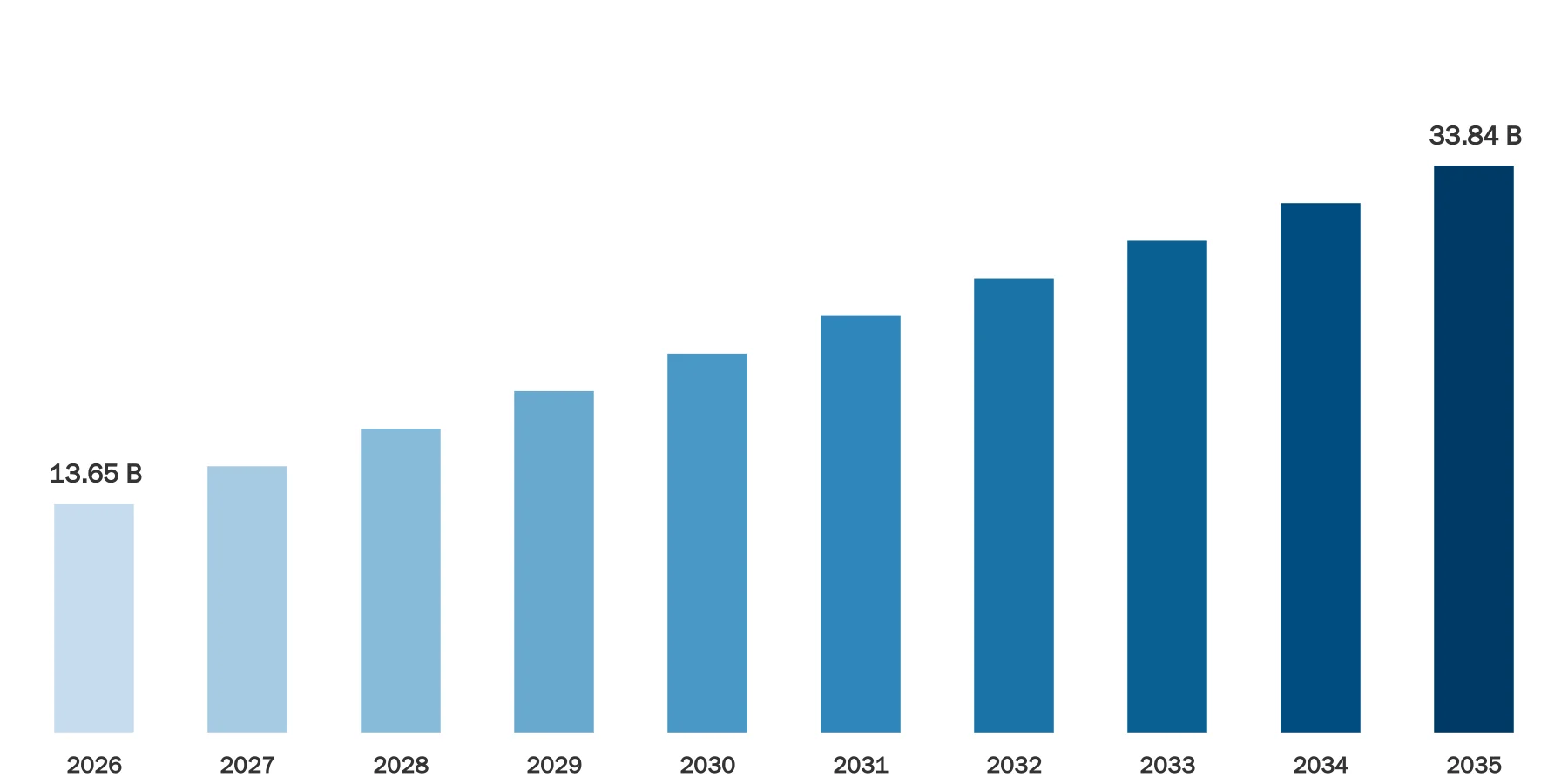
Source: Econ Market Research
SCADA systems gather data from sensors and equipment, allowing operators to oversee and manage operations remotely. This technology plays a vital role in enhancing efficiency, safety, and productivity across various industries. In recent years, the SCADA market has witnessed significant growth due to increasing demand for automation and digitization in industrial processes. Industries are adopting SCADA systems to streamline operations, reduce downtime, and optimize resource utilization.
Moreover, advancements in technology, such as Cloud Computing and the Internet of Things (IoT), have further fuelled market expansion by enabling real-time data monitoring and analysis from remote locations. Key factors driving the growth of the global SCADA market include rising industrialization, stringent regulatory requirements for safety and quality, and the need for operational transparency. Additionally, the integration of SCADA systems with other technologies like Artificial Intelligence (AI) and machine learning is expected to open new avenues for market growth. However, challenges such as cybersecurity threats and interoperability issues pose significant hurdles for market players.
SCADA Dynamics
The increasing adoption of automation and digitalization across industries drives the demand for SCADA systems, as they offer efficient monitoring and control of complex industrial processes. Additionally, stringent regulatory requirements for safety and quality in sectors such as manufacturing, energy, and utilities propel the market growth, as companies seek reliable solutions to ensure compliance and operational excellence. Furthermore, the integration of SCADA with contemporary technologies such as cloud computing, IoT, and AI improves system capabilities, allowing for real-time data analysis and predictive maintenance, which accelerates market growth.
However, cybersecurity concerns constitute a substantial danger to market growth as SCADA systems become increasingly linked and susceptible to intrusions. Ensuring strong cybersecurity safeguards is critical for ensuring the integrity and reliability of SCADA systems, which drives investment in security solutions and services. Furthermore, interoperability concerns persist, especially in businesses with diverse systems and outdated infrastructure. Standardization and advances in communication protocols are undertaken to address these problems and promote seamless integration of SCADA systems with other technologies and devices.
SCADA Drivers
Increasing Industrial Automation
The rising demand for industrial automation across various sectors is a significant driver for the SCADA market. As industries seek to improve efficiency, reduce operational costs, and enhance productivity, the adoption of SCADA systems becomes essential. These systems offer real-time monitoring and control of industrial processes, allowing companies to optimize resource utilization, minimize downtime, and improve overall operational performance. Furthermore, SCADA systems enable remote management and decision-making, which is particularly beneficial for industries with distributed operations or hazardous environments.
Advancements in Technology
Cloud computing, IoT, and artificial intelligence are driving the innovation and expansion of SCADA systems', capabilities. Integrating these technologies improves data analytics, predictive maintenance, and scalability, allowing enterprises to make data-driven decisions and reach higher degrees of automation. Cloud-based SCADA solutions provide greater flexibility, scalability, and accessibility, enabling enterprises to develop and maintain systems more efficiently. Furthermore, IoT-enabled sensors and devices offer seamless connectivity and real-time data capture, allowing for proactive monitoring and control of key assets.
SCADA Restraints:
Cybersecurity Threats
The increasing connectivity and interdependence of SCADA systems make them vulnerable to cybersecurity threats, including malware, hacking, and data breaches. As SCADA systems become more interconnected with other IT systems and external networks, the risk of cyberattacks rises, posing significant challenges for organizations. Security vulnerabilities in SCADA systems can lead to operational disruptions, data loss, and even safety hazards, highlighting the importance of robust cybersecurity measures and risk mitigation strategies.
Interoperability Challenges
Interoperability issues arise from the integration of SCADA systems with diverse hardware and software components, legacy systems, and proprietary protocols. Incompatibility between different systems and devices can hinder seamless communication and data exchange, complicating system integration and deployment. Addressing interoperability challenges requires standardized protocols, open architectures, and compatibility testing to ensure compatibility and interoperability across various platforms and technologies. Overcoming interoperability constraints is essential for maximizing the effectiveness and efficiency of SCADA systems in diverse industrial environments.
SCADA Opportunities:
Industry 4.0 Integration
The integration of SCADA systems with Industry 4.0 technology creates several potential for innovation and differentiation. Industry 4.0 efforts prioritize digitization, connection, and automation, using technologies such as IoT, AI, big data analytics, and robotics to transform industrial processes. Companies that integrate SCADA systems with Industry 4.0 platforms can gain new capabilities such as predictive maintenance, autonomous operations, and adaptive control, increasing competitiveness and driving operational excellence. The combination of SCADA with Industry 4.0 enables smart manufacturing, flexible production, and real-time decision-making, preparing enterprises for long-term growth and competitive advantage in the digital age.
Segment Overview
By Offering
The SCADA market is segmented by offering into hardware, software, and services. Hardware includes components such as human-machine interfaces (HMIs), remote terminal units (RTUs), programmable logic controllers (PLCs), communication systems, and others. These hardware components form the backbone of SCADA systems, facilitating data acquisition, processing, and control in industrial environments.
Software includes SCADA applications, visualization tools, data analytics platforms, and programming environments designed to monitor, manage, and optimize industrial processes. Services include installation, integration, maintenance, training, and support services provided by vendors and third-party providers to ensure the efficient deployment and operation of SCADA systems. Together, hardware, software, and services constitute the comprehensive offerings of the SCADA market, enabling industries to implement advanced automation and control solutions to enhance operational efficiency, reliability, and safety.
By Component
The SCADA market components include human-machine interfaces (HMIs), remote terminal units (RTUs), programmable logic controllers (PLCs), communication systems, and others. HMIs provide operators with graphical user interfaces to interact with SCADA systems, visualize process data, and control industrial equipment. RTUs serve as data acquisition devices, collecting information from sensors and transmitting it to SCADA software for analysis and control.
PLCs are programmable devices that execute control logic and automation algorithms to regulate industrial processes based on input data and predefined instructions. Communication systems establish connectivity between SCADA components, enabling data exchange and remote monitoring/control over wide area networks. Other components may include data historians, alarm systems, and network infrastructure elements that contribute to the functionality and performance of SCADA systems. Collectively, these components form the building blocks of SCADA architectures, enabling seamless integration and operation across diverse industrial environments.
By Deployment Type
SCADA systems can be deployed either on-premise or in the cloud. On-premise deployment involves installing SCADA hardware and software within the organization',s infrastructure, typically in local data centers or control rooms. This deployment model offers greater control, customization, and security over SCADA systems but requires upfront investment in hardware, software licenses, and maintenance.
Cloud deployment, on the other hand, utilizes remote servers and virtualized infrastructure hosted by third-party providers to deliver SCADA functionality as a service over the internet. Cloud-based SCADA solutions offer scalability, flexibility, and accessibility, allowing organizations to leverage advanced features and pay for usage on a subscription basis. By choosing the deployment type that best suits their needs, industries can optimize resource utilization, minimize upfront costs, and adapt to evolving business requirements more effectively.
By End User
The SCADA market serves various end-user industries, including process industries, discrete manufacturing, and utilities. Process industries include sectors such as oil and gas, chemicals, pharmaceuticals, and food and beverage, where continuous or batch production methods are employed to manufacture products. Discrete manufacturing industries, such as automotive, aerospace, electronics, and consumer goods, use assembly, machining, or fabrication techniques to create unique products or components.
Utilities are energy, water, and wastewater management businesses that generate, transmit, and distribute critical services to residential, commercial, and industrial customers. SCADA systems respond to each end-user segment',s unique requirements, providing personalized solutions for process monitoring, control, and optimization to improve operational efficiency, quality, and dependability.
SCADA Overview by Region
North America and Europe are mature markets, characterized by widespread adoption of SCADA systems across industries such as manufacturing, energy, and utilities. These regions benefit from established infrastructure, stringent regulatory frameworks, and advanced technological capabilities, driving continuous innovation and investment in SCADA solutions.
In contrast, the Asia-Pacific region represents a rapidly growing market for SCADA, fuelled by rapid industrialization, urbanization, and infrastructure development in countries like China, India, and South Korea. The increasing demand for automation, energy efficiency, and operational optimization presents significant opportunities for market players in the region. Similarly, Latin America and the Middle East &, Africa are witnessing increasing adoption of SCADA systems, driven by investments in sectors such as oil &, gas, utilities, and smart city initiatives. However, economic and political factors, as well as infrastructure challenges, may influence market growth and penetration in these regions.
SCADA Market Competitive Landscape
Siemens AG, Schneider Electric SE, ABB Ltd., Emerson Electric Co., and Honeywell International Inc. dominate the market due to their diverse product portfolios, global presence, and strong brand image. To sustain their competitive advantage and increase market share, these organizations prioritize ongoing innovation, product development, and strategic collaborations.
Furthermore, mergers and acquisitions are common in the SCADA market as companies seek to improve their skills, penetrate new markets, and strengthen their market position. Emerging start-ups and technology enterprises are also gaining headway in the market, embracing disruptive technologies such as cloud computing, IoT, and AI to offer unique SCADA solutions tailored to specific industrial demands.
Furthermore, niche solution providers specializing in areas such as cybersecurity, data analytics, and integration services play a crucial role in the competitive landscape, addressing specific customer requirements and providing value-added services to complement existing SCADA deployments.
SCADA Key Players:
Emerson Electric Co.
Siemens
Fuji Electric Co. Ltd.
Punzenberger COPA-DATA GmbH
GENERAL ELECTRIC
Willowglen Systems
Hitachi Ltd.
Azbil Corporation
Yokogawa Electric Corporation
ABB
Progea srl
OMRON corporation
Rockwell Automation Inc.
Valmet
Enbase LLC, Ing.
Mitsubishi Electric Corporation
SCADA Recent Developments
March 2024, Emerson, a prominent leader in automation technology and software, is transforming its DeltaV brand into the DeltaV Automation Platform. This expanded platform will integrate supervisory control and data acquisition (SCADA) systems, manufacturing execution systems (MES), and operations management software with the established distributed control systems (DCS), safety systems (SIS), and other long-standing technologies under the brand. This evolution aims to create a more inclusive automation platform, facilitating users in achieving smarter, safer, more optimized, and sustainable operations seamlessly.
SCADA Report Segmentation
SCADA Market Report Scope & Segmentation
| Attributes | Details |
|---|---|
Market Size (Current) | US$ 13.65 Billion in 2026 |
Market Size (Forecast) | US$ 33.84 Billion in 2035 |
Growth Rate | CAGR of 10.5% from 2026 to 2035 |
Forecast Period | 2026 – 2035 |
Base Year | 2025 |
Historical Data Available | Yes |
Regional Scope | Global |
Segments Covered | By Component
By Application
|
Frequently Asked Questions
Common questions about this report
The study period covers historical insights and forecast projections for the period 2026-2035.
About the Author
Market research expert with years of industry experience

Dipali Bhingare serves as the Market Research Director at Econ Market Research. With a focus on translating complex global economic shifts into actionable business intelligence, she oversees the strategic direction of comprehensive market studies. Her work empowers organizations to navigate volatile industries through data-driven forecasting and deep-dive competitive analysis.
Related Reports
Explore more market insights from the same category