

Sago Starch Market
Sago Starch Market Size, Share, Trends, Growth, and Industry Analysis, By Grade (Food Grade, Industrial Grade), By Application (Food andamp; Beverages, Paper andamp; Textile, Pharmaceuticals, Others), Regional Analysis and Forecast Period 2026-2035
Sago Starch Market Overview
As per Econ Market Research analysis, the Global Sago Starch Market was recorded at US$ 0.44 Billion in 2026 and is projected to expand to US$ 0.67 Billion by 2035, registering a CAGR of 4.9% over the forecast period. The base year used is 2025.
Sago Starch Market Size 2025-2035 (USD Billion)

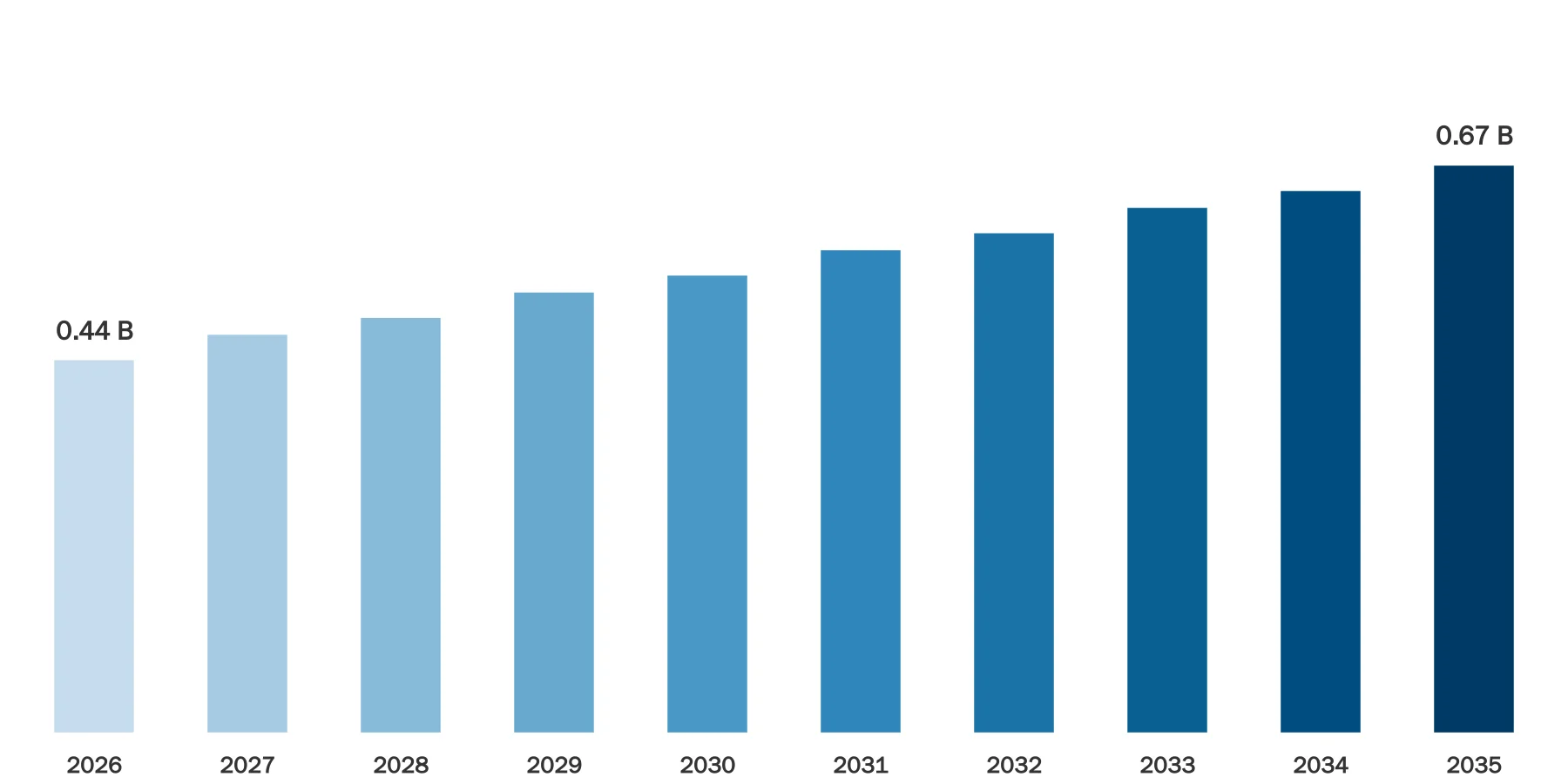
Source: Econ Market Research
The global sago starch market is part of the food industry and focuses on producing and distributing sago starch, which is a carbohydrate extracted from tropical palm trees. It is used in many food products as a thickening agent and is gluten-free, making it ideal for people with dietary restrictions. The market has been growing steadily due to increased awareness of gluten intolerance and the need for alternative ingredients. Over the past few years, the global sago starch market has grown significantly due to the increasing popularity of gluten-free products among consumers, the uptick in demand for convenient foods, and its wide-ranging use across different sectors.
Sago starch',s flexibility as a thickening, stabilizing, and gelling agent has driven its incorporation into food, pharmaceutical, and industrial processes. Additionally, improvements in extraction and processing technologies have elevated the quality and purity of sago starch, contributing to its continued expansion in the market. Even with obstacles such as changing raw material costs, small cultivation spaces, and environmental issues related to palm cultivation, the sago starch market can encounter limitations to its growth. However, the market is expected to keep growing due to shifting consumer tastes and the rising demand for gluten-free and natural food components.
Sago Starch Dynamics
The global sago starch market is influenced by a range of factors, such as evolving consumer tastes, technological progress, regulations, and economic shifts. A key factor driving growth in the market is the growing popularity of gluten-free and natural ingredients, as more health-conscious consumers look for alternatives to conventional wheat products. This has prompted food manufacturers to increasingly use sago starch in making gluten-free baked goods, snacks, and ready-to-eat meals. Moreover, the increasing trend towards convenience foods and the growth of the food processing industry in developing countries are contributing to the rising need for sago starch.
Additionally, improvements in extraction and processing technologies have enhanced the efficiency and quality of sago starch production. This has LED to cost reductions and increased utilization of sago starch in different industries. Innovations like enzymatic hydrolysis and membrane filtration have helped manufacturers increase yields and purities, making sago starch more desirable for food, pharmaceutical, and industrial uses. Even with these advancements, market factors such as fluctuating raw material costs, limited availability of raw materials, and environmental issues related to palm cultivation also influence the industry. Efforts are being made to promote sustainability and diversify sources of raw materials in order to overcome challenges and secure the future of the sago starch market.
Sago Starch Drivers
Increasing Demand for Gluten-Free Products
The growing number of people with gluten intolerance and celiac disease has led to a greater need for gluten-free options in the food industry. Sago starch, which is naturally gluten-free, has become a popular choice for making gluten-free products like bread, pasta, and snacks. As more consumers become aware of and demand gluten-free alternatives, the market for sago starch is expanding as food companies strive to meet the needs of health-conscious customers.
Technological Advancements in Processing Techniques
Recent technological advancements in the extraction and processing of sago starch have greatly improved its overall quality, purity, and efficiency. Through the use of advanced techniques like enzymatic hydrolysis, membrane filtration, and spray drying, manufacturers are able to enhance the functionality and versatility of sago starch, making it applicable to a wider variety of uses in the food, pharmaceutical, and industrial fields. These improvements have not only resulted in cost savings and higher yields, but have also fuelled the growing popularity of sago starch as a high-quality and budget-friendly ingredient choice for various industries.
Sago Starch Restraints:
Fluctuating Raw Material Prices
The cost of raw materials, particularly sago palm, can vary due to factors like weather, market demand, and geopolitical events. These fluctuations in prices can have a big impact on production costs and profits for sago starch makers, making it difficult for the market to stay stable and grow. Price changes could also discourage investments in sago palm farming and processing facilities, which could hurt the long-term health of the sago starch market.
Limited Cultivation Areas and Environmental Concerns
Sago palm cultivation is predominantly concentrated in specific regions with suitable tropical climates, primarily in Southeast Asia. The limited availability of cultivation areas restricts the supply of raw materials, potentially leading to supply chain disruptions and price fluctuations. Moreover, concerns about deforestation, habitat destruction, and biodiversity loss associated with palm cultivation raise environmental sustainability issues for the sago starch industry.
Sago Starch Opportunities:
Expansion of Applications Across Industries
Sago starch is a versatile ingredient that can be used in various industries beyond just food. Pharmaceuticals use it in drug formulations and controlled-release systems because of its biocompatibility and ability to release ingredients slowly. Industries like adhesives, paper manufacturing, and Textile sizing also benefit from sago starch',s properties. The increasing popularity of sago starch in different sectors provides great opportunities for manufacturers and suppliers looking to expand into new markets.
Segment Overview
By Type
By type, the market is segmented into food grade and industrial grade. Food grade sago starch serves as a crucial ingredient in the food and beverage industry, offering thickening, stabilizing, and gelling properties to a wide array of products. The mild flavour and gluten-free properties of sago starch make it a great choice for those with gluten sensitivities or for companies looking for natural options.
On the other hand, industrial-grade sago starch is used in industries outside of food production like paper making and textiles. In paper making, it helps improve the quality and durability of paper products as a sizing agent and binder. Similarly, in textiles, sago starch is an important ingredient in sizing formulas, adding stiffness, smoothness, and moisture resistance to yarns and fabrics during manufacturing.
By Application
By application, the sago starch market is segmented into food and beverages, paper making, and textiles. In the food and beverage sector, sago starch is utilized for its thickening, stabilizing, and gelling properties in a wide range of products such as soups, sauces, desserts, and processed meats. Sago starch is a popular ingredient for manufacturers targeting health-conscious consumers due to its gluten-free nature and mild flavour. It is also widely used in the paper making industry as a key sizing agent and binder, enhancing the surface properties and printability of paper and paperboard products. Additionally, sago starch plays a crucial role in textile sizing formulations, offering stiffness, smoothness, and moisture resistance to yarns and fabrics during weaving and finishing.
Sago Starch Overview by Region
The market for sago starch has different production and consumption patterns in various regions, with Southeast Asia standing out as the leading region. This is because of its ideal tropical climate for growing sago palms. Indonesia, Malaysia, and Thailand play crucial roles as major producers and exporters of sago starch, benefiting from their rich natural resources and well-developed processing facilities. Apart from meeting domestic needs, these countries also export sago starch to global markets, especially in Asia-Pacific, Europe, and North America, where there is a growing demand for gluten-free and natural food ingredients.
Moreover, countries in the Asia-Pacific region like India and China are experiencing a rise in the consumption of convenient foods and processed snacks, leading to a higher demand for sago starch as a crucial component. However, the market in this region is affected by various factors including government policies, trade rules, and environmental worries linked to palm tree farming. There are ongoing initiatives to encourage sustainability and expand cultivation beyond Southeast Asia to guarantee a consistent source of raw materials and keep up with the increasing global demand for sago starch.
Sago Starch Market Competitive Landscape
The competitive landscape of the sago starch market is identified by the presence of several key players, including manufacturers, suppliers, and distributors, competing based on product quality, price, distribution networks, and innovation. Major companies such as PT Indo Sago Prima, W. Hydrocolloids Inc., SSSFI-AAA Group, and Raja Sago Group dominate the market with their extensive production capabilities, technological expertise, and global reach.
In order to stay ahead in the market, these companies are constantly working on developing new products, improving their production processes, and making sure their products reach the customers efficiently. They also collaborate with other companies, merge with them, or acquire them to expand their reach and take advantage of new opportunities.
Sago Starch Market Leading Companies:
PT Indo Sago Prima
W. Hydrocolloids Inc.
SSSFI-AAA Group
Raja Sago Group
Cargill Inc.
Avebe U.A.
Tate &, Lyle PLC
Grain Processing Corporation
Banpong Tapioca Flour Industrial Co. Ltd.
Universal Starch Chem Allied Ltd.
Sago Starch Report Segmentation
Sago Starch Market Report Scope & Segmentation
| Attributes | Details |
|---|---|
Market Size (Current) | US$ 0.44 Billion in 2026 |
Market Size (Forecast) | US$ 0.67 Billion in 2035 |
Growth Rate | CAGR of 4.9% from 2026 to 2035 |
Forecast Period | 2026 – 2035 |
Base Year | 2025 |
Historical Data Available | Yes |
Regional Scope | Global |
Segments Covered | By Grade
By Application
|
Frequently Asked Questions
Common questions about this report
The study period covers historical insights and forecast projections for the period 2026-2035.
About the Author
Market research expert with years of industry experience

Dipali Bhingare serves as the Market Research Director at Econ Market Research. With a focus on translating complex global economic shifts into actionable business intelligence, she oversees the strategic direction of comprehensive market studies. Her work empowers organizations to navigate volatile industries through data-driven forecasting and deep-dive competitive analysis.
Related Reports
Explore more market insights from the same category