

Rental Housing Market
Rental Housing Market Size, Share, Trends, Growth, and Industry Analysis, By Property Type (Apartments/Flats, Standalone Houses, Co-Living Spaces, Student Housing), By Duration (Short-Term Rentals, Long-Term Lease), By Market Segment (Affordable/Budget Housing, Mid-Range Housing, Premium/Luxury Housing), Regional Analysis and Forecast Period 2026-2035
Rental Housing Market Overview
As per Econ Market Research analysis, the Global Rental Housing Market accounted for US$ 1033.67 Billion in 2026 and is expected to surpass US$ 2461.38 Billion by 2035, witnessing a CAGR of 10.12% throughout 2026–2035. The analysis is based on 2025 as the base year.
Rental Housing Market Size 2025-2035 (USD Billion)

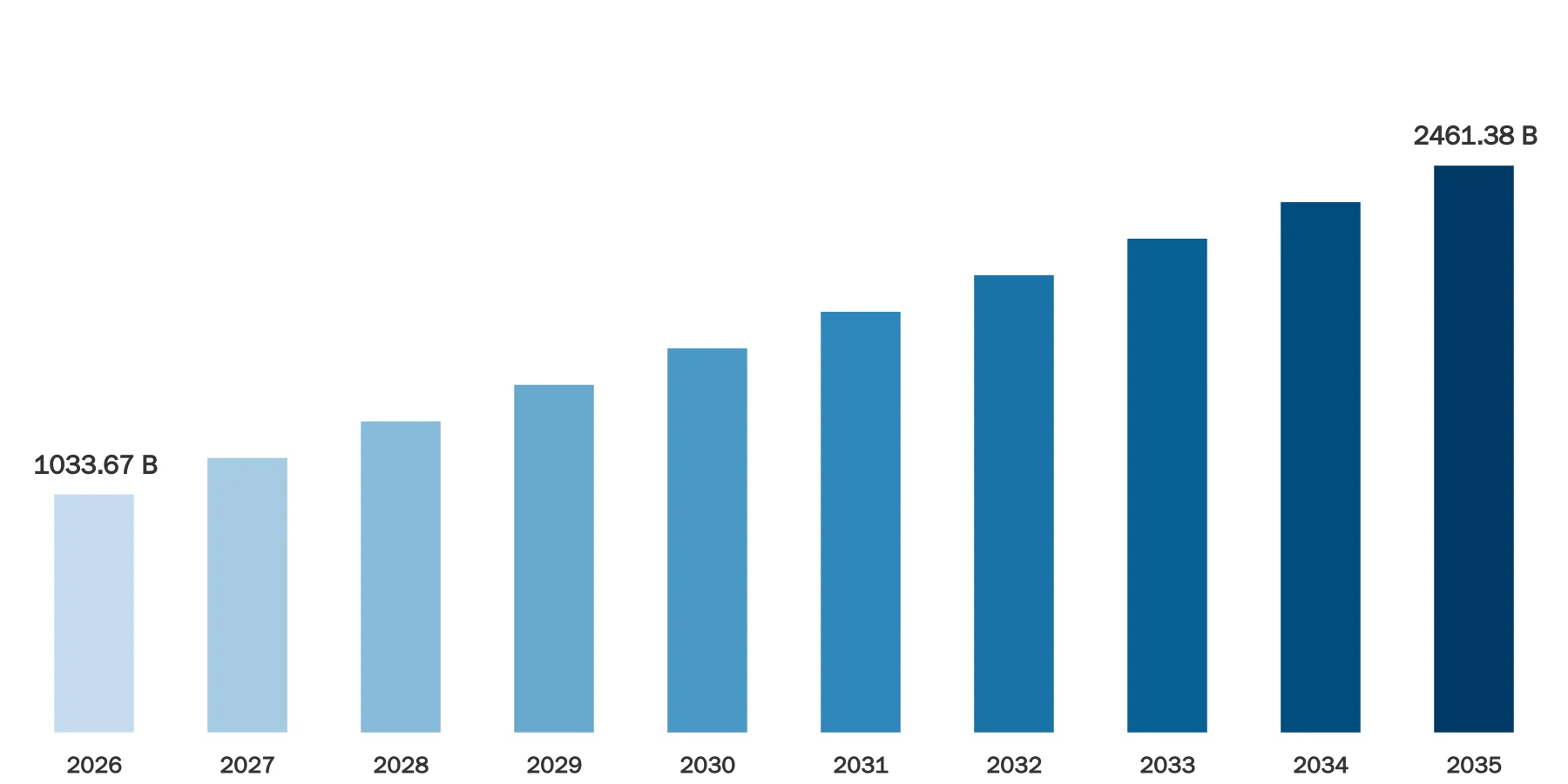
Source: Econ Market Research
Rental Housing products would range from apartments, single-family houses and multi-family units to meet varied income brackets and demographics. Since the tendency to urbanize is gaining momentum it has created a demand to rent and not buy. The basic reasons are cost, flexibility, and a preference in lifestyle. The rental housing market has, in the past years, recorded tremendous growth as a result of the increase in population within the urban areas and the shift in preference for housing.
Most people and families find it convenient to rent since it will allow them easily to move out and avoid the long-term commitment of owning a home. Further, demand for affordable housing has seen governments and private investors build new rental units. For instance, the technological advancements and online platforms that facilitate renting transactions and property management influence the market. Such factors ensure the increase of the global rental housing market and open multiple opportunities for investors and potential tenants who seek temporary accommodations.
Dynamic Insights
One of the major driving factors is urbanization, as people move to cities for work and better living conditions. The increased number of migrants boosts demand for rentals and thus creates a competitive market, with renters seeking cheap, accessible housing. In terms of demographics, there has been a shift towards renters because of the increased influence of millennials and Gen Z, who have made choices that favor renting because it is more flexible and enables them to be more mobile rather than tied to the house for a long period of time.
One of the main market challenges is affordable affordability issues, where higher-than-wage growth rental costs makes finding a place to stay relatively difficult for many renters. Economic ups and downs and interest rates would also affect the market regarding supply and demand balance dynamics. In addition, landlord ability to increase rental in relation to regulatory changes could be affected by laws surrounding rent control and other similar tenant protection laws. Therefore, these market dynamics are way more complex and will be required to tread carefully because it is a place where scope for innovation in property management and rental solutions exists.
Drivers Insights
Urbanization and Population Growth
Urbanization is a primary driver of the global rental housing market, with an increasing number of people relocating to cities in search of better employment opportunities and quality of life. As urban centers expand, the demand for rental housing rises significantly, particularly in metropolitan areas. This trend is fuelled by the younger population, including millennials and Gen Z, who prefer renting over owning due to lifestyle choices that emphasize flexibility, mobility, and minimal commitments. As cities continue to grow, landlords and property developers are responding by creating more rental units, thereby stimulating market growth and catering to the diverse needs of urban dwellers.
Changing Lifestyle Preferences
The lifestyle shift is another major influence. People, especially the younger generation, are now seeking experiences rather than material goods, so there is an increase in demand for rentals with flexibility and convenience. Rentals can be easily moved from one place to another according to the changing situation of life, such as changing a job or shifting lifestyles.
This trend is further supported by the rise of remote work, allowing individuals to choose rental locations based on personal preferences rather than proximity to their workplace. As a result, the market is witnessing an increase in demand for short-term and flexible lease options, driving innovation and competition among landlords and property management companies.
Restraints Insights
Affordability Issues
Despite the high demand for rental housing, affordability remains a significant restraint in the market. In many urban areas, rental prices have skyrocketed, outpacing wage growth and placing an unaffordable rent burden on low- and middle-income households. High levels of rental costs place considerable financial pressure on tenants, hence increasing demand for affordable housing solutions. It is now the dilemma of the landlords and developers who have to balance profitability with low-cost options. Government, regulations, and incentives to undertake affordable housing development will perhaps be required to meet such a pressing need.
Regulatory Challenges
The rental housing market faces various regulatory challenges that can hinder growth and investment. Laws governing rent control, tenant rights, and property management vary significantly across regions, creating a complex environment for landlords and investors. Stringent regulations can limit landlords', ability to increase rents and manage properties effectively, discouraging investment in new rental units. Additionally, compliance with various local laws can lead to increased operational costs for property owners. These regulatory challenges can stifle market growth and make it difficult for investors to navigate the rental housing landscape.
Opportunities Insights
Technological Advancements
The integration of technology into the rental housing market affords tremendous opportunities for innovation and efficiency. The online platforms and mobile applications have changed the way tenants seek and procure rentals, increasing the transparency and streamlining the application process while providing virtual tours to ensure that prospective renters find the right accommodations. This software can also automate tasks like rent collection and maintenance requests to make life easier for landlords. Technology improves the tenant experience and provides a demographic appeal to be more attractive for growth in the rental market.
Segment Analysis
By Type
The rental housing market segment is based on type as affordable housing, luxury housing, multifamily housing, single-family housing, and co-living spaces others. Affordable housing provides shelter at lower prices for low-middle-income families, sometimes coupled with government subsidies or tax incentives to alleviate the shortcomings of the available housing. High-income clients are served under luxury housing, with special amenities and high-class comforts in a preferred location of choice.
Multifamily housing refers to apartment complexes with many units and is thus very appealing to a diverse tenant base who look forward to shared facilities and community living. Single family houses are individual homes rented out to individuals or families who demand large spaces and privacy. Co-living spaces have become popular among younger tenants because they offer shared living arrangements that engender community and affordability.
By Rental Duration
The market can also be segmented by rental duration, which includes short-term rentals (less than one year), medium-term rentals (1-5 years), and long-term rentals (more than five years). Short-term rentals have surged in popularity, particularly through platforms like Airbnb, catering to travelers and individuals in transition, such as those on temporary job assignments.
These rentals provide flexibility and convenience for tenants seeking accommodations for limited periods. Medium-term rentals appeal to individuals or families looking for stability for a few years, often serving professionals relocating for work or students pursuing internships. Long-term rentals, typically exceeding five years, cater to families and individuals seeking stability and a sense of community.
By Application
The rental housing market can also be segmented by application, which includes residential, commercial, Student Housing, senior housing, and military housing. Residential rental properties are the core of the market, which caters to all kinds of tenants from individual clients to families who need a home. Commercial rental properties, such as corporate housing, cater to business professionals and traveling employees in most cases located in an urban area close to work.
Student housing targets the growing college and university student population, it is usually located near campuses, and such facilities are designed to support a social environment. For the elderly, senior housing is designed to meet their needs, providing specialized facilities that promote independence while necessary support services are provided to the tenants. Military housing caters to active duty service members and their families, it is usually sponsored by government agencies or private contractors.
By Tenant Type
Another is by tenant type, which divides the rental market into individuals, families, corporate tenants, students, and government personnel. Individuals are mostly renting houses for personal reasons such as being transferred to work or study places and prefer terms with flexibility in lease periods. The family is looking for bigger spaces for children, families choose a neighborhood that appeals to a community basis and has safety.
Corporate tenants are likely to look for housing solutions that would suit the needs of Business Travel and prefer serviced apartments or temporary accommodations. Students, on the other hand, are a specific type of tenant who focuses more on affordability and proximity to school, looking for an environment that promotes social interaction and study. Government personnel may have housing requirements specific to the job, which may be supplemented by housing allowances or regulations.
By Distribution Channel
The rental housing market can be segmented by the distribution channel, which would include online rental platforms, real estate agencies, and direct rental approaches. In this regard, online rental platforms such as Airbnb, Zillow, and Booking.com have changed the landscape of how tenants find and secure rental properties, and the ease of use has made them accessible to virtually every type of preference.
These platforms contain searching options, prices, and reviews, which make the tenant consult these places to make wiser decisions. Real estate agencies are very essential to deliver prospects to the landlord, especially providing Professional Services, understanding the market, and help during the renting process. Direct rental approaches involve the leasing by the landlords, which facilitates direct communication between landlords and tenants.
Regional Analysis
The rental market in North America, the United States, and Canada is very strong because much of the population cannot afford houses in such cities with prices being very high due to a changed lifestyle pattern. There is strong demand from both the luxury and the affordable markets of places such as New York, Los Angeles, and Toronto. An emerging requirement is in the city for more flexible rental terms from the diversified economy. Rental demands in multifamily and co-living continue to accelerate in Berlin, London, and Paris as young professionals and students increasingly seek the affordable, community-oriented form of living in these densely packed urban centers. Asia-Pacific is rapidly urbanizing and witnessing the emergence of a middle class that has altered the dynamics of the rental housing landscape.
The most significant example is of China, India, and Australia, where there are high demands for rental properties. These demands have picked up because of the ever-increasing population in these cities and changing demographics that require a need for shelter. Co-living and short-term rentals are the latest fads that popularize cities. Conversely, shifts in rental demand are observed in areas such as Latin America and the Middle East, with an eye on low-cost housing options and policies that governments implement for solving a shortage of homes.
Competitive Landscape
The market leaders among the major real estate companies and property management firms provide a wide range of rental accommodations, from luxury apartments to affordable housing. They draw on their massive portfolios, as well as deep knowledge about the local markets to secure tenants and thus preserve occupancy. The major market players include AvalonBay Communities, Equity Residential, and Brookfield Asset Management, which specialize in multifamily housing, large-scale development in major urban areas.
Besides the more traditional real estate firms, online rental platforms have revolutionized the competitive landscape. Companies like Airbnb, Zillow, and Booking.com have made it easier for tenants to find short-term or long-term rental properties, they have become portals that are easy access and user-friendly in the market. Use of these portals has increased the transparency and competition of these markets, thus, smaller landlords and owners can reach a wider population and fill up the place much faster. Other companies like WeWork',s WeLive and Common are renting co-living space. Demand for communal living space is increasingly pushing young professionals and students.
List of Key Players:
Zillow Group, Inc.
Apartments.com (CoStar Group, Inc.)
Airbnb, Inc.
Trulia (Zillow Group, Inc.)
RE/MAX Holdings, Inc.
Keller Williams Realty, Inc.
Realty Income Corporation
Invitation Homes, Inc.
American Homes 4 Rent
Blackstone Group Inc.
Recent Developments:
In Nov 2024, Pinnacle Partners and Trilogy Investment Company have introduced a new Build-to-Rent (BTR) Opportunity Zone Fund designed to develop three ready-to-build BTR communities in Decatur, GA, Augusta, GA, and Huntsville, AL. With plans for nearly 500 homes across these projects situated in Qualified Opportunity Zones, the Fund aims to revitalize these areas by providing new housing options, while also offering significant tax incentives to investors.
Global Rental Housing Report Segmentation
Rental Housing Market Report Scope & Segmentation
| Attributes | Details |
|---|---|
Market Size (Current) | US$ 1033.67 Billion in 2026 |
Market Size (Forecast) | US$ 2461.38 Billion in 2035 |
Growth Rate | CAGR of 10.12% from 2026 to 2035 |
Forecast Period | 2026 – 2035 |
Base Year | 2025 |
Historical Data Available | Yes |
Regional Scope | Global |
Segments Covered | By Property Type
By Duration
By Market Segment
|
Frequently Asked Questions
Common questions about this report
The study period covers historical insights and forecast projections for the period 2026-2035.
About the Author
Market research expert with years of industry experience

Dipali Bhingare serves as the Market Research Director at Econ Market Research. With a focus on translating complex global economic shifts into actionable business intelligence, she oversees the strategic direction of comprehensive market studies. Her work empowers organizations to navigate volatile industries through data-driven forecasting and deep-dive competitive analysis.
Related Reports
Explore more market insights from the same category