

Refrigerated Truck Rental Market
Refrigerated Truck Rental Market Size, Share, Trends, Growth, and Industry Analysis, By Temperature Type (Chilled, Frozen, Multi-Temperature / Dual Compartment), By Vehicle Type (Light Commercial Vehicles (LCVs), Medium-Duty Trucks, Heavy-Duty Trucks), By Rental Duration (Short-Term Rental, Medium-Term Rental, Long-Term Lease), By End-User (Food andamp; Beverage Companies, Retail andamp; E-commerce Grocery, Pharmaceutical and Healthcare Distributors, 3PL and Logistics Providers, Others), Regional Analysis and Forecast Period 2026-2035
Refrigerated Truck Rental Market Overview
As per Econ Market Research analysis, the Global Refrigerated Truck Rental Market size amounted to US$ 86.69 Billion in 2026 and is anticipated to grow to US$ 196.55 Billion by 2035, recording a CAGR of 9.52% during 2026–2035. The base year taken for analysis is 2025.
Refrigerated Truck Rental Market Size 2025-2035 (USD Billion)

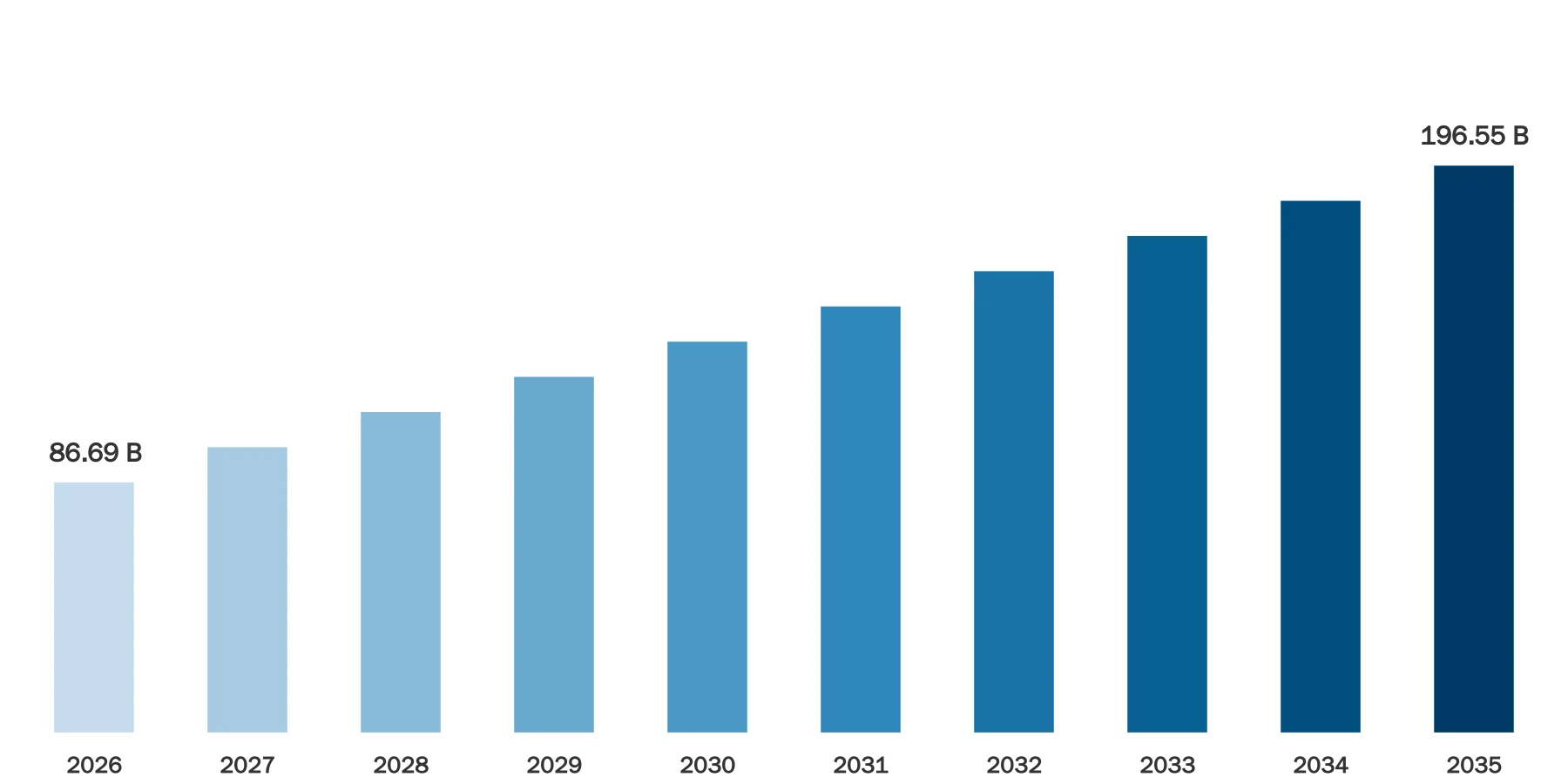
Source: Econ Market Research
Industries needing to deliver perishable goods at a controlled temperature might benefit greatly from the refrigerated truck rental sector. Rental companies offer adaptable solutions for transient or seasonal demands without requiring ownership, a need that is expanding from industries like food and pharmaceuticals. Advanced refrigeration technology installed in these vehicles guarantees that cargo is transported in an undamaged state. Different fleets, effective logistics, and attentive customer care are ways that market participants compete. The refrigerated truck rental market is a crucial part of supply chain management that meets changing industry expectations as companies prioritize cost-effectiveness and scalability more and more.
Refrigerated Truck Rental Dynamics
Various factors, including as seasonal demand changes, economic situations, technical improvements, and regulatory requirements, influence the dynamics of the refrigerated truck rental business. Rental rates increase during periods of high demand, such as the summer and vacations. Growth in the industry and total shipping volumes are influenced by economic developments. Modern technological innovations like GPS tracking and remote temperature monitoring improve dependability and efficiency. Market practices are shaped by adherence to changing legislation regarding emissions and food safety. Increased competition amongst rental firms spurs innovation in Fleet Management and service offerings.
Refrigerated Truck Rental Drivers
Increasing Demand for Perishable Goods Transportation
The growing popularity of online grocery delivery services, the expansion of worldwide trade in perishable goods, and consumers', inclination towards fresh and organic products are all contributing factors to the growing demand for perishable goods transportation. Retailers and distributors strive to satisfy consumer demand by finding dependable and efficient transportation options that prioritize convenience and health-conscious selections. This market segment has been growing because of improvements in Cold Chain Logistics and refrigeration technology, which have increased confidence in preserving product quality and safety during travel.
Growth of E-commerce and Online Grocery Delivery
The rise in demand for perishable goods transportation can be attributed, in part, to the development of e-commerce and online grocery delivery. Delivery of perishable goods, such as fresh produce, dairy, and meats, must be quick and dependable as more and more customers choose the convenience of online shopping. To preserve the integrity and quality of these goods while they are in transit, retailers and logistics firms must invest in refrigerated transportation options. This trend is being driven by innovation and expansion in the refrigerated truck rental market by changing lifestyles, urbanization, and the desire for same-day or next-day delivery choices.
Restraints:
Fluctuating Fuel Costs and Operational Expenses
Fuel price volatility might result in higher operational expenses, which can affect rental companies', profit margins. In addition, excessive fuel costs may discourage prospective clients from using refrigerated truck services, particularly in recessionary times. The whole financial burden is further increased by operating costs like insurance, maintenance, and driver compensation, which restricts the accessibility of rental services. As a result, rental companies struggle to sustain profitability in the face of these unpredictable and frequently shifting expenses while yet offering competitive pricing.
Challenges in Maintaining Consistent Temperature Control
Temperature variations during transportation can jeopardize perishable goods', quality and safety, resulting in spoilage, inventory loss, and possibly legal problems for rental companies. These difficulties are caused by variables including the outside weather, incorrect loading methods, and equipment failures. Although they need a lot of resources, ensuring adequate insulation, maintaining refrigeration systems, and training drivers are essential. Ineffectively handling these issues can lead to unhappy clients, reputational harm, and higher operating expenses, all of which can impair the stability and profitability of rental services.
Opportunities:
Integration of IoT and Advanced Telematics for Fleet Management
Rental companies can have real-time visibility into the performance of their fleet, temperature monitoring, and vehicle diagnostics by utilizing IoT sensors and telematics technologies. This improves operating efficiency and reduces costs by enabling preventive maintenance, route optimization, and effective resource allocation. Furthermore, improved Data Analytics offer insightful information for competitive differentiation, decision-making, and customer service optimization. In general, rental companies can gain a competitive advantage by adopting IoT and telematics, since it can improve fleet management capabilities, customer happiness, and overall business performance.
Investing in Renewable Energy Technologies for Refrigeration
Rental companies can lessen their dependency on fossil fuels and cut down on carbon emissions by switching to renewable energy sources like solar or wind power to power their refrigeration units. This minimizes fuel expenses over time, which not only matches with sustainability goals but also lowers operating costs. Using renewable energy also improves a company',s reputation as an environmentally concerned supplier, attracting eco-aware clients and creating opportunities for collaboration with companies that prioritize sustainability. In summary, the refrigerated truck rental business may achieve both economic sustainability and environmental stewardship by adopting renewable energy sources.
Segment Overview
By Rental Type
Based on rental type, the global refrigerated truck rental market is divided into short-term and long-term. The short-term category dominates the market with the largest revenue share in 2023. Businesses having transient or seasonal needs for chilled transportation, such as events, festivals, or short-term projects, are usually catered to by short-term rentals. These rentals are distinguished by their variable contracts, which can last anywhere from a few hours to many weeks. This flexibility enables firms to adjust their transportation requirements in response to changes in demand. On the other hand, long-term rentals benefit organizations like supermarket chains, food wholesalers, and pharmaceutical firms that need refrigerated transportation on a regular or continuous basis. These long-term rentals, which might last many months or even years, give logistical operations stability and predictability.
By Truck Type
Based on the truck type, the global refrigerated truck rental market is categorized into light, medium, and heavy. The light category leads the global refrigerated truck rental market with the largest revenue share in 2023. Compared to medium and large trucks, light refrigerated vehicles usually have smaller dimensions and lower cargo capacity. These are frequently used for short- or local-distance perishable commodities transportation, including bringing in fresh fruit for catering events or local markets.
Larger than light trucks but smaller than big trucks are medium-sized refrigerated trucks. They are adaptable for a range of applications because they provide a balance between capacity and maneuverability. The biggest and most potent cars available for rental in the refrigerated truck industry are heavy-duty trucks. These trucks are built for the long-haul, long-distance transportation of perishable goods because of their high payload capacity.
By Downstream Field
Based on the downstream field, the global refrigerated truck rental market is segmented into food and beverages, retail, and others. The food and beverages segment dominates the refrigerated truck rental market. Businesses that produce, distribute, and retail food and beverage items are included in this category. It covers industries like dairy, meat, fish, baking, food processing, and drinks. To move perishable goods like fresh produce, frozen foods, dairy products, and beverages from production facilities to distribution centers, retail stores, eateries, and customers, food and beverage companies frequently need refrigerated trucks. Supermarkets, grocery stores, convenience stores, and specialty retailers that sell perishable goods directly to customers make up the retail category. Refrigerated trucks are used by retailers to deliver fresh produce, dairy products, frozen meals, and other perishable goods from suppliers or distribution facilities to their stores.
Refrigerated Truck Rental Overview by Region
The global refrigerated truck rental market is categorized into North America, Europe, Asia-Pacific, and the Rest of the World. North America emerged as the leading region, capturing the largest market share in 2023. The country',s well-established logistics sector, vast infrastructure, and strong economy all contribute to the need for temperature-controlled transportation services. Furthermore, there is a significant need for refrigerated trucks due to the region',s sizable food and beverage industry, which includes distribution, processing, and agriculture. Strong laws governing the quality and safety of food further emphasize the demand for dependable chilled transportation options.
Moreover, North America leads the world in offering comprehensive and trustworthy refrigerated truck rental services thanks to technology improvements and a strong emphasis on efficiency and innovation. Numerous factors, such as fast urbanization, rising economies, and a burgeoning middle class with rising spending power, are responsible for this projection. The growing need for fresh and frozen items in the area, along with the thriving food and beverage industry, drives the demand for dependable refrigerated transportation services. The expected growth trajectory of the refrigerated truck rental market in Asia-Pacific is also influenced by the expansion of infrastructure, improvements in technology, and changing consumer expectations for quality and convenience.
Refrigerated Truck Rental Competitive Landscape
In the global refrigerated truck rental market, a few major players exert significant market dominance and have established a strong regional presence. These leading companies remain committed to continuous research and development endeavors and actively engage in strategic growth initiatives, including product development, launches, joint ventures, and partnerships. By pursuing these strategies, these companies aim to strengthen their market position, expand their customer base, and capture a substantial share of the market.
Refrigerated Truck Rental Market Leading Companies:
KookMate
Ryder System, Inc.
ReeferTek USA
Corp
Penske Corporation, Inc.
Polar Leasing, Inc.,
U-COOL Refrigeration
LLC
Fraikin Limited
The Hertz Corporation
Petit Forestier
Innocool, and various others.
Refrigerated Truck Rental Recent Developments
In August 2023, Truck Freezer Rentals, a Perth-based provider of refrigerated truck rentals, has officially been bought by Scully RSV. After the deal was finalized, Scully RSV expanded its product line to include refrigerated containers and more than doubled the number of vehicles and trailers it owned in Western Australia.
In June 2023, Volta Trucks announced a collaboration with Petit Forestier, a well-known European business that specializes in renting out refrigeration units.
Through this agreement, truck lease and rental options with refrigeration will be made available in the UK and throughout Europe. This builds on the previously disclosed purchase and supply arrangement between the two businesses.In May 2023, With the acquisition of FridgeXpress, which offers short- and long-term chilled and freezer van rental to a nationwide network of food and pharmaceutical enterprises extending from Kent to Scotland, Northgate Vehicle Hire announces its entry into the chilled and freezer van rental market.
Refrigerated Truck Rental Market Report Segmentation
Refrigerated Truck Rental Market Report Scope & Segmentation
| Attributes | Details |
|---|---|
Market Size (Current) | US$ 86.69 Billion in 2026 |
Market Size (Forecast) | US$ 196.55 Billion in 2035 |
Growth Rate | CAGR of 9.52% from 2026 to 2035 |
Forecast Period | 2026 – 2035 |
Base Year | 2025 |
Historical Data Available | Yes |
Regional Scope | Global |
Segments Covered | By Temperature Type
By Vehicle Type
By Rental Duration
By End-User
|
Frequently Asked Questions
Common questions about this report
The study period covers historical insights and forecast projections for the period 2026-2035.
About the Author
Market research expert with years of industry experience

Dipali Bhingare serves as the Market Research Director at Econ Market Research. With a focus on translating complex global economic shifts into actionable business intelligence, she oversees the strategic direction of comprehensive market studies. Her work empowers organizations to navigate volatile industries through data-driven forecasting and deep-dive competitive analysis.
Related Reports
Explore more market insights from the same category