Readymade Garments Market Overview
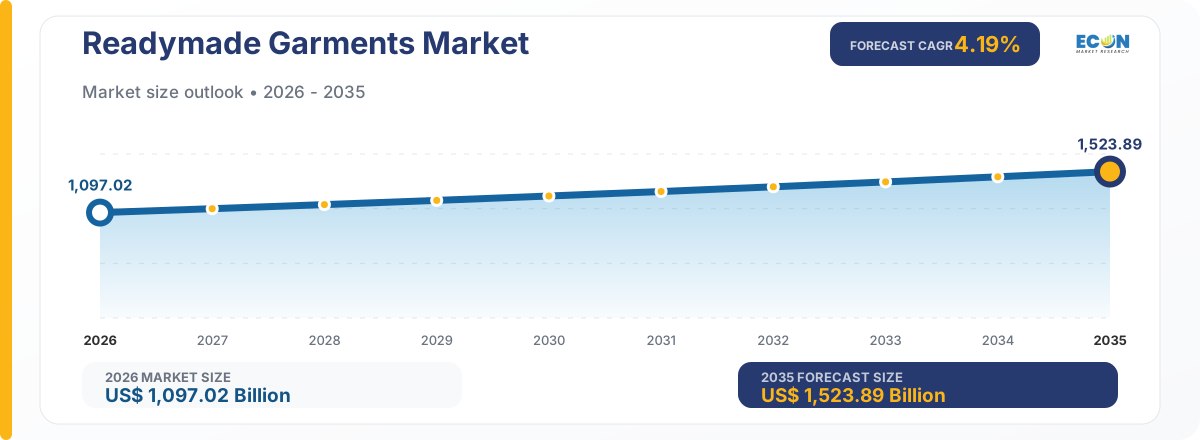
As per Econ Market Research analysis, the Global Readymade Garments Market valuation stood at US$ 1097.02 Billion in 2026 and is expected to reach US$ 1523.89 Billion by 2035, growing at a steady CAGR of 4.19% from 2026 to 2035. 2025 serves as the base year.
Readymade garments are prepared based on standard sizes and designs, keeping in mind the general customer preferences. Readymade garments are manufactured in different categories, like casual wear, formal wear, Sportswear, and innerwear, meeting the diversified needs of customers all over the world. It is usually produced through effective and low-cost processes in the factories, which helps in keeping the prices affordable. This market has grown in massive numbers because of better disposable incomes, urbanization, and the requirement for convenient shopping facilities, especially for emerging economies.
Fast Fashion growth has also fuelled business through brands that introduce series after series of collections associated with the prevailing trends that will be available at affordable prices. Increased buying through the internet has significantly contributed to making it easy to find a wide range of ready-made garments, propelling market growth. The high level of textile waste, as well as the resource-intensive process of manufacturing, makes companies embrace eco-friendly materials and production techniques.
Dynamic Insights
With increased urbanization and rise in disposable incomes, more consumers look for affordable fashion available and accessible clothing while giving rise to the increasing demands for readymade garments. Fast fashion continues to expand and has experienced exponential growth owing to timely release of trends at decreased price points. The changing marketplace also made it very possible for people to move more easily between different designs, brands, and e-shops while shopping over the internet, further increasing turnover sales.
However, sustainability issues are also gaining momentum as a driving force in the market dynamics. Environmental degradation through the manufacture of garments, like water pollution and textile waste, is becoming a challenge that companies are being pushed toward eco-friendly practices and materials. This change is propelling Sustainable Fashion in the readymade garments market as more consumers are interested in ethical and environmentally-friendly products. There are fluctuations in raw material prices and trade policies, further adding complexity to the market in terms of affecting the profit margins and cost of production.
Drivers Insights
Increasing Disposable Income and Changing Lifestyles
With increasing and rising disposable income across the world and especially in developing economies, clothing spending is rising. This increase in clothing demand becomes more prominent in urban communities due to their exposure to fashionable designs and the desire to have convenient ready-made fashion clothing at affordable prices. Lifestyles are changing, whereby young people seek to acquire more fashionable clothes and hence influence the demand. Such segments grow because consumers are more willing to buy more clothing, as they tend to have more disposable incomes to spend on casual wear and fast fashion.
Expansion of E-commerce and Digital Platforms
The surge in e-commerce has dramatically changed the shopping experience, making it easier for consumers to browse and buy from a vast array of readymade garments. Online platforms have reduced barriers to access, allowing consumers from even remote regions to purchase fashion items conveniently. E-commerce also facilitates targeted marketing, offering personalized product recommendations based on consumer preferences and behaviors, which enhances customer experience and encourages higher spending. Digital platforms have thus become a critical driver of market growth.
Restraints Insights
Environmental and Sustainability Concerns
The readymade garment industry is very heavily criticized in terms of its impacts on the environment, the most significant user of water, polluter, and generator of waste from old textile production. Therefore, it requires stricter rules and stronger sustainability. It has also become a must to follow green production, however, this usually is at higher costs, thus challenging producers to keep prices affordable within more green approaches.
Fluctuating Raw Material Prices
The cost of raw materials like cotton, polyester, and other textiles can be volatile, influenced by factors such as climate conditions, demand fluctuations, and trade policies. These price variations can significantly affect production costs and profit margins for manufacturers. To remain competitive, companies must either absorb these cost increases or pass them onto consumers, which can impact demand, especially in price-sensitive markets. This restraint adds complexity to market operations and impacts long-term planning.
Opportunities Insights
Growth of Sustainable and Ethical Fashion
With consumers becoming more environmentally conscious, sustainable and ethical fashion has emerged as a substantial growth area within the readymade garments market. Brands that prioritize eco-friendly materials, fair labor practices, and waste reduction are increasingly attracting a dedicated consumer base. This trend opens up opportunities for companies to innovate, whether by using recycled materials, reducing carbon footprints, or incorporating biodegradable fibers. As demand for responsible fashion grows, companies that invest in sustainability can not only meet regulatory expectations but also capture a growing market segment.
Segment Analysis
By Type
Outer and inner are the types through which ready-made garments are segmented in the readymade garment market. Outer clothing means clothes worn outside the garments, examples of outer clothes include jackets, coats, shirts, and trousers that perform the purpose of protecting clothing as well as creating aesthetic effects. Such kinds of clothes generally appeal to many people',s taste who need something trendy, comfortable, and durable. On the other hand, there are inner clothes which comprise underwear, undershirts, and thermal wears to be worn underneath other clothing. This category primarily looks at comfort, fit, and selection of fabrics, and it mostly utilizes those materials that will facilitate air flow and support.
By Application
The application segment of the readymade garments market encompasses formal wear, sportswear, casual wear, safety apparel, and other specialized categories. Formal wear pertains to the sort of clothes that can be used for professional environments and special occasions, which, for the most part, highlight luxury and grace. Often these include suits, dresses, and blouses.
Sportswear meets consumers engaged in physical activity for the sake of performance, comfort, and adaptability and uses breathable fabric as well as ergonomic design. Casual wear represents every-day wear that combines comfort with style and appeals to a broad audience. Safety apparel consists of clothing for safety purposes in the working environment, characterized by having high visibility, durability, and being certified as safe.
By Fabric Type
Fabric type segmentation in the readymade garments market comprises knit, woven, and non-woven fabrics. Knit fabrics are made by interlocking yarn loops, offering elasticity and comfort, making them ideal for casual wear and sportswear. They are often used in items like t-shirts and leggings, allowing for freedom of movement. Woven fabrics, produced by weaving yarns together, provide structure and durability, commonly used in formal wear, shirts, and trousers. These fabrics can vary in texture and weight, catering to both casual and formal applications. Non-woven fabrics, created through processes that bond fibers without weaving, are often utilized in specialized garments like protective clothing and disposable items.
By Gender
The segmentation by gender in the readymade garments market includes men&rsquo,s, women&rsquo,s, and kids&rsquo, clothing. Men&rsquo,s garments typically encompass a wide range of styles, from formal suits to casual wear, emphasizing functionality, comfort, and style. Women&rsquo,s clothing is diverse, ranging from dresses and skirts to active-wear, reflecting the latest fashion trends while addressing comfort and versatility. The kids', segment focuses on clothing designed for comfort, durability, and ease of wear, catering to the unique needs of children at various growth stages.
By Distribution Channel
The readymade garments market comprises the following distribution channels: supermarkets and hypermarkets, independent retail stores, specialty stores, online sites, and others. One-stop shopping destinations for both supermarkets and hypermarkets would be handy for those people who wish to get varied readymade garments from one place along with all other consumer goods products appealing to price-sensitive consumers. It gives a more personal or customized shopping experience where, independent retail stores often sell only unique and boutique clothing.
Specialty stores focus on niche markets. They sell specific categories of clothing, such as athletic wear or formal wear for a particular consumer group. The internet has changed the way consumers shop. They can browse large varieties of products from any place in the comfort of their homes and compare prices or styles. A wide variety of distributors ensures that consumers find their ready-made garments in any shop environment they would prefer to shop in.
Regional Analysis
North America, more so the United States, is a prime market, thanks to the high disposable incomes and propensity towards fashion and branded clothing. The pace at which e-commerce has grown in this region that overnight shopping behaviour has been altered, providing consumers access to a large variety of readymade garments from their comfort zone. Another prime market is Europe with all the important fashion cities of Paris, Milan, and London. Consumer behaviour in the region is now driven by sustainability issues and ethical apparel. The need for customers for more environmentally friendly and sourced responsibly apparel products is rapidly growing.
Asia-Pacific is an important production as well as consumption region. The key countries of this region are China, India, and Bangladesh. Readymade garments have gained maximum growth in this region through urbanization, growing middle class, and changes in lifestyle. China is the primary manufacturing hub, and India and Bangladesh are prominent exporting countries for garments. The growing youth population in these countries is another reason for the demand for trendy and affordable apparel in casual and sportswear segments. Latin America and the Middle East are emerging markets, where increasing disposable income and evolving fashion consciousness are fostering growth. The regions present opportunities for brands to expand their presence and cater to a more diverse consumer base.
Competitive Landscape
The market has some big business brands such as Zara, H&,M, Uniqlo, and Gap, mainly because of quick turnaround and affordability in a fast fashion model. Because they can respond very well to changes in consumers in terms of trends, and because of the large designs that are appealing to more significant demographics, these powerful brands have an edge for being competitive online because their online presence is supported through sophisticated supply chains.
E-commerce has opened new markets to newer brands and business models. New brands like ASOS and Boohoo are increasingly gaining markets, with an emphasis on the younger crowd and wearing fashionable clothing at affordable rates. Increasingly, market entries such as Reformation and Everlane are increasingly more sustainable and ethical while the increasing consumer demand forces more production of garments, which is more environmentally friendly and ethically produced. These brands stand out and appeal to the eco-conscious shopper in being transparently open about sourcing and how they manufacture.
In addition, local manufacturers are of critical importance in developing markets, as they satisfy regional preferences and sensitivities to price. They often focus on niches where they can provide distinctive styles that appeal to the local customers. This diversified competitive landscape is both a challenge and an opportunity, because the brands must continually innovate and adapt to meet changing consumer expectations while addressing issues such as sustainability and supply chain management.
List of Key Players:
Under Armour, Inc.
Hennes &, Mauritz AB
Zara
Jockey International Inc
VF Corporation
Aditya Birla Management Corporation Pvt. Ltd.
The Gap, Inc.
Hanesbrands Inc.
PVH Corporation
Benetton Group s.r.l
Nike, Inc.
Louis Vuitton Malletier SAS
Gap Inc.
Global Readymade Garments Report Segmentation
Readymade Garments Market Report Scope & Segmentation
| Attributes | Details |
|---|---|
| Market Size (Current)Current market valuation | US$ 1097.02 Billion in 2026 |
| Market Size (Forecast)Projected market valuation | US$ 1523.89 Billion in 2035 |
| Growth RateCompound Annual Growth Rate | CAGR of 4.19% from 2026 to 2035 |
| Forecast PeriodAnalysis timeline | 2026 – 2035 |
| Base YearReference year for analysis | 2025 |
| Historical Data AvailablePast market data availability | Yes |
| Regional ScopeGeographical coverage | Global |
| Segments CoveredMarket segments analyzed | By Product Type
By Distribution Channel
By End-User
|
Frequently Asked Questions
Common questions about this report
The study period covers historical insights and forecast projections for the period 2026-2035.
About the Author
Market research expert with years of industry experience