

Protective Packaging Market
Protective Packaging Market Size, Share, Trends, Growth, and Industry Analysis, By Material (Foam Plastics, Paper and Paperboard, Plastics), By Type (Flexible, Rigid, Foam), By Application (Food and Beverage, Consumer Electronics, Industrial Goods, Automotive), Regional Analysis and Forecast Period 2026-2035
Protective Packaging Market Overview
As per Econ Market Research analysis, the Global Protective Packaging Market accounted for US$ 31.7 Billion in 2026 and is expected to surpass US$ 47.8 Billion by 2035, witnessing a CAGR of 4.9% throughout 2026–2035. The analysis is based on 2025 as the base year.
Protective Packaging Market Size 2025-2035 (USD Billion)

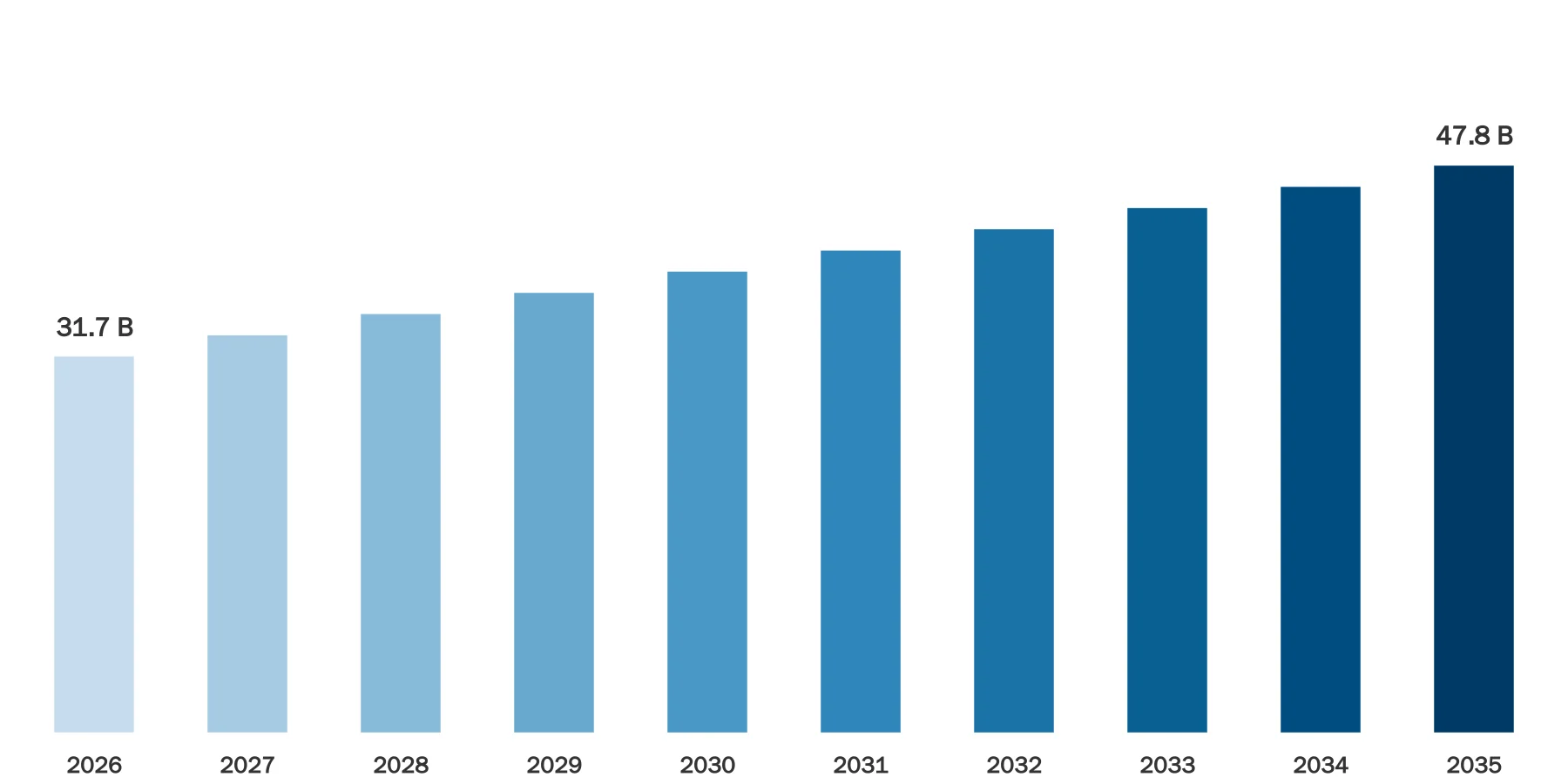
Source: Econ Market Research
Global Protective Packaging market is predicted to reach approximately USD 46.52 billion by 2032, at a CAGR of 5.96% from 2024 to 2032.
The Global Protective Packaging market refers to the industry involved in producing materials and solutions designed to safeguard products during storage, transportation, and distribution. This sector encompasses a wide array of materials and techniques, including foam packaging, air cushions, bubble wraps, corrugated boxes, and other innovative protective materials.
As e-commerce continues to flourish and supply chains become more complex, the demand for protective packaging solutions has surged across various sectors such as electronics, healthcare, automotive, and consumer goods. Market players are increasingly focusing on sustainable and eco-friendly packaging options, driven by regulatory pressures and consumer preferences for environmentally responsible choices. Moreover, the rise of omni-channel retailing and the growing emphasis on product safety and integrity further drive the adoption of advanced protective packaging solutions.
Protective Packaging Dynamics
The need for protective packaging solutions has increased dramatically as a result of the quick growth of e-commerce and the growing popularity of online shopping. Strong packaging materials and methods are required as customers rely more on online shopping and businesses feel pressured to guarantee that goods arrive undamaged. Furthermore, the expansion of globalisation and cross-border trade has broadened the protective packaging market, as businesses look for dependable ways to safeguard their products during handling and shipping internationally.
In addition, the market dynamics are being shaped by strict regulations and standards pertaining to sustainability and product safety. Players in the industry are being prompted to create recyclable and environmentally friendly packaging solutions by governments and regulatory bodies enforcing stricter guidelines on packaging materials. Options for protective packaging that decompose and biodegrade are becoming more and more in demand as consumers and businesses prioritise sustainability.
Moreover, technological advancements and innovations play a pivotal role in driving market dynamics. Companies are investing in research and development to introduce novel materials and packaging designs that offer enhanced protection while optimizing storage and shipping efficiencies. From advanced cushioning materials to smart packaging solutions equipped with tracking and monitoring capabilities, the industry is witnessing a wave of innovation aimed at addressing evolving customer needs and market trends.
Protective Packaging Drivers
- E-commerce Expansion:
The exponential growth of e-commerce worldwide is a significant driver for the protective packaging market. With the increasing preference for online shopping, there',s a higher demand for protective packaging solutions to ensure that products are delivered safely and intact to consumers. The rise of e-commerce platforms has spurred innovations in packaging materials and techniques, including air cushions, bubble wraps, and corrugated boxes, to withstand the rigors of transportation and handling during the delivery process. As e-commerce continues to evolve and expand into new markets, the demand for protective packaging is expected to grow further, presenting lucrative opportunities for market players to capitalize on this trend.
- Focus on Sustainable Packaging:
The adoption of environmentally friendly protective packaging solutions is being propelled by the increasing focus on sustainability across industries. Businesses are moving towards biodegradable, recyclable, and compostable packaging materials in an effort to minimise waste and their carbon footprint in response to mounting environmental concerns and regulatory pressures.
As consumers become more aware of the environment and actively seek out products packaged with sustainable materials, manufacturers are being forced to invest in cutting-edge packaging technologies. In addition to being in line with CSR initiatives, sustainable packaging gives businesses a competitive edge in the marketplace because customers like companies that show a dedication to environmental care. Therefore, a major factor driving market expansion is the need for sustainable protective packaging, which encourages businesses to look for new markets for eco-friendly packaging options and substitute materials.
Restraints:
- High Cost Associated with Implementation
The cost of implementing cutting-edge packaging solutions is one of the main factors impeding the protective packaging market. Superior protective materials and creative packaging designs are frequently expensive, which can be problematic for companies, especially small and medium-sized businesses (SMEs) with limited funding. Companies', financial burden is further increased by the expenses related to using sustainable packaging materials and adhering to regulatory requirements. Because of this, some companies may choose to cut costs by using less efficient, less expensive packaging options, which compromises product protection and increases the chance of damage occurring during transit.
- Logistical Challenges:
Transportation and distribution network logistical complexity is another major impediment to the protective packaging market. Ensuring the timely delivery of products while maintaining their integrity presents significant challenges for companies, particularly as supply chains become more globalised and interconnected. Variations in handling procedures, transit times, and environmental conditions are some of the factors that can affect how effective protective packaging is. Logistics become even more complex because different product types and sizes require custom packaging designs. Efficient packaging techniques can result in elevated transportation expenses, product impairments, and client discontent, underscoring the significance of optimised logistics and successful packaging approaches.
Opportunities:
- Technological Advancements:
The market for protective packaging has plenty of room for innovation given the speed at which technology is developing. Technology-driven innovations are transforming the way products are packaged, shipped, and delivered. Examples of these innovations include automated packaging systems and smart packaging solutions with sensors and tracking devices.
Businesses can monitor real-time data on package conditions by integrating Internet of Things (IoT) technologies, which enables proactive measures to prevent damages and maximise supply chain efficiency. Furthermore, automation minimises human error and lowers labour costs while improving speed, accuracy, and scalability in packaging operations. There is tremendous potential for market participants to create innovative solutions that provide increased protection, enhanced sustainability, and increased operational efficiency as technology continues to advance.
Segment Overview
- By Type
In terms of type, protective packaging can be categorized into flexible, foam, and rigid packaging solutions. Flexible protective packaging includes materials like pouches, bags, and films, offering versatility and adaptability for various product shapes and sizes. Foam protective packaging involves materials like expanded polystyrene (EPS) and polyethylene foam, providing excellent cushioning and shock absorption properties to safeguard fragile items during transit. Rigid protective packaging comprises materials such as corrugated boxes, plastic containers, and wooden crates, offering sturdy and durable protection for heavy or bulky goods.
- By Material
Material-wise, protective packaging encompasses paper and paperboard, plastic foams, plastics, and other materials. Paper and paperboard are commonly used for their recyclability and sustainability, ideal for applications like corrugated boxes and cardboard packaging. Plastic foams, including polyurethane and polyethylene foams, are valued for their lightweight nature and superior cushioning capabilities. Plastics, such as polyethylene terephthalate (PET) and polypropylene (PP), offer durability and resistance to moisture and chemicals, suitable for a wide range of packaging needs.
- By Function
In terms of function, protective packaging serves various purposes including void fill, wrapping, insulation, blocking and bracing, and cushioning. Void fill materials like air cushions and packing peanuts fill empty spaces within packages to prevent movement and minimize product shifting during transit. Wrapping materials like bubble wraps and foam sheets provide an extra layer of protection around individual items to prevent surface damage.
Insulation materials like thermal liners and foam inserts help regulate temperature and protect temperature-sensitive products. Blocking and bracing techniques involve securing items within packaging using dividers, partitions, or foam inserts to prevent movement and potential damage. Cushioning materials like foam pads and air pillows absorb shock and vibration to safeguard products from impact and compression forces.
- By Application
Protective packaging finds application across a diverse range of industries including food and beverage, industrial goods, consumer electronics, household appliances, healthcare, automotive, and others. Each industry has specific packaging requirements and challenges, driving the demand for tailored protective packaging solutions to ensure product safety, integrity, and customer satisfaction throughout the supply chain.
Protective Packaging Overview by Region
North America, driven by the robust e-commerce sector and stringent regulations promoting sustainable packaging practices, commands a significant share in the market. The region',s focus on eco-friendly packaging solutions, coupled with advancements in technology and material innovations, propels market growth. Europe follows suit, emphasizing sustainability and circular economy principles, leading to widespread adoption of recyclable and biodegradable protective packaging materials. Additionally, the presence of established industries across diverse sectors fuels demand for customized protective packaging solutions.
Asia-Pacific emerges as a key growth engine for the protective packaging market, attributed to rapid urbanization, expanding middle-class population, and burgeoning e-commerce activities. Countries like China, India, and Southeast Asian nations witness exponential growth in online retail, driving demand for efficient and cost-effective protective packaging solutions. Moreover, increased industrialization and infrastructure development in the region foster the need for reliable packaging to safeguard products during transportation and storage. The Asia-Pacific market also benefits from technological advancements and investments in manufacturing capabilities, enabling market players to cater to diverse customer requirements across various end-use industries.
Protective Packaging Market Competitive Landscape
Major companies such as Sealed Air Corporation, Sonoco Products Company, and Pregis LLC dominate the market with a diverse portfolio of protective packaging solutions tailored to meet the evolving needs of various industries. These industry leaders focus on research and development initiatives to introduce advanced packaging materials and technologies that offer superior protection, sustainability, and cost-effectiveness.
Furthermore, the market witnesses active participation from a multitude of regional and local players catering to specific niche segments and geographic markets. These players compete based on factors such as pricing, product quality, customization capabilities, and customer service to gain a competitive edge. Moreover, mergers, acquisitions, and strategic alliances are common strategies adopted by market participants to strengthen their market position, expand their product offerings, and enhance their global footprint.
Additionally, the competitive landscape is shaped by shifting consumer preferences towards eco-friendly and sustainable packaging solutions. Companies are investing in environmentally responsible packaging materials and practices to address growing concerns over plastic pollution and environmental degradation. Moreover, regulatory initiatives aimed at reducing packaging waste and promoting recycling further influence competitive dynamics within the market.
Protective Packaging Market Leading Companies:
-
Smurfit Kappa Group
-
WestRock Company
-
Sealed Air Corporation
-
Sonoco Products Company
-
Mondi Group
-
DS Smith PLC
-
Huhtamaki
-
Pregis Corporation
-
Storopack
-
Intertape Polymer Group
Protective Packaging Recent Developments
- May 2023, Sealed Air Corporation revealed that it has formally transitioned its corporate identity to SEE, marking a pivotal move in the company',s transformation. The evolution of Sealed Air',s corporate and renowned brands to SEE underscores its commitment to being a customer-centric, solutions-oriented entity in the market. SEE collaborates closely with its customers to provide packaging solutions that incorporate Automation, Digital technologies, and Sustainability, thereby generating substantial value for their enterprises.
Global Protective Packaging Report Segmentation
Protective Packaging Market Report Scope & Segmentation
| Attributes | Details |
|---|---|
Market Size (Current) | US$ 31.7 Billion in 2026 |
Market Size (Forecast) | US$ 47.8 Billion in 2035 |
Growth Rate | CAGR of 4.9% from 2026 to 2035 |
Forecast Period | 2026 – 2035 |
Base Year | 2025 |
Historical Data Available | Yes |
Regional Scope | Global |
Segments Covered | By Material
By Type
By Application
|
Frequently Asked Questions
Common questions about this report
The study period covers historical insights and forecast projections for the period 2026-2035.
About the Author
Market research expert with years of industry experience

Dipali Bhingare serves as the Market Research Director at Econ Market Research. With a focus on translating complex global economic shifts into actionable business intelligence, she oversees the strategic direction of comprehensive market studies. Her work empowers organizations to navigate volatile industries through data-driven forecasting and deep-dive competitive analysis.
Related Reports
Explore more market insights from the same category