Poultry Vaccines Market Overview
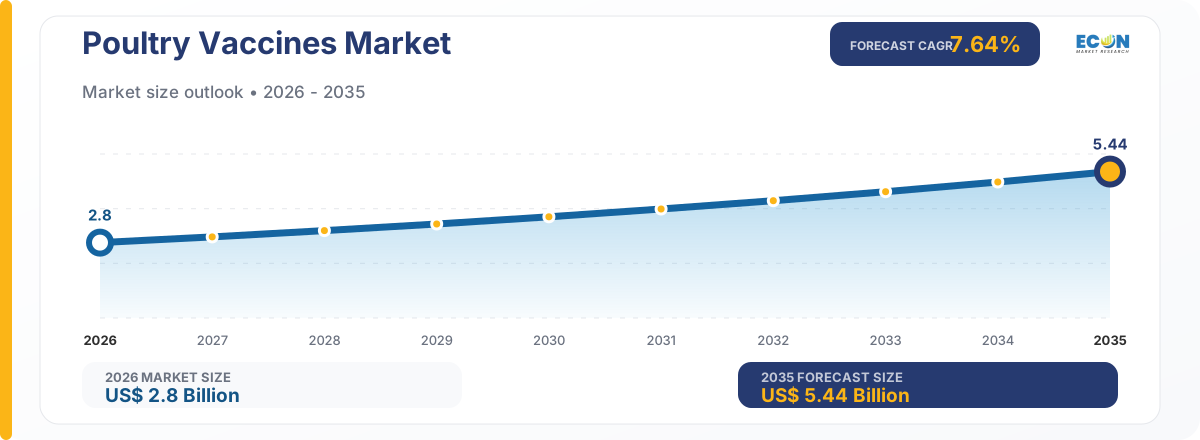
As per Econ Market Research analysis, the Global Poultry Vaccines Market was recorded at US$ 2.8 Billion in 2026 and is projected to expand to US$ 5.44 Billion by 2035, registering a CAGR of 7.64% over the forecast period. The base year used is 2025.
Poultry vaccines are specifically designed to prevent diseases in poultry such as chickens, turkeys, ducks, and other birds raised for eggs or meat. These vaccines help protect against a range of infectious diseases including Newcastle disease, avian influenza, Marek',s disease, and infectious bronchitis, which can cause significant economic losses in the poultry industry. The market includes various types of vaccines like live attenuated, inactivated, recombinant, and toxoid vaccines, each with different methods of preparation and application to ensure the health and productivity of poultry.
The market for poultry vaccines is experiencing steady growth driven by several factors. Increasing consumer demand for poultry products, coupled with the need to ensure food safety and animal welfare, has led to greater adoption of vaccination programs. Additionally, advancements in vaccine technology and increased awareness among poultry farmers about disease prevention are contributing to market expansion. Regions such as North America, Europe, and Asia-Pacific are the key markets, with Asia-Pacific expected to witness the fastest growth due to the rising poultry farming activities and increasing investments in veterinary healthcare.
Poultry Vaccines Dynamics
On the demand side, the rising global consumption of poultry products is a primary driver. As consumers increasingly prefer poultry meat and eggs due to their high protein content and affordability, poultry farmers are under pressure to maintain healthy and productive flocks. This demand fuels the need for effective vaccination programs to prevent outbreaks of diseases that could devastate poultry populations.
Additionally, stringent regulations regarding food safety and animal health in many regions compel farmers to adopt comprehensive vaccination strategies, further bolstering market growth. On the supply side, technological advancements and innovations in vaccine development are significant contributors to market dynamics. The introduction of new vaccines that offer broader protection, longer immunity, and easier administration is making vaccination more effective and appealing to poultry farmers.
Companies are investing in research and development to create recombinant and vector vaccines, which are more efficient and safer. However, challenges such as the high cost of vaccine production and distribution, particularly in developing regions, can limit market penetration. Moreover, the need for Cold Chain Logistics to maintain vaccine efficacy adds to the complexity and cost, impacting accessibility in rural or less developed areas.
Poultry Vaccines Drivers
Increasing Demand for Poultry Products
The global demand for poultry products such as meat and eggs is on the rise due to their affordability and high protein content. Poultry is often considered a healthier alternative to red meat, leading to increased consumption worldwide. As a result, poultry farmers are expanding their operations to meet this growing demand. To ensure the health and productivity of their flocks, farmers are increasingly adopting vaccination programs to prevent diseases that can lead to significant economic losses. Effective vaccination helps maintain the health of poultry, thereby supporting continuous and reliable production, which is crucial for meeting market demands.
Advancements in Vaccine Technology
Technological advancements in the development of poultry vaccines are a significant driver of market growth. Innovations such as recombinant DNA technology, vector vaccines, and newer adjuvant formulations have enhanced the efficacy and safety of vaccines. These advancements lead to the creation of vaccines that provide broader protection against multiple strains of pathogens, offer longer-lasting immunity, and require fewer doses. Additionally, easier administration methods, such as in ovo vaccination, are becoming more prevalent, making the vaccination process more efficient for large-scale poultry operations. Continuous research and development in this field are expected to introduce even more advanced vaccines, further driving market growth.
Poultry Vaccines Restraints:
High Cost of Vaccines
One of the main restraints in the poultry vaccines market is the high cost associated with vaccine production and distribution. Developing and producing high-quality vaccines involve significant investment in research and development, sophisticated manufacturing processes, and stringent quality control measures. These costs are often passed on to the end-users, making vaccines relatively expensive for small-scale farmers, particularly in developing countries. Additionally, the requirement for cold chain logistics to maintain vaccine potency adds to the overall cost, limiting accessibility and affordability for many poultry farmers.
Limited Access in Developing Regions
Another significant barrier is limited access to poultry immunizations in poor countries. Many underdeveloped countries lack the infrastructure required for efficient vaccination distribution, such as reliable transportation networks and Cold Storage facilities. Furthermore, there may be a lack of awareness and education among poultry producers on the benefits and significance of vaccination programs. These limitations can lead to reduced vaccination rates, making people more vulnerable to disease outbreaks. To overcome these hurdles requires significant investment in infrastructure and educational initiatives, which can be difficult to undertake in resource-constrained contexts.
Poultry Vaccines Opportunities:
Growing Awareness and Adoption of Vaccination Programs
As people become more aware of the necessity of disease control in chicken farming, there will be more opportunities for market growth. Governments, non-governmental organizations, and industry partners are working together to educate farmers about the benefits of vaccination in terms of reducing economic losses and guaranteeing food security. As more farmers implement vaccination programs, demand for chicken vaccinations is projected to increase. This increased knowledge, along with supportive regulations and financial incentives, might greatly boost market growth, especially in places where vaccination methods are currently neglected.
Segment Overview
By Disease
The segmentation by disease categorizes poultry vaccines based on the specific diseases they target, including Marek&rsquo,s disease, Newcastle disease, infectious bronchitis, avian influenza, and others. Each disease presents unique challenges to poultry health and productivity, necessitating tailored vaccination approaches. Marek&rsquo,s disease, for instance, is a viral illness affecting poultry nervous systems, while Newcastle disease is highly contagious and can lead to severe respiratory and nervous system disorders. Vaccines targeting these diseases play a crucial role in disease prevention and maintaining flock health.
By Product Type
Segmentation by product type classifies poultry vaccines based on their formulation and mode of action, encompassing attenuated vaccines, inactivated vaccines, DNA vaccines, recombinant vaccines, and others. Attenuated vaccines contain weakened forms of pathogens that stimulate an immune response without causing disease, offering long-lasting protection.
Inactivated vaccines consist of killed pathogens that stimulate the immune system but do not replicate in the host. DNA vaccines utilize genetic material to induce immunity, while recombinant vaccines are engineered to express antigens that trigger an immune response. Each product type has distinct advantages and applications in poultry vaccination programs, contributing to comprehensive disease control strategies.
By Dosage
The dose category relates to the physical form in which vaccinations are provided to chickens, such as freeze-dried vaccines, liquid vaccines, duct vaccines, and others. Freeze-dried vaccinations are often reconstituted with a diluent before to administration, making them easy to store and transport. Liquid vaccines are ready-to-use formulations that require little preparation, making them ideal for mass vaccination campaigns. Duct vaccinations are given orally, usually mixed with feed or water for ease of administration. Each dosage type provides distinct challenges and considerations regarding vaccine stability, administration, and efficacy, determining its applicability for various chicken farming conditions and management approaches.
Poultry Vaccines Overview by Region
North America, comprising the United States and Canada, dominates the market due to advanced poultry farming infrastructure, stringent regulatory standards, and high levels of awareness about disease prevention. Europe follows closely, with countries like the UK, Germany, and France adopting sophisticated vaccination programs to ensure poultry health and food safety standards.
In Asia-Pacific, particularly countries like China, India, and Thailand, rapid urbanization, increasing disposable incomes, and rising demand for poultry products drive market growth. However, challenges such as disease outbreaks, inadequate veterinary infrastructure, and regulatory complexities may hinder market expansion in certain regions. Latin America, led by Brazil, Argentina, and Mexico, represents a growing market fueled by expanding poultry production and improving healthcare infrastructure. Africa and the Middle East present opportunities for market development, driven by growing poultry consumption, government initiatives to improve food security, and increasing investments in veterinary healthcare.
Poultry Vaccines Market Competitive Landscape
Companies such as Zoetis Inc., Merck &, Co. Inc., Boehringer Ingelheim GmbH, and Ceva Santé, Animale are among the leading manufacturers of poultry vaccines, offering a wide range of products targeting various poultry diseases. These companies invest significantly in research and development to develop advanced vaccine formulations that provide improved efficacy, safety, and ease of administration.
Moreover, strategic collaborations with poultry producers, veterinarians, and governmental organizations help these companies expand their market presence and enhance distribution networks. Regional players also play a significant role, especially in emerging markets, by catering to the specific needs and preferences of local poultry farmers. Additionally, the competitive landscape is influenced by regulatory compliance requirements, quality standards, and pricing strategies, which determine the market positioning of different vaccine manufacturers.
Poultry Vaccines Key Players:
Ceva
Calier
Biovac
Elanco
Phibro Animal Health Corporation
Zoetis Inc
Hester Biosciences Limited
Merck &, Co. Inc.
AniCon Labor GmbH (SAN Group)
Boehringer Ingelheim International GmbH
Venkys India
KM Biologics
Vaxxinova International BV
Ringpu Biology
Poultry Vaccines Recent Developments
Oct 2023, Kemin Industries, a leading global provider of ingredients, is teaming up with ilender in Latin America to introduce the MEFLUVAC&trade, H5 PLUS 8 vaccine. This initiative aims to bolster immunity against the highly pathogenic Avian Influenza, contributing to the enhancement of public health in the region.
May 2022, TARGAN (formerly known as Applied LifeSciences &, Systems (ALSS)) announced the successful acquisition of $35 million in Series C equity financing. Mountain Group Partners and NovaQuest Capital Management jointly led the financing, with participation from existing investors Merck Animal Health and Oval Park Capital. TARGAN specializes in integrating its exclusive technologies, including high-speed imaging, feature recognition, Artificial Intelligence, robotics, and microfluidics. These innovations are currently applied in a system tailored for the commercial poultry industry. This system boasts the capacity to individually and precisely vaccinate up to 100,000 chicks per hour against prevalent diseases like coccidiosis, infectious bronchitis, and Newcastle disease. Furthermore, TARGAN has devised a distinctive and fully automated system capable of determining the gender of individual chicks, facilitating separate gender rearing for poultry producers.
Poultry Vaccines Report Segmentation
Poultry Vaccines Market Report Scope & Segmentation
| Attributes | Details |
|---|---|
| Market Size (Current)Current market valuation | US$ 2.8 Billion in 2026 |
| Market Size (Forecast)Projected market valuation | US$ 5.44 Billion in 2035 |
| Growth RateCompound Annual Growth Rate | CAGR of 7.64% from 2026 to 2035 |
| Forecast PeriodAnalysis timeline | 2026 – 2035 |
| Base YearReference year for analysis | 2025 |
| Historical Data AvailablePast market data availability | Yes |
| Regional ScopeGeographical coverage | Global |
| Segments CoveredMarket segments analyzed | By Type
By Disease
By Dosage Form
|
Frequently Asked Questions
Common questions about this report
The study period covers historical insights and forecast projections for the period 2026-2035.
About the Author
Market research expert with years of industry experience

Dipali Bhingare serves as the Market Research Director at Econ Market Research. With a focus on translating complex global economic shifts into actionable business intelligence, she oversees the strategic direction of comprehensive market studies. Her work empowers organizations to navigate volatile industries through data-driven forecasting and deep-dive competitive analysis.