

Pico Projector Market
Pico Projector Market Size, Share, Trends, Growth, and Industry Analysis, By Type (Embedded, Non-embedded), By Technology (DLP, LCoS, LBS), By Application (Consumer Electronics, Business and Education), Regional Analysis and Forecast Period 2026-2035
Market Overview
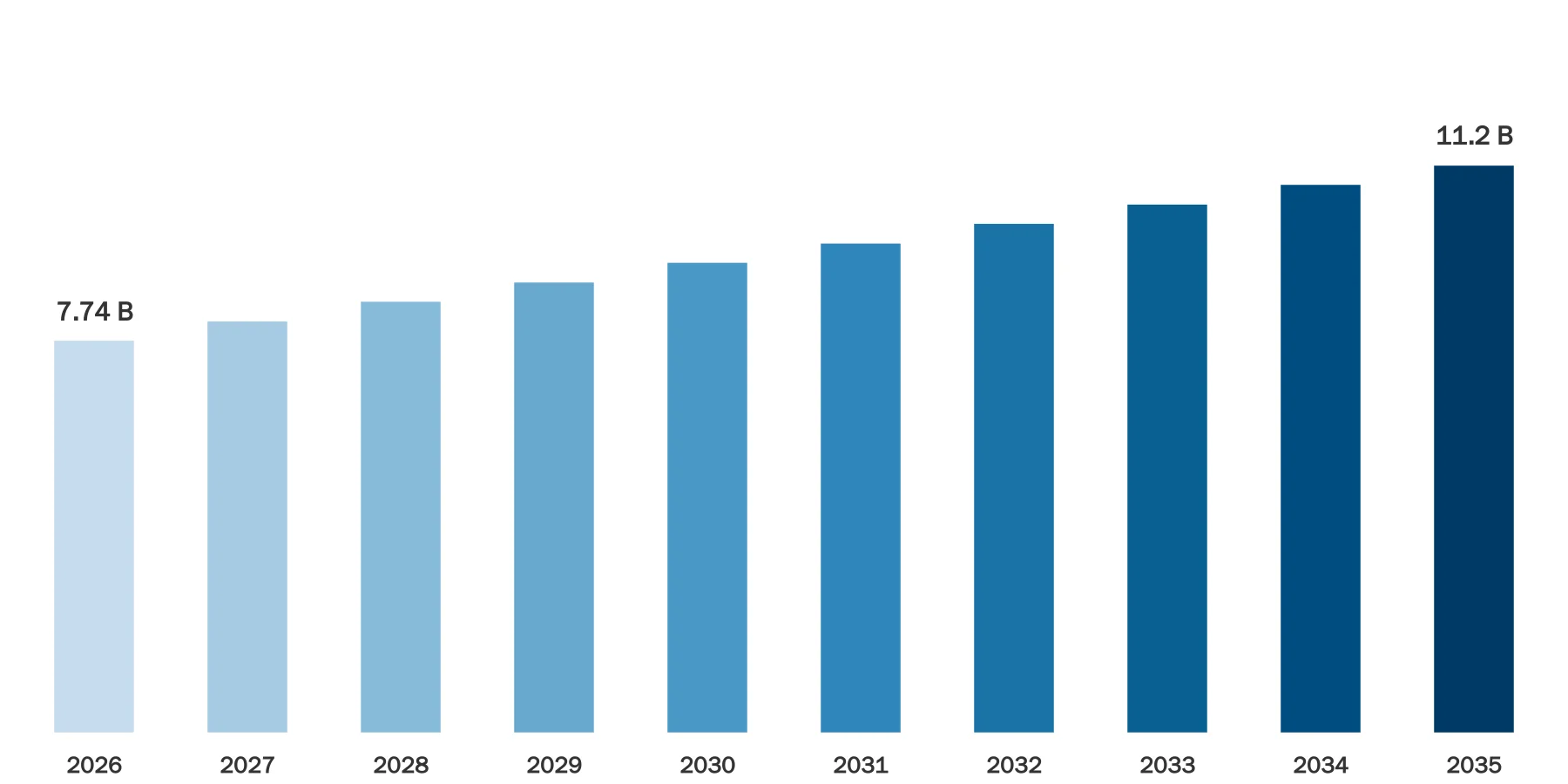
As per Econ Market Research analysis, the Global Pico Projector Market accounted for US$ 7.74 Billion in 2026 and is expected to surpass US$ 11.2 Billion by 2035, witnessing a CAGR of 4.19% throughout 2026–2035. The analysis is based on 2025 as the base year.
Pico Projector Market Size 2025-2035 (USD Billion)

Source: Econ Market Research
Pico projectors, also known as handheld projectors or pocket projectors, utilize miniature projection technology to display images and videos from various electronic devices such as smartphones, tablets, laptops, and digital cameras. These compact devices offer convenience and portability, making them popular for personal and professional applications such as business presentations, home entertainment, education, and gaming. The market for pico projectors has experienced significant growth in recent years due to advancements in projection technology, increasing demand for portable electronic devices, and the expanding applications of pico projectors across different industries.
The global pico projector market has grown rapidly in recent years due to a number of important factors. One of the main factors driving market expansion has been the growing need for lightweight and portable display solutions across a variety of industries, including business, education, entertainment, and consumer electronics. Further driving market expansion are technological developments in pico projectors, which have improved brightness, resolution, and connectivity options in addition to improving these devices', functionality and performance.
Pico Projector Dynamics
Technological developments, shifting customer preferences, changing application scenarios, and changes in the competitive landscape are some of the major factors influencing market dynamics. Technological innovations have a significant impact on market dynamics by continuously enhancing pico projector performance, features, and capabilities. Thanks to improvements in brightness, resolution, colour accuracy, and connectivity, projection technology has advanced to the point where manufacturers can now provide more high-quality and adaptable products that meet a wider range of consumer needs and preferences.
Furthermore, the value proposition of pico projectors is further enhanced by the growing integration of smart features, wireless connectivity, and compatibility with a variety of multimedia devices, which encourages adoption across a range of end-user segments. Market dynamics are also shaped by shifting consumer preferences and lifestyles, which have an impact on product design, form factor, portability, and functionality.
Manufacturers are under pressure to create smaller, lighter, and more ergonomic pico projector designs that offer improved portability and ease of use as consumers seek out more convenient and portable display solutions for use on the go. Moreover, the need for pico projectors as adaptable multimedia tools for presentations, training sessions, home theatre setups, and gaming experiences is driven by changing application scenarios across industries like business, education, entertainment, and gaming.
Pico Projector Drivers
Technological Advancements:
The pico projector market is driven forward by ongoing technological advancements that improve the usability, performance, and features of the products. Advancements in projection technology, including enhanced brightness, resolution, and colour accuracy, allow manufacturers to produce images and videos of higher quality, improving the overall viewing experience for users. Pico projectors are also more versatile and functional owing to the addition of smart features like wireless connectivity, compatibility with smartphones and other devices, and built-in multimedia capabilities. As a result, they are an essential tool for a variety of uses, including business presentations, educational activities, and entertainment.
Growing Demand for Portable Display Solutions:
One major factor propelling the pico projector market is the growing need for lightweight and portable display solutions in various industries. Compact and convenient projection devices that are portable and versatile are sought after by consumers, businesses, and educational institutions alike. This need is met by pico projectors, which provide a lightweight substitute for bulky, conventional projectors and enable users to share content, make presentations, watch movies, and participate in multimedia activities from anywhere at any time. Pico projector demand is further fuelled by the trend towards remote work, flexible learning environments, and on-the-go entertainment, as consumers value mobility and flexibility in their multimedia experiences.
Restraints:
Limited Brightness and Image Quality:
Despite technological advancements, pico projectors still face limitations in terms of brightness and image quality compared to larger, more traditional projectors. The compact size and lower power output of pico projectors constrain their ability to produce bright, high-definition images, especially in well-lit environments or large venues. This limitation may hinder their adoption in certain professional settings where image clarity and brightness are paramount, thus restricting market growth in specific applications and industries.
Price Sensitivity and Affordability:
Price sensitivity among consumers and businesses poses a restraint on the widespread adoption of pico projectors. While the demand for portable display solutions is high, many potential buyers may find the cost of pico projectors prohibitive, especially when compared to other display technologies such as flat-screen TVs or traditional projectors. The relatively high price point of pico projectors may deter budget-conscious consumers and organizations from investing in these devices, particularly in markets with limited purchasing power or competing budget priorities.
Opportunities:
Rapid Technological Innovation:
The pico projector market presents significant opportunities for innovation and product development, driven by the rapid pace of technological advancement. Manufacturers can capitalize on emerging technologies such as laser projection, micro-electromechanical systems (MEMS), and augmented reality (AR) to enhance the performance, functionality, and user experience of pico projectors. By investing in research and development, companies can introduce ground-breaking features and capabilities that differentiate their products in the competitive marketplace, expand their customer base, and drive revenue growth.
Segment Overview
By Type
The pico projector market is segmented into various types to cater to diverse user preferences and applications. USB Pico Projectors are compact devices that can be directly connected to USB ports on computers, laptops, and other compatible devices, offering convenient plug-and-play functionality for on-the-go presentations and multimedia playback. Embedded Pico Projectors are integrated into electronic devices such as smartphones, tablets, digital cameras, and portable gaming consoles, providing users with built-in projection capabilities for enhanced versatility and portability.
Media Player Pico Projectors combine projection functionality with multimedia playback features, allowing users to directly access and play digital content from integrated storage or external sources such as USB drives, microSD cards, and wireless connections. Stand-alone Pico Projectors are independent projection devices that operate autonomously without the need for external devices or connections, offering users a standalone solution for presentations, entertainment, and educational purposes. Other types of pico projectors encompass a range of specialized devices, including laser projectors, holographic projectors, and ultra-portable models designed for specific applications and use cases.
By Application:
Pico projectors find applications across various sectors and industries, each serving distinct user needs and requirements. Hand Gesture Recognition integrates gesture recognition technology with pico projectors, enabling users to interact with projected content using hand gestures and motions for intuitive control and navigation. Pointer-based Computer Control utilizes pico projectors to enhance traditional computer interfaces by enabling precise cursor control and navigation through projected visual feedback, offering users an alternative input method for increased productivity and ease of use. 3D Pico Projectors leverage advanced stereoscopic imaging techniques to create immersive 3D visual experiences, enabling users to view three-dimensional content with depth and realism for gaming, entertainment, and educational applications.
Mobile Devices incorporate pico projectors into smartphones, tablets, and wearable gadgets, enabling users to project content from their portable devices onto flat surfaces for enhanced sharing, collaboration, and entertainment experiences. Other applications of pico projectors span a wide range of use cases, including augmented reality, Digital Signage, interactive displays, automotive head-up displays, and medical imaging systems, showcasing the versatility and potential of pico projection technology in diverse environments and industries.
Pico Projector Overview by Region
Developed regions such as North America and Europe boast advanced technological infrastructure and high disposable incomes, driving significant demand for innovative electronic devices including pico projectors. These regions are hubs for technological innovation and consumer electronics adoption, with a strong emphasis on product performance, quality, and brand reputation.
In contrast, emerging markets in Asia Pacific, Latin America, and Africa present lucrative growth opportunities for pico projector manufacturers due to rising disposable incomes, expanding middle-class populations, and increasing adoption of portable multimedia devices. Rapid urbanization, growing consumer awareness, and changing lifestyles contribute to the burgeoning demand for portable display solutions across various sectors including education, entertainment, and business. Moreover, government initiatives, infrastructure investments, and favourable regulatory policies aimed at promoting digital connectivity and technology adoption further stimulate market growth in these regions.
While North America and Europe remain key revenue generators for pico projector manufacturers, Asia Pacific emerges as a pivotal growth engine, driven by populous countries such as China, India, Japan, and South Korea with a strong appetite for consumer electronics and technological innovation. However, regional variations in consumer preferences, purchasing power, distribution channels, and cultural factors necessitate tailored marketing strategies and product offerings to effectively penetrate and capitalize on diverse market opportunities across different regions.
Pico Projector Market Competitive Landscape
Leading companies such as Sony Corporation, LG Electronics Inc., AAXA Technologies Inc., Optoma Corporation, and Anker Innovations dominate the global market with a diverse portfolio of pico projector products catering to various consumer segments and applications. These companies invest heavily in research and development to drive technological innovation and product differentiation, enhancing features such as brightness, resolution, connectivity options, and multimedia capabilities to meet evolving customer needs and preferences.
Additionally, strategic partnerships, mergers, acquisitions, and collaborations enable pico projector manufacturers to expand their market presence, leverage complementary strengths, and capitalize on synergies in terms of technology integration, market access, and brand recognition. Moreover, emerging players and start-ups entering the pico projector market bring disruptive technologies, innovative business models, and niche product offerings, intensifying competition and challenging established incumbents to adapt and innovate in response to evolving market dynamics and consumer demands. The competitive landscape is further shaped by factors such as pricing pressures, regulatory compliance, supply chain management, and brand reputation, which influence market positioning, profitability, and sustainability in the highly competitive global marketplace.
Pico Projector Market Leading Companies:
AAXA Technologies Inc.
Acer Inc.
Coretronic Corporation
Sony Corporation
Canon Inc.
Aiptek International Inc.
Koninklijke Philips N.V.
LG Electronics Inc.
Samsung Group
Miroir USA
Global Pico Projector Report Segmentation
Pico Projector Market Report Scope & Segmentation
| Attributes | Details |
|---|---|
Market Size (Current) | US$ 7.74 Billion in 2026 |
Market Size (Forecast) | US$ 11.2 Billion in 2035 |
Growth Rate | CAGR of 4.19% from 2026 to 2035 |
Forecast Period | 2026 – 2035 |
Base Year | 2025 |
Historical Data Available | Yes |
Regional Scope | Global |
Segments Covered | By Type
By Technology
By Application
|
Frequently Asked Questions
Common questions about this report
The study period covers historical insights and forecast projections for the period 2026-2035.
About the Author
Market research expert with years of industry experience

Related Reports
Explore more market insights from the same category