

Pharmaceutical Logistics Market
Pharmaceutical Logistics Market Size, Share, Trends, Growth, and Industry Analysis, By Type (Cold Chain Logistics, Non-cold Chain Logistics), By Component (Storage, Transportation, Monitoring Components), Regional Analysis and Forecast Period 2026-2035
Market Overview
As per Econ Market Research analysis, the Global Pharmaceutical Logistics Market accounted for US$ 111.58 Billion in 2026 and is expected to surpass US$ 235.87 Billion by 2035, witnessing a CAGR of 8.68% throughout 2026–2035. The analysis is based on 2025 as the base year.
Pharmaceutical Logistics Market Size 2025-2035 (USD Billion)

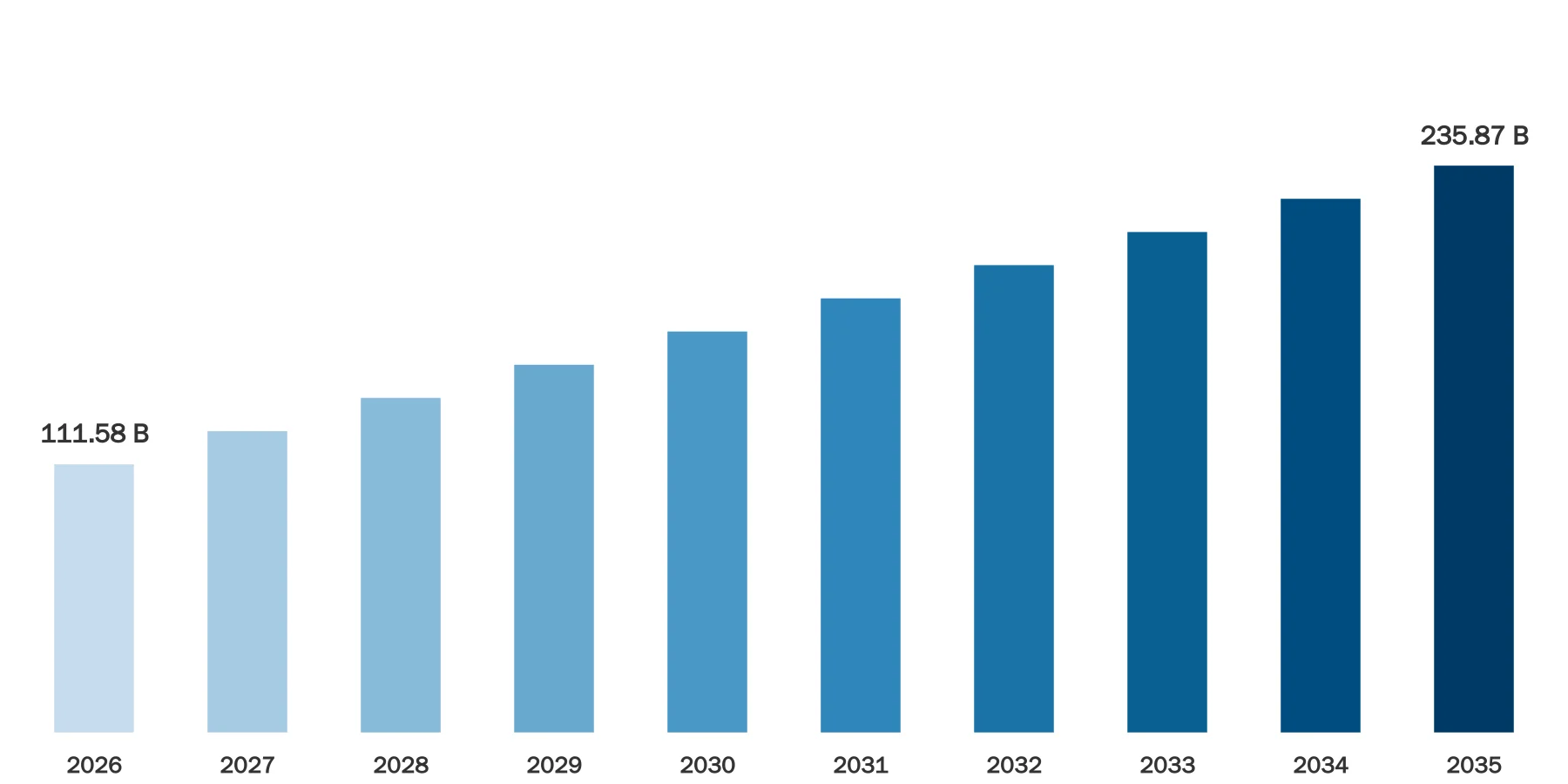
Source: Econ Market Research
The pharmaceutical logistics industry involves the intricate process of moving medicines, vaccines, and other healthcare products from manufacturers to end-users such as hospitals, pharmacies, and patients. This includes activities like storage, packaging, transportation, and distribution, all of which are essential for maintaining the quality and effectiveness of pharmaceutical products. As global healthcare needs increase and efficient supply chain management becomes more important, the pharmaceutical logistics market has a crucial role in ensuring that essential medical supplies are delivered promptly and are accessible to those who need them.
Over the past few years, the pharmaceutical logistics industry has experienced notable expansion, largely because of improvements in transportation technology, strict regulations concerning product management, and the rising intricacy of pharmaceutical supply networks. The market is primarily fuelled by the increasing need for specialized Cold Chain Logistics to maintain the integrity of temperature-sensitive drugs and vaccines. Moreover, the introduction of biopharmaceuticals and personalized medicine has contributed to the demand for customized logistics services that can accommodate specific product needs.
In today',s ever-changing healthcare world, pharmaceutical companies are depending more on logistics providers to streamline their supply chains, cut costs, and improve efficiency. This guarantees that medications can reach patients all over the world smoothly. The COVID-19 outbreak underlined the crucial need for strong supply chains that can handle unforeseen events. Consequently, pharmaceutical firms and logistics providers are embracing technologies such as blockchain and artificial intelligence to improve transparency and traceability in the supply chain. This will help them be better equipped to handle any future emergencies. By embracing innovation and sustainability, the pharmaceutical logistics market is poised to meet the evolving needs of the healthcare industry while driving positive social and environmental impact.
Pharmaceutical Logistics Dynamics
The global pharmaceutical logistics market is influenced by various factors, such as technological advancements, regulations, market consolidation, and changing consumer preferences. Innovations like real-time tracking systems, IoT sensors, and predictive analytics have transformed the logistics sector, leading to more transparency, efficiency, and safety in moving pharmaceutical products. Additionally, there is a rising need for temperature-controlled storage and transportation solutions, especially for biopharmaceuticals and vaccines, which is fuelling the expansion of specialized cold chain logistics services.
Meeting regulatory requirements is crucial in pharmaceutical logistics, as strict rules guide how medications are handled, stored, and distributed to guarantee their safety and effectiveness. Adhering to standards like Good Distribution Practices (GDP) and Good Manufacturing Practices (GMP) is essential for logistics companies to uphold the quality of pharmaceutical products along the supply chain. Moreover, the industry is seeing a shift towards consolidation, as major players merge and acquire businesses to broaden their reach, improve services, and capitalize on economies of scale.
The increasing consolidation in the industry is changing how companies compete and leading to more collaboration and partnerships. As consumer preferences evolve, like the growth of online healthcare shopping and the desire for personalized medicine, there is a greater demand for adaptable logistics solutions to meet varying customer needs.
Pharmaceutical Logistics Drivers
Rapid Technological Advancements
The pharmaceutical logistics market has been greatly changed by new technologies, making the transportation of medical products more efficient and secure. Innovations like IoT sensors, real-time tracking, and blockchain technology have improved visibility and traceability in supply chains, reducing the chances of product loss or damage. Automation and robotics have also made warehouse operations more efficient, leading to better inventory management and order fulfilment. These advancements not only boost operational efficiency but also improve safety and compliance, increasing the need for advanced logistics solutions.
Growing Demand for Temperature-Controlled Logistics
The pharmaceutical industry is becoming more complex, especially with biopharmaceuticals and vaccines. This has led to a greater demand for temperature-controlled logistics to ensure that these medications remain safe and effective. Specialized cold chain services with advanced refrigeration and monitoring are needed to meet this demand. Regulatory requirements also play a role in driving the adoption of temperature-controlled logistics for pharmaceutical transportation and storage. This growing demand presents significant opportunities for logistics providers to invest in infrastructure and technology to meet the specialized requirements of the pharmaceutical industry.
Restraints:
Stringent Regulatory Compliance
Regarding pharmaceutical products, following regulations is crucial for their safety and effectiveness. However, this can be difficult for logistics providers. Regulations like Good Distribution Practices (GDP) and Good Manufacturing Practices (GMP) demand careful documentation, monitoring, and quality control at every step of the supply chain. Failing to comply can lead to serious consequences, including fines, recalls, and harm to a company',s reputation. The differing regulations in various regions only make things more complicated, increasing the workload and expenses for logistics firms.
High Initial Investment and Operating Costs
Building and keeping a strong pharmaceutical logistics system involves a significant amount of money at the beginning and continuous expenses. The costs of temperature-controlled storage spaces, specialized transportation vehicles, and advanced technology can be quite substantial. Moreover, the necessity for tight security measures to avoid theft or tampering also increases the operational costs. These considerable initial and ongoing expenses can make it tough for new companies to enter the market and restrict the growth of current logistics providers, especially in developing countries with limited resources.
Opportunities:
Expansion of Global Healthcare Markets
The pharmaceutical logistics market is poised for growth due to the increasing demand for healthcare services globally. Factors like population growth, aging populations, and rising healthcare spending are driving this expansion. Countries in Asia-Pacific, Latin America, and Africa are particularly promising markets for pharmaceutical companies and logistics providers to reach new customers and meet the growing demand for healthcare products and services. Additionally, innovations in Telemedicine and e-commerce are making healthcare more accessible in rural areas, creating a greater need for efficient pharmaceutical logistics solutions to reach underserved populations.
Segment Overview
By Product
By product type, the market can be segmented into branded drugs and generic drugs. Branded drugs are medications created and sold by pharmaceutical companies under a brand name, often protected by patents. These drugs involve substantial research and development and are sold at higher prices compared to generic drugs. On the contrary, generic drugs are the same or similar versions of branded drugs, produced once the patent expires. Generic drugs are typically more cost-effective and play a key role in reducing healthcare expenses.
By Application
By application market is segmented into, chemical pharma, bio pharma, and specialized pharma. Chemical pharma involves pharmaceutical products made through chemical synthesis, like traditional small molecule drugs. Bio pharma covers biopharmaceuticals made through biological processes, like proteins, antibodies, and vaccines. Specialized pharma includes niche pharmaceutical products such as oncology drugs, orphan drugs, and personalized medicines, which have specific handling and storage needs.
By Mode of Operation
The mode of operation of pharmaceutical segmented into both cold chain and non-cold chain transportation. Cold chain transport focuses on keeping consistent temperature levels to protect the effectiveness and reliability of temperature-sensitive medications like vaccines and biologics. Non-cold chain transport, on the other hand, involves transporting pharmaceuticals that do not need temperature regulation, such as solid oral medications and certain generic drugs.
By Mode of Transport
By Mode of Transport market is segmented into rail, road, air, and sea transportation modes. Rail transport offers a cost-effective and environmentally friendly option for long-distance transportation of pharmaceuticals. Road transport provides flexibility and accessibility for delivering pharmaceutical products to various destinations, including remote areas.
Air transport offers rapid and efficient delivery, particularly for time-sensitive pharmaceuticals and international shipments. Sea transport is suitable for large-volume pharmaceutical shipments over long distances, offering cost advantages for bulk transportation. Each mode of transport has its advantages and limitations, depending on factors such as speed, cost, and geographic reach, influencing its suitability for pharmaceutical logistics operations.
Pharmaceutical Logistics Overview by Region
North America has a large share because of its advanced healthcare systems, strict regulations, and high pharmaceutical consumption. Europe is close behind with strong pharmaceutical industries and extensive cold chain logistics networks. The Asia-Pacific region is growing quickly with increasing healthcare spending, expanding pharmaceutical markets, and a higher need for temperature-controlled logistics, especially in countries like China and India.
Latin America and the Middle East &, Africa regions are also emerging as lucrative markets, propelled by improving healthcare infrastructure and growing investments in pharmaceuticals. However, logistical challenges and regulatory complexities in these regions pose obstacles to market growth. Overall, the pharmaceutical logistics market presents diverse opportunities across regions, with ongoing advancements in technology and infrastructure driving the evolution of supply chain networks to meet the demands of the global healthcare industry.
Pharmaceutical Logistics Market Competitive Landscape
Companies such as DHL International GmbH, FedEx Corporation, United Parcel Service, Inc. (UPS), and Kuehne + Nagel International AG dominate the market with their extensive global networks, specialized services, and advanced logistics solutions tailored to the pharmaceutical industry. These players focus on offering comprehensive end-to-end logistics services, including cold chain management, regulatory compliance, and value-added services such as temperature monitoring and packaging solutions.
Additionally, emerging players and regional logistics providers are leveraging niche expertise and innovative technologies to carve out a niche in the market. The competitive intensity is further fuelled by the growing demand for pharmaceutical logistics services driven by factors such as increasing healthcare expenditures, rising prevalence of chronic diseases, and the need for efficient supply chain management. As competition intensifies, companies are emphasizing differentiation through service quality, reliability, and customer-centric solutions to gain a competitive edge in the dynamic pharmaceutical logistics landscape.
Pharmaceutical Logistics Market Leading Companies:
DHL International GmbH
FedEx Corporation
United Parcel Service, Inc. (UPS)
Kuehne + Nagel International AG
DB Schenker
CEVA Logistics
XPO Logistics
C.H. Robinson Worldwide, Inc.
Nippon Express Co., Ltd.
Agility Logistics
DSV Panalpina A/S
Expeditors International of Washington, Inc.
Hellmann Worldwide Logistics
GEODIS
Yusen Logistics Co., Ltd.
Pharmaceutical Logistics Market Recent Developments
Oct 2023, UPS Healthcare expands its healthcare logistics service in Europe, aiming to solidify its position as a leader in the field. The launch of UPS Pickup Point locations across the UK, Germany, Italy, France, and Spain provides a new reverse logistics service for health laboratory customers.
Mar 2023, GEODIS, a transport and logistics company, acquires trans-o-flex, a specialized logistics service provider for temperature-controlled transport of pharmaceutical and high-tech products. The acquisition enhances GEODIS', integrated freight network in Germany, signaling its strategic development in the region.
Feb 2021, Agility introduced an express road freight network connecting consumers and businesses throughout the GCC region. The newly launched service offers both full truckload (FTL) and less-than-truckload (LTL) options, catering to the diverse needs of its customers.
Pharmaceutical Logistics Report Segmentation
Pharmaceutical Logistics Market Report Scope & Segmentation
| Attributes | Details |
|---|---|
Market Size (Current) | US$ 111.58 Billion in 2026 |
Market Size (Forecast) | US$ 235.87 Billion in 2035 |
Growth Rate | CAGR of 8.68% from 2026 to 2035 |
Forecast Period | 2026 – 2035 |
Base Year | 2025 |
Historical Data Available | Yes |
Regional Scope | Global |
Segments Covered | By Type
By Component
|
Frequently Asked Questions
Common questions about this report
The study period covers historical insights and forecast projections for the period 2026-2035.
About the Author
Market research expert with years of industry experience

Dipali Bhingare serves as the Market Research Director at Econ Market Research. With a focus on translating complex global economic shifts into actionable business intelligence, she oversees the strategic direction of comprehensive market studies. Her work empowers organizations to navigate volatile industries through data-driven forecasting and deep-dive competitive analysis.
Related Reports
Explore more market insights from the same category