

Pharmaceutical Contract Manufacturing Market
Pharmaceutical Contract Manufacturing Market Size, Share, Trends, Growth, and Industry Analysis, By Service (API Manufacturing, FDF Manufacturing, Secondary Packaging), By Drug Molecule (Small Molecule, Biologics, Advanced Therapies), By End-User (Big Pharma, Generic Pharma, Biotech Companies), Regional Analysis and Forecast Period 2026-2035
Market Overview
As per Econ Market Research analysis, the Global Pharmaceutical Contract Manufacturing Market was estimated at US$ 104.4 Billion in 2026 and is forecast to attain US$ 155.4 Billion by 2035, expanding at a CAGR of 4.5% between 2026 and 2035. The base year for the study is 2025.
Pharmaceutical Contract Manufacturing Market Size 2025-2035 (USD Billion)

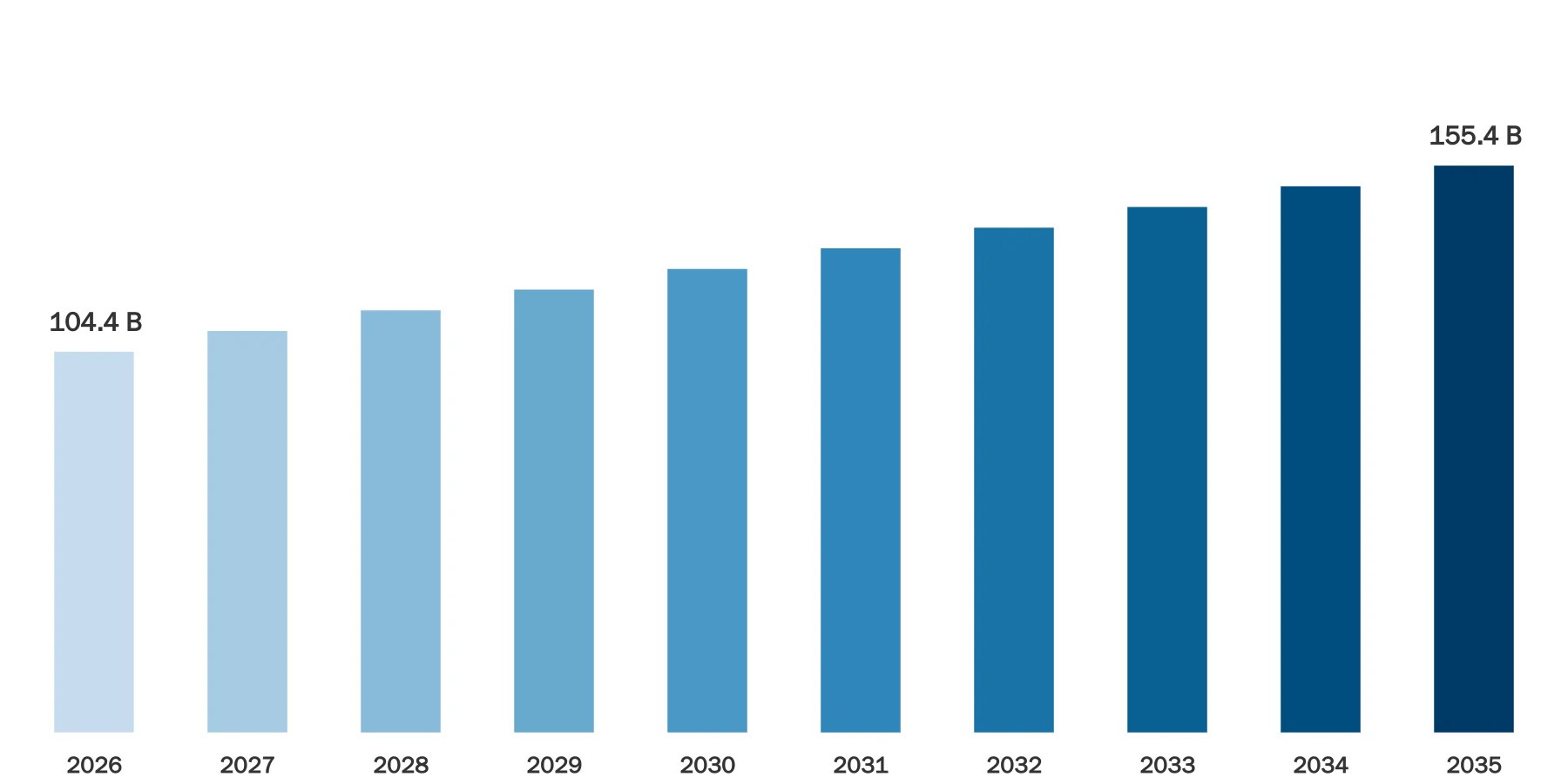
Source: Econ Market Research
The Global Pharmaceutical Contract Manufacturing market refers to the outsourcing of pharmaceutical production processes by pharmaceutical companies to third-party organizations specializing in manufacturing. This practice allows pharmaceutical firms to focus on core competencies such as research, development, and marketing, while leveraging the expertise and infrastructure of contract manufacturing organizations (CMOs) to produce drugs efficiently and cost-effectively.
The market encompasses a wide range of services including formulation development, API synthesis, manufacturing, packaging, and labeling. It serves various segments of the pharmaceutical industry including small biotech firms, generic drug manufacturers, and large multinational pharmaceutical companies. The increasing complexity of drug development, stringent regulatory requirements, cost pressures, and the need for flexible manufacturing capacity have fuelled the growth of the global pharmaceutical contract manufacturing market.
The demand for biologics, specialty medications, and generic drugs has all increased significantly in recent years, and the complexity of pharmaceutical formulations has also increased. These factors have contributed to the strong growth of the global pharmaceutical contract manufacturing market. The pharmaceutical industry',s globalisation, the development of new technologies, and outsourcing trends that maximise operational effectiveness and cut manufacturing costs all contribute to market expansion. Furthermore, the COVID-19 pandemic has highlighted the significance of robust and flexible supply chains, leading pharmaceutical companies to collaborate with contract manufacturers to guarantee continuous drug supply and minimise the hazards linked to interruptions in manufacturing processes.
Pharmaceutical Contract Manufacturing Dynamics
Pharmaceutical companies are finding it more and more necessary to outsource their manufacturing processes to contract manufacturing organisations (CMOs) with specialised infrastructure and expertise in order to cut costs and increase operational efficiency. Furthermore, the need for CMOs with advanced manufacturing skills and technological know-how is being driven by the increasing complexity of drug development, which includes the emergence of biologics and specialty medicines. Additionally, as the pharmaceutical industry becomes more globalised, contract manufacturing organisations (CMOs) are extending their reach geographically by setting up shop in emerging markets in order to take advantage of the rising demand for pharmaceutical products.
Furthermore, the evolving regulatory landscape, characterized by stringent quality standards and compliance requirements, is shaping the competitive dynamics of the pharmaceutical contract manufacturing market. CMOs must continuously invest in regulatory compliance, quality assurance, and risk management to maintain market competitiveness and meet the evolving needs of pharmaceutical clients. Additionally, technological advancements such as automation, robotics, and digitalization are transforming manufacturing processes, enabling CMOs to enhance operational efficiency, reduce production costs, and accelerate time-to-market for pharmaceutical products.
Pharmaceutical Contract Manufacturing Drivers
Increasing Demand for Outsourcing Services:
The growing need from pharmaceutical companies to outsource manufacturing processes to specialised contract manufacturing organisations (CMOs) is driving the pharmaceutical contract manufacturing market. Pharmaceutical companies can concentrate on their core skills, like marketing, R&,D, and production, by outsourcing. At the same time, they can take advantage of CMOs', infrastructure and experience to expedite time-to-market, cut costs, and streamline manufacturing processes.
Furthermore, the need for CMOs with advanced manufacturing capabilities and experience managing complex formulations and production processes is being driven by the growing complexity of drug development, which includes the introduction of biologics and specialty medicines. As pharmaceutical companies continue to look for strategic partnerships with CMOs to maximise operational efficiency and boost competitiveness in the global pharmaceutical market, this trend is anticipated to fuel market growth.
Technological Advancements and Innovation:
Innovation in pharmaceutical contract manufacturing is being driven by technological advancements like automation, robotics, and digitalization. These advancements allow CMOs to lower production costs, improve product quality, and increase operational efficiency. Robotics and automation improve production throughput, reduce human error, and streamline manufacturing processes, which boosts productivity and lowers costs for CMOs and their pharmaceutical clients.
Additionally, digitalization makes data analytics, predictive maintenance, and real-time monitoring easier. This helps CMOs find possible bottlenecks, optimise production schedules, and enhance overall manufacturing performance. Furthermore, CMOs can now provide creative solutions for customised medications, novel therapies, and intricate Drug delivery systems thanks to developments in formulation technologies and manufacturing processes. This opens up new avenues for CMO growth and differentiation in the global pharmaceutical contract manufacturing market.
Restraints:
Regulatory Challenges and Compliance Requirements:
The global regulatory authorities have imposed strict compliance standards and requirements on the pharmaceutical contract manufacturing market. In order to guarantee product safety, effectiveness, and quality throughout the manufacturing process, CMOs are required to abide by Good Manufacturing Practices (GMP), Quality Management Systems (QMS), and other regulatory guidelines. For CMOs, complying with regulatory requirements means making large investments in technology, infrastructure, and employee training, which raises operational costs and complicates operations. Furthermore, CMOs face difficulties in maintaining regulatory compliance and adjusting to new regulatory requirements due to regulatory uncertainties, shifting guidelines, and evolving compliance standards. This could potentially delay product approvals and have an impact on pharmaceutical clients', access to the market.
Intellectual Property Protection and Confidentiality Concerns:
Intellectual property (IP) protection and confidentiality concerns pose significant restraints to the pharmaceutical contract manufacturing market. Pharmaceutical companies are increasingly reliant on CMOs to manufacture proprietary formulations and specialty medicines, raising concerns about IP theft, unauthorized replication, and data breaches. Protecting confidential information, trade secrets, and proprietary technologies is paramount for pharmaceutical companies and CMOs to safeguard their competitive advantage and maintain trust and confidence in their business relationships.
However, ensuring robust IP protection measures, implementing secure data management systems, and enforcing stringent confidentiality agreements require substantial investment in Cyber Security infrastructure and compliance mechanisms, increasing operational costs and complexity for CMOs and their pharmaceutical clients. Additionally, navigating IP disputes, contractual breaches, and legal challenges related to confidentiality breaches can disrupt business operations, damage reputations, and undermine market competitiveness, highlighting the importance of proactive risk management strategies and effective IP protection mechanisms in the pharmaceutical contract manufacturing market.
Opportunities:
Diversification of Service Offerings:
Diversifying service offerings presents another key opportunity for CMOs to enhance competitiveness, expand market reach, and capture new revenue streams in the pharmaceutical contract manufacturing market. With the increasing complexity of drug development and evolving customer demands, there is growing demand for integrated services and end-to-end solutions encompassing formulation development, process optimization, analytical testing, packaging, and regulatory support.
CMOs can differentiate themselves by offering specialized expertise in niche therapeutic areas, innovative drug delivery technologies, and value-added services such as supply chain management, inventory optimization, and post-marketing surveillance. Moreover, strategic investments in advanced manufacturing technologies, such as continuous manufacturing, personalized medicine platforms, and biopharmaceutical manufacturing, enable CMOs to address unmet needs, accelerate innovation, and capitalize on emerging trends shaping the future of the pharmaceutical industry.
Segment Overview
By Services
In terms of services, the market encompasses pharmaceutical manufacturing services, including finished dosage form (FDF) manufacturing and active pharmaceutical ingredient (API) manufacturing, biologics manufacturing services covering both FDF and API manufacturing, and drug development services. Pharmaceutical manufacturing services involve the production of finished pharmaceutical products and active ingredients, catering to the formulation and synthesis needs of pharmaceutical companies across various therapeutic areas.
Biologics manufacturing services specialize in the production of biological drugs, including monoclonal antibodies, recombinant proteins, and cell therapies, which require specialized facilities and expertise in bioprocessing technologies. Drug development services encompass a range of activities from preclinical research and formulation development to clinical trial manufacturing and regulatory support, facilitating the development and commercialization of pharmaceutical products.
By End-Use
In terms of end-users, the pharmaceutical contract manufacturing market serves a wide spectrum of clients, including big pharmaceutical companies, generic pharmaceutical companies, small and medium-sized pharmaceutical companies, and others. Big pharmaceutical companies represent established multinational corporations with extensive product portfolios, global market presence, and significant R&,D investments. These companies rely on contract manufacturing services to optimize manufacturing capacity, reduce production costs, and accelerate time-to-market for new drug candidates.
Generic pharmaceutical companies specialize in the production of off-patent drugs and generic equivalents, leveraging contract manufacturing partnerships to enhance production efficiency, maintain competitiveness, and meet regulatory requirements in diverse markets. Small and medium-sized pharmaceutical companies encompass a diverse group of companies ranging from startups and biotech firms to mid-sized enterprises, which often lack the resources and infrastructure to establish in-house manufacturing capabilities. These companies partner with contract manufacturers to access specialized expertise, scale manufacturing capacity, and navigate regulatory complexities, enabling them to focus on core competencies such as research, development, and commercialization.
Pharmaceutical Contract Manufacturing Overview by Region
North America dominates the market, fuelled by a robust pharmaceutical industry, strong regulatory standards, and a significant presence of large pharmaceutical companies outsourcing manufacturing activities to contract manufacturing organizations (CMOs). The region benefits from a mature healthcare system, advanced manufacturing capabilities, and a favourable business environment conducive to innovation and collaboration.
Europe follows closely, characterized by stringent regulatory requirements, technological advancements, and strategic partnerships between CMOs and pharmaceutical firms. The region',s established pharmaceutical market, coupled with increasing investments in biologics and specialty medicines, drives demand for contract manufacturing services. Asia-Pacific emerges as a rapidly growing market, driven by factors such as rising healthcare expenditure, expanding pharmaceutical industry, and favourable government initiatives promoting outsourcing and investment in healthcare infrastructure. Countries like China and India offer cost-effective manufacturing solutions, skilled workforce, and growing expertise in Biopharmaceuticals, positioning the region as a key hub for pharmaceutical contract manufacturing.
Latin America and the Middle East &, Africa regions present untapped potential, driven by increasing healthcare spending, improving regulatory environments, and growing demand for affordable and accessible medicines. These regions offer opportunities for CMOs to expand market presence, forge strategic alliances, and capitalize on emerging trends shaping the global pharmaceutical contract manufacturing market. However, regional disparities in regulatory compliance, intellectual property protection, and infrastructure development pose challenges to market growth and require tailored strategies to navigate market complexities and unlock growth opportunities effectively.
Pharmaceutical Contract Manufacturing Market Competitive Landscape
Leading contract manufacturing organizations (CMOs) such as Lonza Group AG, Catalent, Inc., and Patheon Inc. (a part of Thermo Fisher Scientific Inc.) dominate the market with their extensive manufacturing capabilities, global presence, and diversified service offerings spanning pharmaceuticals, biologics, and drug development services. These market leaders leverage their technological expertise, regulatory compliance, and economies of scale to cater to the evolving needs of pharmaceutical clients, drive innovation, and maintain competitive positioning in the market.
Additionally, mergers, acquisitions, and strategic alliances are prominent features of the competitive landscape, enabling key players to expand market reach, enhance service capabilities, and capitalize on emerging opportunities in the pharmaceutical contract manufacturing market. Moreover, niche CMOs specializing in specific therapeutic areas, dosage forms, or manufacturing technologies carve out distinct market niches, offering customized solutions, flexibility, and agility to meet the diverse needs of pharmaceutical clients. Emerging players in regions like Asia-Pacific and Latin America are gaining traction, driven by factors such as cost advantages, regulatory harmonization, and increasing investments in healthcare infrastructure. These players focus on technology adoption, quality assurance, and customer-centric strategies to gain market share, build brand reputation, and establish long-term partnerships with pharmaceutical companies.
Pharmaceutical Contract Manufacturing Market Leading Companies:
Lonza Group
Thermo Fisher Scientific
Catalent, Inc.
WuXi Biologics
Samsung Biologics
Boehringer Ingelheim
AbbVie Contract Manufacturing
Dr. Reddy',s Laboratories
Jubilant Life Sciences
Patheon (part of Thermo Fisher Scientific)
Recipharm AB
Fareva
Vetter Pharma
Evonik Industries
Pharmaceutical Contract Manufacturing Recent Developments
Oct 2023, Samsung Biologics (KRX: 207940.KS), a leading global contract development and manufacturing organization (CDMO), has entered into a strategic partnership with Kurma Partners, a prominent European venture capital firm specializing in healthcare and biotechnology. The collaboration aims to facilitate the development and manufacturing of biologics for companies within Kurma Partners', portfolio.
Oct 2023, Quotient Sciences, a leading pharmaceutical company, has significantly expanded its sterile fill/finish capabilities at its Alnwick, UK facility through a major investment. This strategic initiative will augment the existing capacity of the Annex 1 compliant facility, allowing it to effectively address the rising industry demand for comprehensive drug development programs.
Global Pharmaceutical Contract Manufacturing Report Segmentation
Pharmaceutical Contract Manufacturing Market Report Scope & Segmentation
| Attributes | Details |
|---|---|
Market Size (Current) | US$ 104.4 Billion in 2026 |
Market Size (Forecast) | US$ 155.4 Billion in 2035 |
Growth Rate | CAGR of 4.5% from 2026 to 2035 |
Forecast Period | 2026 – 2035 |
Base Year | 2025 |
Historical Data Available | Yes |
Regional Scope | Global |
Segments Covered | By Service
By Drug Molecule
By End-User
|
Frequently Asked Questions
Common questions about this report
The study period covers historical insights and forecast projections for the period 2026-2035.
About the Author
Market research expert with years of industry experience

Dipali Bhingare serves as the Market Research Director at Econ Market Research. With a focus on translating complex global economic shifts into actionable business intelligence, she oversees the strategic direction of comprehensive market studies. Her work empowers organizations to navigate volatile industries through data-driven forecasting and deep-dive competitive analysis.
Related Reports
Explore more market insights from the same category