Perfume Ingredient Chemicals Market Overview
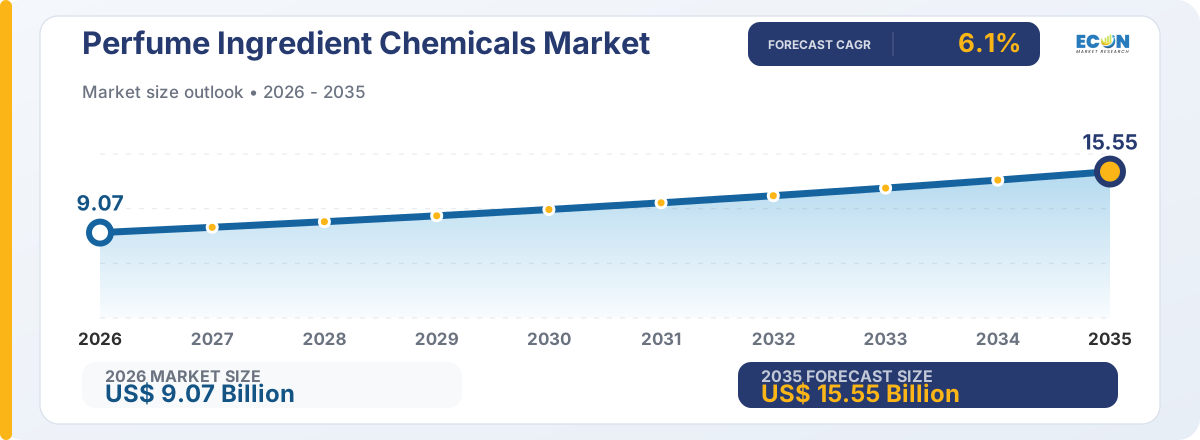
As per Econ Market Research analysis, the Global Perfume Ingredient Chemicals Market was valued at US$ 9.07 Billion in 2026 and is expected to reach US$ 15.55 Billion by 2035, registering a CAGR of 6.1% during the forecast period 2026–2035. The base year considered is 2025.
Chemicals used as perfume ingredients, which are necessary to create a variety of smells, are in high demand. Growing disposable incomes, shifting consumer preferences, and an increased emphasis on personal grooming are important market drivers. The popularity of natural ingredients is growing as people become more conscious of sustainability and health issues.
The industry is distinguished by the existence of significant players who fund R&,D to launch novel and distinctive Fragrance compounds. The industry is also impacted by regulatory initiatives that support the use of non-toxic and environmentally friendly ingredients. In addition, regional differences in economic conditions and cultural preferences affect the market. The market for perfume ingredient chemicals is expected to grow steadily despite obstacles like supply chain disruptions and changes in the price of raw materials. This is because new product developments and growing global consumer markets will continue to fuel the market',s growth.
Perfume Ingredient Chemicals Dynamics
Growing consumer demand for customised and distinctive scents has spurred innovation and prompted the perfume industry to investigate new chemical compounds for their ingredients. Growing environmental consciousness has led to a noticeable shift away from traditional synthetic formulations and towards sustainable and natural ingredients. The role of regulatory developments was also crucial, as there was increased focus on ingredient safety and transparency.
As a result, producers had to modify and restructure their goods to meet changing requirements. The market also saw strategic alliances and acquisitions as businesses looked to expand their research capacities and diversify their portfolios. Consumer preferences were shaped by the continued influence of fashion and celebrity endorsements, which increased demand for particular fragrance notes and compositions.
Perfume Ingredient Chemicals Drivers
Increasing Consumer Preferences for Personalization
The growing consumer desire for customised and distinctive fragrances is a key factor propelling the global market for perfume ingredient chemicals. More and more, customers are looking for unique scent experiences that fit with their unique tastes and personalities. This trend pushes the industry to spend money on R&,D to produce cutting-edge chemicals for perfume ingredients that suit a wide range of preferences. Consumers can create signature scents with customisation options like mix-and-match fragrance components, which propels market growth. The market is growing as a result of manufacturers meeting consumer demand by providing a variety of fragrance notes and adaptable ingredients.
Growing Emphasis on Sustainable and Natural Ingredients
Growing consumer awareness of and preference for natural and sustainable ingredients in perfumes is another important factor. Customers', growing concern for the environment has caused a move away from synthetic chemicals and towards more natural and eco-friendly options. This change is also fuelled by certifications and regulatory organisations that support green practices. To meet this demand, perfume manufacturers are adding more and more natural compounds, such as essential oils and botanical extracts, to their formulas. Adopting sustainable practices gives perfume brands a competitive edge in the market and also enhances their market positioning in line with consumer values.
Restraints:
Regulatory Compliance Challenges
The difficulty of complying with regulations is one of the main obstacles the market for perfume ingredient chemicals faces. Manufacturers face difficulties because of strict laws governing the use of specific chemicals in fragrances and constantly changing safety requirements. Adhering to compliance standards requires constant product adaptation and reformulation, which comes with extra expenses and time constraints. The dynamic nature of regulations can lead to uncertainty for industry participants, thereby affecting their approaches to product development and market entry.
High Production Costs
The production of high-quality and innovative perfume ingredient chemicals often involves sophisticated processes and technologies, leading to elevated production costs. This cost factor can pose a significant restraint for both established and emerging players in the market. The need for advanced research and development, quality control measures, and compliance with environmental standards contributes to the overall expense of manufacturing. As a result, pricing pressures and production cost-related challenges can impede market growth, especially for smaller companies with limited resources.
Opportunities:
Technological Advancements in Fragrance Creation
Technological developments, such as machine learning and Artificial Intelligence, offer the market for perfume ingredient chemicals a chance. These technologies can help with perfume formulation optimisation, trend prediction for fragrances, and analysis of consumer preferences. Manufacturers can produce more appealing and targeted products by utilising data-driven insights, which also saves time and money by eliminating the need for trial and error in conventional fragrance development processes. Technology integration boosts operational effectiveness and competitiveness in the market in addition to improving product innovation.
Segment Overview
By Type
The Perfume Ingredient Chemicals market is divided into two primary types &ndash, Synthetic Aroma Chemicals and Essential Oils. Synthetic Aroma Chemicals are artificially created compounds, widely utilized in fine fragrances and Personal Care products for their cost-effective versatility. On the other hand, Essential Oils, derived from natural sources like plants and fruits, are favoured for their aromatic richness and therapeutic qualities, finding applications in various segments such as fine fragrances, personal care, and cosmetics, catering to the demand for natural and sustainable fragrance ingredients.
By Application
The market',s diverse applications include Fine Fragrance, Home Care, Laundry Care, Personal Care, and Cosmetics. In Fine Fragrance, perfume ingredient chemicals are essential for creating distinctive and captivating scents in high-end perfumes. Home Care involves enhancing the sensory appeal of household products like air fresheners.
In Laundry Care, these chemicals contribute to fabric care products, adding freshness to laundered items. Personal Care relies on perfume ingredients for unique scents in products such as shampoos and lotions. Additionally, the Cosmetics segment utilizes these chemicals to impart pleasant fragrances to beauty products, enhancing the overall user experience and product differentiation.
Perfume Ingredient Chemicals Overview by Region
The Perfume Ingredient Chemicals market exhibits dynamic regional variations influenced by diverse cultural preferences, economic factors, and regulatory landscapes. In North America, the market is characterized by a robust demand for premium and niche fragrances, driven by a strong consumer emphasis on personalization and luxury. Stringent regulatory frameworks in this region also play a pivotal role, emphasizing the need for compliance with safety and environmental standards, encouraging the adoption of sustainable perfume ingredient chemicals.
Europe, with its rich heritage in the fragrance industry, remains a key player in the Perfume Ingredient Chemicals market. The region sees a steady demand for both synthetic and natural ingredients, reflecting a preference for classic and innovative scents. The European market is notably impacted by shifting consumer preferences toward sustainable and eco-friendly formulations, prompting manufacturers to invest in green technologies and natural sourcing practices.
The market is expanding significantly in the Asia-Pacific area due to the growing middle class, rising disposable income, and growing awareness of personal grooming. The demand for a wide range of fragrance products, from fine fragrances to personal care and cosmetics, is greatly influenced by nations like China and India. A combination of traditional and modern fragrance preferences also impact market dynamics in Asia-Pacific, creating a varied product landscape.
The regions of Latin America and the Middle East and Africa present distinct opportunities as well as challenges. The demand for a wide range of scents is fostered by the vibrant and diverse cultures of Latin America and the Middle East, which are known for their historical association with high-end fragrances. Additionally, the Middle East remains a major hub for luxury perfumes and essential oils.
Perfume Ingredient Chemicals Market Competitive Landscape
Established global companies, such as Givaudan, Firmenich, and Symrise, dominate the market, leveraging their extensive research and development capabilities to introduce innovative fragrance compounds. These industry leaders focus on expanding their product portfolios, embracing sustainability, and meeting evolving consumer preferences. Additionally, mergers and acquisitions play a crucial role in shaping the competitive dynamics, with companies seeking to strengthen their market presence, enhance technological capabilities, and secure a competitive edge.
In addition, the market is seeing the rise of regional and specialty players, which adds to the competitive landscape',s diversity. These companies frequently focus on particular fragrance categories in order to serve niche markets with particular needs. The constant search for new fragrance profiles, whether achieved by creating state-of-the-art artificial aroma chemicals or by locating premium natural ingredients like essential oils, drives competition. Businesses modify their formulations to comply with regulatory requirements and customer expectations in an effort to meet the growing demand for environmentally friendly and sustainable options.
Key Players:
Givaudan
Firmenich
International Flavors &, Fragrances Inc. (IFF)
Symrise AG
Takasago International Corporation
BASF SE
MANE Group
Eternis Fine Chemicals
YingYang (China) Aroma Chemical Group
KDAC CHEM Pvt. Ltd.
Frutarom
Harmony Organics Pvt. Ltd.
Perfume Ingredient Chemicals Recent Developments
June 2022, During the World Perfumery Congress 2022 in Miami, BASF Aroma Ingredients unveiled the Virtual Aroma Assistants&mdash,a novel digital platform designed to streamline the exploration of BASF',s Aroma Ingredients portfolio for clients in the Flavor &, Fragrance industry.
November 2023, Cosmo International Fragrances is actively exploring sustainable approaches in the production of natural fine perfumery ingredients, unveiling a ground-breaking technique for extracting fragrance molecules from botanical sources. This innovative, patent-pending technology stands out as a waterless, energy-efficient, and gradual extraction process, showcasing the company',s commitment to advancing eco-friendly practices within the fragrance industry.
Global Perfume Ingredient Chemicals report segmentation
Perfume Ingredient Chemicals Market Report Scope & Segmentation
| Attributes | Details |
|---|---|
| Market Size (Current)Current market valuation | US$ 9.07 Billion in 2026 |
| Market Size (Forecast)Projected market valuation | US$ 15.55 Billion in 2035 |
| Growth RateCompound Annual Growth Rate | CAGR of 6.1% from 2026 to 2035 |
| Forecast PeriodAnalysis timeline | 2026 – 2035 |
| Base YearReference year for analysis | 2025 |
| Historical Data AvailablePast market data availability | Yes |
| Regional ScopeGeographical coverage | Global |
| Segments CoveredMarket segments analyzed | By Product
By Application
By Source
|
Leading companies covered in this report
- Givaudan
- Firmenich
- IFF (International Flavors and Fragrances)
- Symrise
- Mane SA
- Robertet Group
- BASF SE
Frequently Asked Questions
Common questions about this report
The study period covers historical insights and forecast projections for the period 2026-2035.
About the Author
Market research expert with years of industry experience