Padel Sports Market Overview
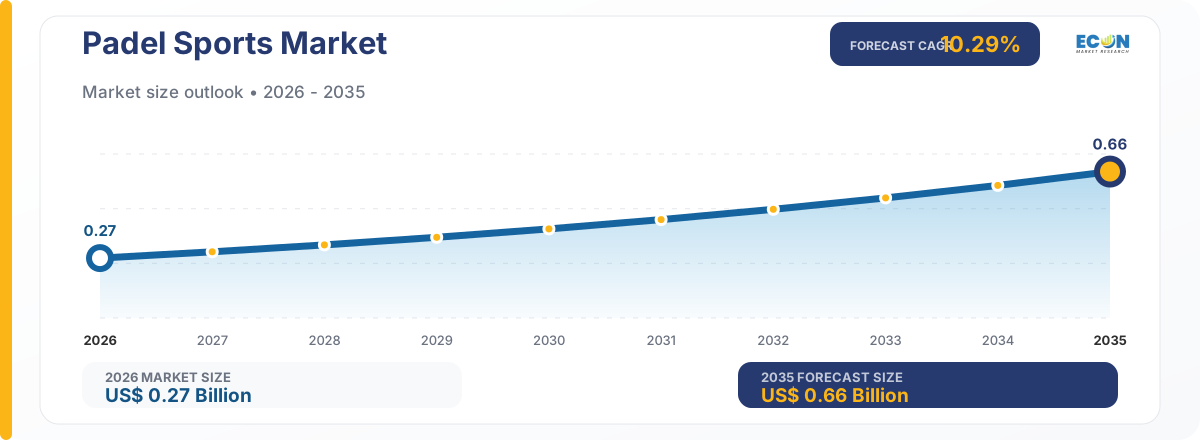
As per Econ Market Research analysis, the Global Padel Sports Market reached a valuation of US$ 0.27 Billion in 2026 and is anticipated to grow to US$ 0.66 Billion by 2035, at a CAGR of 10.29% during the forecast timeline 2026–2035. The base year considered is 2025.
The global Padel sports market is the industry surrounding padel, a fast-growing sport combining elements of tennis and squash. Played in doubles, the game is usually played on a small enclosed court with solid rackets and a low-bouncing ball. Its popularity has been on the rise, especially in Europe, Latin America, and the Middle East, because of its accessibility, social nature, and easy learning curve. The sport is gaining popularity among countries such as Spain, Argentina, and Sweden, where more and more games are being played in recreational fields, clubs, and even professionally.
The market encompasses product sales, consisting of equipment: rackets, balls, clothes, and accessories, facility developments: padel courts, media rights: tournaments, events, and sponsorships. The trend is also characterized by the emerging number of padel clubs, increasing rates of participation, and the gaining popularity of professional tournaments and padel athletes. The sport',s ability to be played both recreationally and competitively also provides a scope for expansion across various demographics. This makes the padel sports market a dynamic and lucrative sector, with significant growth prospects in the coming years.
Dynamic Insights
The increasing popularity among the youth has been a great driver for the sport. This is because it is easy to learn, friendly, and does not pose such risks as those associated with racket sports, thereby making it easy for a broader audience to adopt. This LED to an increased demand for padel equipment such as rackets, balls, and apparel.
Other essential factors are infrastructural development. Padel courts are being developed in public and private areas as well as specifically designed padel clubs, both of which are on the increase globally. Some countries like Spain, with well-established padel culture, take the lead, while the growing markets in Asia and the Middle East are soon catching up. The professional tournaments and media coverage increase the visibility of the sport, thereby raising the sponsorship deals and broadcasting rights. This development has led to the entry of more players, amateurs, and professionals alike, hence the need for training facilities, equipment, and coaching services.
Drivers Insights
Increasing Popularity of Padel Sports
Padel is an emerging game that has been gaining popularity worldwide. The game',s simplicity, minimal court size, and social nature lend it to people of any age or skill level. Comparatively, padel requires less physical strength than racket sports such as tennis, which makes the game appealing for leisurely play and with quicker learning capabilities. The rise in grassroots participation, particularly among youth, has increased amateur and professional players. Spain, Sweden, and Argentina have experienced a dramatic rise in the number of players and clubs, further increasing demand for associated equipment and facilities. Widespread adoption and popularity provide a sound base for sustained market growth.
Expansion of Infrastructure and Facilities
The development of dedicated padel courts and clubs is a strong factor that is augmenting market growth. With increasing followers of the sport, the demand for the development of new facilities is expected. Investment in padel infrastructure has gained momentum in Europe, Latin America, and the Middle East, as many new courts are constructed to accommodate fast-rising participation. Other diversification of their offerings is in the addition of padel courts by many tennis clubs, and this is providing new business opportunities. This diversification is key to ensuring access to the game is increased as more players join and existing players are retained to grow the market.
Restraints Insights
High Initial Investment for Infrastructure
One of the major issues that the padel sports market faces is the large amount of investment needed to set up proper facilities and courts. Building high-class padel courts and establishing clubs at professional standards requires significant capital expenditure, which can be a deterrent, especially in developing markets. The price of land, construction, and maintenance of padel courts might hinder the growth rate in low-budget areas. Although demand is increasing, the high financial investment required to create the necessary infrastructure may slow the overall growth of the market, especially in regions where padel is still a niche sport.
Limited Awareness in Non-Traditional Markets
Padel has a long tradition in some areas, but is still not widely known or followed in most of the world. The gap is especially huge in countries outside of Europe, Latin America, and the Middle East. In this regard, awareness of the sport and its rules is a factor limiting growth. Due to this reason, there may not be as high a participation level and investment expected in the non-traditional markets, this may consequently retard the rate of global spread in the market. This calls for a concentrated effort in the areas of marketing and educational programs, increasing awareness, and creating an interest in the sport.
Opportunities Insights
Professionalization and Sponsorship Growth
The growing professionalism in padel sports is a source of additional opportunities for further growth in the market. Increasing the sport',s credibility and bigger fan base enhance the value for sponsorship and media rights deals. It creates new space for investment opportunities and partnerships through worldwide brands based on the high-profile tournaments, coverage, and exposure to larger broadcasters and big sponsors. These partnerships will spur the growth of both infrastructure and player support, along with more lucrative sponsorship deals, in turn, they are likely to help the market through the cycle of sustainable investment and interes.
Segment Analysis
By Product
The by-product type segment in the global padel sports market is diverse, consisting of essential items such as padel rackets, padel balls, padel apparel and accessories, and padel courts and infrastructure. Padel rackets are critical for the game and come in different designs according to various player preferences. Balls, specifically designed for padel',s unique playstyle, are an integral part of the game and come in different varieties for recreational, amateur, and professional use.
Apparel and accessories, including specialized clothing, shoes, and protective gear, contribute to the overall experience of the sport, providing comfort, performance, and safety. Lastly, the construction of padel courts and other infrastructure is an important factor in furthering the sport since this aspect goes directly to supporting participation by providing necessary court space for casual and professional play. The products in this segment are many as evidenced in the need to keep pace with expanding interest in the sport and substantial support at all levels of the game.
By End-User
The by-end-user segment in the padel sports market involves professional players, amateur players, and recreational players. Professional players represent the crè,me de la crè,me, which often serves as a trigger for high-performance equipment, professional training, and quality facilities. With the increased popularity of the sport, enthusiastic amateur players, usually playing in leagues or semi-professional tournaments, are driving the demand for good quality equipment and apparel. The largest group of padel players are recreational players, who play casually and not competitively. Their demand will be for low-cost, user-friendly equipment and local clubs or community courts. The various end-user categories differ in their requirements, from high-performance to more leisurely uses, which all contribute to the growth in the market.
By Distribution Channel
The by distribution channel segment is comprised of online retail, offline retail, and direct sales through clubs and padel centers. Online retail has become the dominant channel for buying padel equipment, offering convenience and a wide range of options to consumers worldwide. E-commerce platforms have made it easier for consumers to purchase products such as rackets, balls, and apparel, especially in regions where physical stores are limited.
Sports outlets and specialty shops remain an offline retail channel in order to hit those consumers that like to buy from a storefront and test out the product with personal consultation. Furthermore, clubs and padel centers sell products directly to local consumers, using this channel often for new players or membership opportunities, thus immediately linking the sport to its infrastructural base. All of these distribution channels play an important role in increasing access to padel sports and meeting the demands of different customer preferences.
Regional Analysis
Europe, especially Spain, leads the padel market. The country houses a significant percentage of the global players and clubs. The popularity of the sport in Spain has created a precedent for other European countries such as Italy, France, and Sweden, where participation and infrastructure development have been rising in recent years. Regional growth is further fueled by the existence of professional tournaments and media coverage, which has increased its visibility. The Northern Europe region, with a growing interest in fitness and recreational sports, has shown potential for future growth, thereby making the regional expansion more balanced.
In Latin America, Argentina and Brazil are the key players in the padel sports market, as Argentina is considered one of the pioneers of the sport. The culture of racket sports and the warm climate of the region make padel an attractive option for both recreational and competitive players. Padel has also been gaining significant momentum in the Middle East, where the sport is increasingly popular in countries like the UAE and Qatar, driven by a growing interest in sports and wellness activities. These regions are expected to continue to expand, fueled by investments in infrastructure, increasing media attention, and rising participation. Meanwhile, the North American market has begun to acknowledge the potential of padel though still at its infancy stages, especially when compared to Europe and Latin America. As more awareness is spread, and courts start popping up across the regions, North America and, in specific, the U.S. and Canada provide the greatest scope for future expansion which can further diversify the global market.
Competitive Landscape
Major companies involved in the manufacture of padel rackets and balls include Bullpadel, Head Padel, Wilson, and Babolat, providing the market with high-performance equipment catering to professionals as well as non-professionals. By investing in innovative technologies, maintaining superior quality of their products, and strategic partnerships with top sports personalities and tournament events, the firms have set themselves as critical leaders in this niche. The competition within the racket and ball segment is increasing since newer brands such as Nox and StarVie manage to become hot, leveraging regional partnerships to appeal to niche markets.
In addition to equipment manufacturers, companies developing the infrastructure that constructs padel courts are very important in the competitive landscape. Padel Court Builders and PadelGalicia lead the construction of high-class courts across Europe and Latin America, contributing to the rapid growth of the sport. With increasing demand from padel facilities, these companies are fighting to produce the finest-quality courts, sometimes, they use very high material and sustainable practices to attract commercial and community-based clubs. On the events side, high-profile padel tournaments, like the World Padel Tour, have become a centerpiece of the sport',s visibility and growth-by securing global sponsorships from brands such as Estrella Damm and Adidas. These events also serve as a platform for brands to display their products, thereby influencing consumer behavior and market trends.
Another growth coming from competition at the retail market level, while online and offline retailing try to vie in the marketplace is also present here. Big platforms like Amazon are offering very affordable prices along with convenience and time-saving measures at the point of sale. Additionally, strong customers', ties could be observed where physical stores have maintained those services and product exposure through face-to-face experience to padel club members. Hence, these competencies fuel a market to widen its prospects among companies through separate segments and various regions.
Padel Sports Market Leading Companies:
Le Petit Tennis
Slazenger
PowerAngle
Wilson
Drop Shot
Tecnifibre
Champion Sports
Boris Becker
Pro Kennex
Nox
Pacific Holdings
Adidas
Dunlop
Solinco
Yonex
Babolat
Gamma Sports
STAR VIE
Prince
Clarke
Abrams Padel
MacGregor
SIUX PADEL
Bullpadel
Volkl
Recent Developments:
On 30 October 2024, Premier Padel, the premier official professional padel tour globally, and NTT DATA, a global leader in digital business and IT services, unveiled a new global partnership, with the consultancy becoming an official partner of Premier Padel.
Global Padel Sports Report Segmentation:
Padel Sports Market Report Scope & Segmentation
| Attributes | Details |
|---|---|
| Market Size (Current)Current market valuation | US$ 0.27 Billion in 2026 |
| Market Size (Forecast)Projected market valuation | US$ 0.66 Billion in 2035 |
| Growth RateCompound Annual Growth Rate | CAGR of 10.29% from 2026 to 2035 |
| Forecast PeriodAnalysis timeline | 2026 – 2035 |
| Base YearReference year for analysis | 2025 |
| Historical Data AvailablePast market data availability | Yes |
| Regional ScopeGeographical coverage | Global |
| Segments CoveredMarket segments analyzed | By Product Type
By Distribution Channel
By End-User
|
Frequently Asked Questions
Common questions about this report
The study period covers historical insights and forecast projections for the period 2026-2035.
About the Author
Market research expert with years of industry experience