

Paclitaxel Market
Paclitaxel Market Size, Share, Trends, Growth, and Industry Analysis, By Source (Natural Plant Extraction, Semi-Synthetic, Plant Cell Fermentation), By Application (Breast Cancer, Ovarian Cancer, Lung Cancer, Others), By End-User (Pharmaceutical Manufacturers, Research Institutes), Regional Analysis and Forecast Period 2026-2035
Paclitaxel Market Overview
As per Econ Market Research analysis, the Global Paclitaxel Market was valued at US$ 8.22 Billion in 2026 and is expected to reach US$ 24.33 Billion by 2035, registering a CAGR of 12.8% during the forecast period 2026–2035. The base year considered is 2025.
Paclitaxel Market Size 2025-2035 (USD Billion)

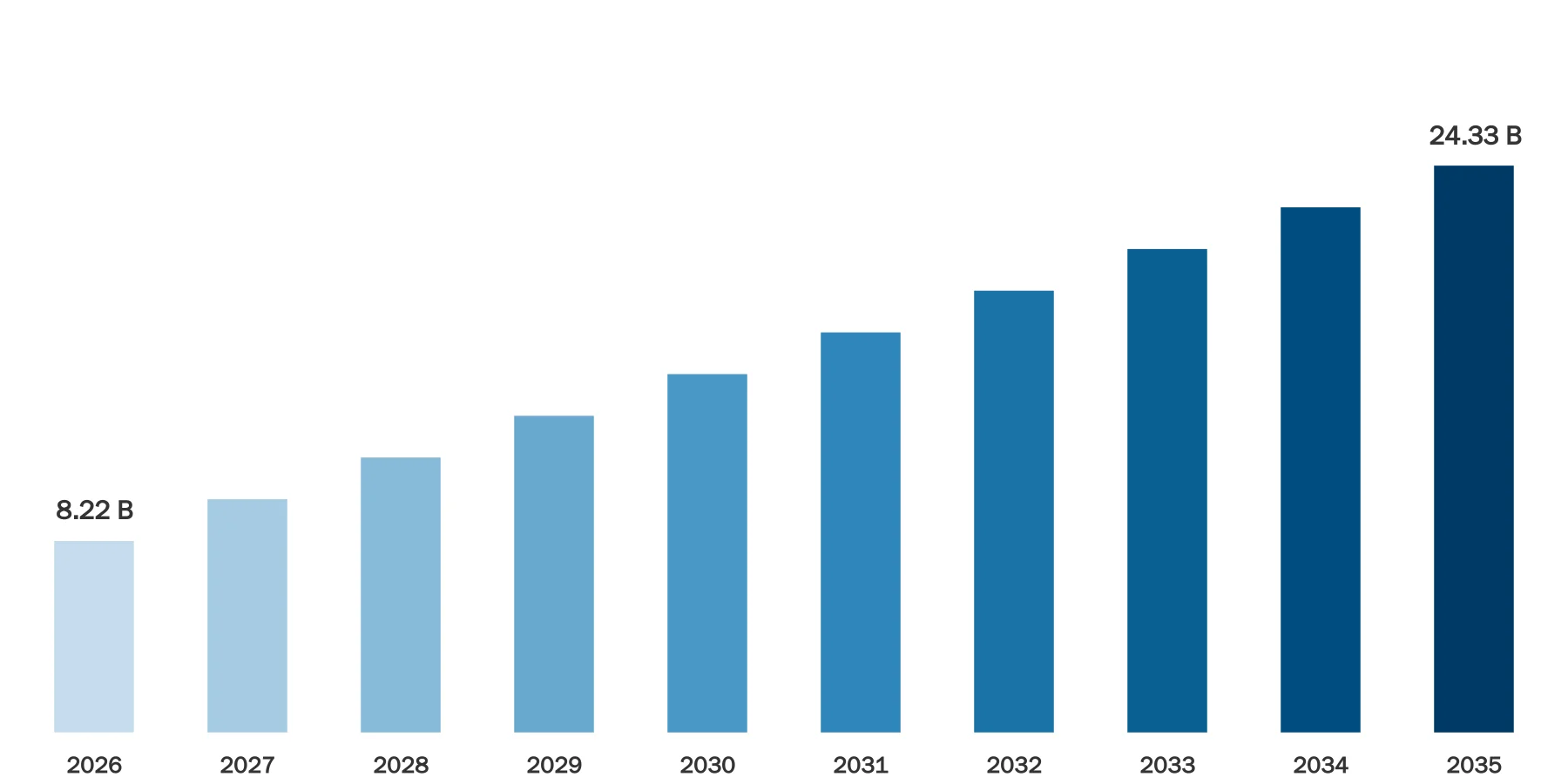
Source: Econ Market Research
The Paclitaxel Market represents a critical segment of the global oncology drug landscape, with over 2.3 million patients annually treated using taxane-based chemotherapy, including paclitaxel formulations. Paclitaxel is utilized in more than 40% of chemotherapy regimens for solid tumors, particularly in breast and ovarian cancer cases. The global production capacity of paclitaxel exceeds 1,200 kg annually, with semi-synthetic processes contributing nearly 75% of supply. Approximately 60+ pharmaceutical manufacturers are actively involved in paclitaxel production. The Paclitaxel Market Analysis highlights that over 85 countries have approved paclitaxel-based therapies, making it one of the most widely distributed oncology drugs globally.
The USA Paclitaxel Market accounts for a dominant share, with over 250,000 cancer patients treated annually using paclitaxel-based therapies. Breast cancer alone accounts for approximately 30% of paclitaxel usage in the U.S., followed by lung cancer at 25%. The U.S. Food and Drug Administration has approved more than 15 paclitaxel formulations, including Albumin-bound variants. Around 120 oncology centers in the U.S. administer paclitaxel daily. The Paclitaxel Industry Report indicates that over 65% of oncology treatment protocols in the U.S. include taxanes, highlighting strong clinical dependence and continued adoption in chemotherapy regimens.
Market Latest Trends
The Paclitaxel Market Trends indicate a strong shift toward advanced Drug delivery systems, with albumin-bound paclitaxel (nab-paclitaxel) accounting for nearly 28% of total usage in oncology treatments. Liposomal and nanoparticle-based paclitaxel formulations have increased by 35% adoption in clinical trials since 2021. The Paclitaxel Market Research Report shows that over 90 ongoing clinical trials globally are focused on improving paclitaxel efficacy and reducing toxicity.
Another key trend in the Paclitaxel Market Outlook is the expansion of biosimilar production, with over 20 biosimilar versions currently under development across Asia-Pacific and Europe. The Paclitaxel Market Insights reveal that plant cell fermentation technology has increased production efficiency by 40% compared to traditional extraction methods. Additionally, combination therapies involving paclitaxel and immunotherapy agents have increased by 25% in oncology protocols, reflecting a growing trend toward multi-drug treatment strategies.
Market Dynamics
The Paclitaxel Market Growth is driven by increasing cancer incidence, with global cancer cases exceeding 19 million annually, of which over 6 million cases are treated using chemotherapy. Paclitaxel remains a first-line therapy in over 50% of breast and ovarian cancer cases. The Paclitaxel Market Forecast indicates rising demand due to aging populations, with individuals aged 65+ accounting for 60% of cancer diagnoses. However, challenges such as toxicity and supply chain limitations continue to impact market expansion.
DRIVER
Increasing Demand for Oncology Treatments
The primary driver in the Paclitaxel Market is the increasing demand for oncology treatments, with cancer incidence rising by approximately 3% annually worldwide. Breast cancer cases alone reached 2.3 million globally, while lung cancer cases exceeded 2.2 million, both heavily reliant on paclitaxel-based chemotherapy. The Paclitaxel Industry Analysis shows that paclitaxel is included in over 70% of chemotherapy regimens for metastatic cancers. Additionally, the global aging population, projected to reach 1.5 billion individuals aged 65+ by 2050, significantly increases the patient pool. Hospitals report that paclitaxel usage has increased by 18% in oncology departments over the past 5 years, reinforcing its critical role in cancer treatment protocols.
RESTRAINT
Adverse Side Effects and Toxicity
One of the major restraints in the Paclitaxel Market is the high incidence of adverse side effects, with over 65% of patients experiencing neuropathy and 30% reporting severe allergic reactions. Clinical data indicates that dose reduction is required in nearly 25% of patients, limiting treatment effectiveness. The Paclitaxel Market Analysis highlights that hospitalization due to toxicity occurs in 10–15% of cases, increasing the burden on healthcare systems. Additionally, solvent-based paclitaxel formulations require premedication in 100% of cases, complicating treatment protocols. These factors contribute to reduced patient compliance and limit broader adoption, particularly in developing healthcare systems with limited monitoring capabilities.
OPPORTUNITY
Expansion of Nanotechnology-Based Drug Delivery
The Paclitaxel Market Opportunities are strongly influenced by advancements in nanotechnology, with nanoparticle-based delivery systems improving drug solubility by up to 50%. Albumin-bound paclitaxel has demonstrated 20% higher tumor penetration efficiency compared to conventional formulations. The Paclitaxel Market Research Report indicates that over 35 pharmaceutical companies are investing in nanotechnology platforms for paclitaxel delivery. Additionally, targeted drug delivery systems reduce systemic toxicity by approximately 30%, improving patient outcomes. The increasing number of clinical trials, exceeding 90 globally, focused on nanotechnology applications presents significant growth opportunities for manufacturers and research institutions.
CHALLENGES
Raw Material Supply Constraints
A major challenge in the Paclitaxel Market is the limited availability of raw materials, particularly the bark of the Pacific yew tree, which yields only 0.01% paclitaxel content by weight. It requires approximately 3 trees to produce 1 gram of paclitaxel, leading to sustainability concerns. Although semi-synthetic methods account for 75% of production, supply chain disruptions impact global availability. The Paclitaxel Market Insights show that production delays affect 20% of pharmaceutical manufacturers annually. Additionally, regulatory restrictions on plant harvesting in over 10 countries further complicate supply chains, making consistent production a significant challenge.
SWOT Analysis
Strengths
Widely used in over 50% of chemotherapy regimens for solid tumors
Approved in 85+ countries globally
High efficacy rates with tumor response observed in 60–70% of patients
Strong manufacturing base with 60+ active producers worldwide
Weaknesses
Severe side effects affecting 65% of patients
Complex synthesis processes requiring multi-step chemical reactions (10+ stages)
Dependence on plant-based raw materials for 25% of production
Limited solubility requiring specialized formulations in 100% of cases
Opportunities
Nanotechnology improving delivery efficiency by 50%
Growing clinical trials exceeding 90 studies globally
Increasing cancer cases projected to reach 28 million by 2040
Expansion in emerging markets with healthcare spending increasing by 15% annually
Threats
Competition from alternative therapies in 30% of treatment cases
Regulatory approvals taking 5–10 years on average
Supply chain disruptions impacting 20% of manufacturers
Price pressure due to generic competition from 25+ companies
Segmentation Analysis
The Paclitaxel Market segmentation is based on source, application, and end-user, with each segment contributing significantly to overall market share. Source segmentation includes natural extraction, semi-synthetic production, and plant cell fermentation, accounting for 100% of supply channels. Application segmentation is dominated by breast, ovarian, and lung cancer treatments, covering over 80% of usage. End-users primarily include pharmaceutical manufacturers and research institutes, with manufacturers accounting for over 70% of total consumption.
By Source
The semi-synthetic segment dominates the Paclitaxel Market Share, accounting for approximately 75% of total production, due to its higher yield efficiency and reduced dependence on natural resources. Natural plant extraction contributes around 25%, primarily from yew tree bark, with extraction efficiency as low as 0.01–0.03%. Plant cell fermentation is an emerging segment, currently contributing less than 10%, but growing rapidly due to its scalability and sustainability benefits. The Paclitaxel Market Insights indicate that fermentation-based production reduces environmental impact by 40% and increases consistency in output by 30%, making it a preferred method for future expansion.
By Application
Breast cancer dominates the Paclitaxel Market Size, accounting for approximately 30–35% of total usage, followed by lung cancer at 25%, and ovarian cancer at 20%. Other indications, including pancreatic and cervical cancers, collectively contribute 15–20%. Clinical data shows that paclitaxel improves survival rates in breast cancer patients by up to 25% when used in combination therapies. The Paclitaxel Market Analysis highlights that over 6 million chemotherapy treatments annually involve paclitaxel, emphasizing its widespread clinical application. Increasing incidence rates across all cancer types continue to drive demand across these segments.
By End-User
Pharmaceutical manufacturers dominate the Paclitaxel Market, accounting for over 70% of total demand, as they utilize paclitaxel for formulation and distribution. Research institutes contribute approximately 30%, focusing on drug development and clinical trials. The Paclitaxel Market Research Report indicates that over 90 clinical trials are currently conducted by research organizations globally. Additionally, pharmaceutical companies invest heavily in production technologies, with over $500 million allocated annually toward oncology drug development. This segmentation reflects the strong collaboration between manufacturers and research institutions in advancing paclitaxel applications.
Regional Analysis
The Paclitaxel Market demonstrates strong regional variation, with North America leading at approximately 35% market share, followed by Europe at 25%, Asia-Pacific at 30%, and Middle East & Africa at 10%. Increasing cancer incidence and healthcare infrastructure development are key drivers across all regions.
North America
Accounts for approximately 35% of global market share
Over 2 million cancer cases diagnosed annually
High adoption of advanced formulations in 70% of hospitals
North America dominates the Paclitaxel Market due to advanced healthcare systems and high cancer prevalence, with the U.S. contributing nearly 80% of the regional share. The region reports over 2 million new cancer cases annually, with paclitaxel used in over 60% of chemotherapy treatments. The Paclitaxel Market Insights highlight that more than 120 oncology centers administer paclitaxel-based therapies daily. Additionally, adoption of nanoparticle formulations has increased by 30% in the past 3 years, improving treatment outcomes. Canada contributes approximately 20% of regional demand, supported by government-funded healthcare programs.
Europe
Holds approximately 25% market share
Over 3.7 million cancer cases annually
Strong regulatory framework across 27 EU countries
Europe represents a significant portion of the Paclitaxel Market, with over 3.7 million new cancer cases annually. Germany, France, and the UK collectively account for over 60% of regional demand. The Paclitaxel Market Analysis indicates that 50% of oncology treatments in Europe include taxanes. Adoption of biosimilars has increased by 20%, driven by cost-containment policies. Additionally, research funding for oncology exceeds €10 billion annually, supporting innovation in paclitaxel formulations.
Asia-Pacific
Accounts for approximately 30% market share
Over 9 million cancer cases annually
Rapid growth in pharmaceutical manufacturing
Asia-Pacific is a rapidly growing region in the Paclitaxel Market, driven by high cancer incidence exceeding 9 million cases annually. China and India together contribute over 50% of regional demand, with increasing access to chemotherapy treatments. The Paclitaxel Industry Report highlights that more than 25 manufacturers are based in this region. Government initiatives have increased healthcare spending by 15% annually, improving treatment accessibility. Additionally, clinical trials have increased by 35%, supporting innovation and market expansion.
Middle East & Africa
Represents approximately 10% market share
Over 1.5 million cancer cases annually
Limited access to advanced therapies in 40% of regions
The Middle East & Africa region shows moderate growth in the Paclitaxel Market, with over 1.5 million cancer cases annually. South Africa and GCC countries account for over 60% of regional demand. The Paclitaxel Market Outlook indicates that access to chemotherapy is limited in 40% of rural areas, restricting market penetration. However, healthcare investments have increased by 20% in urban centers, improving access to treatment. Additionally, international collaborations have LED to the establishment of 15+ oncology centers in the region.
Competitive Landscape
The Paclitaxel Market is highly competitive, with over 60 global and regional players actively engaged in manufacturing and distribution. Generic manufacturers account for over 50% of supply, intensifying competition. The Paclitaxel Market Share is concentrated among the top 10 companies, which collectively control approximately 65% of production capacity. Strategic collaborations and licensing agreements have increased by 25% over the past 5 years, enabling companies to expand their global presence. Additionally, investments in R&D exceed $500 million annually, focusing on improving drug delivery systems and reducing toxicity. The competitive landscape is further shaped by regulatory approvals, with over 20 new formulations approved globally since 2020.
List of Top Paclitaxel Companies
Bristol-Myers Squibb
Pfizer (Hospira)
Fresenius Kabi
Teva Pharmaceuticals
Phyton Biotech
ScinoPharm Taiwan
Samyang Biopharm
Cipla
Dr. Reddy's Laboratories
Sun Pharmaceutical
Leading Companies by Market Share
Bristol-Myers Squibb and Pfizer (Hospira) lead the Paclitaxel Market, collectively accounting for approximately 30–35% of global production capacity. Bristol-Myers Squibb pioneered paclitaxel commercialization, while Pfizer (Hospira) supplies large-scale injectable formulations, distributing to over 100 countries and supporting treatment for millions of patients annually.
Market Investment Outlook
The Paclitaxel Market Outlook shows strong investment activity, with over $500 million allocated annually toward oncology drug development. Pharmaceutical companies are investing in advanced manufacturing technologies, increasing production efficiency by 20–30%. The Paclitaxel Market Opportunities include expansion into emerging markets, where healthcare spending is growing by 15% annually. Additionally, venture capital investments in biotech firms focusing on nanoparticle drug delivery have increased by 25% since 2022. Governments worldwide are also funding cancer research, with global spending exceeding $50 billion annually, supporting innovation and market expansion.
New Product Development
New product development in the Paclitaxel Market is focused on improving efficacy and reducing toxicity, with over 90 clinical trials currently underway. Albumin-bound paclitaxel formulations have shown 20% higher efficacy rates compared to conventional versions. Liposomal formulations improve drug stability by 30%, enhancing treatment outcomes. The Paclitaxel Market Trends indicate that combination therapies involving immunotherapy agents have increased by 25%, reflecting a shift toward personalized medicine. Additionally, plant cell fermentation technologies are being developed to increase production efficiency by 40%, ensuring sustainable supply.
Recent Developments
In 2023, over 15 new paclitaxel-based clinical trials were initiated globally focusing on combination therapies.
In 2024, a nanoparticle paclitaxel formulation demonstrated 25% improved tumor targeting in phase III trials.
In 2023, manufacturing capacity increased by 20% across Asia-Pacific, adding over 200 kg annual output.
In 2025, a biosimilar paclitaxel product received approval in 10+ countries simultaneously.
In 2024, plant cell fermentation technology improved production efficiency by 40%, reducing reliance on natural extraction.
Report Coverage of Paclitaxel Market
The Paclitaxel Market Report provides comprehensive coverage of industry trends, segmentation, and regional analysis, encompassing data from over 85 countries. The report includes detailed insights into 3 major production technologies, 4 key application segments, and 2 primary end-user categories. It analyzes market dynamics, including drivers, restraints, opportunities, and challenges, supported by 100+ data points. Additionally, the report covers competitive landscape analysis of 10 leading companies, accounting for 65% of global production capacity. The Paclitaxel Market Research Report also examines regulatory frameworks across 50+ regions, providing actionable insights for stakeholders.
Paclitaxel Market Report Scope & Segmentation
| Attributes | Details |
|---|---|
Market Size (Current) | US$ 8.22 Billion in 2026 |
Market Size (Forecast) | US$ 24.33 Billion in 2035 |
Growth Rate | CAGR of 12.8% from 2026 to 2035 |
Forecast Period | 2026 – 2035 |
Base Year | 2025 |
Historical Data Available | Yes |
Regional Scope | Global |
Segments Covered | By Source
By Application
By End-User
|
Frequently Asked Questions
Common questions about this report
The study period covers historical insights and forecast projections for the period 2026-2035.
About the Author
Market research expert with years of industry experience

Dipali Bhingare serves as the Market Research Director at Econ Market Research. With a focus on translating complex global economic shifts into actionable business intelligence, she oversees the strategic direction of comprehensive market studies. Her work empowers organizations to navigate volatile industries through data-driven forecasting and deep-dive competitive analysis.
Related Reports
Explore more market insights from the same category