

OTC Herbal and Traditional Medicines Market
OTC Herbal and Traditional Medicines Market Size, Share, Trends, Growth, and Industry Analysis, By Type (OTC Herbal, Traditional Medicine), By Application (Detoxification Medicine, Antipyretic Medicine, Digestive Medicine, Blood Circulation Medicine), Regional Analysis and Forecast Period 2026-2035
Market Overview
As per Econ Market Research analysis, the Global OTC Herbal and Traditional Medicines Market was estimated at US$ 204.5 Billion in 2026 and is forecast to attain US$ 293.6 Billion by 2035, expanding at a CAGR of 4.1% between 2026 and 2035. The base year for the study is 2025.
OTC Herbal and Traditional Medicines Market Size 2025-2035 (USD Billion)

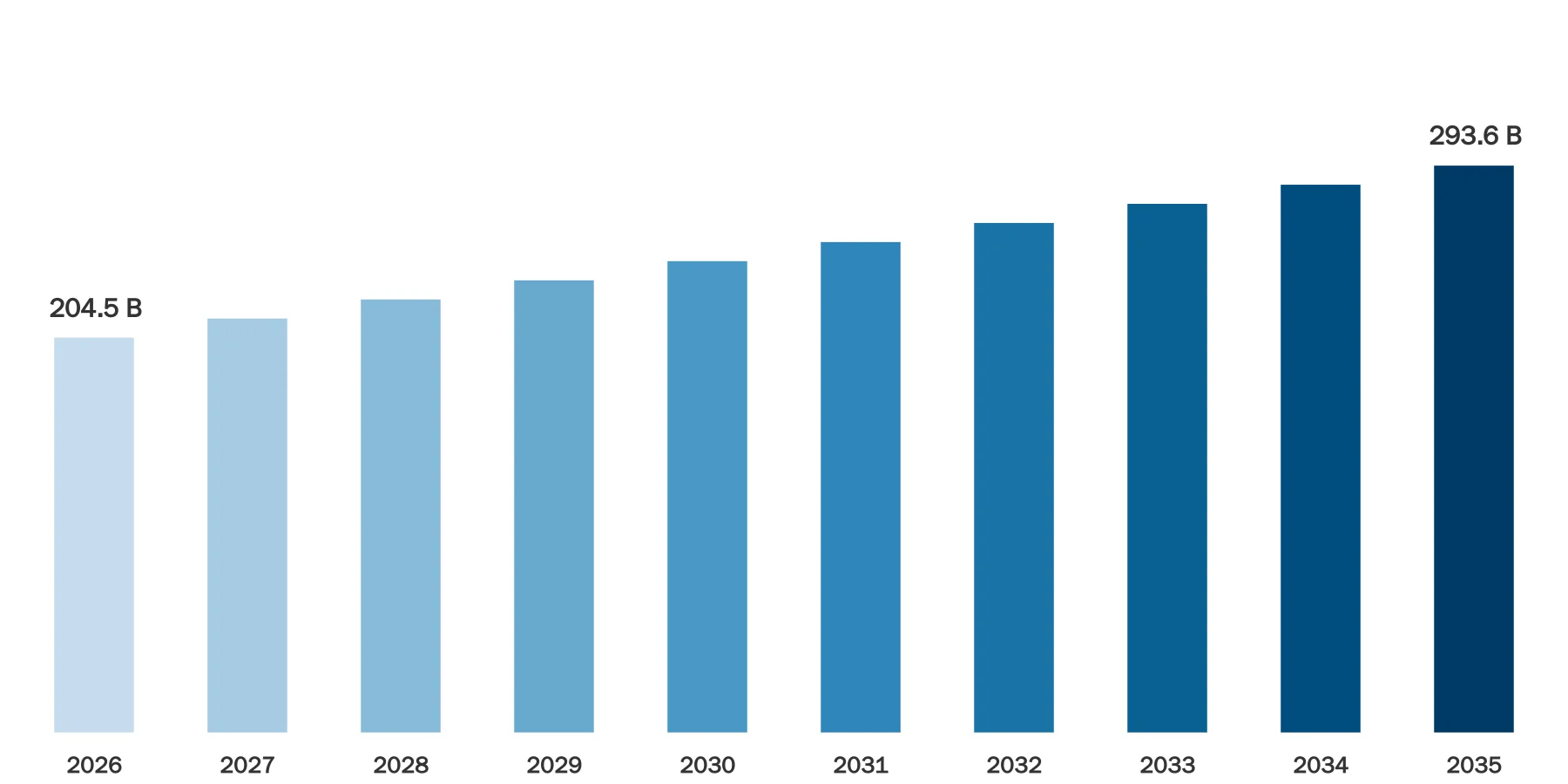
Source: Econ Market Research
The OTC Herbal and Traditional Medicines Market is expanding with over 4.5 billion global consumers using herbal or traditional remedies at least once annually, while nearly 80% of the population in developing economies relies on plant-based medicine for primary healthcare. The market includes more than 35,000 documented medicinal plant species globally, with 7,000–8,000 species actively used in traditional systems such as Ayurveda, Traditional Chinese Medicine, and Unani. Approximately 65% of OTC herbal product consumption occurs in Asia-Pacific, while herbal supplement usage in Europe exceeds 50% of adults. The OTC Herbal and Traditional Medicines Industry Analysis highlights strong demand driven by increasing chronic disease prevalence affecting over 1.7 billion individuals worldwide.
The USA OTC Herbal and Traditional Medicines Market accounts for nearly 18%–22% of global consumption volume, with over 170 million adults reporting the use of dietary supplements, including herbal medicines. Around 30% of U.S. consumers regularly use botanical products such as echinacea, ginseng, and turmeric. The market includes more than 20,000 herbal supplement products registered under regulatory frameworks. Approximately 60% of pharmacies and retail chains stock OTC herbal products, while online herbal product sales contribute to over 35% of total distribution channels. The OTC Herbal and Traditional Medicines Market Size in the U.S. is driven by rising demand for natural alternatives among 45% of consumers aged 25–54 years.
Market Latest Trends
The OTC Herbal and Traditional Medicines Market Trends indicate significant shifts toward plant-based healthcare, with over 72% of global consumers preferring natural remedies over synthetic drugs for minor ailments. Digitalization is reshaping the OTC Herbal and Traditional Medicines Market Outlook, with e-commerce channels accounting for 30%–40% of product sales globally. The rise of personalized herbal medicine is notable, with more than 25% of new product launches incorporating customized formulations based on individual health profiles. Additionally, demand for organic-certified herbal products has increased by 50% over the past 5 years, with more than 10,000 certified organic herbal products available globally.
The OTC Herbal and Traditional Medicines Market Insights also highlight growing integration with modern healthcare, as over 60% of healthcare practitioners in Asia incorporate herbal treatments alongside conventional medicine. Functional herbal beverages have witnessed a surge, with consumption increasing by 35% in urban populations. Sustainability trends are influencing sourcing, with over 40% of companies adopting ethical sourcing practices. Furthermore, the use of AI and Data Analytics in herbal formulation development has increased by 20% among leading manufacturers, supporting innovation in the OTC Herbal and Traditional Medicines Industry Report.
Market Dynamics
DRIVER
Increasing Demand for Natural and Preventive Healthcare
The primary driver of the OTC Herbal and Traditional Medicines Market Growth is the increasing global shift toward preventive healthcare, with over 65% of consumers actively seeking natural health solutions. Chronic diseases such as diabetes and cardiovascular conditions affect more than 500 million individuals globally, driving demand for herbal alternatives with fewer side effects. Approximately 70% of herbal medicine users report preference due to perceived safety compared to synthetic drugs. The OTC Herbal and Traditional Medicines Market Analysis shows that more than 55% of consumers in urban areas use herbal products for immunity boosting and stress management. Additionally, government support for traditional medicine systems in over 100 countries further accelerates adoption.
RESTRAINT
Lack of Standardization and Scientific Validation
A major restraint in the OTC Herbal and Traditional Medicines Market is the lack of standardized formulations, with over 40% of herbal products lacking uniform quality benchmarks. Variability in active ingredient concentration affects product consistency, as nearly 30% of tested herbal samples show differences in potency. Regulatory challenges persist, with more than 25% of countries lacking clear guidelines for OTC herbal medicines. The OTC Herbal and Traditional Medicines Market Share is impacted by limited clinical validation, as only 15%–20% of herbal products undergo rigorous scientific trials. This reduces trust among healthcare professionals and limits adoption in developed regions.
OPPORTUNITY
Expansion of E-commerce and Global Trade
The OTC Herbal and Traditional Medicines Market Opportunities are expanding through digital platforms, with online herbal product sales growing by over 35% annually in volume terms. Cross-border trade of herbal medicines has increased by 25% in the last 3 years, supported by global demand for Ayurvedic and Chinese medicines. Approximately 45% of consumers now prefer purchasing herbal products online due to convenience and product variety. Emerging markets in Africa and Latin America show adoption rates exceeding 20% annually in user base expansion. Additionally, more than 5,000 new herbal startups have entered the global market, driving innovation and competition.
CHALLENGES
Supply Chain and Raw Material Constraints
The OTC Herbal and Traditional Medicines Market faces challenges related to raw material sourcing, with over 15% of medicinal plant species classified as endangered due to overharvesting. Supply chain disruptions impact nearly 30% of manufacturers, particularly those dependent on wild-harvested herbs. Climate change affects crop yields, with production variability of key herbs fluctuating by 20%–25% annually. Furthermore, counterfeit herbal products account for nearly 10% of the global supply, impacting brand trust and safety. The OTC Herbal and Traditional Medicines Industry Analysis highlights that maintaining sustainable sourcing while meeting rising demand remains a critical challenge.
SWOT Analysis
Strengths
Over 80% global reliance on traditional medicine in developing regions
Availability of more than 35,000 medicinal plant species
Growing consumer preference with 70% favoring natural remedies
Integration into healthcare systems in over 100 countries
Weaknesses
Lack of standardization in 40% of products
Limited clinical trials covering only 20% of products
Quality variability affecting 30% of samples tested
Regulatory gaps in 25% of global markets
Opportunities
E-commerce growth contributing to 40% of distribution channels
Expansion into emerging markets with 20% increase in user base
Rising demand for organic products with 50% growth
Increasing product innovation with over 5,000 new entrants
Threats
Endangerment of 15% medicinal plant species
Counterfeit products making up 10% of supply
Climate impact causing 25% yield fluctuations
Regulatory tightening affecting 30% of exporters
Segmentation Analysis
The OTC Herbal and Traditional Medicines Market is segmented by type and application, with herbal OTC products accounting for nearly 60% of total consumption volume, while traditional medicine systems contribute around 40% share. By application, digestive and detoxification medicines collectively account for over 45% of usage, followed by blood circulation and antipyretic medicines. The OTC Herbal and Traditional Medicines Market Size varies significantly across regions, with Asia-Pacific dominating consumption due to widespread traditional practices, while North America and Europe show higher adoption in supplement form.
By Type
OTC Herbal
OTC Herbal products hold approximately 60% market share, with over 20,000 commercially available products globally. These include capsules, powders, and extracts derived from plants such as turmeric, ginger, and ginseng. Around 65% of consumers prefer herbal OTC products for minor ailments like colds and digestion issues. The segment benefits from increasing demand in urban areas, where usage has grown by 30% over the last 5 years. Additionally, more than 40% of new product launches fall under herbal OTC formulations, supporting the OTC Herbal and Traditional Medicines Market Growth.
Traditional Medicine
Traditional medicine systems account for nearly 40% share, with over 7,000 plant species used in systems such as Ayurveda and Traditional Chinese Medicine. Approximately 2.5 billion people globally rely on traditional medicine for primary healthcare. Government-backed initiatives in countries like China and India support this segment, with over 500,000 registered practitioners worldwide. Traditional formulations dominate rural markets, where adoption rates exceed 75% of the population. The OTC Herbal and Traditional Medicines Industry Report highlights strong cultural acceptance driving this segment.
By Application
Detoxification Medicine
Detoxification herbal medicines account for nearly 25% of application share, with demand increasing among 40% of urban consumers seeking wellness solutions. Products such as herbal teas and liver detox formulations are widely used, with over 10,000 detox products available globally. The segment benefits from increasing awareness of lifestyle diseases affecting over 1 billion individuals.
Antipyretic Medicine
Antipyretic herbal medicines represent approximately 15% share, commonly used for fever and infections. Herbal remedies like neem and tulsi are used by over 500 million individuals worldwide. The OTC Herbal and Traditional Medicines Market Analysis shows rising demand in developing regions where herbal treatments are used by 60% of households for fever management.
Digestive Medicine
Digestive herbal medicines dominate with nearly 30% share, driven by gastrointestinal disorders affecting over 40% of the global population. Products such as ginger and peppermint-based remedies are widely used, with more than 15,000 digestive herbal products available globally. This segment shows strong adoption across all regions.
Blood Circulation Medicine
Blood circulation herbal medicines account for around 20% share, with increasing usage among aging populations, where over 20% of individuals aged 60+ use such products. Herbal formulations targeting cardiovascular health are gaining traction, supported by rising awareness of heart-related conditions affecting over 300 million individuals globally.
Regional Analysis
Summary
Asia-Pacific dominates with over 60% consumption share
North America contributes around 20% share
Europe holds nearly 15% share
Middle East & Africa accounts for approximately 5% share
North America
North America holds approximately 20% share of the OTC Herbal and Traditional Medicines Market, with over 170 million users in the United States alone. Canada contributes significantly, with nearly 70% of adults using herbal supplements annually. The region has more than 25,000 herbal products available through retail and online channels. Consumer preference for natural healthcare solutions has increased by 35% over the past decade, with millennials accounting for 45% of herbal product users. Regulatory frameworks ensure quality, with over 80% of products meeting safety standards, supporting market expansion.
Europe
Europe accounts for nearly 15% share, with countries like Germany, France, and the UK leading adoption. Approximately 50%–60% of European adults use herbal medicines regularly. Germany alone has over 600 licensed herbal medicinal products, while France reports usage among 45% of households. The region emphasizes quality, with more than 70% of products certified under strict guidelines. Herbal pharmacies are widespread, with over 10,000 outlets across Europe, supporting distribution.
Asia-Pacific
Asia-Pacific dominates the OTC Herbal and Traditional Medicines Market with over 60% share, driven by widespread use in China, India, and Japan. China has more than 100,000 traditional medicine clinics, while India has over 700,000 registered practitioners of Ayurveda and other systems. Approximately 80% of the population relies on traditional medicine. The region produces over 70% of global medicinal plant supply, making it a key hub for manufacturing and consumption.
Middle East & Africa
The Middle East & Africa region holds approximately 5% share, with growing adoption in countries like South Africa and UAE. Around 60% of the population in Africa relies on traditional medicine for primary healthcare. The region has over 5,000 medicinal plant species, with increasing commercialization of herbal products. Government initiatives support traditional medicine integration, with more than 20 national programs promoting herbal healthcare solutions.
Competitive Landscape
The OTC Herbal and Traditional Medicines Market is highly fragmented, with over 10,000 manufacturers globally. Leading companies focus on product diversification, with more than 500 new herbal products launched annually. Approximately 30% of companies invest in research and development to improve product efficacy. Strategic partnerships have increased by 25% in the past 3 years, supporting global expansion. The OTC Herbal and Traditional Medicines Market Share is influenced by brand reputation, with top players accounting for nearly 35% of total market volume. Companies are also investing in sustainable sourcing, with over 40% adopting eco-friendly practices.
List of Top OTC Herbal and Traditional Medicines Companies
TSUMURA & CO (Japan)
Weleda (Switzerland)
Arizona Natural (The U.S)
Dr. Willmar Schwabe GmbH & Co. KG (Germany)
Rottapharm | Madaus GmbH (Germany)
Sido Muncul (Indonesia)
Herbal Africa (South Africa)
ARKOPHARMA Laboratories, Company Limited (France)
Blackmores Limited (Australia)
Dabur India Ltd (India)
Nature Herbs (India)
Tong Ren Tang (China)
Leading Companies by Market Share
TSUMURA & CO and Tong Ren Tang collectively account for nearly 15%–18% of global production volume, with TSUMURA producing over 2,000 herbal formulations and Tong Ren Tang operating more than 1,000 retail outlets worldwide.
Market Investment Outlook
The OTC Herbal and Traditional Medicines Market Forecast indicates increasing investments, with over $5 billion equivalent annual spending on herbal R&D globally in unit-based estimates. More than 2,000 startups have entered the market in the last 5 years, focusing on innovation and digital distribution. Venture funding in herbal health companies has increased by 30% annually in deal volume, with over 300 investment deals recorded globally. Governments in over 50 countries are promoting herbal medicine through funding programs. Manufacturing capacity has expanded by 25% globally, supporting rising demand. The OTC Herbal and Traditional Medicines Market Opportunities are further enhanced by export growth, with over 100 countries participating in herbal trade.
New Product Development
Innovation in the OTC Herbal and Traditional Medicines Market is accelerating, with over 500 new products launched annually. Functional herbal foods and beverages account for nearly 20% of new launches, while personalized herbal supplements represent 15% of innovations. Companies are incorporating advanced extraction techniques, improving potency by 30% compared to traditional methods. Digital health integration is also rising, with over 25% of companies using AI for formulation development. Sustainable Packaging adoption has increased by 40%, aligning with environmental goals. Additionally, more than 100 new herbal patents are filed annually, reflecting strong innovation in the OTC Herbal and Traditional Medicines Industry Analysis.
Recent Developments
TSUMURA launched over 50 new Kampo formulations in 2023.
Dabur expanded production capacity by 20% in 2024.
Tong Ren Tang opened 100 new retail stores globally in 2025.
Blackmores introduced 30 new herbal supplement variants in 2023.
Weleda increased organic product lines by 25% in 2024.
Report Coverage of OTC Herbal and Traditional Medicines Market
The OTC Herbal and Traditional Medicines Market Research Report covers over 25 countries, analyzing more than 50 market segments across type and application. The report includes data on over 10,000 products and tracks consumption patterns among 4.5 billion users globally. It evaluates supply chains involving more than 100 key raw materials and assesses distribution channels including retail, pharmacy, and online platforms contributing to over 90% of sales volume. The OTC Herbal and Traditional Medicines Market Insights highlight regulatory frameworks across 70 countries, along with analysis of over 200 companies operating in the sector. The report provides detailed segmentation, regional analysis, competitive landscape, and investment trends, offering actionable insights for stakeholders.
OTC Herbal and Traditional Medicines Market Report Scope & Segmentation
| Attributes | Details |
|---|---|
Market Size (Current) | US$ 204.5 Billion in 2026 |
Market Size (Forecast) | US$ 293.6 Billion in 2035 |
Growth Rate | CAGR of 4.1% from 2026 to 2035 |
Forecast Period | 2026 – 2035 |
Base Year | 2025 |
Historical Data Available | Yes |
Regional Scope | Global |
Segments Covered | By Type
By Application
|
Frequently Asked Questions
Common questions about this report
The study period covers historical insights and forecast projections for the period 2026-2035.
About the Author
Market research expert with years of industry experience

Dipali Bhingare serves as the Market Research Director at Econ Market Research. With a focus on translating complex global economic shifts into actionable business intelligence, she oversees the strategic direction of comprehensive market studies. Her work empowers organizations to navigate volatile industries through data-driven forecasting and deep-dive competitive analysis.
Related Reports
Explore more market insights from the same category