

Organic Milk Market
Organic Milk Market Size, Share, Trends, Growth, and Industry Analysis, By Product Form (Fresh/Pasteurized, UHT, Powdered), By Source (Cow, Buffalo, Goat), By Distribution Channel (Supermarkets/Hypermarkets, Online Retail, Specialty Stores), Regional Analysis and Forecast Period 2026-2035
Market Overview
As per Econ Market Research analysis, the Global Organic Milk Market was recorded at US$ 6.7 Billion in 2026 and is projected to expand to US$ 11.66 Billion by 2035, registering a CAGR of 6.3% over the forecast period. The base year used is 2025.
Organic Milk Market Size 2025-2035 (USD Billion)

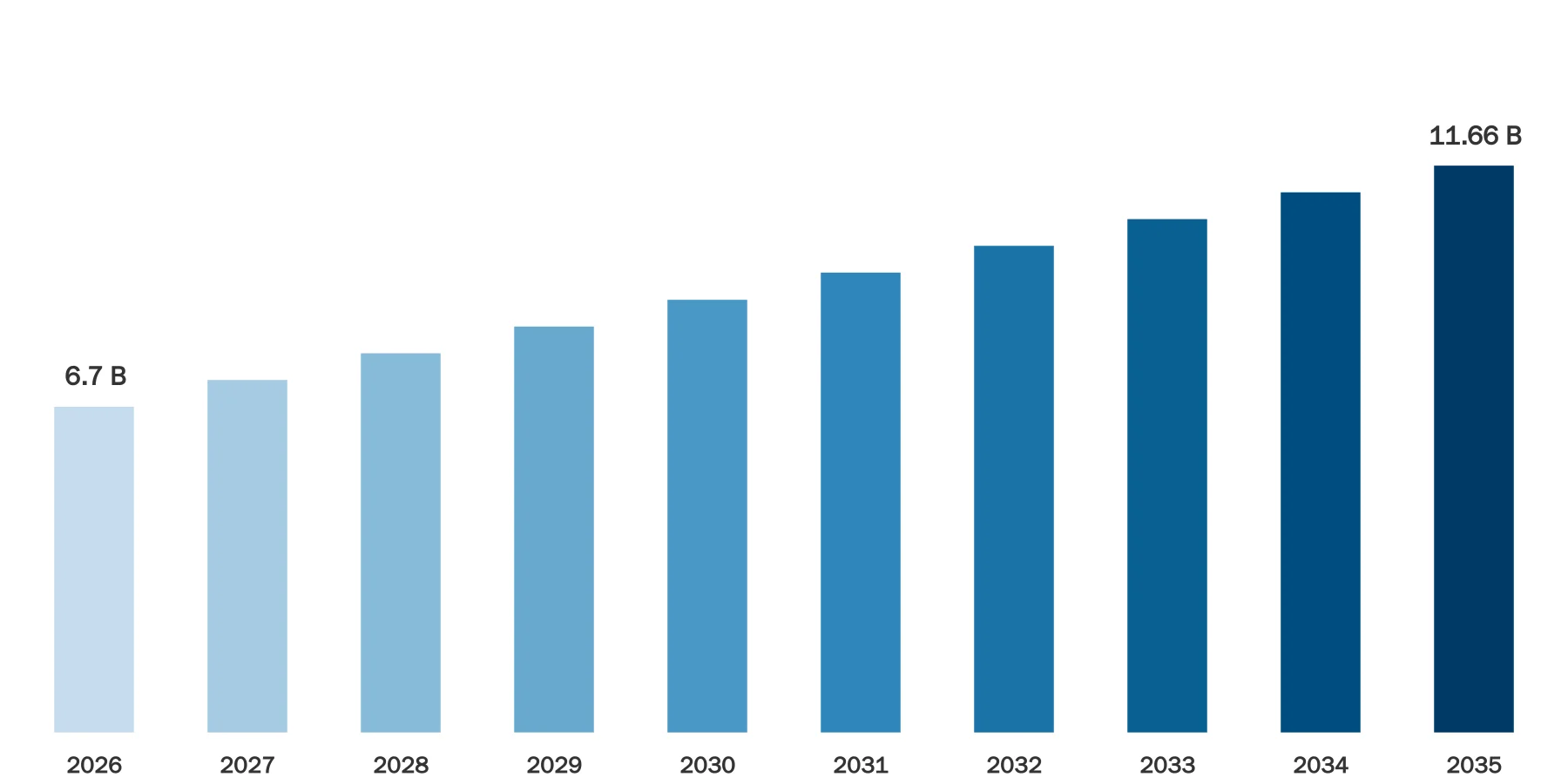
Source: Econ Market Research
A rise in interest in organic milk can be attributed to increased environmental and health concerns. Organic milk is made with an emphasis on pasture grazing and natural cow feed, and is produced without the use of artificial hormones or pesticides. The goal of this approach is to give customers a more eco-friendly and healthful choice. The market has grown quickly in response to the growing demand for organic products, giving customers more options that are consistent with their values. In addition to being seen as a healthier option, organic milk encourages environmentally friendly farming methods, making it appealing to consumers who are concerned about the environment and are looking for wholesome, ethical dairy products.
Organic Milk Dynamics
Growth is driven by consumer demand for environmentally friendly and healthier products as people look for dairy substitutes. The accessibility and competitiveness of the market are impacted by pricing, availability, and distribution methods. Market entry barriers and product quality are shaped by regulations governing organic certification requirements and production techniques.
Market dynamics are further impacted by competition from conventional dairy farmers and non-dairy substitutes. Furthermore, cultural developments, marketing tactics, and consumer education all influence customer choices and market expansion. In general, a complex interaction between industrial dynamics, regulatory frameworks, and consumer behavior drives the market for organic milk.
Organic Milk Drivers
Health-Conscious Consumer Trends
As awareness of the impacts of hormones, antibiotics, and pesticides in conventional dairy products grows, more people are turning to organic dairy products for their health. These preferences are supported by organic milk, which is produced without artificial additives and with an emphasis on animal welfare and natural grazing. Growing consumer preferences for natural foods and wellbeing are driving up demand for organic milk, which is driving the market',s expansion.
Expansion of Organic Agriculture
Increased supply of organic dairy products is one way that the expansion of organic agriculture supports the organic milk industry. There is a greater supply of organic milk as more farmers switch to organic farming practices, especially those for dairy production. This growth satisfies growing customer demand for dairy products made in an environmentally friendly manner. Growing organic dairy farming contributes to the organic milk market',s continuous rise as organic agriculture gains popularity worldwide due to environmental concerns and consumer preferences for natural, chemical-free meals.
Restraints:
Competition from Non-Dairy Alternatives
The market for organic milk is constrained by competition from non-dairy alternatives, which draw customers looking for dairy-free alternatives elsewhere. Organic milk is directly competing with the growing popularity of plant-based milk substitutes like oat, soy, and almond milk for market share. These substitutes cater to consumers who are concerned about their health and the environment by providing vegan and lactose-free options. Consequently, organic milk encounters difficulties in holding on to customers who choose non-dairy substitutes, impeding its potential for market expansion.
Limited Supply
The market for organic milk is severely constrained by limited supply because it is difficult to expand organic dairy production. There is a limited supply because of things like land availability, the time it takes to switch to organic procedures, and lower milk yields when compared to conventional methods. Production is further limited by seasonal fluctuations in the availability of pasture. Since there is a limited supply, organic milk is only occasionally available in some areas, which restricts customer accessibility and may therefore impede market expansion and price increases.
Opportunities:
Innovation in Product Development
The organic milk market has a lot of potential since product development innovation enables producers to differentiate their goods and adapt to changing consumer preferences. Producers can reach a broader consumer base by launching novel and distinctive organic dairy products, such as flavored organic milk, milk-based drinks, or value-added items like organic yogurt or cheese. In the cutthroat dairy sector, these innovations are increasing market share and driving up consumption of organic milk by catering to a wide range of tastes and preferences.
Partnerships and Collaborations
Collaborations and partnerships provide the organic milk market with a significant opportunity by enabling wider market reach and distribution channels. Organic milk producers can expand their market reach and target customer categories by partnering with food service providers, retailers, and other relevant parties. These collaborations increase organic milk products', visibility and accessibility, which boosts sales and market penetration. Furthermore, producers may be able to take use of complementary resources and skills through strategic collaborations, which could result in win-win situations and long-term growth for the organic dairy sector.
Segment Overview
By Type
Based on type, the global organic milk market is divided into organic whole milk, organic 2% milk, organic 1% milk, organic fat-free milk, and others. The organic whole milk category dominates the market with the largest revenue share in 2023. Those looking for a rich, creamy flavor will enjoy the full-fat content of organic whole milk. To appeal to consumers who are health-conscious, organic 2% milk strikes a balance between flavor and lower fat content. Comparably, organic 1% milk provides a reduced-fat substitute without sacrificing its creamy consistency. For those who want to consume as little fat and calories as possible, there is organic fat-free milk.
By Distribution Channel
Based on the distribution channel, the global organic milk market is categorized into supermarkets/hypermarkets, convenience stores, online retail stores, and other distribution channels. The supermarkets/hypermarkets category leads the global organic milk market with the largest revenue share in 2023. These expansive retail establishments provide a big selection of organic milk brands and products, making them convenient and accessible to a wide spectrum of customers.
Convenience stores are smaller retail establishments that often serve customers seeking quick and simple shopping options by providing a selection of organic milk along with other convenience items. As e-commerce has grown, customers can now easily buy organic milk from the comfort of their homes, giving them access to a wider selection of brands and goods.
By Application
Based on application, the global organic milk market is segmented into children, adults, and the aged. The children segment dominates the organic milk market. Children',s organic milk is frequently advertised with an emphasis on nutrients like calcium and vitamin D levels, which are critical for healthy bones and general growth. Products in this market area may also emphasize natural and healthy ingredient guarantees that are appropriate for children',s diets, as well as tastes and packaging styles that appeal to younger consumers.
Adult-oriented organic milk may emphasize the nutritional value of organic dairy products as well as health advantages including less exposure to hormones and pesticides. Organic milk could be marketed to senior citizens as a component of a balanced, healthful diet that promotes general wellbeing and addresses health issues associated with aging.
Organic Milk Overview by Region
The global organic milk market is categorized into North America, Europe, Asia-Pacific, and the Rest of the World. Asia-Pacific emerged as the leading region, capturing the largest market share in 2023. Demand for organic and healthier food options has increased due to factors such as rapid urbanization, rising disposable income, and rising consumer health consciousness. Concerns about environmental sustainability and food safety have also influenced consumers', desire for organic dairy products. The vast population of the region offers organic milk producers a large market opportunity, especially in nations like China and India.
Additionally, the Asia-Pacific region',s organic milk industry has grown because to government measures supporting organic production and certification requirements. Increasing consumer knowledge of the health and environmental benefits of organic dairy products is one of the factors contributing to this increase. In addition, dietary choices, a shift toward organic and natural goods, and changes in lifestyle all contribute to the region',s growing need for organic milk. In addition, strong distribution networks, pro-organic dairy producers, and supporting government policies are anticipated to maintain the organic milk market',s increasing trajectory in North America.
Organic Milk Competitive Landscape
In the global organic milk market, a few major players exert significant market dominance and have established a strong regional presence. These leading companies remain committed to continuous research and development endeavors and actively engage in strategic growth initiatives, including product development, launches, joint ventures, and partnerships. By pursuing these strategies, these companies aim to strengthen their market position, expand their customer base, and capture a substantial share of the market.
Organic Milk Market Leading Companies:
Arla Food
Horizon Organic
Organic Valley
Emmi
Yeo Valley
Aurora Organic Dairy
Andechser Dairy
Organic Dairy Farmers
Avalon Dairy
Bruton Dairy, and various others.
Organic Milk Recent Developments
In January 2024, Platinum Equity declared that it has finalized an agreement to buy Wallaby and Horizon Organic from Danone. With the introduction of the first organic milk available coast to coast in the US in 1991, Horizon Organic is the largest USDA-certified organic dairy brand in the world and a pioneer in the dairy beverage industry. Horizon Organic offers a range of organic dairy products, such as yogurt, cheese, butter, creamers and whiteners, and milk.
In January 2024, Danone, a French food company, has agreed to sell investment firm Platinum Equity its premium organic dairy businesses in the US.
In April 2022, the first-ever single-serve organic milk in the US is now available, and it comes in Tetra Prisma Aseptic carton packaging, thanks to Tetra Pak, the industry leader in creative packaging for specialty beverages. The ',Organic Milk-on-the-Moo-ve', product line, which Tetra Pak and Horizon Organic distributed to shops, offers consumers a unique, handy, and healthful option.
Organic Milk Market Report Segmentation
Organic Milk Market Report Scope & Segmentation
| Attributes | Details |
|---|---|
Market Size (Current) | US$ 6.7 Billion in 2026 |
Market Size (Forecast) | US$ 11.66 Billion in 2035 |
Growth Rate | CAGR of 6.3% from 2026 to 2035 |
Forecast Period | 2026 – 2035 |
Base Year | 2025 |
Historical Data Available | Yes |
Regional Scope | Global |
Segments Covered | By Product Form
By Source
By Distribution Channel
|
Frequently Asked Questions
Common questions about this report
The study period covers historical insights and forecast projections for the period 2026-2035.
About the Author
Market research expert with years of industry experience

Related Reports
Explore more market insights from the same category