Online Cooking Class Market Overview
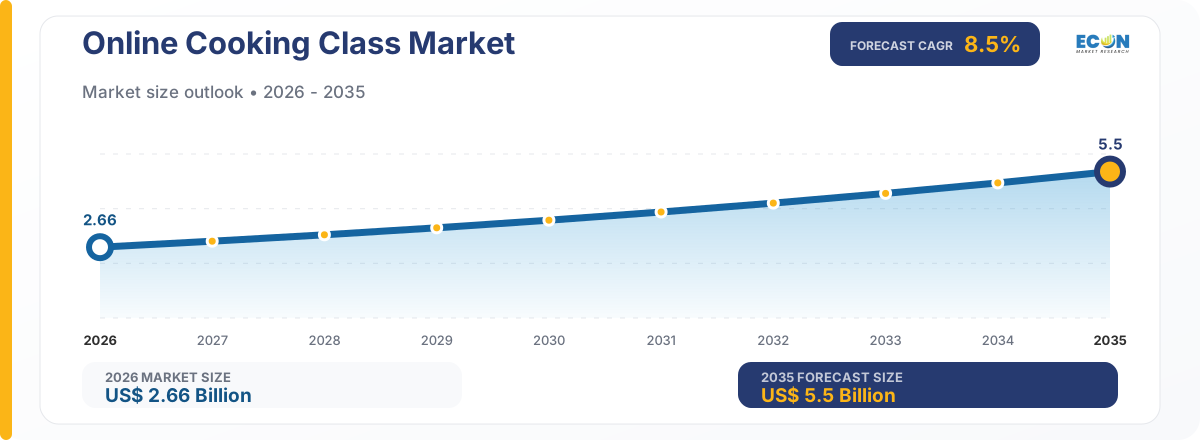
As per Econ Market Research analysis, the Global Online Cooking Class Market accounted for US$ 2.66 Billion in 2026 and is expected to surpass US$ 5.5 Billion by 2035, witnessing a CAGR of 8.5% throughout 2026–2035. The analysis is based on 2025 as the base year.
Online cooking classes can be accessed through video lessons, live sessions, or pre-recorded content. This makes the education of cooking more convenient and flexible. The online cooking class market caters to a wide range of individuals, from beginners to experienced chefs, offering various courses that cover a diverse set of cuisines, cooking techniques, and dietary preferences.
The market has seen tremendous growth in the last couple of years. This is partly due to growing interest in home cooking, a rise in the popularity of food-related content on social media, and the ease of online learning. Consumers increasingly look for more interactive and engaging ways to hone their cooking skills without having to attend traditional cooking schools. Offered are professional chefs',, culinary experts, and even house-cooking amateurs', knowledge conveyed through user-friendly platforms. Considering the increasing appeal of flexibility by online learning among people, an increase in taking online cooking lessons is expected because of personal interest and variety offered in courses.
Dynamic Insights
The demand for home-cooked meals is increasing as people are becoming more health-conscious and cost-conscious. Online cooking classes are very convenient and accessible, allowing people to learn at their own pace, making it an attractive alternative to traditional cooking schools. The rise of social media has also fuelled interest in food culture, as people want to recreate recipes and cooking styles from popular influencers, celebrity chefs, and food bloggers.
The growing trends of experiential learning with more interactive activities that people relate to are factors behind the expansion of the market. Online cooking classes, incorporating live sessions and Q&,A opportunity with community participation, fulfill that need. Alongside, technologies improve the methods for delivering cookery lessons as through high definition video tutorials and virtual kitchens into mobile applications make it more accessible and engaging. On the other hand, challenges like market saturation, free content availability on sites such as YouTube, and the need for continuous innovation to establish a niche are influencing the market.
Drivers Insights
Increased Interest in Home Cooking
The rising trend of home cooking is one of the main drivers for the Global Online Cooking Class Market. As more people cook at home owing to health concerns, cost-saving strategies, and the desire for personalized meals, demand for cooking knowledge continues to increase. This is also captured by online platforms in making it easier to access various skill levels and cuisines.
Many people are motivated by the health benefits of cooking fresh meals and are looking for culinary education that enables them to replicate restaurant-quality dishes at home. This trend has intensified with the popularity of healthy eating and special diets (like veganism, gluten-free, and keto), driving more people toward online cooking classes that offer tailored content.
Convenience and Accessibility
Convenience and ease of access by online platforms make this market the most attractive for many people. Traditional cooking schools are quite inconvenient and restricted by geography, and many would like to avoid that. Online cooking classes break such barriers as the learner can learn at any given time and location. This flexibility has resulted in an increased number of participants who prefer self-paced learning or are unable to attend physical classes due to location constraints, work schedules, or personal commitments. The appeal of taking cooking lessons from renowned chefs or culinary experts online further drives the demand for these classes.
Restraints Insights
Market Saturation and Free Content Availability
The market for online cooking classes is saturated, with many platforms offering similar content, which makes it difficult for new providers to differentiate themselves. Moreover, many users rely on free cooking tutorials available on platforms like YouTube, which limits their willingness to pay for structured, premium cooking classes. While free content is easily accessible, it lacks structure and personal interaction that paid online cooking classes bring. This free content can undermine the value proposition of premium courses if competitors do not offer unique or highly specialized content.
Lack of Hands-On Experience
Another limitation is not being able to extend hands-on tutoring and immediate feedback, which remains an integral element of cooking classes. Compared with traditional, offline cooking schools, online courses would not provide face-to-face learning experiences, the immediacy, or individual mentorship some cooks need to really learn cooking. Online sites will be able to mimic cooking by playing videos or providing live demonstrations but cannot recreate this in real practice. This is because people who are less experienced in the kitchen require direct guidance to improve their techniques, which is a limitation in an online-only environment and reduces the appeal of such platforms for beginners.
Opportunities Insights
Expansion of Niche and Specialized Courses
The growth opportunity in niche and specialized online cooking classes is huge. The culinary world is diversifying, and there is a growing need for courses on specific dietary preferences and cultural cuisines. Online platforms can create customized content, such as vegan cooking, gluten-free baking, or international cuisines, to fulfill the interests of diverse consumer groups.
Additional classes that provide expert advice on specific techniques, such as fermentation, pastry-making, or molecular gastronomy, have the opportunity to attract experts interested in developing expertise in these areas. The platform may stand out and establish credibility if it provides certification or partnerships with renowned chefs or food brands.
Segment Analysis
By Mode of Delivery:
The mode of delivery for online cooking classes may be categorized as live virtual classes, on-demand classes, and hybrid classes. Live Virtual Classes allow a student to get in touch with chefs in real time, have questions answered on the spot, and get immediate feedback. These are the sessions which provide an immersion experience and will be engaging and interesting.
The On-Demand Classes, conversely, enable flexibility because pre-recorded sessions can be accessed at any convenient time. This model is ideal for those who require a self-directed learning process. Hybrid Classes will combine the features of both live and on-demand formats, thereby offering some sort of live interaction but still availing access to recorded lessons. This flexibility, therefore, would help reach an even larger number of students by accommodating various kinds of learning personalities and time allocations, hence generally making online cooking education appealing.
By Type:
Online cooking classes are usually categorized into cuisine-specific classes, skill-based classes, health &, dietary classes, and cooking for special occasions. Cuisine-Specific Classes focus on specific culinary traditions, such as Italian, Japanese, or Mexican, giving learners the expertise to master regional dishes. Skill-Based Classes aim to improve specific cooking techniques, such as knife skills, baking, or mastering particular cooking methods like grilling or sous-vide.
Health &, Nutrition Classes meet the global demand in specific diets, such as gluten-free, vegan, or keto diets, enabling students to cook dishes that will meet their dietary requirements. Cooking for Special Occasions classes cater to those who want to cook meals for occasions such as holidays, weddings, or parties, teaching students how to make tasty foods to serve for huge events or small soirees.
By Target Audience:
The target audience for online cooking classes are individual consumers, professional chefs/restaurants, corporate clients, and families. Individual Consumers are usually home cooks looking to improve their skills or learn something new for pleasure. Professional Chefs and Restaurants may use them for staff training or to gain more expertise through specialized courses.
Corporate clients have also been known to hold cooking classes as team-building or employee wellness programs that help people bond and enjoy each other',s company while reducing the tension. Families may also take the courses together as ways of bonding as they learn how to prepare meals as family or even teach the kids some basic cooking skills.
By Subscription Model:
The subscription model for online cooking classes is divided into three: pay-per-class, subscription-based model, and freemium model. In the Pay-Per-Class model, learners pay for individual classes, giving them flexibility and the ability to only pay for what they need. The Subscription-Based Model offers ongoing access to a library of classes for a recurring fee, providing learners with consistent value and continuous learning opportunities.
This is a model targeted at committed students who are ready to explore different topics and upgrade their skills over time. The Freemium Model allows users to have access to a limited number of classes for free, upon a paid subscription that unlocks premium content. This will also attract new customers who may be interested in the classes before taking a paid version, thus working as a form of trial for paid offerings.
By Course Content:
Different levels of course content are offered for online cooking classes, such as beginner classes, intermediate classes, and advanced classes. Beginner Classes are for people who have minimal or no previous experience in cooking, and these classes provide the foundational skills with simple recipes for beginners. Intermediate Classes are meant for people who have some experience in the kitchen but want to improve their techniques and learn more complex recipes. Advanced Classes are designed for professional cooks who want to perfect their skills, try gourmet recipes, or explore specialties like fine dining or molecular gastronomy. This variety of classes at different levels allows the online platform to reach many different learners with content suited to their current level of expertise.
By Cooking Tools Used:
Cooking classes can be further divided into which cooking tools used will be used, including basic equipment cooking and specialized equipment classes. Basic Equipment Cooking focuses on kitchen equipment available in most homes that may include knives, cutting boards, and standard pots and pans. Classes are for students who might not have these specialized tools or are just learning how to get the best out of what they do have in the kitchen.
The Specialized Equipment Classes introduce students to professional tools such as stand mixers, sous-vide machines, or blowtorches, therefore, the more skilled cooks or those looking to learn new ways of cooking. Classes made available for each equipment category ensure that online platforms can outreach a broad audience, from novice cooks up to professional chefs.
By Duration of Class:
The duration of online cooking classes can be short-term classes or long-term courses. Short-term classes are mainly focused on a single skill or recipe and may take from a few hours to a few days. This is ideal for learners who do not have ample time and need to learn quickly about a new technique or dish. Long-Term Courses are more extensive, spread out over weeks or months, and provide more definitive education on diverse topics of cooking. These courses generally take into account most skills - from fundamental to highly technical - and usually offer certifications when finished. This segmentation caters to learners with different levels of commitment, offering both quick lessons for those in a hurry and detailed programs for those seeking a more immersive culinary education.
By Platform:
Dedicated Cooking Class Platforms and Multi-Purpose Online Learning Platforms have online cooking classes. Dedicated Cooking Class Platforms only focus on culinary education, with a broad selection of courses and niche content for the cooking enthusiast. It can offer real-time cooking sessions, discussion forums, and intensive resources on cooking to design an effective cooking education plan.
Multi-Purpose Online Learning Platforms like Coursera or Udemy offer cooking classes along with other courses on multiple subjects, so they are appealing to people who wish to learn cooking as part of a broader learning experience. These may not be as specialized as the dedicated cooking platforms, but they are convenient and offer a broad range of topics for learners.
Regional Analysis
The market is established in North America and Europe. Online platforms with a vast range of culinary courses are popular there. Popularity of home cooking, fuelled by health-conscious lifestyles and an increased demand for culinary expertise, has driven the growth of the market in these regions. There is high-speed internet available, the adoption of smartphones and digital learning that are fast-paced trends in support of the proliferation of online cooking education. High celebrity chefs, influencers, food bloggers also bring the rising growth in this part of the world of interest for more online cooking classes.
Asia-Pacific, in particular, is growing very fast, thanks to increasing disposable incomes, growth in the middle class, and penetration of internet and smartphones. India, China, and Japan are becoming new key players since consumers in those regions are constantly looking for methods to enhance their cooking skills due to the rapidly increasing interest in global cuisines.
The demand for online cooking classes is compounded by the trend towards healthy eating, interest in cuisines specific to diets, such as vegan or gluten-free, and the growth of culinary content on social media. Latin America and the Middle East, too, provide ample opportunities with their high cooking culture heritage and rising demand for cooking skills learning. In Africa, though at a very early stage of its market life cycle, the future prospect is hopeful since digital learning will continue to dominate.
Competitive Landscape
The key players are MasterClass, which features celebrity chefs offering exclusive cooking tutorials, and Skillshare and Udemy, which provide a broad range of cooking courses besides other educational content. These platforms focus on providing high-quality video content that is engaging, with additional features like community interaction, downloadable resources, and expert feedback. Their strong brand recognition and extensive user bases give them a competitive advantage, making them the dominant players in the market.
Besides these large, multi-purpose learning platforms, niche cooking platforms such as America',s Test Kitchen and Sur La Table cater specifically to educational content on culinary teaching and techniques, recipes, or special cuisines, all of which are very detailed. Classes offered both live and on-demand, they emphasize professional-level education with niches in cuisines. Newer, smaller players such as ChefSteps or The Chef &, The Dish are tapping into the demand for personalized learning experiences by offering one-on-one sessions with chefs or specialized classes in areas such as baking, international cuisines, or healthy cooking. These platforms are trying to carve out a unique space in the market by providing more interactive, hands-on learning experiences, offering users more tailored content.
The rise of social media influencers and YouTube chefs who provide free tutorials further shapes the competitive dynamics, making it difficult for paid platforms to differentiate themselves. However, paid services continue to attract users seeking more structured, professional, and in-depth learning. The competition in the market is anticipated to increase with firms innovating and launching products integrated with emerging technologies, like virtual reality and Augmented Reality that enable users to interact and learn more vividly about cooking. The growth of the market will be a sector where differentiation would emerge based on quality content, unique features, and user experience.
List of Key Players
Breville Group Ltd.
Sur La Table
America&rsquo,s Test Kitchen Online Cooking School
The Chef &, The Dish
MasterClass
Paul Bradford Sugarcraft School
Rouxbe
CocuSocial
Goldbelly
Udemy
Yes Chef
CozyMeal
Delish
Global Online Cooking Class Report Segmentation
Online Cooking Class Market Report Scope & Segmentation
| Attributes | Details |
|---|---|
| Market Size (Current)Current market valuation | US$ 2.66 Billion in 2026 |
| Market Size (Forecast)Projected market valuation | US$ 5.5 Billion in 2035 |
| Growth RateCompound Annual Growth Rate | CAGR of 8.5% from 2026 to 2035 |
| Forecast PeriodAnalysis timeline | 2026 – 2035 |
| Base YearReference year for analysis | 2025 |
| Historical Data AvailablePast market data availability | Yes |
| Regional ScopeGeographical coverage | Global |
| Segments CoveredMarket segments analyzed | By Mode of Delivery
By Type
By Target Audience
|
Frequently Asked Questions
Common questions about this report
The study period covers historical insights and forecast projections for the period 2026-2035.
About the Author
Market research expert with years of industry experience