

On-board Charger Market
On-board Charger Market Size, Share, Trends, Growth, and Industry Analysis, By Power Output (Less than 11 kW, 11 kW to 22 kW, More than 22 kW), By Propulsion Type (BEV, PHEV), By Vehicle Type (Passenger Cars, LVCs andamp; HCVs), Regional Analysis and Forecast Period 2026-2035
On-board Charger Market Overview
As per Econ Market Research analysis, the Global On-board Charger Market was valued at approximately US$ 9.58 Billion in 2026 and is predicted to reach US$ 29.57 Billion by 2035, expanding at a CAGR of 13.23% over the forecast duration. The base year is 2025.
On-board Charger Market Size 2025-2035 (USD Billion)

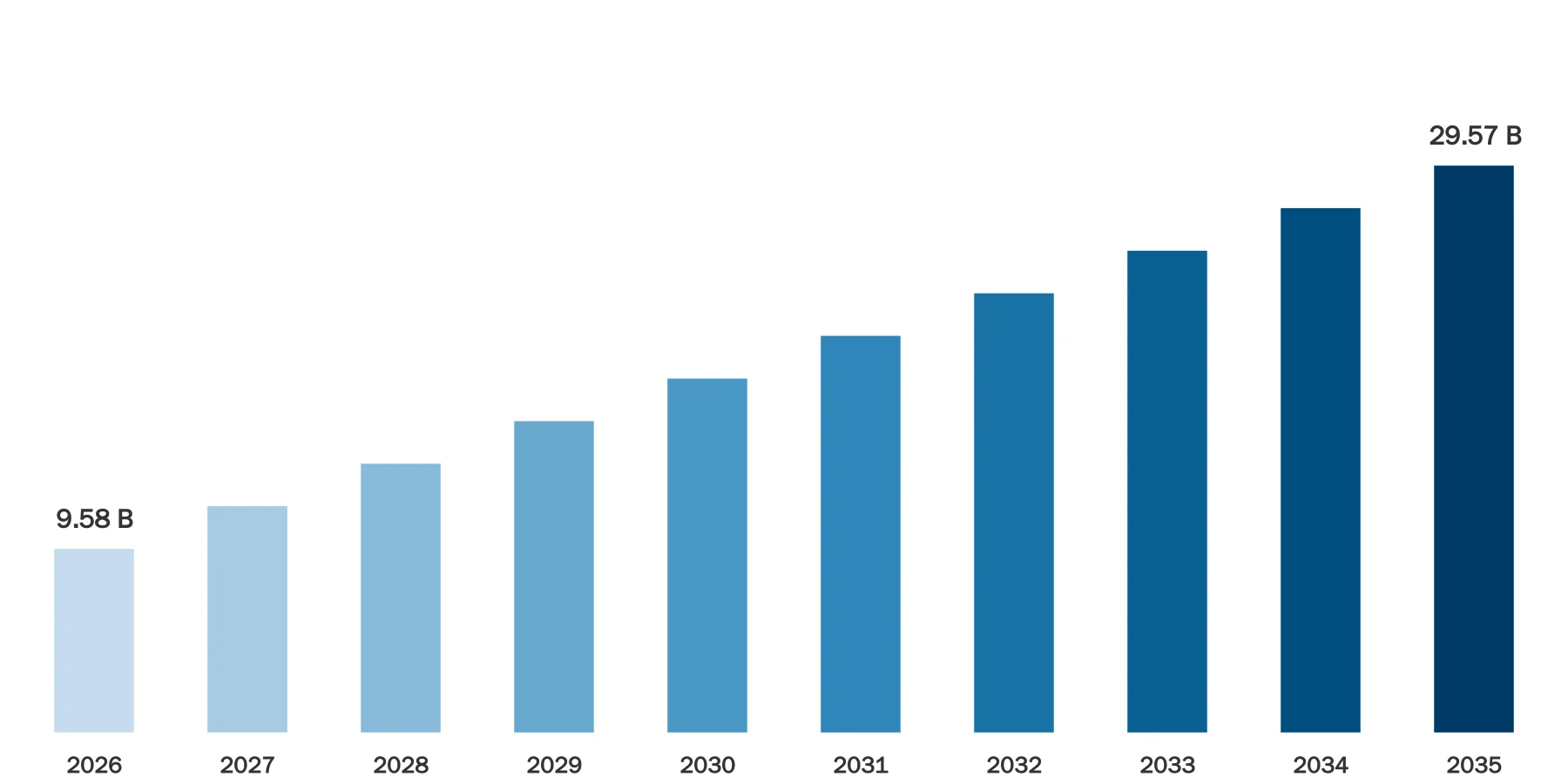
Source: Econ Market Research
An on-board charger is an essential component in electric vehicles because it converts the alternating current (AC) from the power grid into the direct current (DC) required to charge the battery. This process enables EV owners to recharge their vehicles using standard electrical outlets, making charging more convenient and efficient.
The rising demand for EVs as a result of environmental concerns, government incentives, and advancements in battery technology are driving market growth. Key factors influencing the market include the development of more efficient and compact OBCs, increased investments in EV infrastructure, and the growing trend towards vehicle electrification by major automobile manufacturers. Additionally, the push for sustainable transportation solutions and stricter emission regulations are further accelerating the adoption of EVs and, consequently, the demand for on-board chargers. As a result, the OBC market is expected to see significant growth in the coming years, with innovations and technological advancements playing a pivotal role in shaping the future of electric mobility.
On-board Charger Dynamics
One of the primary drivers is the growing popularity of electric vehicles (EVs), as consumers and governments around the world strive to reduce carbon emissions and promote sustainable transportation. Government incentives such as tax breaks, subsidies, and stricter emission regulations significantly increase EV sales, driving demand for OBCs. Furthermore, advancements in battery technology and the expansion of EV Charging Infrastructure improve the practicality and appeal of electric vehicles, propelling the OBC market growth.
On the other hand, the market faces numerous challenges. The high cost of electric vehicles and their components, including on-board chargers, can stifle market growth, especially in price-sensitive areas. Furthermore, the need for standardization in charging protocols and infrastructure presents a challenge, as differing standards can cause compatibility issues. Despite these obstacles, opportunities abound in the form of technological advancements, such as the creation of more efficient, compact, and fast-charging OBCs. Collaborations between automotive manufacturers and technology providers are also helping to advance charging technology. Furthermore, the growing trend towards vehicle-to-grid (V2G) technology, which allows EVs to supply power back to the grid, opens up new avenues for market expansion.
On-board Charger Drivers
Increasing Adoption of Electric Vehicles (EVs)
The rise in Electric Vehicle adoption is one of the most important factors driving the global on-board charger (OBC) market. As concerns about environmental sustainability and the harmful effects of fossil fuels on the climate grow, consumers and governments are increasingly turning to electric vehicles. Governments around the world are implementing various incentives, such as tax breaks, subsidies, and grants, to encourage the purchase of EVs.
These incentives reduce the total cost of ownership, making EVs more appealing to consumers. Furthermore, as major automakers expand their electric vehicle portfolios, the variety and availability of EVs grow, increasing their adoption. This, in turn, drives the demand for on-board chargers, which are essential for converting grid electricity into the direct current needed by EV batteries.
Advancements in Battery Technology
The ongoing advancement of battery technology significantly contributes to the growth of the OBC market. Advances in battery chemistry, particularly lithium-ion batteries, have resulted in higher energy densities, longer driving ranges, and faster charging times. These improvements address one of the most common consumer concerns about EVs: range anxiety.
As batteries become more efficient and capable of storing more energy, the demand for effective on-board charging systems grows. Enhanced battery technology also enables the development of smaller and lighter on-board chargers that are easier to integrate into vehicles while maintaining performance. As a result, advancements in battery technology not only make EVs more appealing, but also highlight the importance and advancement of on-board chargers.
On-board Charger Restraints:
High Cost of Electric Vehicles and Components
One of the primary challenges confronting the global OBC market is the high cost of electric vehicles and their components. Despite the fact that battery costs have decreased over time, EVs are still more expensive than Internal Combustion Engine vehicles. On-board chargers, as sophisticated and essential components, increase the overall cost of the vehicle. This higher initial investment may discourage potential buyers, especially in price-sensitive markets where consumers are less willing or able to pay a premium for EVs. The cost barrier is significant because it slows the rate at which consumers adopt electric vehicles, thus impacting the growth of the OBC market.
Need for Standardization in Charging Infrastructure
The lack of standardization in charging protocols and infrastructure is yet another significant challenge for the OBC market. Different regions and manufacturers frequently use different standards for charging connectors and communication protocols, resulting in compatibility issues. This fragmentation can lead to confusion and inconvenience for consumers, who may find it difficult to locate compatible charging stations, particularly while traveling. Inconsistency in standards impedes the seamless and widespread adoption of EVs and, by extension, the on-board chargers required to operate them. Until there is greater harmonization and standardization in charging infrastructure globally, this issue will continue to limit market growth.
On-board Charger Opportunities:
Technological Innovations in On-board Charging Systems
Technological advancements in on-board charging systems offer significant market growth prospects. Innovations such as the development of more efficient, compact, and powerful on-board chargers improve the overall EV charging experience. High-efficiency OBCs reduce energy losses during the charging process, making electric vehicles more affordable and environmentally friendly.
Furthermore, compact designs allow for more seamless integration into vehicles, potentially freeing up space for other components or passenger comfort. Faster charging capabilities also respond to consumer demands for shorter charging times, making EVs more practical for daily use. These technological advancements not only make EVs more appealing, but also create new markets and applications for on-board chargers.
Segment Overview
By Vehicle Type
The on-board charger market can be divided into vehicle types, which include boats, passenger cars, vans, buses, medium and heavy-duty vehicles, and others. Passenger cars are the largest segment, owing to a significant consumer shift toward electric vehicles (EVs) motivated by environmental concerns and regulatory pressures. On-board chargers in vans and buses are also becoming more popular as public transportation systems and commercial fleets seek to reduce emissions and operating costs.
Medium and heavy-duty vehicles, including trucks, are increasingly electrifying in order to meet strict emission standards while also saving money on fuel. The maritime sector is gradually incorporating on-board chargers in boats as part of the larger movement toward electrification in all modes of transportation. This diverse application across various vehicle types highlights the extensive and growing demand for efficient on-board charging solutions across different transportation sectors.
By Propulsion Type
The market is segmented by propulsion type into plug-in hybrid electric vehicles (PHEVs) and battery electric vehicles (BEVs). BEVs, which run entirely on electricity, require powerful on-board charging systems to meet their energy demands, making this segment the primary driver of market growth. PHEVs, which combine an internal combustion engine and an electric motor, also require on-board chargers, but typically have a lower capacity than BEVs.
The growing popularity of BEVs, driven by advances in battery technology and increased environmental awareness, creates a significant demand for high-capacity and efficient on-board chargers. PHEVs serve as a transitional technology, promoting the adoption of electrification while the infrastructure for fully electric vehicles is developing.
By Power Type
The market can also be divided into power types: 11 kW to 22 kW, less than 11 kW, and more than 22 kW. Smaller EVs and plug-in hybrids typically use on-board chargers with a power output of less than 11 kW, which is sufficient for battery capacity. The 11 kW to 22 kW range is standard for many passenger cars and light commercial vehicles, providing a good balance of charging speed and cost.
On-board chargers with more than 22 kW are commonly found in high-performance and heavy-duty vehicles, where faster charging is critical for maintaining operational efficiency. The development and deployment of high-power on-board chargers are critical to reducing charging times and improving the convenience of electric vehicles, thus supporting wider adoption.
By Sales Channel
The market is divided into two segments based on the sales channel: OEMs and aftermarket. OEMs dominate the market by incorporating on-board chargers into new EVs during the manufacturing process, ensuring compatibility and compliance with vehicle specifications. This segment benefits from the increased production of electric vehicles by major automakers worldwide.
Although the aftermarket segment is small, it is significant in terms of providing replacement chargers and upgrades for existing EV owners looking for improved performance or faster charging. Aftermarket solutions provide flexibility and customization, meeting the diverse needs of the EV user base. OEMs drive initial adoption, while aftermarket services ensure the longevity and adaptability of on-board charging systems.
On-board Charger Overview by Region
North America dominates the market, owing to strong demand for electric vehicles and supportive government policies aimed at lowering greenhouse gas emissions and promoting clean transportation. The presence of major automotive manufacturers and technological innovators fuels market growth in this region. Europe follows closely, with countries such as Norway, the Netherlands, and Germany experiencing significant EV penetration and investment in charging infrastructure. The European Union',s stringent emission regulations and ambitious climate targets are driving the transition to electric mobility, boosting demand for on-board chargers.
Asia Pacific is emerging as a key market, driven by rapid urbanization, rising disposable income, and increased awareness of environmental issues. China, Japan, and South Korea are at the forefront of electric vehicle adoption, supported by government subsidies and incentives. Additionally, the presence of prominent EV manufacturers and suppliers in the region stimulates market expansion. Latin America and the Middle East &, Africa regions exhibit untapped potential for on-board charger adoption, albeit at a slower pace compared to other regions. However, rising environmental concerns, coupled with improving infrastructure and government initiatives, are expected to drive gradual market growth in these regions.
On-board Charger Market Competitive Landscape
Leading companies like Bosch, Delphi Technologies, and Siemens AG dominate the market due to their diverse product portfolios, strong brand presence, and significant investments in R&,D. These players are committed to continuous innovation in order to create advanced on-board charging solutions that are more efficient, faster to charge, and compatible with a wider range of electric vehicles. Furthermore, strategic alliances and collaborations with automakers and technology providers are common, allowing businesses to capitalize on synergies and broaden their market presence.
Emerging players, such as start-ups and niche players, are entering the market with innovative offerings aimed at addressing specific market segments or technological niches. As the demand for electric vehicles continues to grow and the automotive industry undergoes rapid transformation, competition in the on-board charger market is expected to intensify further, driving companies to differentiate their products, enhance their service offerings, and strengthen their competitive positions.
On-board Charger Key Players:
Stercom Power Solutions GmbH
Eaton
BRUSA Elektronik AG
Toyota Industries Corporation
Ficosa Internacional SA
AVID Technology Limited
Delta Energy Systems
Bel Fuse Inc.
innolectric AG
STMicroelectronics
On-board Charger Report Segmentation
On-board Charger Market Report Scope & Segmentation
| Attributes | Details |
|---|---|
Market Size (Current) | US$ 9.58 Billion in 2026 |
Market Size (Forecast) | US$ 29.57 Billion in 2035 |
Growth Rate | CAGR of 13.23% from 2026 to 2035 |
Forecast Period | 2026 – 2035 |
Base Year | 2025 |
Historical Data Available | Yes |
Regional Scope | Global |
Segments Covered | By Power Output
By Propulsion Type
By Vehicle Type
|
Frequently Asked Questions
Common questions about this report
The study period covers historical insights and forecast projections for the period 2026-2035.
About the Author
Market research expert with years of industry experience

Dipali Bhingare serves as the Market Research Director at Econ Market Research. With a focus on translating complex global economic shifts into actionable business intelligence, she oversees the strategic direction of comprehensive market studies. Her work empowers organizations to navigate volatile industries through data-driven forecasting and deep-dive competitive analysis.
Related Reports
Explore more market insights from the same category