

Off Price Retail Market
Off Price Retail Market Size, Share, Trends, Growth, and Industry Analysis, By Product Type (Apparel andamp; Footwear, Home Goods, Beauty andamp; Personal Care, Consumer Electronics), By Business Model (Discount Stores (TJ Maxx, Ross), Outlet Stores), By Distribution Channel (Physical Stores, Online Stores), Regional Analysis and Forecast Period 2026-2035
Off Price Retail Market Overview
As per Econ Market Research analysis, the Global Off Price Retail Market was valued at approximately US$ 404.86 Billion in 2026 and is predicted to reach US$ 858.3 Billion by 2035, expanding at a CAGR of 8.7% over the forecast duration. The base year is 2025.
Off Price Retail Market Size 2025-2035 (USD Billion)

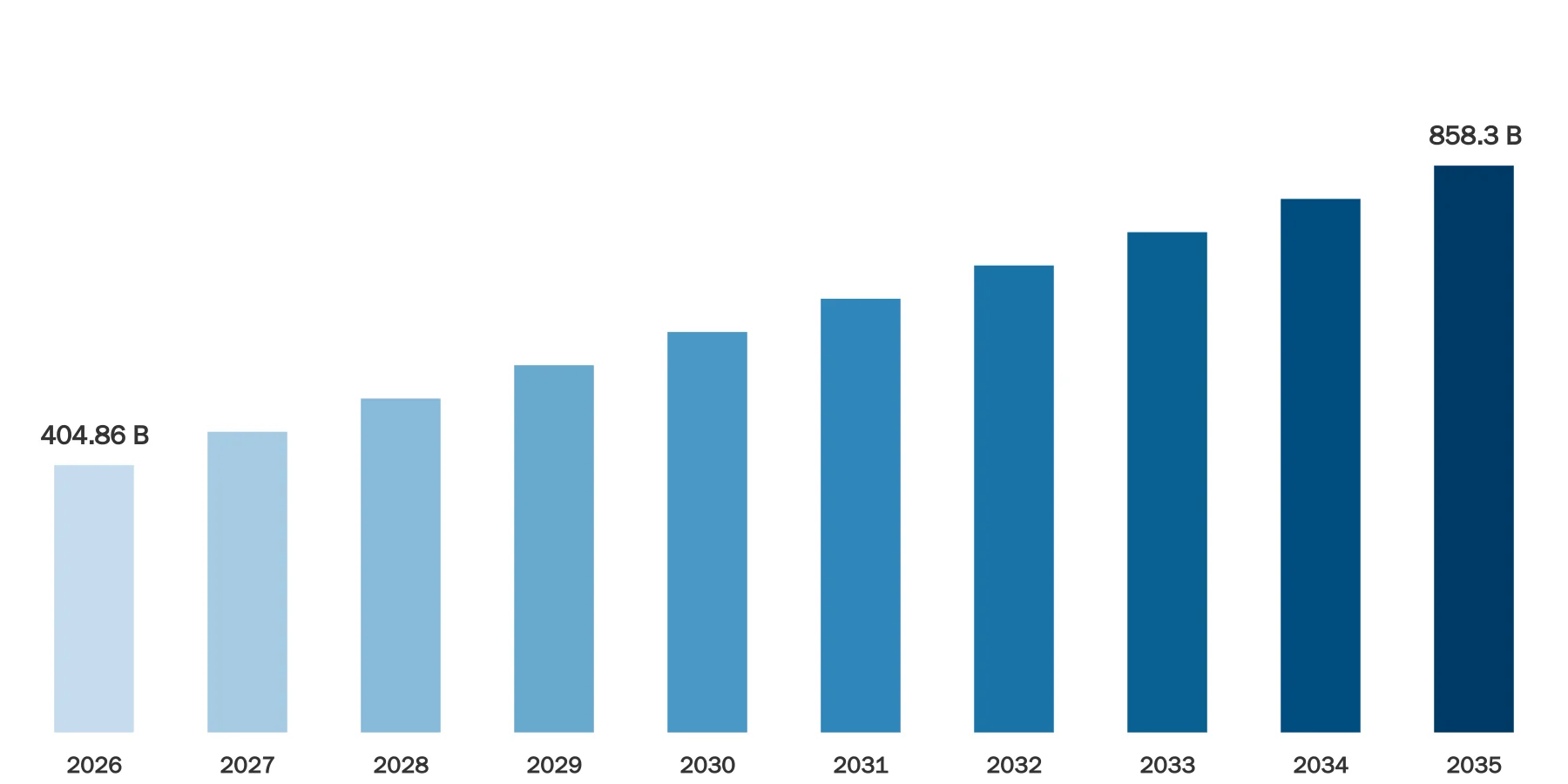
Source: Econ Market Research
Off Price Retail products generally include brand-name goods, overstock, or past-season items. Therefore, off-price retailers make them cheaper for consumers. Off-price retailers make savings for their customers by offering discounts on their products. Discounts are achieved when they purchase products in bulk from manufacturers, wholesalers, or department stores. Examples of products that can be sold at a discount include clothing, footwear, accessories, home goods, and much more.
This market has been growing steadily in the recent past, with demand from consumers that value shopping on price and brand preference for discounted brands. Off-price retailers can be accessed mainly through physical outlets or online outlets. Some of the best companies that dominate this global market are TJX Companies, Ross Stores, and Burlington. Factors such as a desire for quality at a lower price, economic pressures, and changing shopping behaviors have fuelled this sector',s success. The market will continue to expand as more people turn to off-price retailers for their affordability and variety.
Dynamic Insights
The shift in consumer behaviour towards bargain hunting, accelerated particularly among price-sensitive shoppers, has facilitated fast-growing demand for their stores. The chief forces behind this are the growing demands of consumers for discounted brand-name goods, influenced by economic factors, increasing cost of living, and growing interest in value-based shopping. Consumers are increasingly looking for high-quality products at a relatively lower cost, and off-price retailers are meeting this demand through a wide variety of discounted merchandise offerings, such as clothing, home goods, and electronics.
Moreover, the advancement in e-commerce and digital media has expanded the customer base of off-price retailers as they are reaching a more considerable number of consumers and therefore raising their sales. There are better shopping options and increased digital marketing to help customers easily find discounts on off-price retailers. On the other hand, the challenges include inventory management, maintaining brand partnerships, and competition from traditional retail stores and e-commerce giants. However, the continuous expansion of physical and online stores, coupled with consumer desire for value deals, is expected to drive sustained growth in the market. In addition, economic fluctuations and changes in consumer spending patterns will continue to mold the dynamics of the global off-price retail sector.
Drivers Insights
Increasing Demand for Discounted Brand-Name Products:
A major driver of the global off-price retail market is the growing consumer demand for discounted brand-name items. Many consumers are looking for high-quality products at lower prices, especially in tough economic conditions. This demand is fueled by budget-conscious shoppers seeking to stretch their spending while still acquiring well-known brands. Off-price retailers, such as TJ Maxx and Ross Stores, excel by offering surplus inventory, overstocks, or past-season items at a fraction of their original retail prices, making them highly attractive. This trend is especially prominent among middle-income consumers who want value without compromising on brand recognition or product quality.
Expansion of E-Commerce and Online Platforms:
The rapid growth of e-commerce is another key driver for the off-price retail market. Online shopping has become a preferred option for many consumers due to convenience, easy price comparisons, and the ability to access a broader range of products. Off-price retailers have increasingly capitalized on this shift by enhancing their online presence, offering exclusive online deals, and providing a seamless shopping experience. This has not only expanded their customer base but has also allowed them to compete more effectively with traditional retailers and e-commerce giants, thus driving growth in the market.
Restraints Insights
Inventory Management Challenges:
A significant restraint for off-price retailers is managing inventory effectively. Since they focus on offering surplus goods, overstocks, or previous season&rsquo,s products, inventory sourcing and stock management can be unpredictable. This reliance on the availability of discounted goods means that off-price retailers may struggle with stockouts, forcing them to operate with limited product lines. Furthermore, changes in consumer demand or slow-moving inventory can lead to operational inefficiencies and unsold products, ultimately impacting profitability.
Intense Competition from Traditional and Online Retailers:
Off-price retailers face fierce competition from both traditional full-price retailers and online e-commerce giants. Department stores and large chains like Walmart and Amazon are increasingly offering deep discounts or introducing their own discount sections, which pose direct competition to the off-price model. Additionally, the rise of direct-to-consumer (D2C) brands that bypass traditional retail chains by selling directly through online platforms has increased pressure on off-price stores. This intensifying competition can limit market share for existing off-price players, as consumers now have more choices for discounted products across various channels.
Opportunities Insights
Incorporating Sustainability and Eco-Friendly Offerings:
The opportunity for off-price retailers to resonate with the sustainable trend of the consumers is, therefore, found in incorporating green and sustainable products into their offering. Discounting sustainable products or partnering with sustainable production-focused brands could attract shoppers who are eco-conscious. This also increases the scope for off-price retailers to increase the variety of products without compromising their interest in sustainability. This can not only attract new customers but also make improvements in the brand image and appeal of off-price retail chains.
Segment Analysis
By Product Type:
The off-price retail market comprises several product categories, which are apparel &, footwear, home goods, beauty &, Personal Care, consumer electronics, food &, beverages, and others. Apparel &, footwear is the category that has gained the maximum lead in the off-price retail business, since more and more people look for inexpensive brand-name apparels and footwear. Home Furnishings, which are home goods products like furniture, decorative items, and kitchenware, are also highly in demand since consumers are seeking affordable yet fashionable solutions for their homes.
Another significant segment is beauty &, personal care products, such as Skincare and cosmetics, as consumers', interest in discounted premium personal care items is on the rise. Consumer electronics, such as gadgets and accessories, are one of the growth areas for off-price retailers since more people seek budget-friendly alternatives for technology. The food &, beverages segment is a smaller portion of the market but still presents an opportunity for off-price retailers to sell packaged goods, snacks, and drinks at discounted prices.
By Distribution Channel:
The two primary distribution channels through which off-price retailers operate are physical stores and online stores. Physical stores remain a significant channel for off-price retailers, offering customers an in-store experience to browse discounted products in various categories. These stores are often located in high-traffic areas, such as malls or outlet centers, providing a convenient shopping destination for consumers seeking bargains.
However, online shopping has had a significant impact on the off-price retail market, shifting focus to e-commerce. The online stores offer customers the chance to shop from home for discounted products, to access a broader product selection, and to have their purchases delivered to their homes. The digital shift has enabled off-price retailers to expand their reach globally and serve customers beyond the geographical limits of physical stores.
By End-User:
The end-user segment of the off-price retail market includes men, women, and children. Each of these groups has unique shopping preferences and demands in terms of product offerings. For men, the focus is primarily on discounted apparel, footwear, and accessories, with an increasing interest in electronics and personal care items. Women represent a significant portion of the market, with a high demand for discounted clothing, beauty products, and home goods.
Women are often more inclined to purchase fashion-forward items at a lower price, as well as skincare and cosmetics products, making them a key target demographic for off-price retailers. Children&rsquo,s products, such as clothing, toys, and accessories, form another important category, as parents seek to buy quality items for their children at a lower cost.
By Business Model:
The off-price retail market operates primarily through two business models: discount stores and outlet stores. Discount stores, such as TJ Maxx and Ross Stores, are retail outlets that offer a broad range of discounted merchandise, including apparel, home goods, and beauty products. These stores buy surplus inventory from manufacturers or other retailers and sell it at lower prices to consumers. They are often located in busy shopping areas, making them easily accessible for shoppers looking for a bargain. Outlet stores, on the other hand, are typically located in outlet malls or dedicated retail outlets. These stores primarily sell products from specific brands, often from previous seasons or excess stock, at a reduced price. The outlet model allows retailers to provide high-quality brand-name products at lower prices while maintaining their brand identity.
Regional Analysis
Off-price retailing is very well-established in North America, particularly in the United States. Major players include TJ Maxx, Ross Stores, and Burlington. Demand for discounted brand-name apparel, home goods, and beauty products has helped drive off-price retailers to success in the region. Moreover, the convenience of both physical stores and the ever-growing e-commerce platforms has improved the shopping experience, making more consumers turn towards off-price options.
Europe also offers huge growth opportunities, especially in the UK, Germany, and France. Consumers in Europe are looking for more affordable options to avoid traditional retail prices, and off-price stores are becoming popular in major cities and outlet malls. In the Asia-Pacific region, the off-price retail market is growing fast because of the rising disposable incomes, a growing middle class, and increased exposure to global brands. Countries like China and India are experiencing a spurt in demand for discounted goods, with consumers showing interest in both international and local products at lower prices.
The e-commerce boom in Asia has further fueled market expansion, enabling off-price retailers to easily gain access to emerging online shopping trends. Latin America and the Middle East are gaining traction in terms of off-price retail market development, mainly based on changes in consumer behavior, with an ever-growing interest for high-quality items at affordable prices. However, the potential of the market could be hampered by the issues of infrastructure and supply chain for these regions.
Competitive Landscape
Key leading market growth companies consist of TJX Companies, owning the TJ Maxx, Marshalls, and HomeGoods company names, among others. Further players include Ross Stores and Burlington, with market performance enhanced by high-scale store count operations in North America and gradual globalization. Both can offer tremendous opportunities for shoppers by providing vast, brand-name assortment capabilities at greatly discounted prices through vast store numbers. Their business models rely on sourcing surplus inventory, overstocks, and past-season goods to provide significant discounts, which attracts a broad customer base.
The big retailers have the advantage because of the strong brand recognition that has cemented over years, large supply chains, and wide product assortments across apparel, home goods, beauty, and footwear categories. Besides these large competitors, smaller and regional off-price retailers are also present, focusing on niches or regional markets. Ollie',s Bargain Outlet, Big Lots in the U.S., and many others have carved out their own market space by targeting specific customer groups and offering deep discounts on a range of products that include home goods and electronics.
E-commerce has increasingly disrupted the conventional retail model with players like Overstock.com and Amazon, further augmenting the pressure on off-price retailers. Off-price retailers face increased pressure because digital shopping compels brick-and-mortar companies to invest more in online operations and offer seamless omnichannel shopping experiences. More importantly, off-price retailers now face an increase in interest for private-label brands and D2C offerings that add another dimension to their operational challenges.
List of Key Players:
Pick n Pay
TJX Companies
Bluefly
Landmark Group
Burlington Stores
BFL Group
Macy&rsquo,s Backstage
Ross Stores
Geo Holdings Corporation
COSTCO
Saks Off 5th
Off Price Retail Report Segmentation
Off Price Retail Market Report Scope & Segmentation
| Attributes | Details |
|---|---|
Market Size (Current) | US$ 404.86 Billion in 2026 |
Market Size (Forecast) | US$ 858.3 Billion in 2035 |
Growth Rate | CAGR of 8.7% from 2026 to 2035 |
Forecast Period | 2026 – 2035 |
Base Year | 2025 |
Historical Data Available | Yes |
Regional Scope | Global |
Segments Covered | By Product Type
By Business Model
By Distribution Channel
|
Frequently Asked Questions
Common questions about this report
The study period covers historical insights and forecast projections for the period 2026-2035.
About the Author
Market research expert with years of industry experience

Related Reports
Explore more market insights from the same category