

Network Switches Market
Network Switches Market Size, Share, Trends, Growth, and Industry Analysis, By Type (Managed Switches, Unmanaged Switches), By Speed (100 Mbps to 1 Gbps, 1 Gbps to 10 Gbps, 10 Gbps to 40 Gbps, Above 40 Gbps), By End-User (Telecommunications, Data Centers, Enterprise andamp; Industrial, Others), Regional Analysis and Forecast Period 2026-2035
Network Switches Market Overview
As per Econ Market Research analysis, the Global Network Switches Market generated revenue of US$ 86.04 Billion in 2026 and is forecast to achieve US$ 322.2 Billion by 2035, at a CAGR of 14.35% during the study period 2026–2035. The base year considered is 2025.
Network Switches Market Size 2025-2035 (USD Billion)

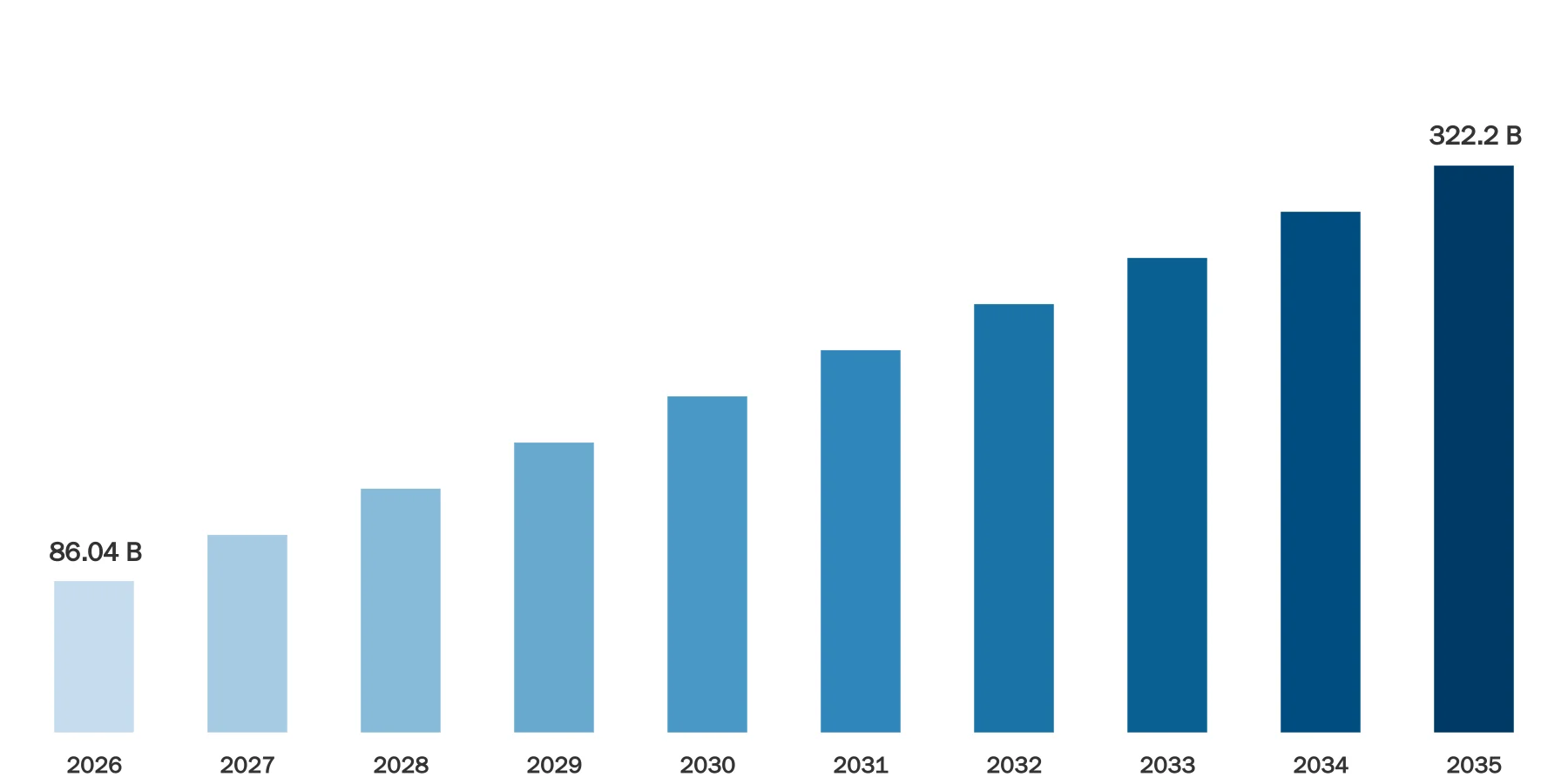
Source: Econ Market Research
Network switches are essential components of computer networks that connect several devices to one another inside a local area network (LAN). They function at the data connection layer of the OSI model, enabling effective data flow between connected devices. Switches take in incoming data packets and examine the MAC addresses of the destinations to decide which path should be used to forward the packets. By doing so, they may establish specialized communication channels and avoid network sluggishness. Depending on the switch, several network speeds, such as Fast Ethernet, Gigabit Ethernet, or 10 Gigabit Ethernet, may be supported. They provide superior performance, security, and scalability compared to hubs or repeaters.
Network Switches Market Dynamics
The use of network switches is being driven by the rising need for fast and dependable data transfer within organizations. The demand for effective networking solutions grows as organizations continue to develop their digital infrastructure and rely on data-intensive applications. The development of IoT devices, Cloud Computing, and big Data Analytics further increases the need for reliable network switches that can handle the rising volume of data traffic. In addition, the development of virtualization and software-defined networking (SDN) technologies calls for sophisticated switches that can accommodate these changing topologies.
Network Switches Market Drivers
Increasing Demand for Data Center Consolidation
With the rapid growth of data-intensive applications and cloud computing, there is a rising need for data center consolidation. Network switches play a crucial role in connecting and managing multiple servers and devices within data centers, driving the demand for high-performance switches.
Restraints:
Network Security Concerns
As network switches play a critical role in connecting various devices, they become potential targets for cyberattacks. Security vulnerabilities in switches can lead to unauthorized access, data breaches, and service disruptions. The perceived risks associated with network security can hinder the adoption of network switches.
Opportunities:
Growing Demand for High-speed Connectivity
The proliferation of bandwidth-intensive applications, such as video streaming, online gaming, and virtual reality, drives the demand for high-speed network switches. As more users require faster and more reliable connectivity, network switches supporting high-speed Ethernet standards, such as 25GbE, 40GbE, and 100GbE, have significant growth opportunities.
Segment Overview
By Switching Port
Based on the switching port, the global network switches market is divided into 100 MBE & 1 GBE, 2.5 GBE & 5 GBE, 10 GBE, 25 GBE & 50 GBE, 100 GBE, and 200 GBE & 400 GBE. The 100 GBE category dominates the market with the largest revenue share of around 45.3% in 2022. The demand for high-speed data transmission and the exponential rise in data traffic necessitate network architecture that can handle enormous data quantities. Significant bandwidth capacity is provided by the 100 GBE technology, enabling quicker and more effective data transport. The need for faster network speeds is being driven by the growth of bandwidth-hungry applications like cloud computing, virtualization, and video streaming. Additionally, 100 GBE's cost per gigabit of bandwidth has decreased over time, making it a competitive option for businesses.
By Type
Based on the type, the global network switches market is divided into fixed-configuration switches, managed switches, unmanaged switches, PoE switches, and modular switches. The managed switches category dominates the market with the largest revenue share of around 32.3% in 2022. This dominance may be ascribed to a number of things, including managed switches that offer cutting-edge features and functions to meet the sophisticated networking needs of businesses. In order to facilitate effective network administration and improved performance. The more management and configuration options the managed switches offer, the easier it is for network managers to solve problems, monitor and manage network traffic, and enhance network performance. This degree of control is especially important for companies with extensive and varied network infrastructures.
By End-User
Based on end-user, the global network switches market is divided into data center cloud service providers, telecom service providers, large enterprise or private cloud and non-data center. The cloud service provider category is anticipated to grow at a higher CAGR of 6.2% during the forecast period. Because of the upcoming growth, businesses in a variety of sectors are progressively implementing cloud computing solutions to streamline operations, improve scalability, and lower infrastructure costs.
Network Switches Market Overview by Region
By Region, the global network switches market has been segmented into North America, Europe, Asia-Pacific, and the Rest of the World. North America held 37.4%, of revenue share in the global market in 2022 because of technology centers and a booming IT sector, which encourage the adoption of modern networking solutions a number of reasons contribute to this supremacy. Network switches are more in demand because large businesses and organizations in industries like manufacturing, healthcare, and finance need reliable network infrastructure. The use of cloud computing, the Internet of Things, and other technological innovations have all been pioneered in North America. High-performance network switches are now even more necessary to accommodate the growing data traffic as a result of this.
Network Switches Market Competitive Landscape
In the global network switches market, several prominent players hold significant market dominance and possess a strong regional presence. These major players are dedicated to ongoing research and development efforts. Additionally, they actively engage in strategic growth initiatives such as product innovation, product launches, joint ventures, and partnerships. The objective of these organizations is to enhance their market position and expand their customer base, aiming to capture a substantial market share.
Key Players
Huawei Technologies
HPE Aruba (Aruba Networks)
Alcatel-Lucent Enterprise
Juniper Networks
Arista Networks
Netgear
D-Link Corporation
Cisco Systems
Extreme Networks
NVIDIA Corporation
TRENDnet
Lantronix
Broadcom Inc.
Dell Technologies
Hewlett Packard Enterprise (HPE)
TP-Link Technologies
ZTE Corporation
Ubiquiti Inc.
Allied Telesis
Fortinet, Inc.
Network Switches Market Recent Developments
In June 2022, High-performance 400GbE switches from HPE Aruba (US) have been launched and are designed for demanding situations. A state-of-the-art 1U fixed configuration switch, the Aruba CX 9300-32D can offer a staggering 12.8Tbps throughput. It has 32 400GbE ports, giving it the versatility to handle port breakouts for different speeds including 200G, 100G, and 25G. The switch provides dense and dependable 100/200/400GbE connections for servers, storage, and intra-fabric communication with a design that prioritizes scalability and cost-effectiveness.
Network Switches Market Report Scope & Segmentation
| Attributes | Details |
|---|---|
Market Size (Current) | US$ 86.04 Billion in 2026 |
Market Size (Forecast) | US$ 322.2 Billion in 2035 |
Growth Rate | CAGR of 14.35% from 2026 to 2035 |
Forecast Period | 2026 – 2035 |
Base Year | 2025 |
Historical Data Available | Yes |
Regional Scope | Global |
Segments Covered | By Type
By Speed
By End-User
|
Frequently Asked Questions
Common questions about this report
The study period covers historical insights and forecast projections for the period 2026-2035.
About the Author
Market research expert with years of industry experience

Dipali Bhingare serves as the Market Research Director at Econ Market Research. With a focus on translating complex global economic shifts into actionable business intelligence, she oversees the strategic direction of comprehensive market studies. Her work empowers organizations to navigate volatile industries through data-driven forecasting and deep-dive competitive analysis.
Related Reports
Explore more market insights from the same category